Download as PDF, PPTX
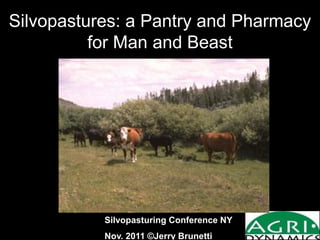
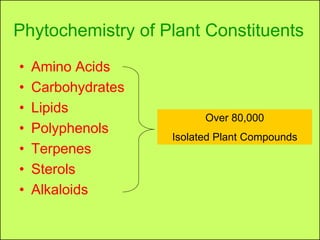
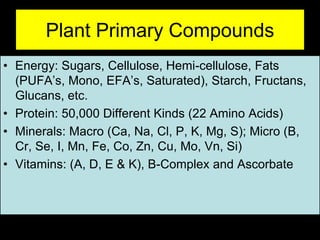
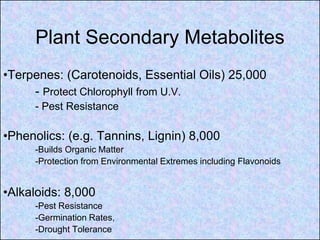
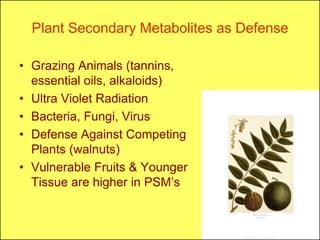
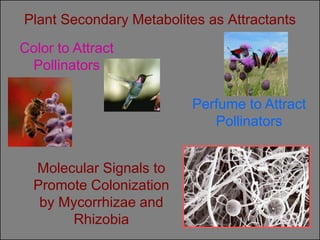
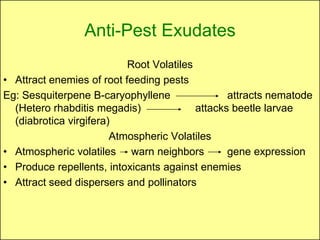


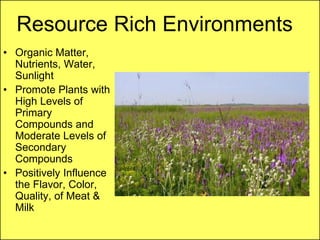
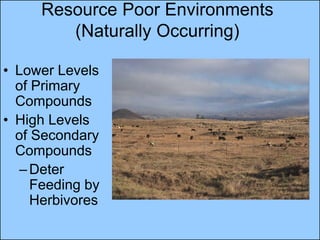
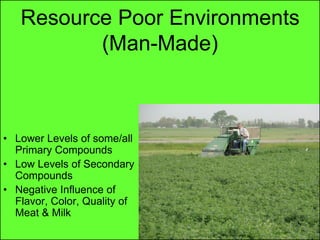
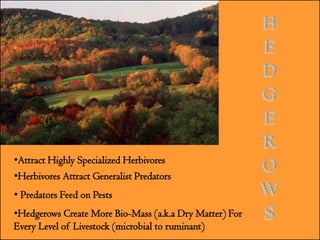
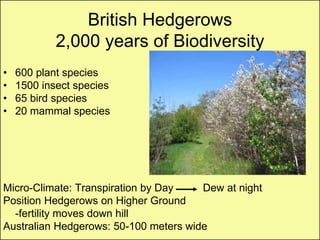
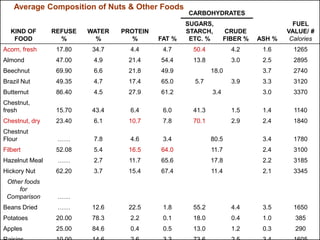
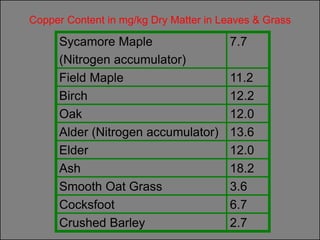
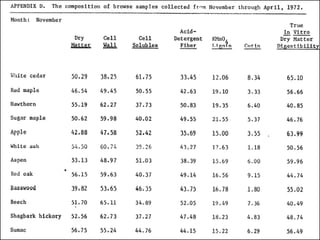

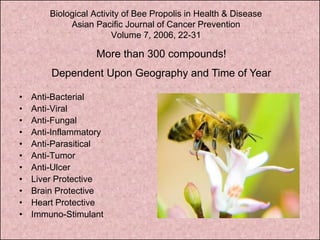
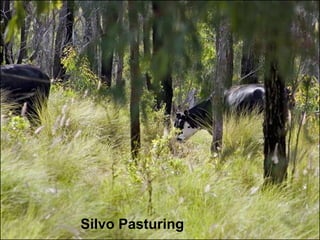
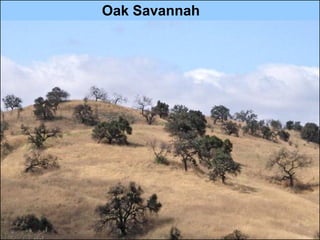


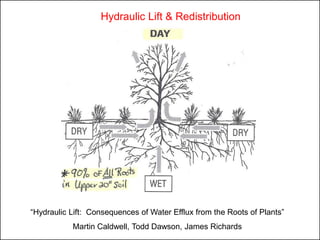
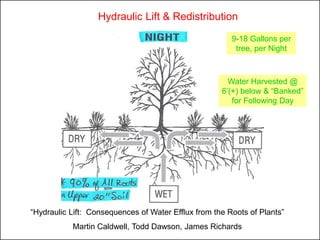

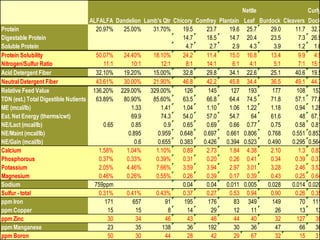
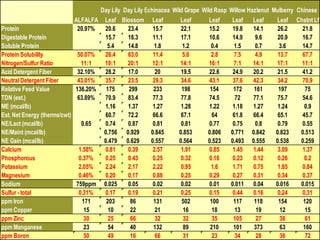
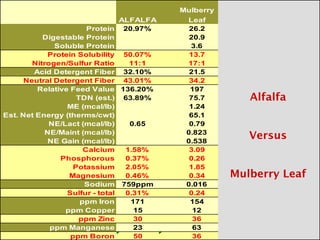
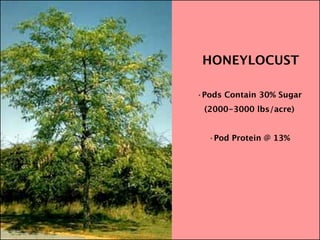
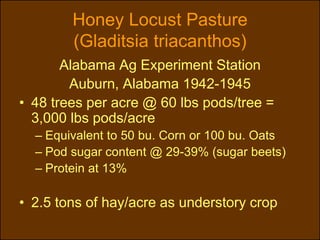
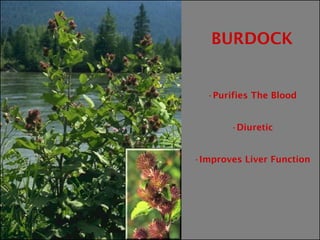
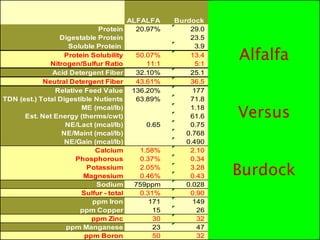
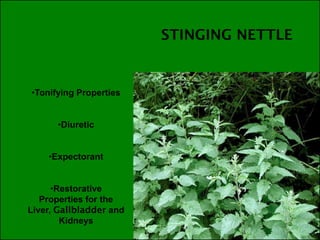
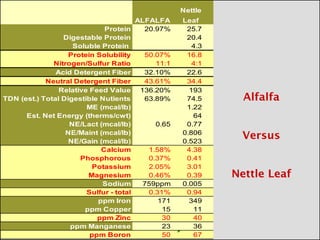
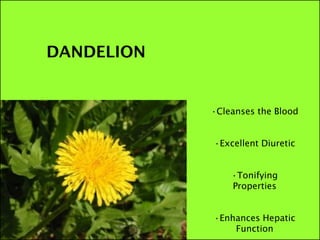
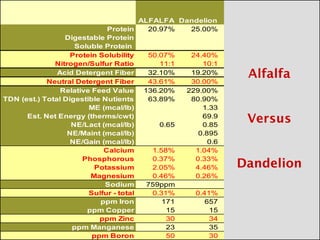
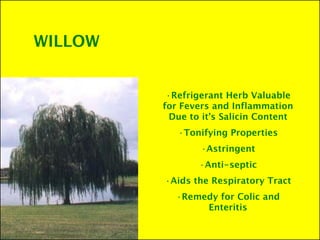
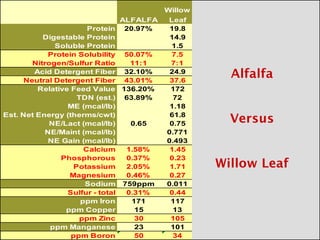
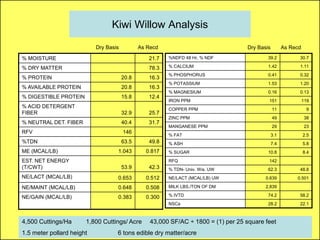
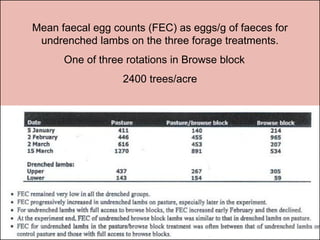
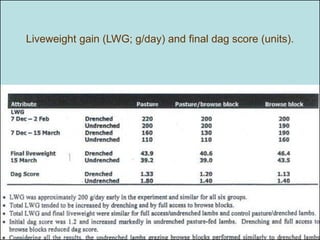
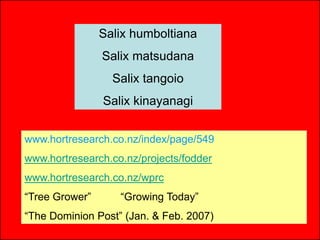
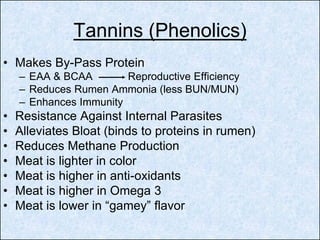
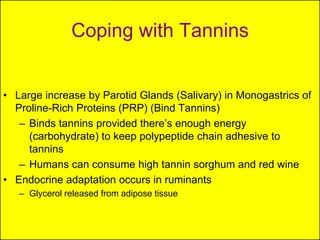
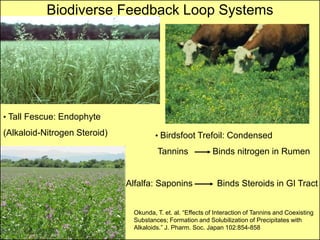
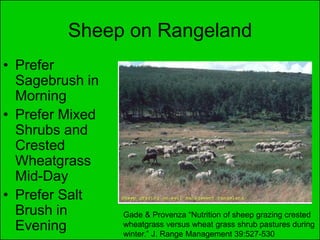
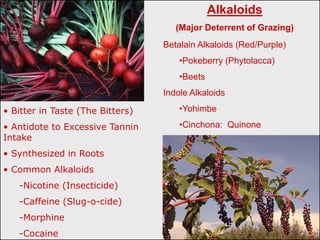
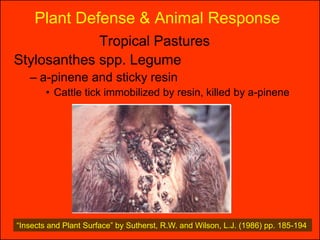
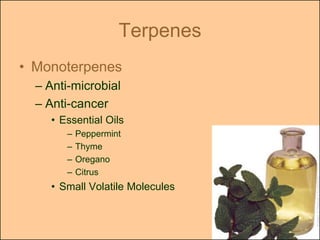
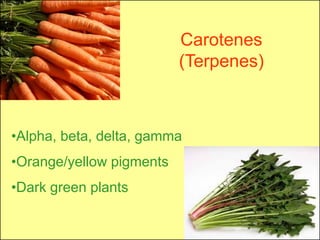
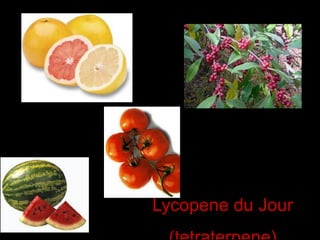
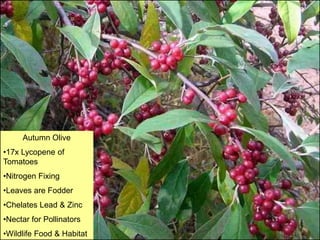

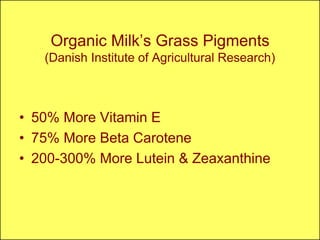


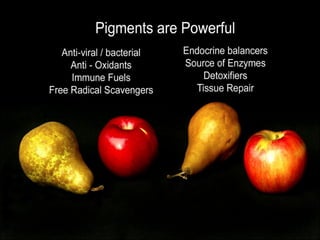
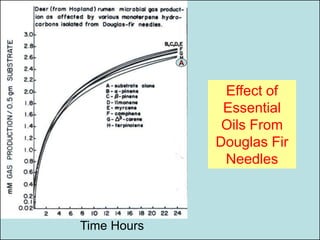
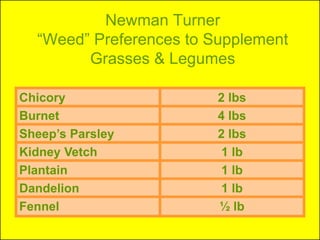


The document discusses the phytochemistry and nutritional value of plants used in silvopastures. It notes that plants contain primary nutrients like sugars, proteins, fats, and minerals as well as secondary metabolites that can benefit grazing animals and attract pollinators. These secondary compounds help protect plants from environmental stresses, pests, and competing plants. The document provides examples of how resource-rich and resource-poor environments influence plant compound levels and consequently the quality of meat and milk. It advocates using silvopastures and hedgerows to create diverse habitats that maximize forage production and quality.


