Signs

by St. Augustine
From On Christian Doctrine,
        Book One, Part II
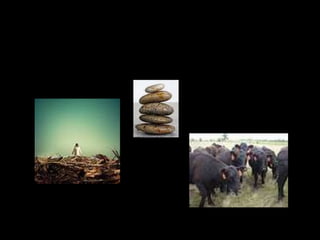
All instruction is either about things or
about signs; but things are learned by means
of signs. I now use the word thing in a strict
sense, to signify that which is never employed
as a sign of anything else: for
example, wood, stone, cattle, and other things
of that kind.
Not, however, the wood which we
read Moses cast into the bitter waters to make
them sweet, Exodus 15:25 nor the stone
which Jacob used as a
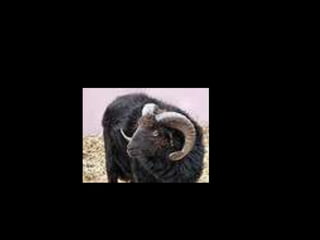
pillow, Genesis 28:11 nor the ram
which Abraham offered up instead of his
son; Genesis 22:13 for these, though they are
things, are also signs of other things.
There are signs of another kind, those which
are never employed except as signs: for
example, words. No one uses words except
as signs of something else; and hence may be
understood what I call signs: those things, to
wit, which are used to indicate something
else. Accordingly, every sign is also a thing; for
what is not a thing is nothing at all. Every
thing, however, is not also a sign.
And so, in regard to this distinction between
things and signs, I shall, when I speak of
things, speak in such a way that even if some
of them may be used as signs also, that will
not interfere with the division of the subject
according to which I am to discuss things first
and signs afterwards. But we must carefully
remember that what we have now to consider
about things is what they are in
themselves, not what other things they
are signs of.
From On Christian Doctrine,
          Book Two, Part I
 As when I was writing about things, I
introduced the subject with a warning against
attending to anything but what they are in
themselves, even though they are signs of
something else, so now, when I come in its
turn to discuss the subject of signs, I lay down
this direction, not to attend to what they are
in themselves, but to the fact that they
are signs, that is, to what they signify.
From On Christian Doctrine,
          Book Two, Part I
For a sign is a thing which, over and above the
impression it makes on the
senses, causes something else to come into
the mind as a consequence of itself: as when we
see a footprint, we conclude that an animal
whose footprint this is has passed by; and when
we see smoke, we know that there is fire
beneath; and when we hear the voice of a living
man, we think of the feeling in his mind; and
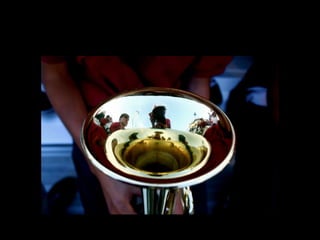
when the trumpet sounds, soldiers know that
they are to advance or retreat, or do whatever
else the state of the battle requires.
From On Christian Doctrine,
          Book Two, Part I
Now some signs are natural, others
conventional. Natural signs are those which,
apart from any intention or desire of using them
assigns, do yet lead to the knowledge of
something else, as, for example, smoke when it
indicates fire. For it is not from any intention of
making it a sign that it is so, but through
attention to experience we come to know that
fire is beneath, even when nothing but smoke can
be seen.
From On Christian Doctrine,
          Book Two, Part I
And the footprint of an animal passing by belongs
to this class of signs. And the countenance of
an angry or sorrowful man indicates the feeling in
his mind, independently of his will: and in the
same way every other emotion of the mind is
betrayed by the tell-
tale countenance, even though we do nothing
with the intention of making it known. This class
of signs, however, it is no part of my design to
discuss at present. But as it comes under this
division of the subject, I could not altogether pass
it over. It will be enough to have noticed it thus
far.
From On Christian Doctrine,
         Book Two, Part II
Conventional signs, on the other hand, are those which
living beings mutually exchange for the purpose of
showing, as well as they can, the feelings of
their minds, or their perceptions, or their thoughts.
Nor is there any reason for giving a sign except the
desire of drawing forth and conveying into
another's mind what the giver of the sign has in his
own mind. We wish, then, to consider and discuss this
class of signs so far as men are concerned with
it, because even the signs which have been given us
of God, and which are contained in the Holy
Scriptures, were made known to us through men—
those, namely, who wrote the Scriptures.
From On Christian Doctrine,
          Book Two, Part II
The beasts, too, have certain signs among themselves by
which they make known the desires in their mind. For
when the poultry-cock has discovered food, he signals with
his voice for the hen to run to him, and the dove by cooing
calls his mate, or is called by her in turn; and many signs of
the same kind are matters of common observation. Now
whether these signs, like the expression or the cry of a man
in grief, follow the movement of the mind instinctively and
apart from any purpose, or whether they are really used
with the purpose of signification, is another question, and
does not pertain to the matter in hand. And this part of the
subject I exclude from the scope of this work as
not necessary to my present object.
From On Christian Doctrine,
          Book Two, Part III
Of the signs, then, by which men communicate their
thoughts to one another, some relate to the sense of
sight, some to that of hearing, a very few to the other
senses. For, when we nod, we give no sign except to
the eyes of the man to whom we wish by this sign to
impart our desire. And some convey a great deal by the
motion of the hands: and actors by movements of all
their limbs give certain signs to the initiated, and, so to
speak, address their conversation to the eyes: and the
military standards and flags convey through the eyes
the will of the commanders. And all these signs are as
it were a kind of visible words.
From On Christian Doctrine,
         Book Two, Part III
The signs that address themselves to the ear
are, as I have said, more numerous, and for
the most part consist of words. For though
the bugle and the flute and the lyre frequently
give not only a sweet but a significant sound,
yet all these signs are very few in number
compared with words. For among men words
have obtained far and away the chief place as
a means of indicating the thoughts of
the mind.
words words words words words words
From On Christian Doctrine,
          Book Two, Part III
Our Lord, it is true, gave a sign through the odor of the
ointment which was poured out upon His feet; and in
the sacrament of His body and blood
He signified His will through the sense of taste; and
when by touching the hem of His garment
the woman was made whole, the act was not wanting
in significance. Matthew 9:20 But the countless
multitude of the signs through which men express their
thoughts consist of words. For I have been able to put
into words all those signs, the various classes of which I
have briefly touched upon, but I could by no effort
express words in terms of those signs.
From On Christian Doctrine,
        Book Two, Part X
Now there are two causes which prevent what
is written from being understood: its
being veiled either under unknown, or under
ambiguous signs. Signs are either proper or
figurative. They are called proper when they
are used to point out the objects they were
designed to point out, as we say bos when we
mean an ox, because all men who with us use
the Latin tongue call it by this name.
From On Christian Doctrine,
         Book Two, Part X
Signs are figurative when the things
themselves which we indicate by the proper
names are used to signify something else, as
we say bos, and understand by that syllable
the ox, which is ordinarily called by that name;
but then further by that ox understand a
preacher of the
gospel, as Scripture signifies, according to
the apostle's explanation, when it says: You
shall not muzzle the ox that treads out the
grain.
From On Christian Doctrine,
         Book Two, Part IV
But because words pass away as soon as they
strike upon the air, and last no longer than their
sound, men have by means of letters
formed signs of words. Thus the sounds of the
voice are made visible to the eye, not of course as
sounds, but by means of certain signs. It has been
found impossible, however, to make
those signs common to all nations owing to
the sin of discord among men, which springs
from every man trying to snatch the chief place
for himself.
From On Christian Doctrine,
        Book Two, Part IV
And that celebrated tower which was built to
reach to heaven was an indication of
this arrogance of spirit; and the
ungodly men concerned in it justly earned the
punishment of having not their minds only,
but their tongues besides, thrown into
confusion and discordance.
Where do the signs point?
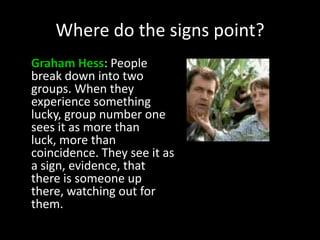
Graham Hess: People
break down into two
groups. When they
experience something
lucky, group number one
sees it as more than
luck, more than
coincidence. They see it as
a sign, evidence, that
there is someone up
there, watching out for
them.
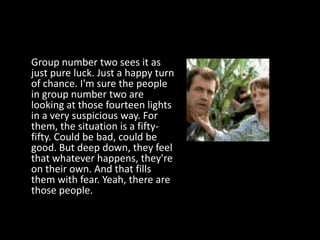
Group number two sees it as
just pure luck. Just a happy turn
of chance. I'm sure the people
in group number two are
looking at those fourteen lights
in a very suspicious way. For
them, the situation is a fifty-
fifty. Could be bad, could be
good. But deep down, they feel
that whatever happens, they're
on their own. And that fills
them with fear. Yeah, there are
those people.
But there's a whole lot of
people in group number
one. When they see those
fourteen lights, they're
looking at a miracle. And
deep down, they feel that
whatever's going to
happen, there will be
someone there to help
them. And that fills them
with hope.
See what you have to ask
yourself is what kind of
person are you? Are you
the kind that sees signs,
that sees miracles? Or do
you believe that people
just get lucky? Or, look at
the question this way: Is it
possible that there are no
coincidences?

Signs by augustine

  • 1.
  • 2.
    From On ChristianDoctrine, Book One, Part II All instruction is either about things or about signs; but things are learned by means of signs. I now use the word thing in a strict sense, to signify that which is never employed as a sign of anything else: for example, wood, stone, cattle, and other things of that kind.
  • 4.
    Not, however, thewood which we read Moses cast into the bitter waters to make them sweet, Exodus 15:25 nor the stone which Jacob used as a pillow, Genesis 28:11 nor the ram which Abraham offered up instead of his son; Genesis 22:13 for these, though they are things, are also signs of other things.
  • 6.
    There are signsof another kind, those which are never employed except as signs: for example, words. No one uses words except as signs of something else; and hence may be understood what I call signs: those things, to wit, which are used to indicate something else. Accordingly, every sign is also a thing; for what is not a thing is nothing at all. Every thing, however, is not also a sign.
  • 7.
    And so, inregard to this distinction between things and signs, I shall, when I speak of things, speak in such a way that even if some of them may be used as signs also, that will not interfere with the division of the subject according to which I am to discuss things first and signs afterwards. But we must carefully remember that what we have now to consider about things is what they are in themselves, not what other things they are signs of.
  • 8.
    From On ChristianDoctrine, Book Two, Part I As when I was writing about things, I introduced the subject with a warning against attending to anything but what they are in themselves, even though they are signs of something else, so now, when I come in its turn to discuss the subject of signs, I lay down this direction, not to attend to what they are in themselves, but to the fact that they are signs, that is, to what they signify.
  • 9.
    From On ChristianDoctrine, Book Two, Part I For a sign is a thing which, over and above the impression it makes on the senses, causes something else to come into the mind as a consequence of itself: as when we see a footprint, we conclude that an animal whose footprint this is has passed by; and when we see smoke, we know that there is fire beneath; and when we hear the voice of a living man, we think of the feeling in his mind; and when the trumpet sounds, soldiers know that they are to advance or retreat, or do whatever else the state of the battle requires.
  • 11.
    From On ChristianDoctrine, Book Two, Part I Now some signs are natural, others conventional. Natural signs are those which, apart from any intention or desire of using them assigns, do yet lead to the knowledge of something else, as, for example, smoke when it indicates fire. For it is not from any intention of making it a sign that it is so, but through attention to experience we come to know that fire is beneath, even when nothing but smoke can be seen.
  • 12.
    From On ChristianDoctrine, Book Two, Part I And the footprint of an animal passing by belongs to this class of signs. And the countenance of an angry or sorrowful man indicates the feeling in his mind, independently of his will: and in the same way every other emotion of the mind is betrayed by the tell- tale countenance, even though we do nothing with the intention of making it known. This class of signs, however, it is no part of my design to discuss at present. But as it comes under this division of the subject, I could not altogether pass it over. It will be enough to have noticed it thus far.
  • 13.
    From On ChristianDoctrine, Book Two, Part II Conventional signs, on the other hand, are those which living beings mutually exchange for the purpose of showing, as well as they can, the feelings of their minds, or their perceptions, or their thoughts. Nor is there any reason for giving a sign except the desire of drawing forth and conveying into another's mind what the giver of the sign has in his own mind. We wish, then, to consider and discuss this class of signs so far as men are concerned with it, because even the signs which have been given us of God, and which are contained in the Holy Scriptures, were made known to us through men— those, namely, who wrote the Scriptures.
  • 14.
    From On ChristianDoctrine, Book Two, Part II The beasts, too, have certain signs among themselves by which they make known the desires in their mind. For when the poultry-cock has discovered food, he signals with his voice for the hen to run to him, and the dove by cooing calls his mate, or is called by her in turn; and many signs of the same kind are matters of common observation. Now whether these signs, like the expression or the cry of a man in grief, follow the movement of the mind instinctively and apart from any purpose, or whether they are really used with the purpose of signification, is another question, and does not pertain to the matter in hand. And this part of the subject I exclude from the scope of this work as not necessary to my present object.
  • 15.
    From On ChristianDoctrine, Book Two, Part III Of the signs, then, by which men communicate their thoughts to one another, some relate to the sense of sight, some to that of hearing, a very few to the other senses. For, when we nod, we give no sign except to the eyes of the man to whom we wish by this sign to impart our desire. And some convey a great deal by the motion of the hands: and actors by movements of all their limbs give certain signs to the initiated, and, so to speak, address their conversation to the eyes: and the military standards and flags convey through the eyes the will of the commanders. And all these signs are as it were a kind of visible words.
  • 16.
    From On ChristianDoctrine, Book Two, Part III The signs that address themselves to the ear are, as I have said, more numerous, and for the most part consist of words. For though the bugle and the flute and the lyre frequently give not only a sweet but a significant sound, yet all these signs are very few in number compared with words. For among men words have obtained far and away the chief place as a means of indicating the thoughts of the mind.
  • 17.
    words words wordswords words words words words words words words words words words words words words words words words words words words words words words words words words words
  • 18.
    From On ChristianDoctrine, Book Two, Part III Our Lord, it is true, gave a sign through the odor of the ointment which was poured out upon His feet; and in the sacrament of His body and blood He signified His will through the sense of taste; and when by touching the hem of His garment the woman was made whole, the act was not wanting in significance. Matthew 9:20 But the countless multitude of the signs through which men express their thoughts consist of words. For I have been able to put into words all those signs, the various classes of which I have briefly touched upon, but I could by no effort express words in terms of those signs.
  • 19.
    From On ChristianDoctrine, Book Two, Part X Now there are two causes which prevent what is written from being understood: its being veiled either under unknown, or under ambiguous signs. Signs are either proper or figurative. They are called proper when they are used to point out the objects they were designed to point out, as we say bos when we mean an ox, because all men who with us use the Latin tongue call it by this name.
  • 20.
    From On ChristianDoctrine, Book Two, Part X Signs are figurative when the things themselves which we indicate by the proper names are used to signify something else, as we say bos, and understand by that syllable the ox, which is ordinarily called by that name; but then further by that ox understand a preacher of the gospel, as Scripture signifies, according to the apostle's explanation, when it says: You shall not muzzle the ox that treads out the grain.
  • 21.
    From On ChristianDoctrine, Book Two, Part IV But because words pass away as soon as they strike upon the air, and last no longer than their sound, men have by means of letters formed signs of words. Thus the sounds of the voice are made visible to the eye, not of course as sounds, but by means of certain signs. It has been found impossible, however, to make those signs common to all nations owing to the sin of discord among men, which springs from every man trying to snatch the chief place for himself.
  • 22.
    From On ChristianDoctrine, Book Two, Part IV And that celebrated tower which was built to reach to heaven was an indication of this arrogance of spirit; and the ungodly men concerned in it justly earned the punishment of having not their minds only, but their tongues besides, thrown into confusion and discordance.
  • 23.
    Where do thesigns point? Graham Hess: People break down into two groups. When they experience something lucky, group number one sees it as more than luck, more than coincidence. They see it as a sign, evidence, that there is someone up there, watching out for them.
  • 24.
    Group number twosees it as just pure luck. Just a happy turn of chance. I'm sure the people in group number two are looking at those fourteen lights in a very suspicious way. For them, the situation is a fifty- fifty. Could be bad, could be good. But deep down, they feel that whatever happens, they're on their own. And that fills them with fear. Yeah, there are those people.
  • 25.
    But there's awhole lot of people in group number one. When they see those fourteen lights, they're looking at a miracle. And deep down, they feel that whatever's going to happen, there will be someone there to help them. And that fills them with hope.
  • 26.
    See what youhave to ask yourself is what kind of person are you? Are you the kind that sees signs, that sees miracles? Or do you believe that people just get lucky? Or, look at the question this way: Is it possible that there are no coincidences?