A Semantic Web Platform for Automating the Interpretation of Finite Element Bio-simulations 
Andre Freitas, Kartik Asooja, Joao B. Jares, 
Stefan Decker, Ratnesh Sahay 
SWAT4LS 2014
Insight Centre for Data Analytics
Goals 
Automate the interpretation of finite element (FE) biosimulations ... 
... by providing a supporting a symbolic representation of FE data. 
Insight Centre for Data Analytics 
Slide 3
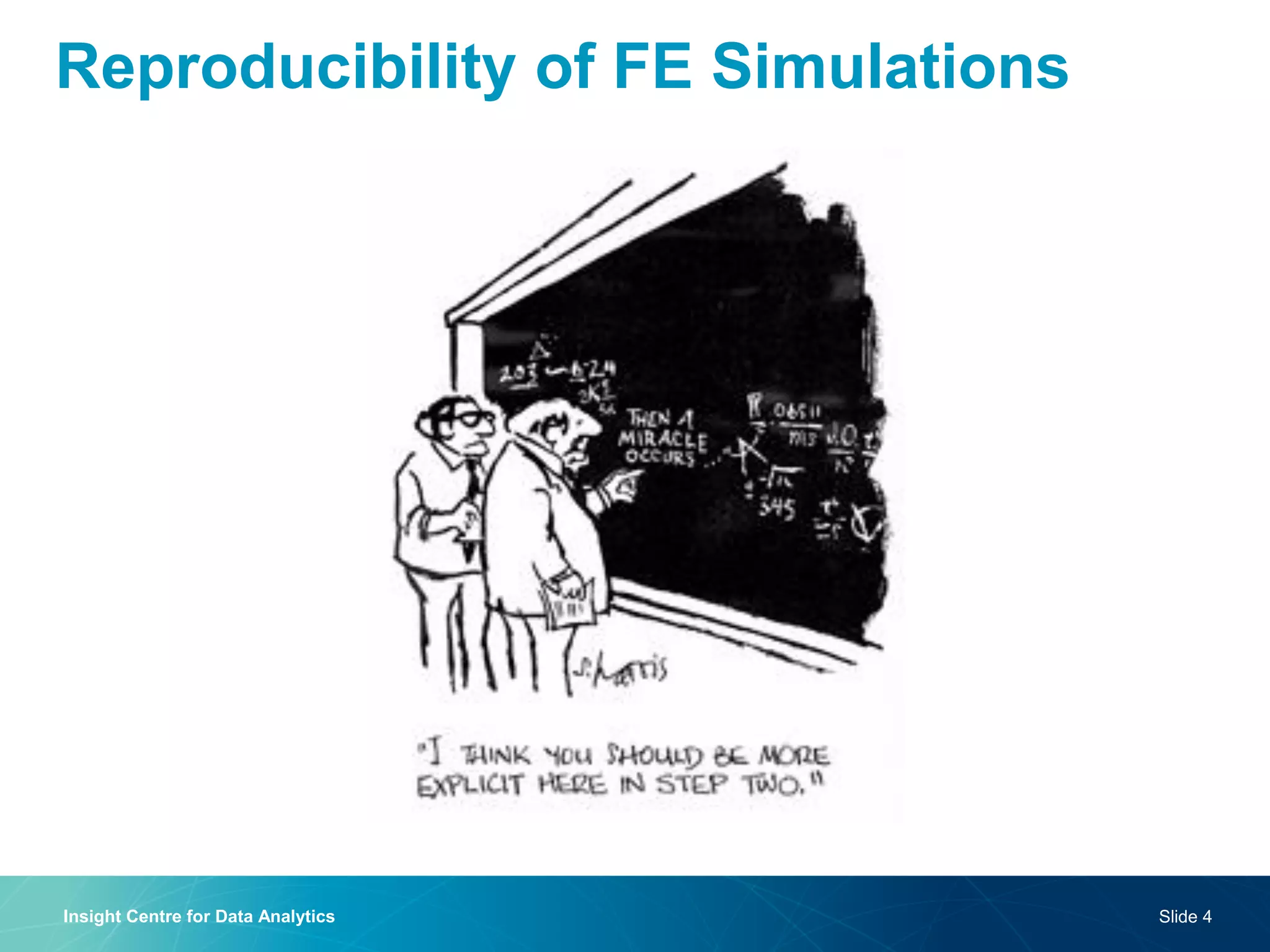
Reproducibility of FE Simulations 
Insight Centre for Data Analytics 
Slide 4
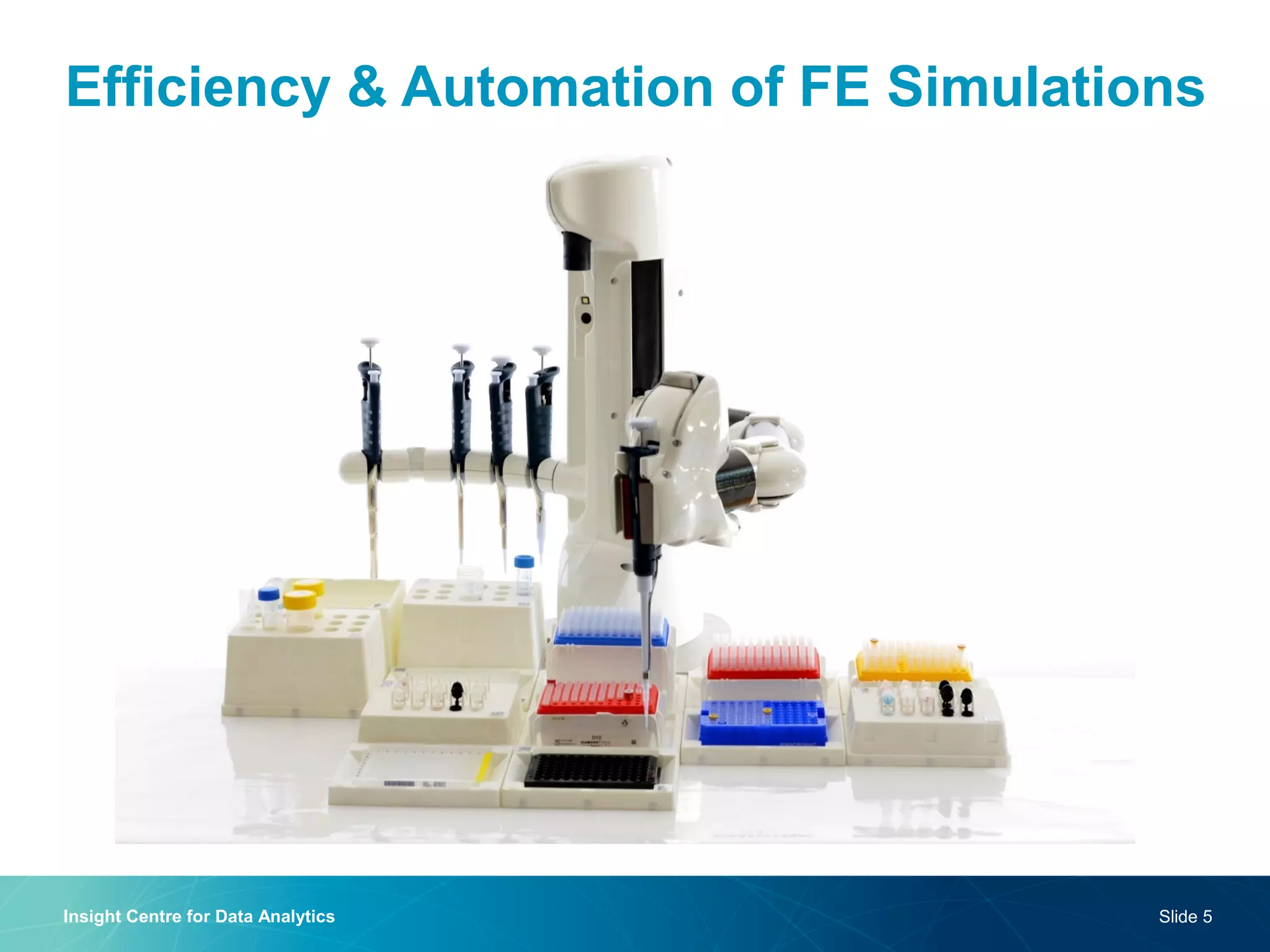
Efficiency & Automation of FE Simulations 
Insight Centre for Data Analytics 
Slide 5
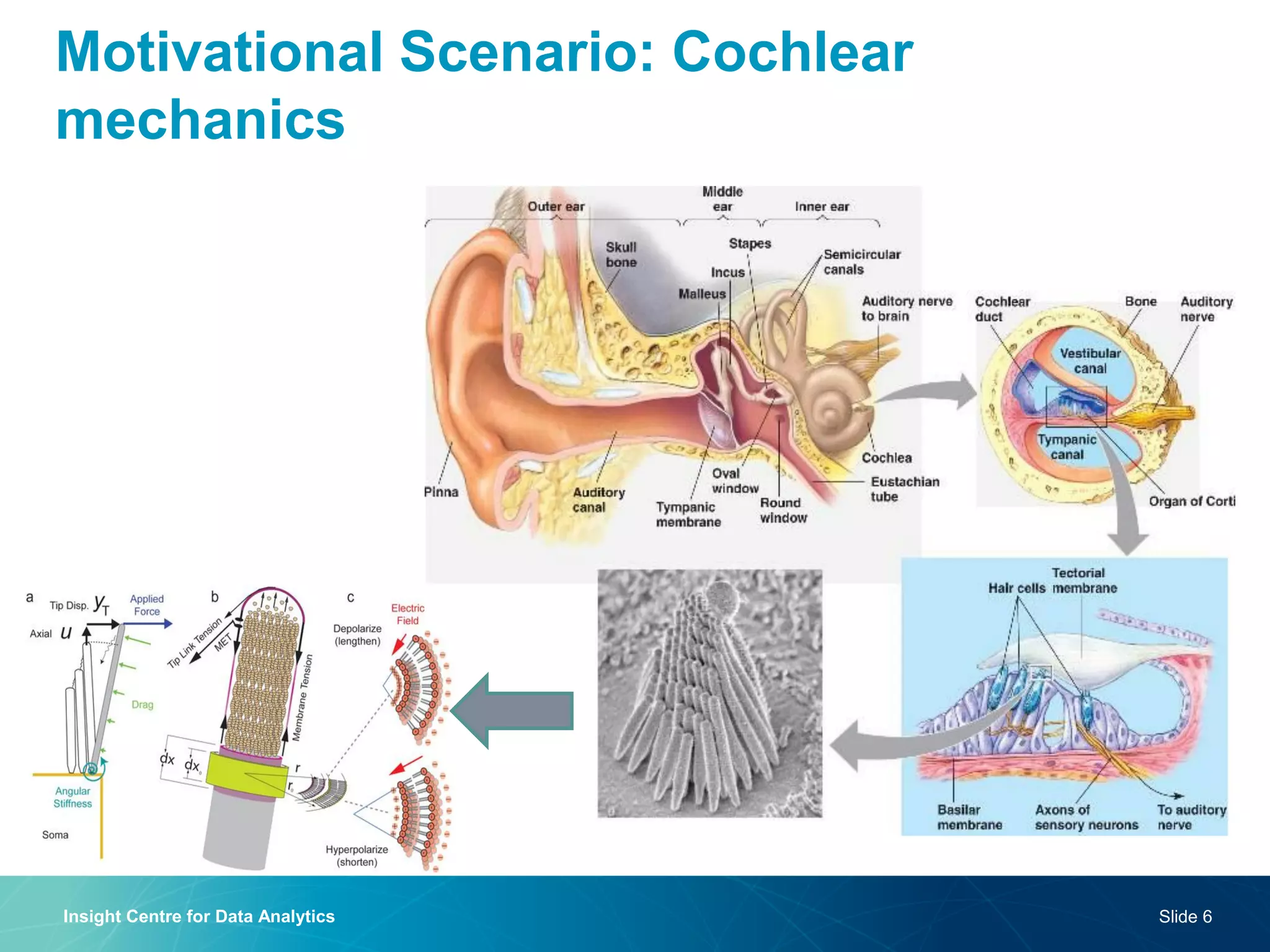
Motivational Scenario: Cochlear mechanics 
Insight Centre for Data Analytics 
Slide 6
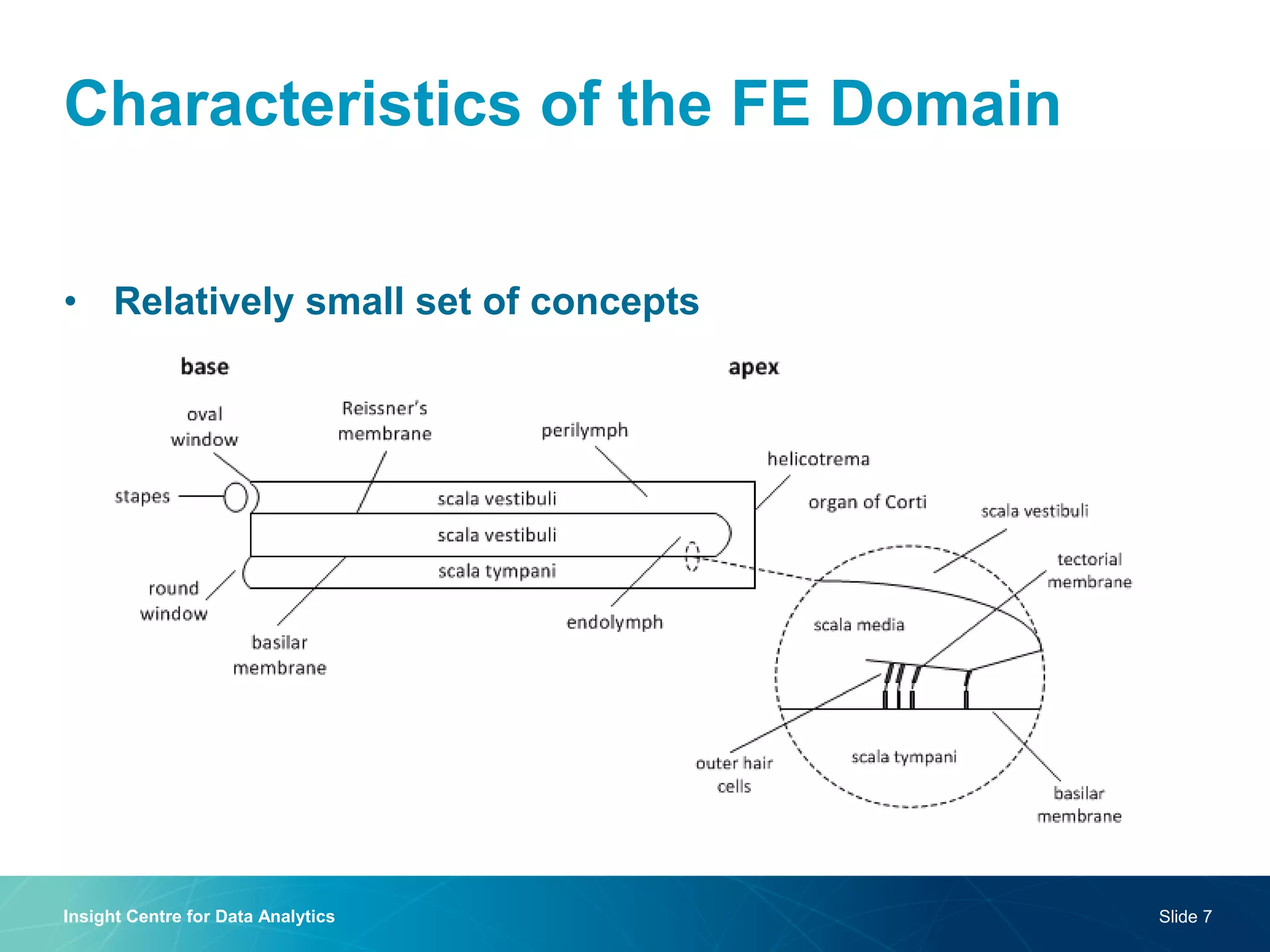
Characteristics of the FE Domain 
•Relatively small set of concepts 
Insight Centre for Data Analytics 
Slide 7
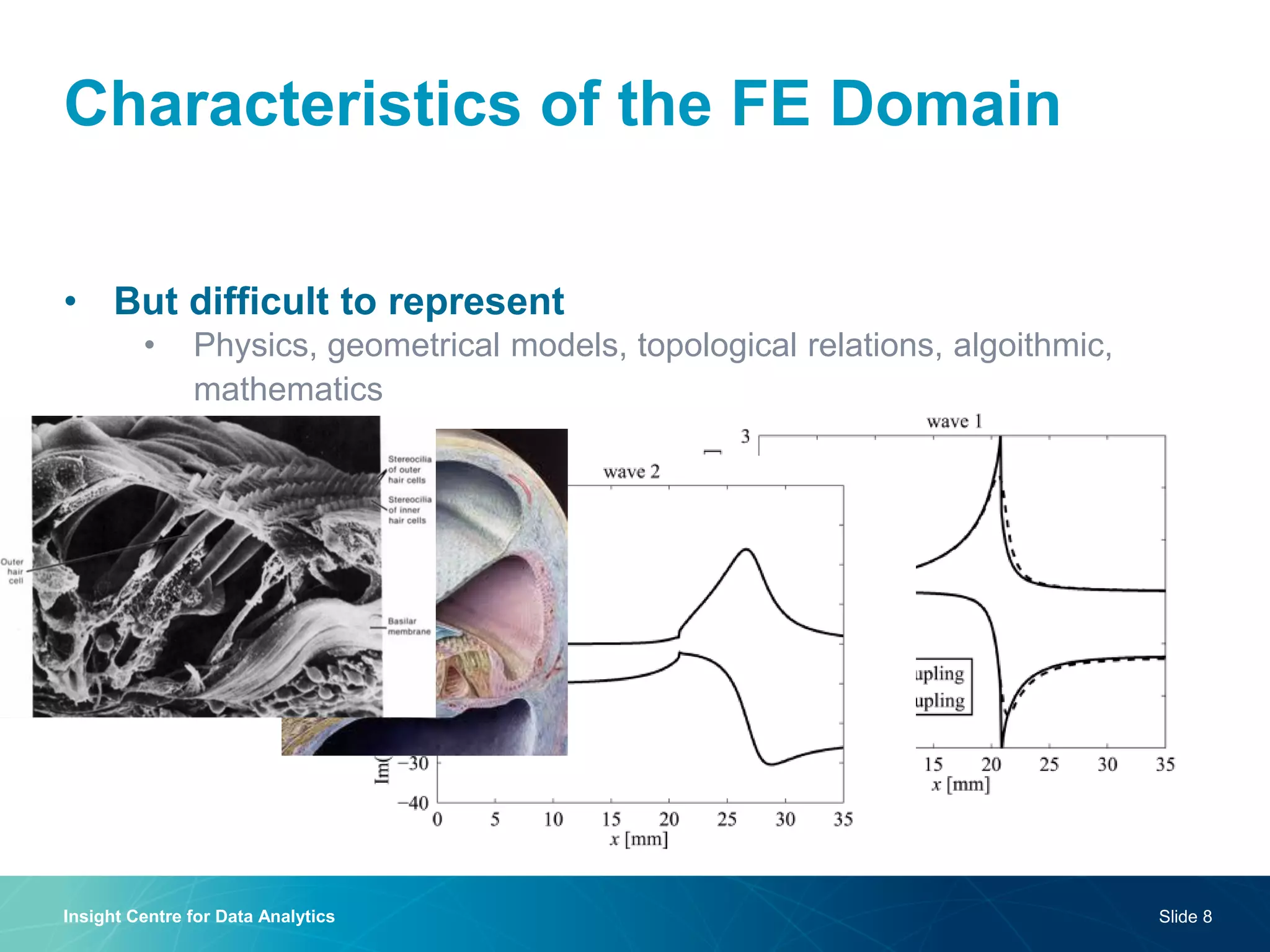
Characteristics of the FE Domain 
•But difficult to represent 
•Physics, geometrical models, topological relations, algoithmic, mathematics 
Insight Centre for Data Analytics 
Slide 8
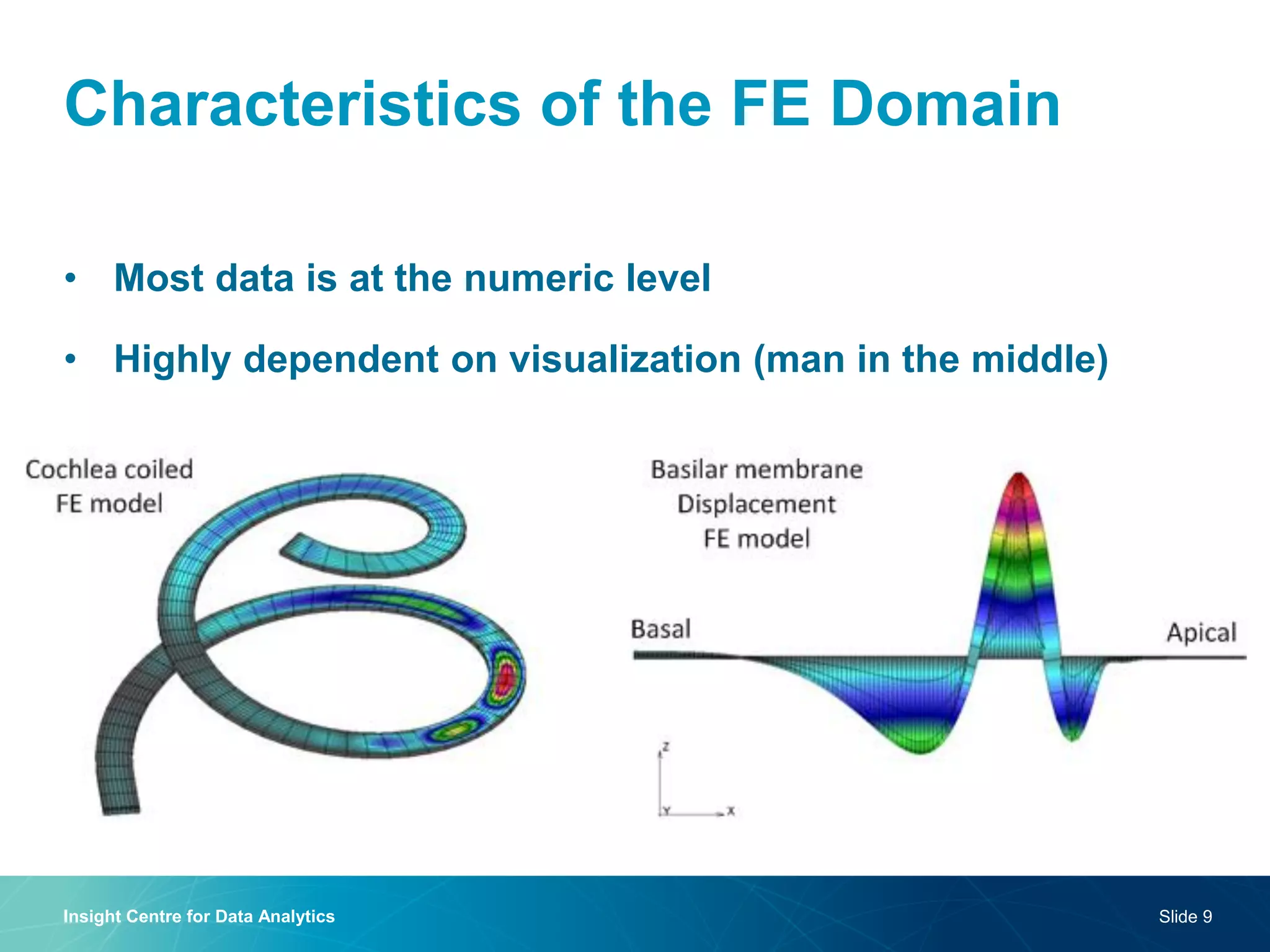
Characteristics of the FE Domain 
•Most data is at the numeric level 
•Highly dependent on visualization (man in the middle) 
Insight Centre for Data Analytics 
Slide 9
Dimensions of a FE Bio-simulation 
Insight Centre for Data Analytics 
Slide 10
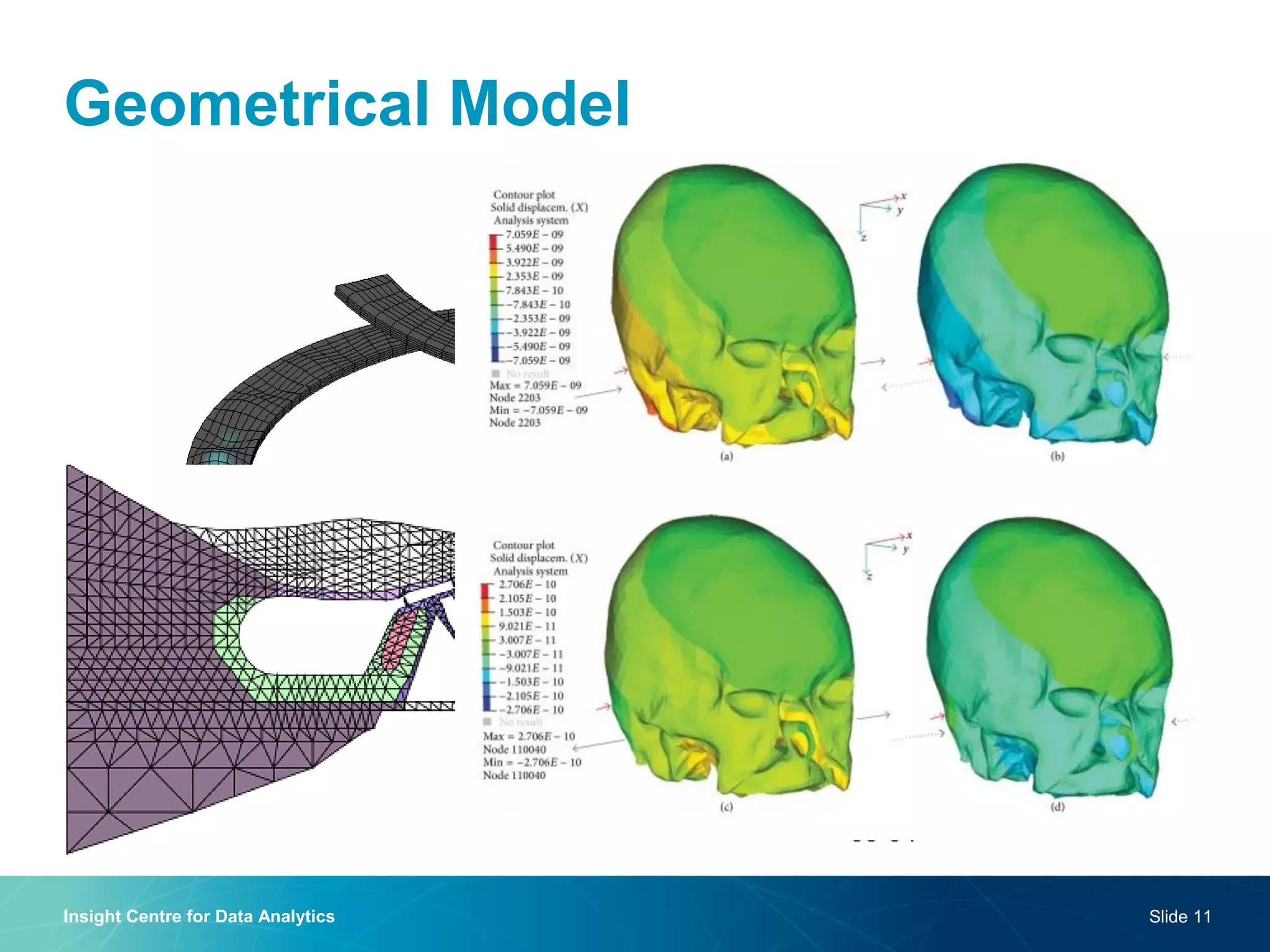
Geometrical Model 
Insight Centre for Data Analytics 
Slide 11
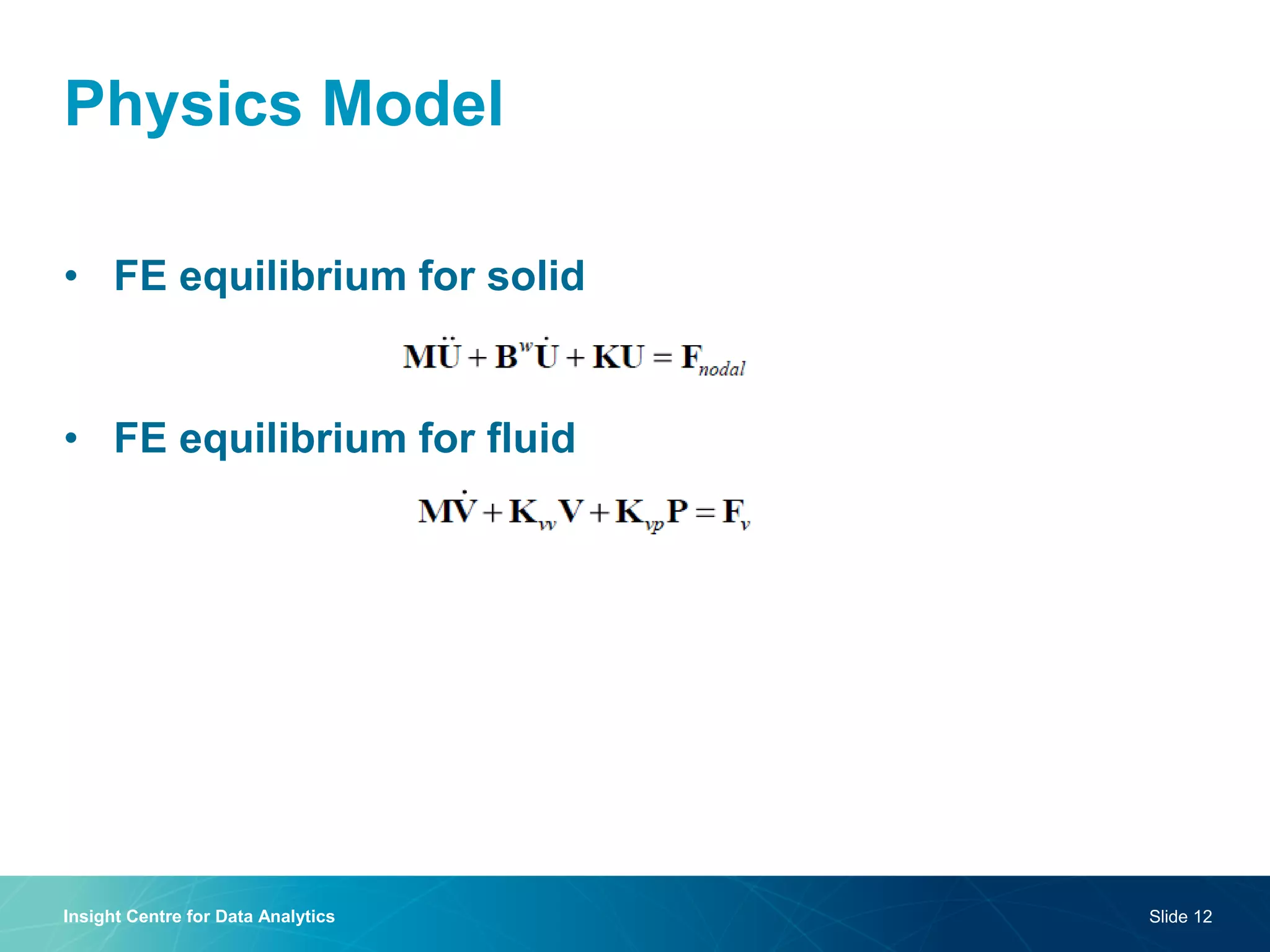
Physics Model 
•FE equilibrium for solid 
•FE equilibrium for fluid 
Insight Centre for Data Analytics 
Slide 12
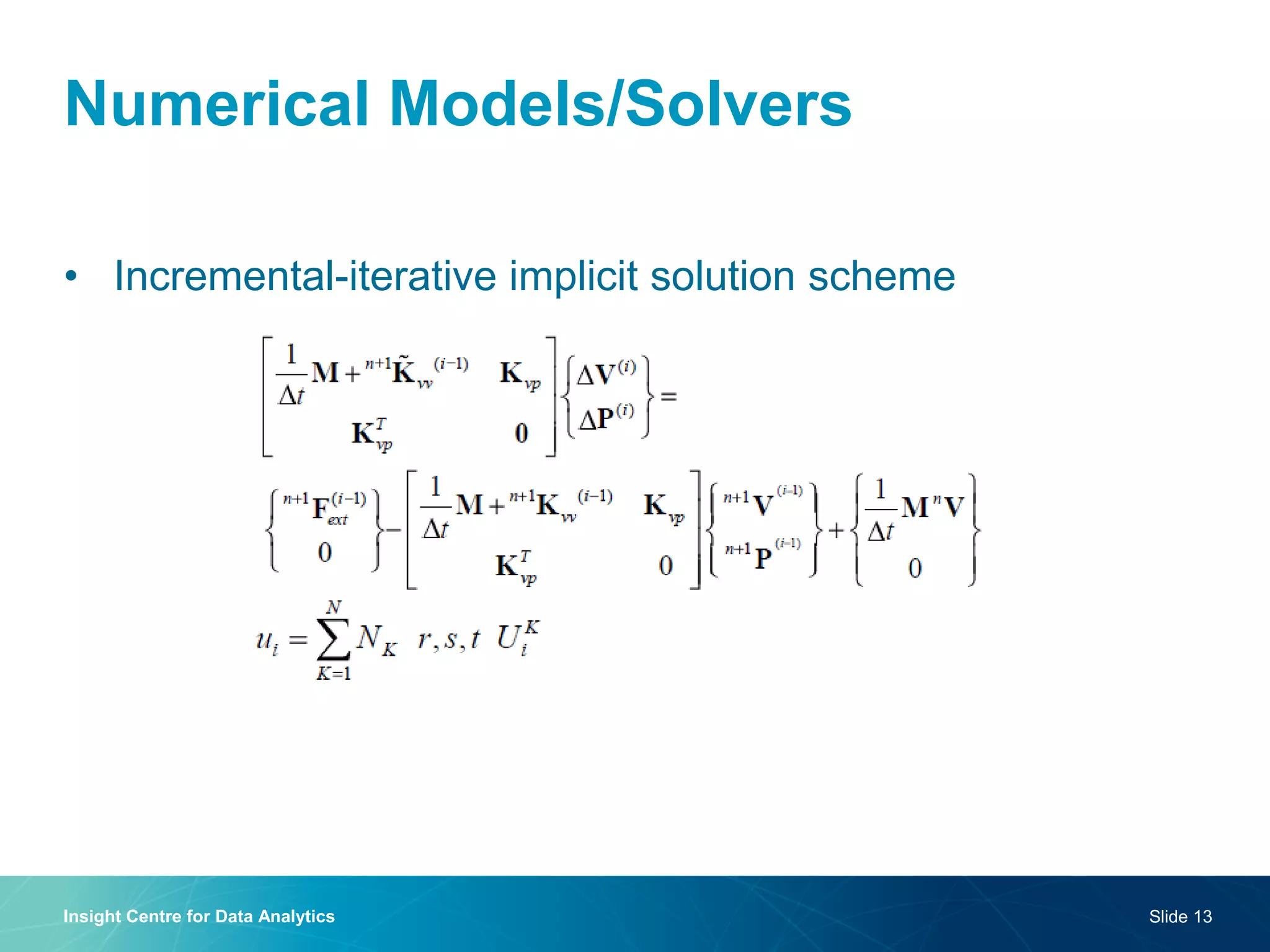
Numerical Models/Solvers 
•Incremental-iterative implicit solution scheme 
Insight Centre for Data Analytics 
Slide 13
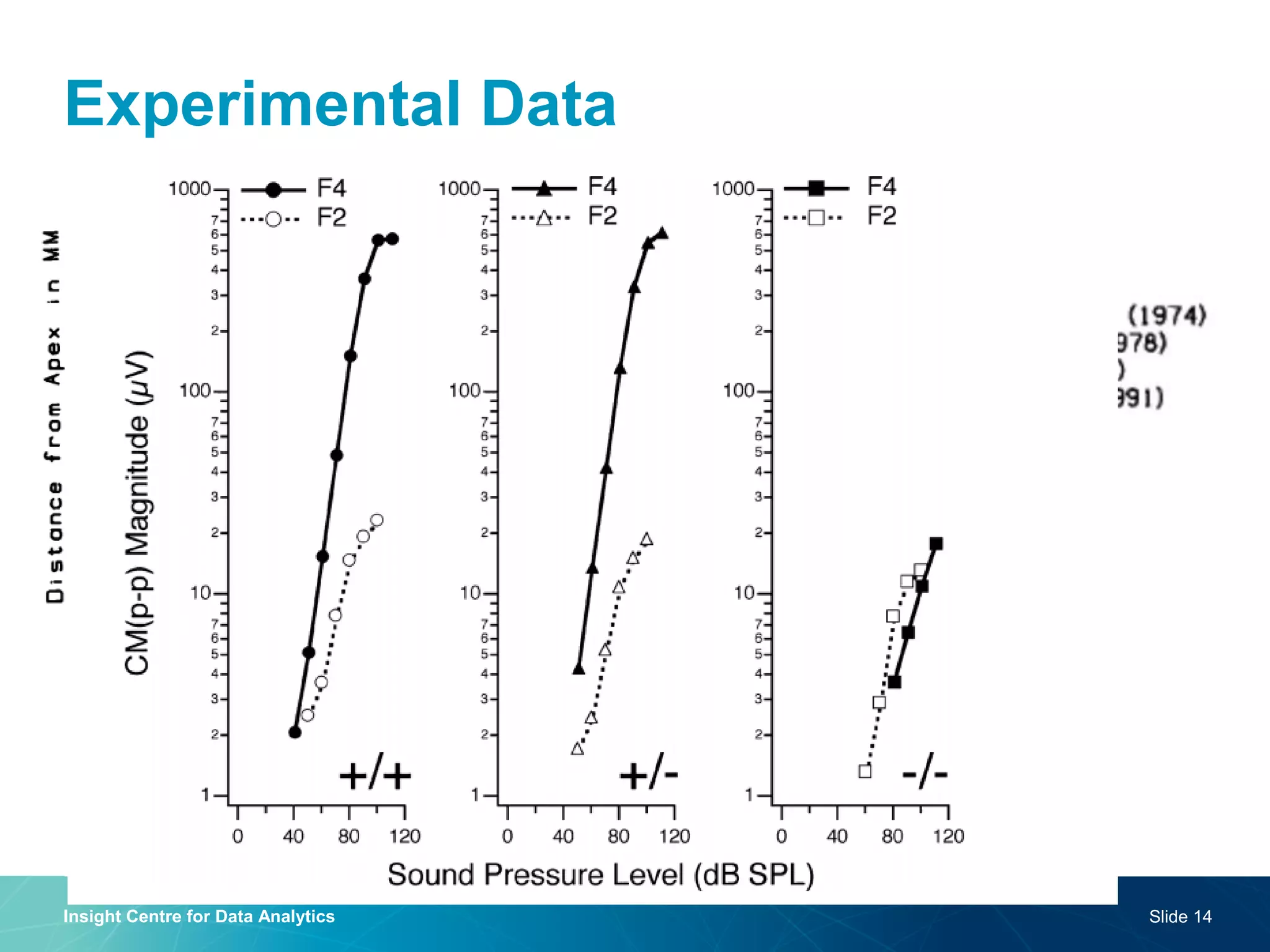
Experimental Data 
•A 
Insight Centre for Data Analytics 
Slide 14
And others ... (which are not covered here) 
•Anatomical 
•Physiological 
•Histological 
•... 
02 May 2014 
Insight Centre for Data Analytics 
Slide 15
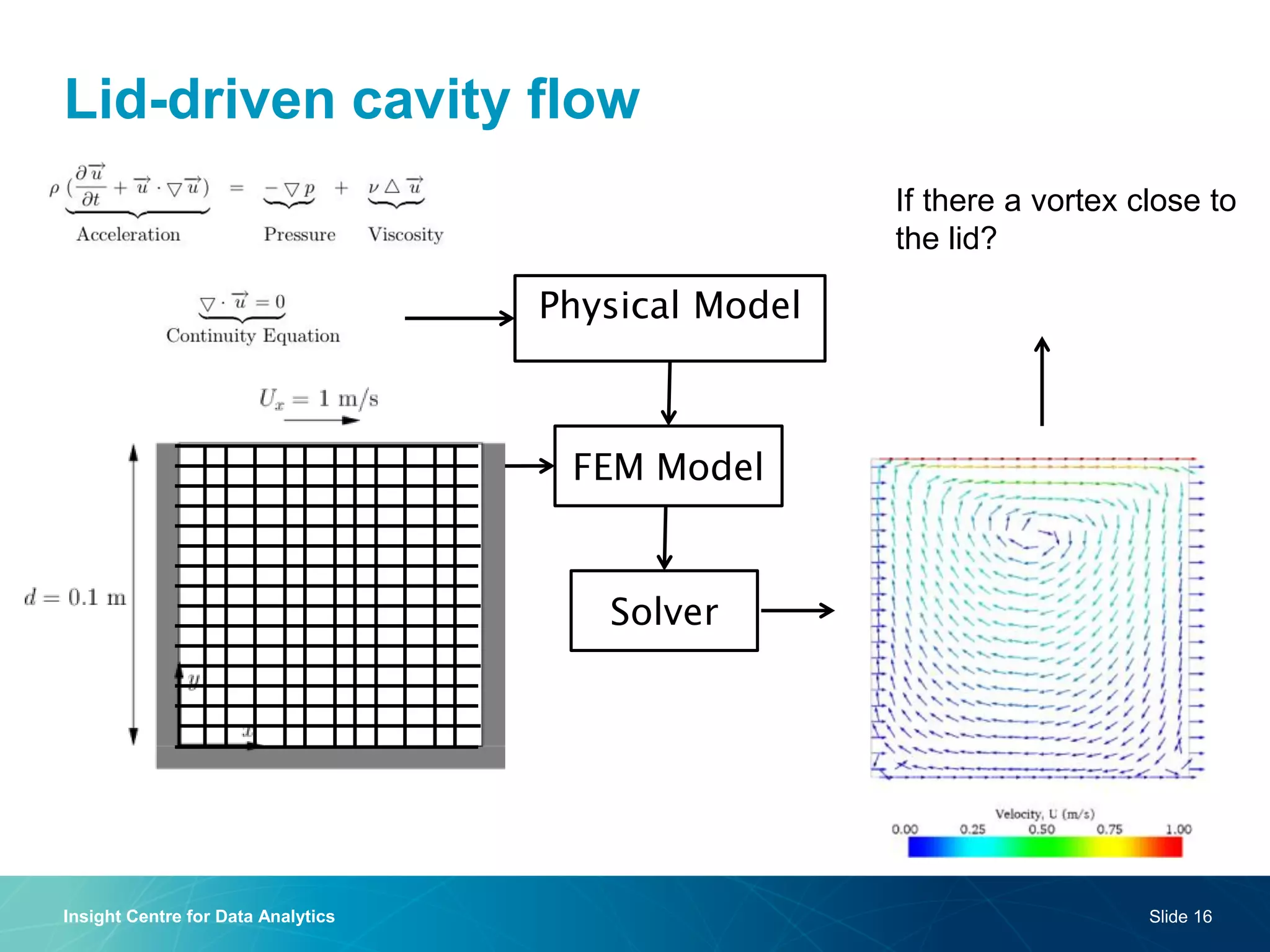
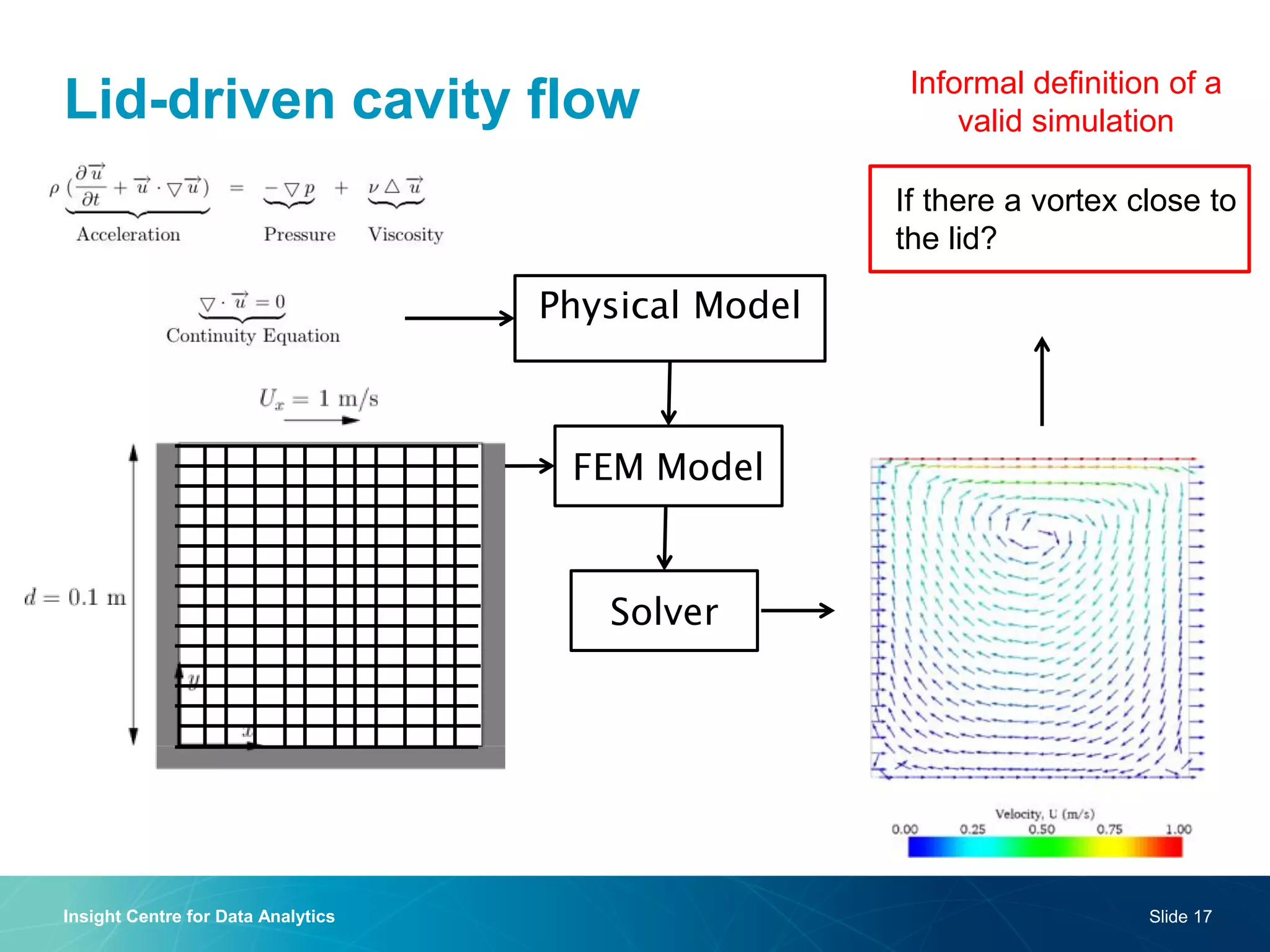
Lid-driven cavity flow 
Insight Centre for Data Analytics 
Slide 16 
Physical Model 
Solver 
FEM Model 
If there a vortex close to the lid?
Lid-driven cavity flow 
Insight Centre for Data Analytics 
Slide 17 
Physical Model 
Solver 
FEM Model 
If there a vortex close to the lid? 
Informal definition of a valid simulation
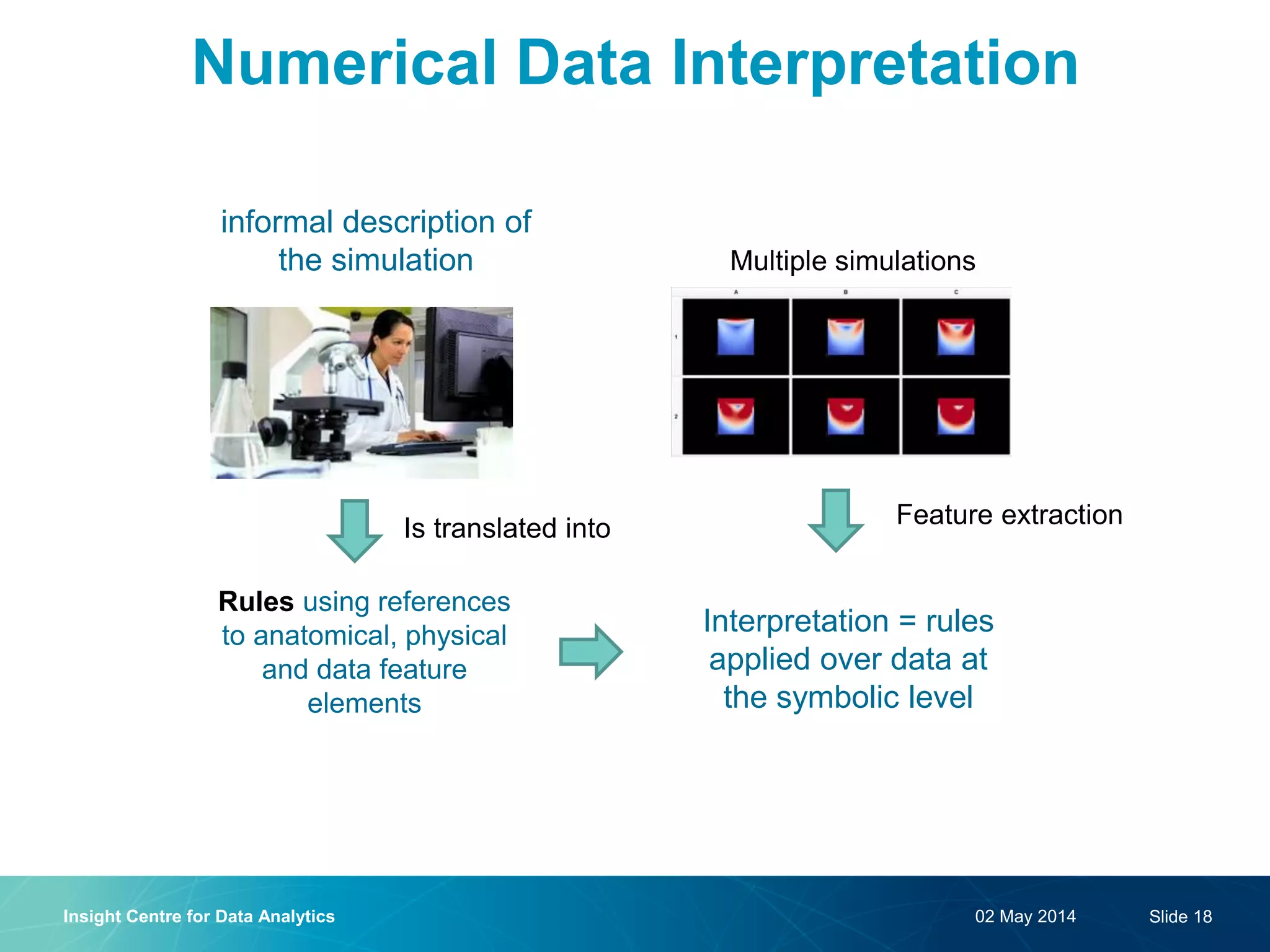
Numerical Data Interpretation 
02 May 2014 
Insight Centre for Data Analytics 
Slide 18 
informal description of the simulation 
Rules using references to anatomical, physical and data feature elements 
Is translated into 
Multiple simulations 
Feature extraction 
Interpretation = rules applied over data at the symbolic level
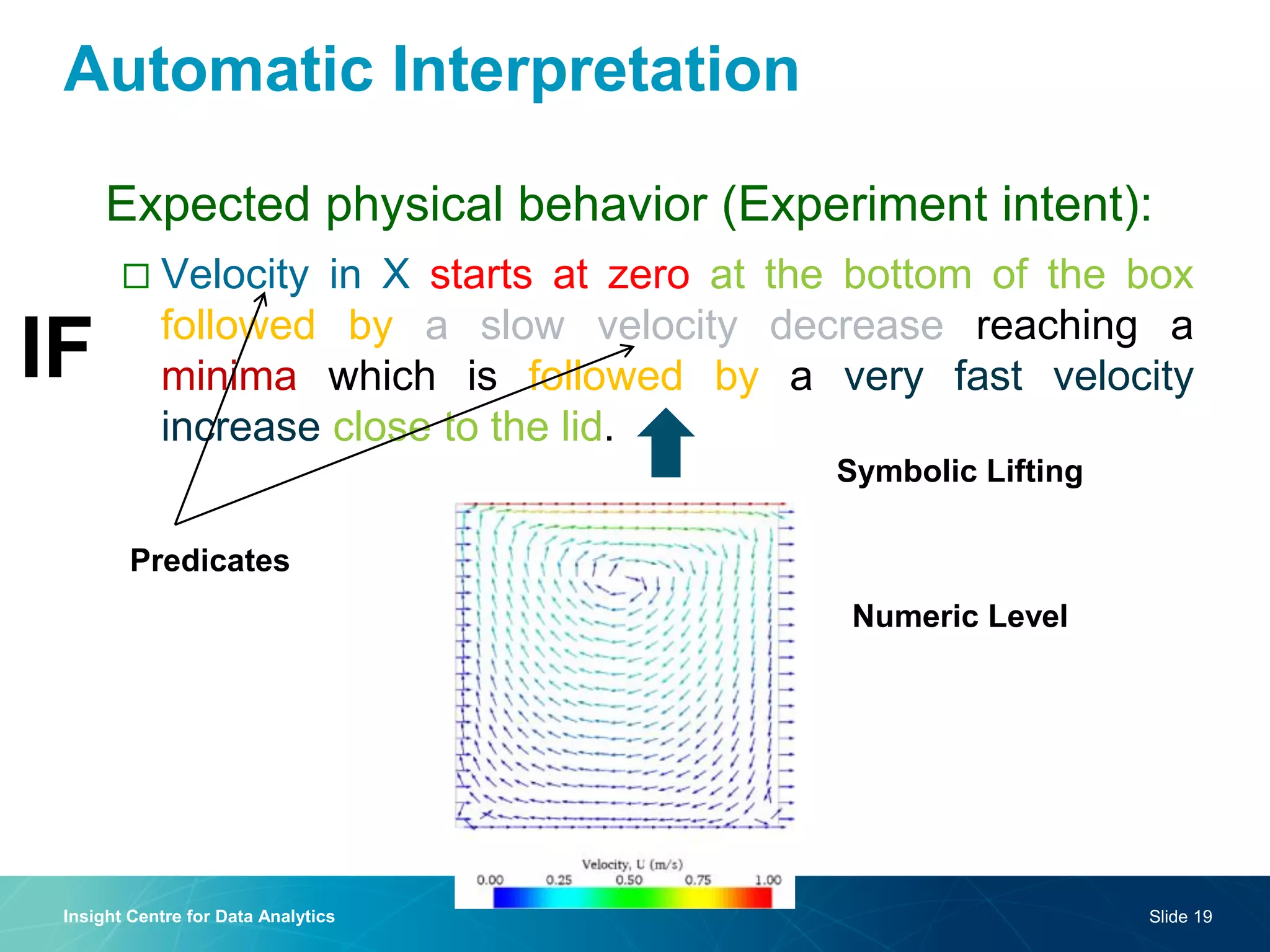
Automatic Interpretation 
Insight Centre for Data Analytics 
Slide 19 
Expected physical behavior (Experiment intent): 
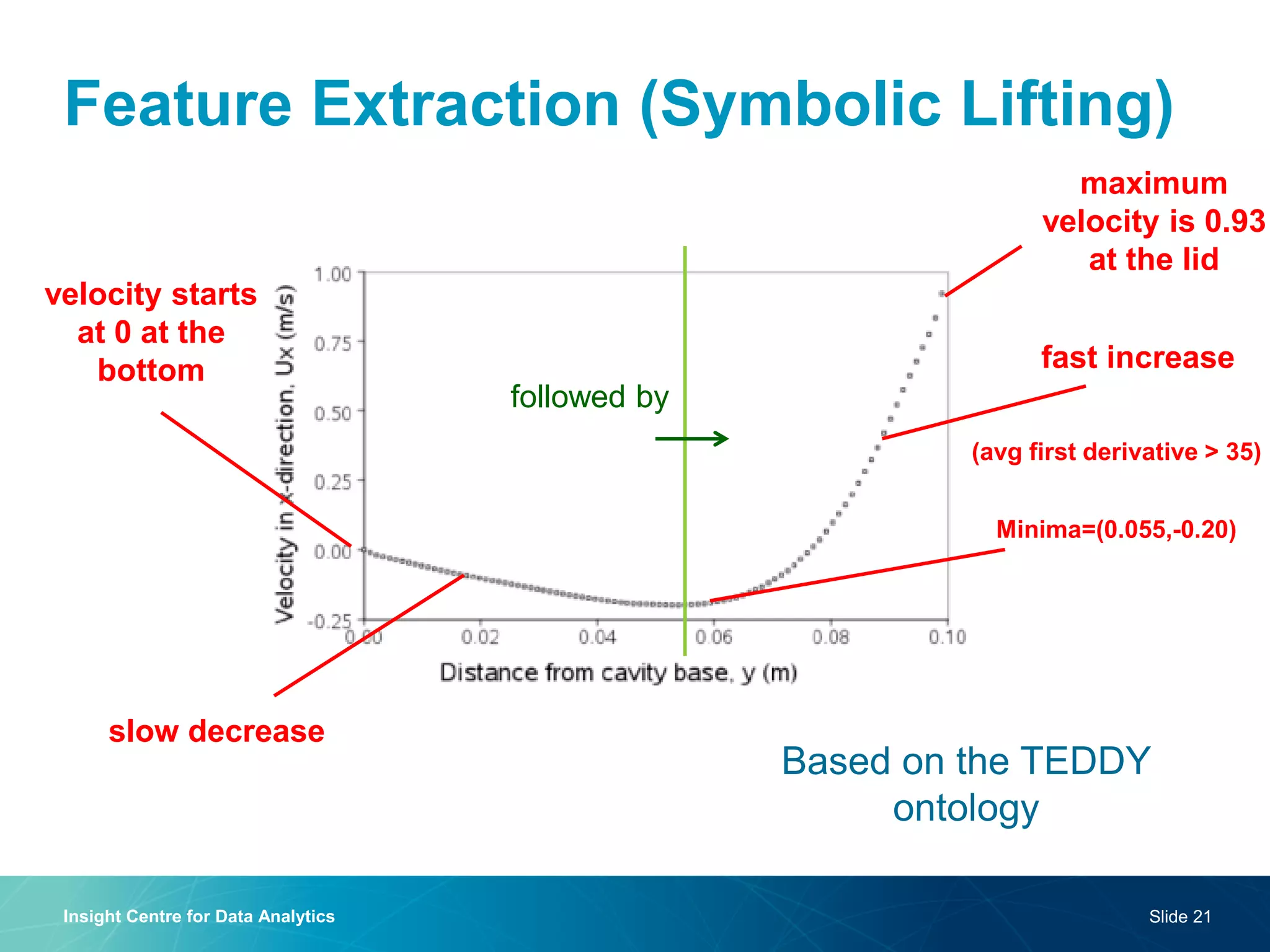
Velocity in X starts at zero at the bottom of the box followed by a slow velocity decrease reaching a minima which is followed by a very fast velocity increase close to the lid. 
Numeric Level 
Symbolic Lifting 
IF 
Predicates
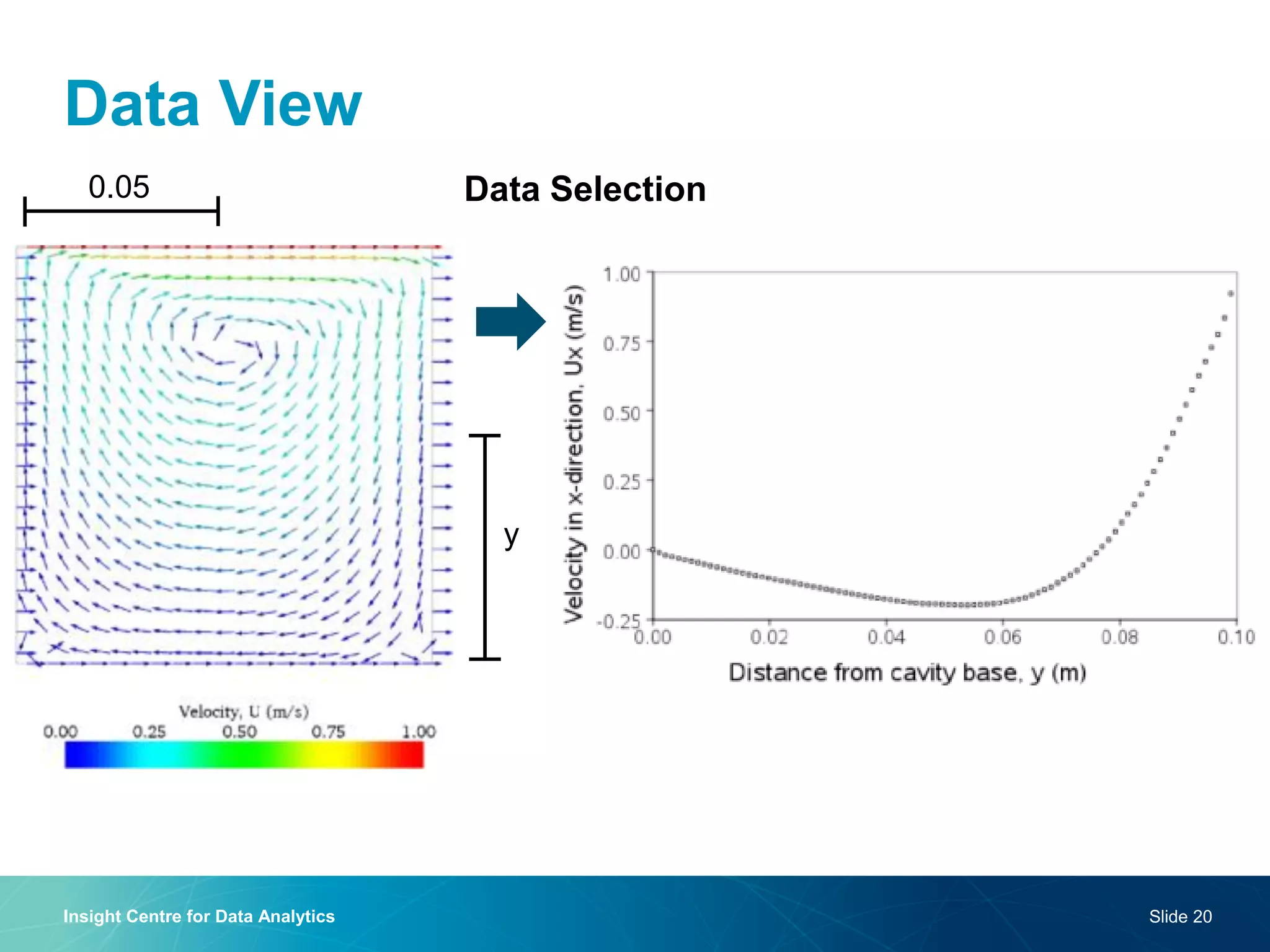
Data View 
Insight Centre for Data Analytics 
Slide 20 
Data Selection 
y 
0.05
Feature Extraction (Symbolic Lifting) 
Insight Centre for Data Analytics 
Slide 21 
Minima=(0.055,-0.20) 
fast increase 
slow decrease 
followed by 
(avg first derivative > 35) 
velocity starts at 0 at the bottom 
maximum velocity is 0.93 
at the lid 
Based on the TEDDY ontology
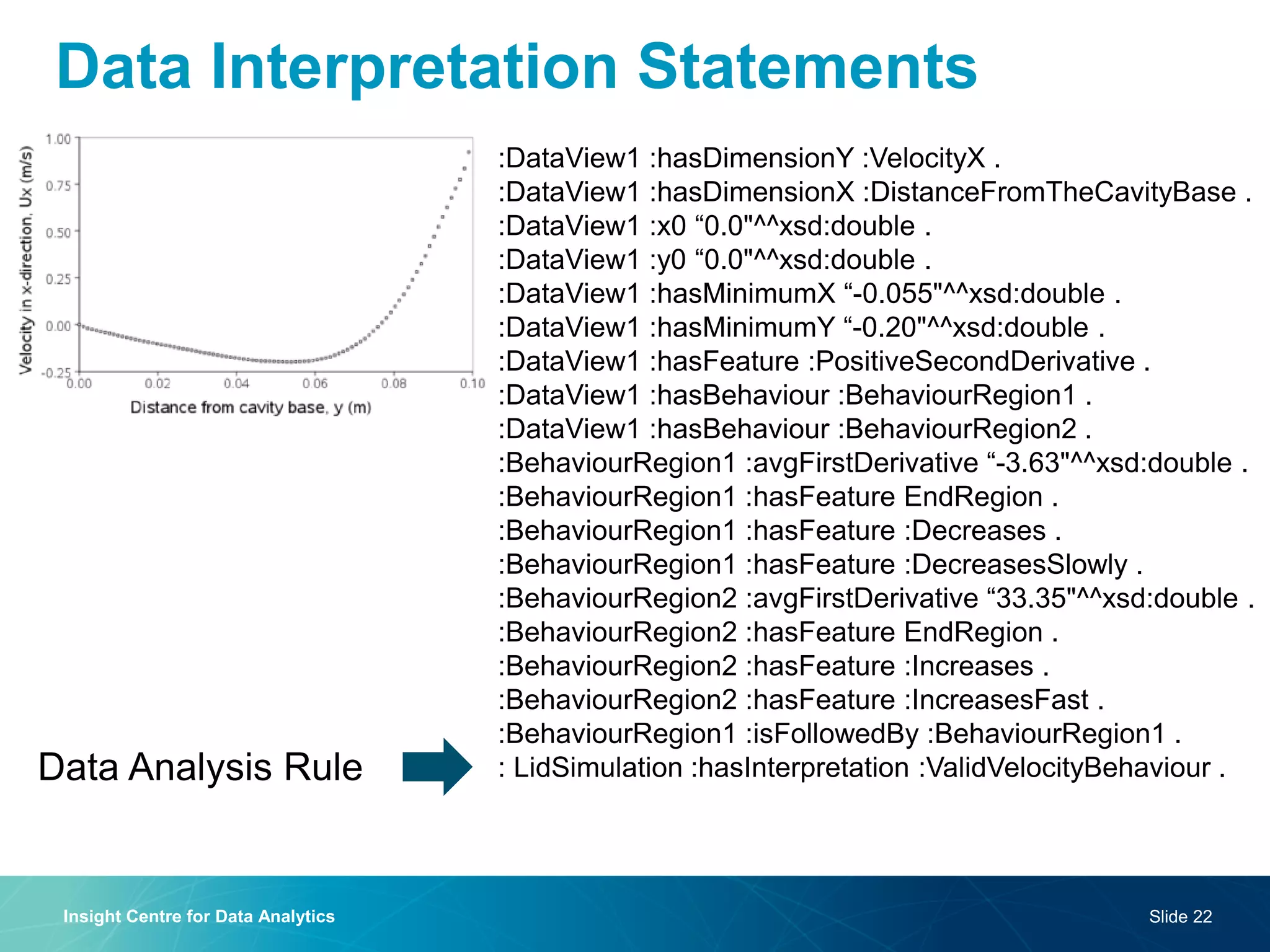
Data Interpretation Statements 
Insight Centre for Data Analytics 
Slide 22 
:DataView1 :hasDimensionY :VelocityX . 
:DataView1 :hasDimensionX :DistanceFromTheCavityBase . 
:DataView1 :x0 “0.0"^^xsd:double . 
:DataView1 :y0 “0.0"^^xsd:double . 
:DataView1 :hasMinimumX “-0.055"^^xsd:double . 
:DataView1 :hasMinimumY “-0.20"^^xsd:double . 
:DataView1 :hasFeature :PositiveSecondDerivative . 
:DataView1 :hasBehaviour :BehaviourRegion1 . 
:DataView1 :hasBehaviour :BehaviourRegion2 . 
:BehaviourRegion1 :avgFirstDerivative “-3.63"^^xsd:double . 
:BehaviourRegion1 :hasFeature EndRegion . 
:BehaviourRegion1 :hasFeature :Decreases . 
:BehaviourRegion1 :hasFeature :DecreasesSlowly . 
:BehaviourRegion2 :avgFirstDerivative “33.35"^^xsd:double . 
:BehaviourRegion2 :hasFeature EndRegion . 
:BehaviourRegion2 :hasFeature :Increases . 
:BehaviourRegion2 :hasFeature :IncreasesFast . 
:BehaviourRegion1 :isFollowedBy :BehaviourRegion1 . 
: LidSimulation :hasInterpretation :ValidVelocityBehaviour . 
Data Analysis Rule
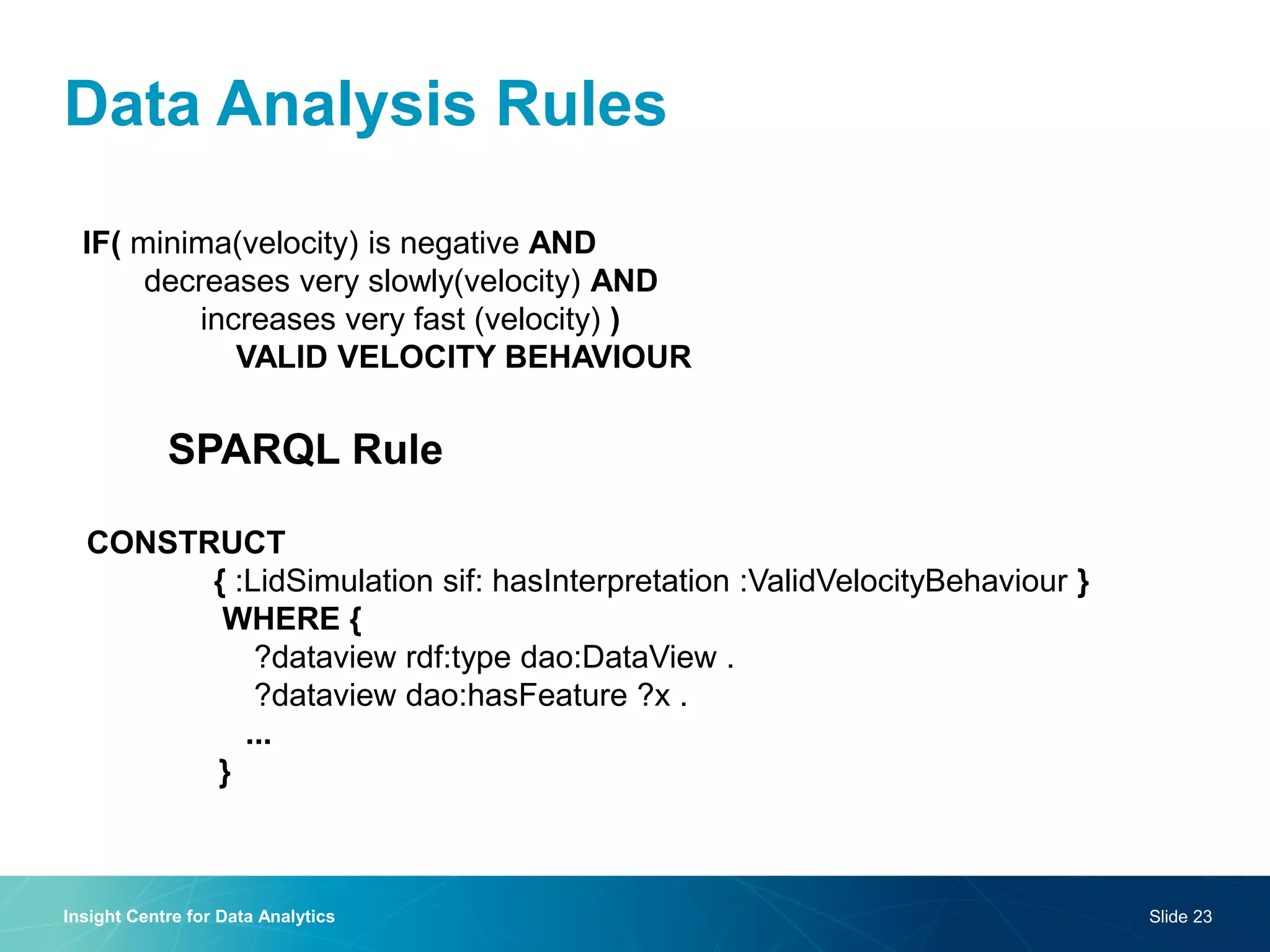
Data Analysis Rules 
Insight Centre for Data Analytics 
Slide 23 
CONSTRUCT 
{ :LidSimulation sif: hasInterpretation :ValidVelocityBehaviour } 
WHERE { 
?dataview rdf:type dao:DataView . 
?dataview dao:hasFeature ?x . 
... 
} 
IF( minima(velocity) is negative AND 
decreases very slowly(velocity) AND 
increases very fast (velocity) ) 
VALID VELOCITY BEHAVIOUR 
SPARQL Rule
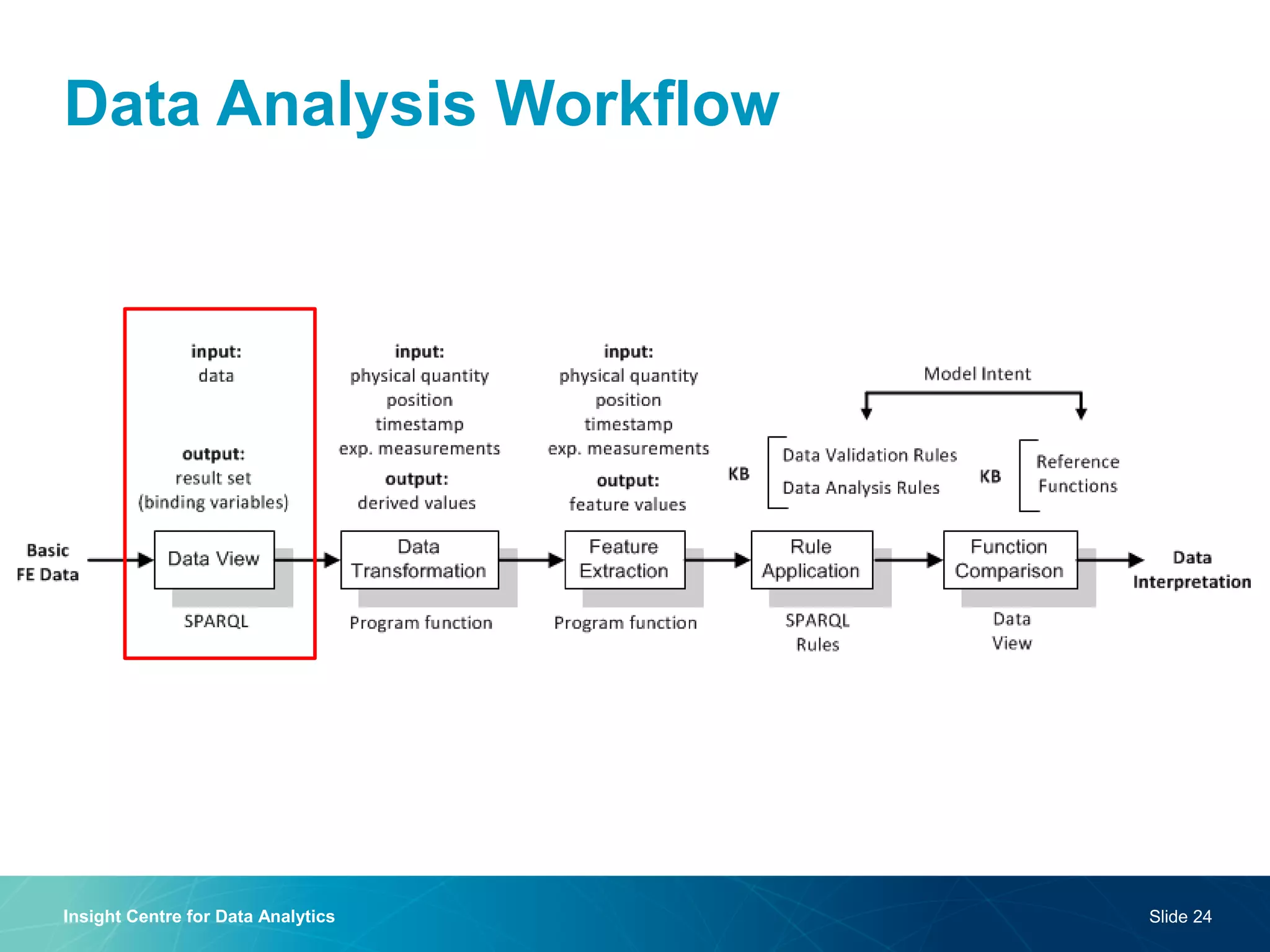
Data Analysis Workflow 
Insight Centre for Data Analytics 
Slide 24
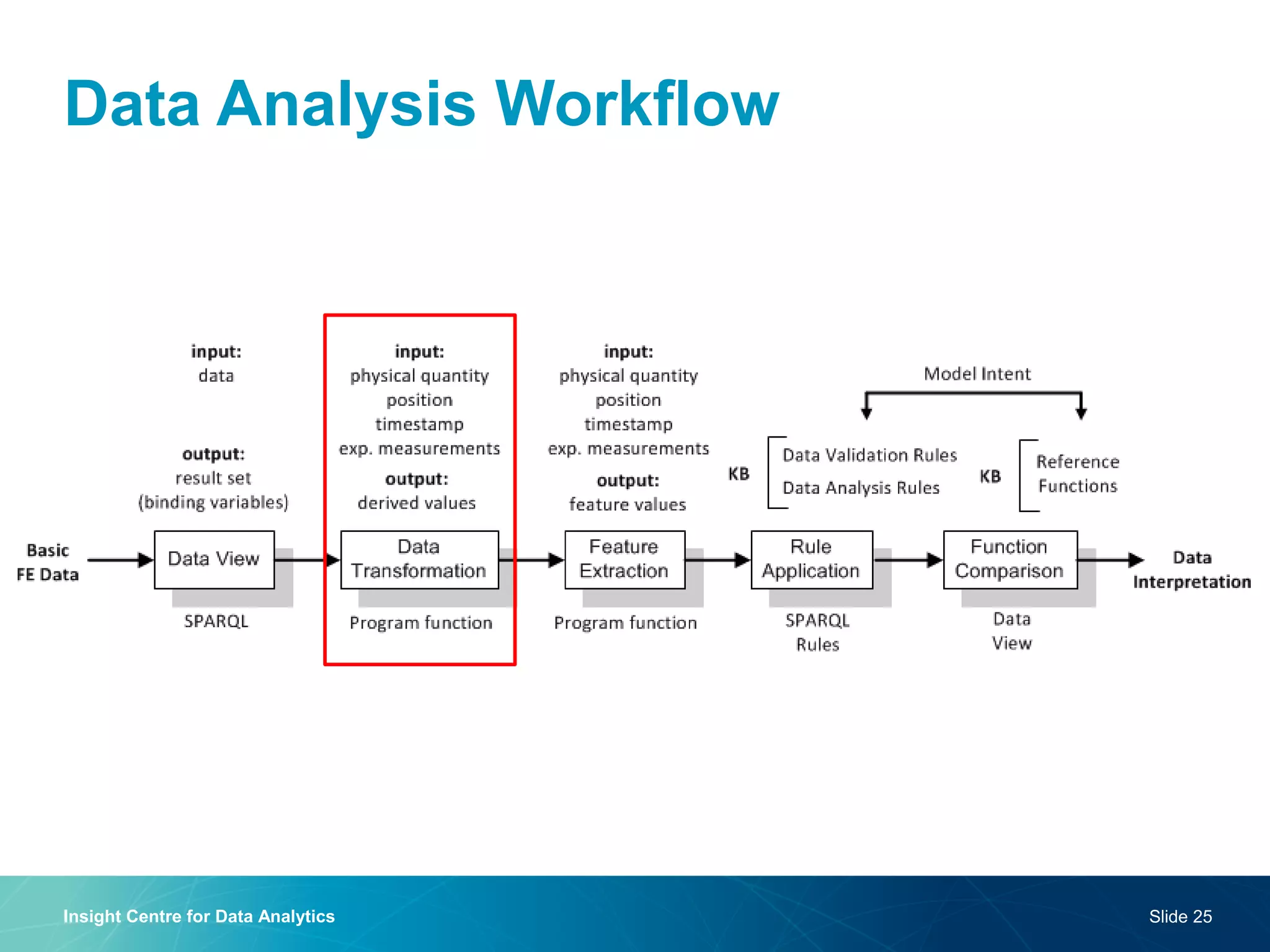
Data Analysis Workflow 
Insight Centre for Data Analytics 
Slide 25
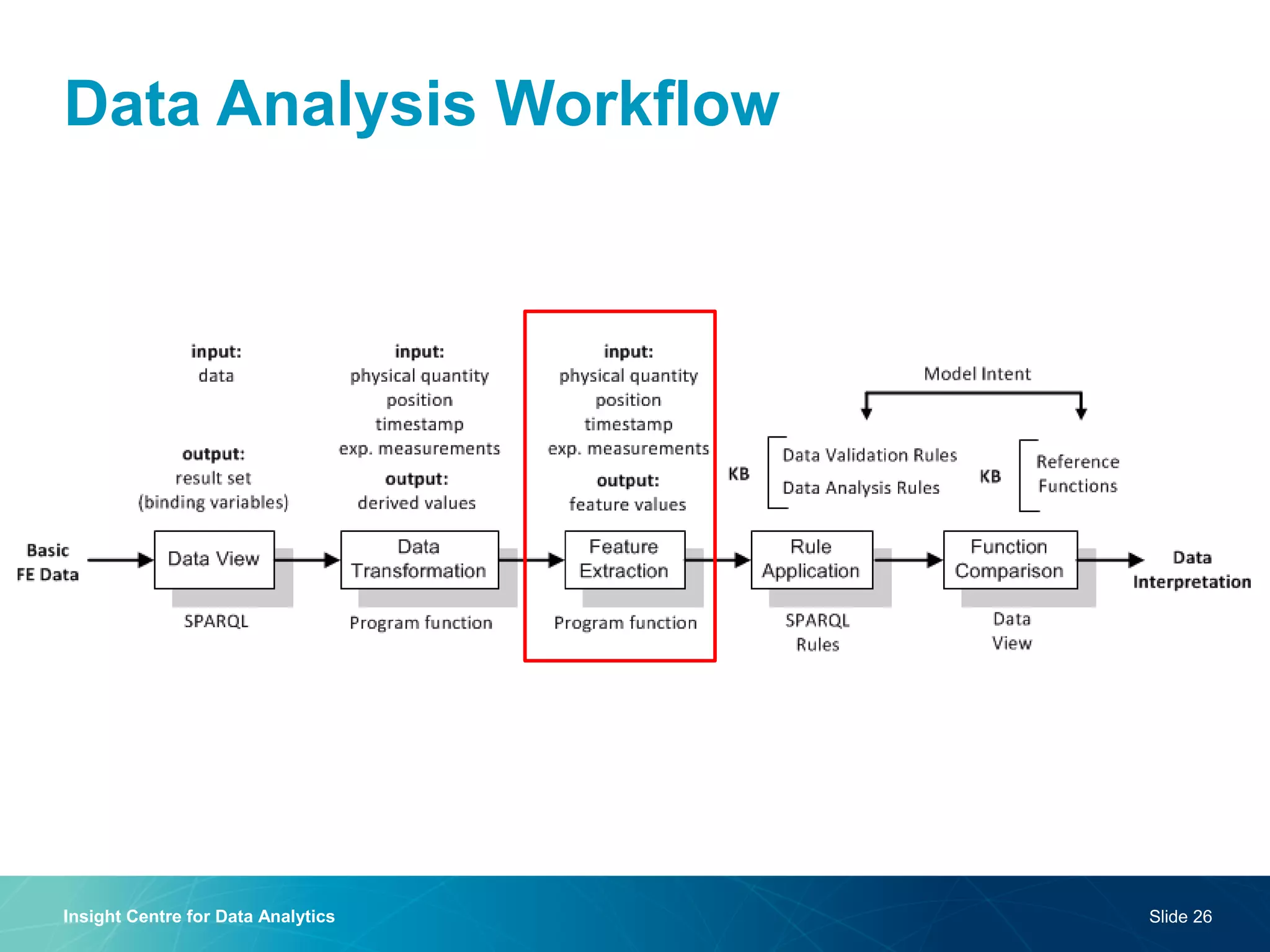
Data Analysis Workflow 
Insight Centre for Data Analytics 
Slide 26
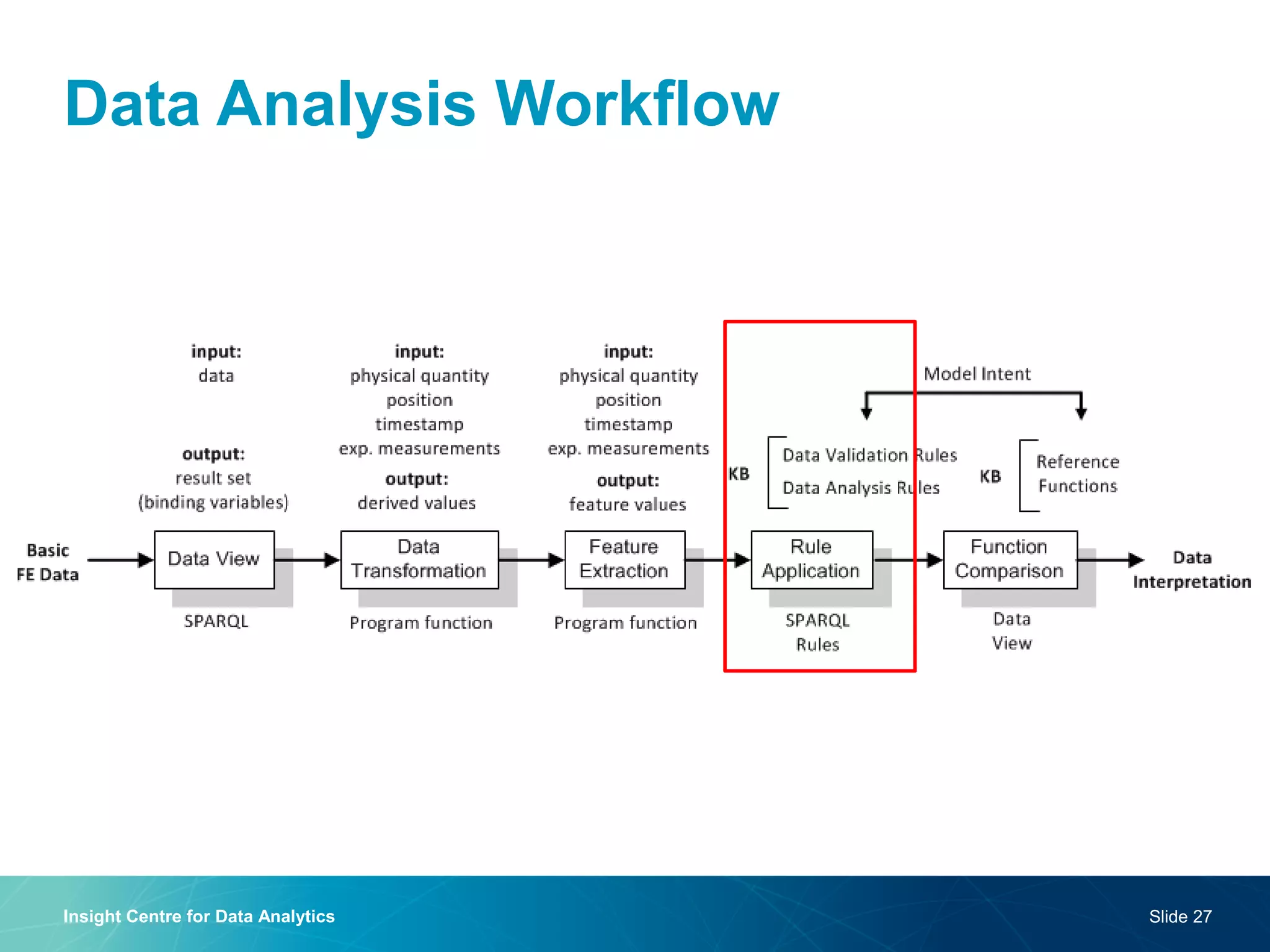
Data Analysis Workflow 
Insight Centre for Data Analytics 
Slide 27
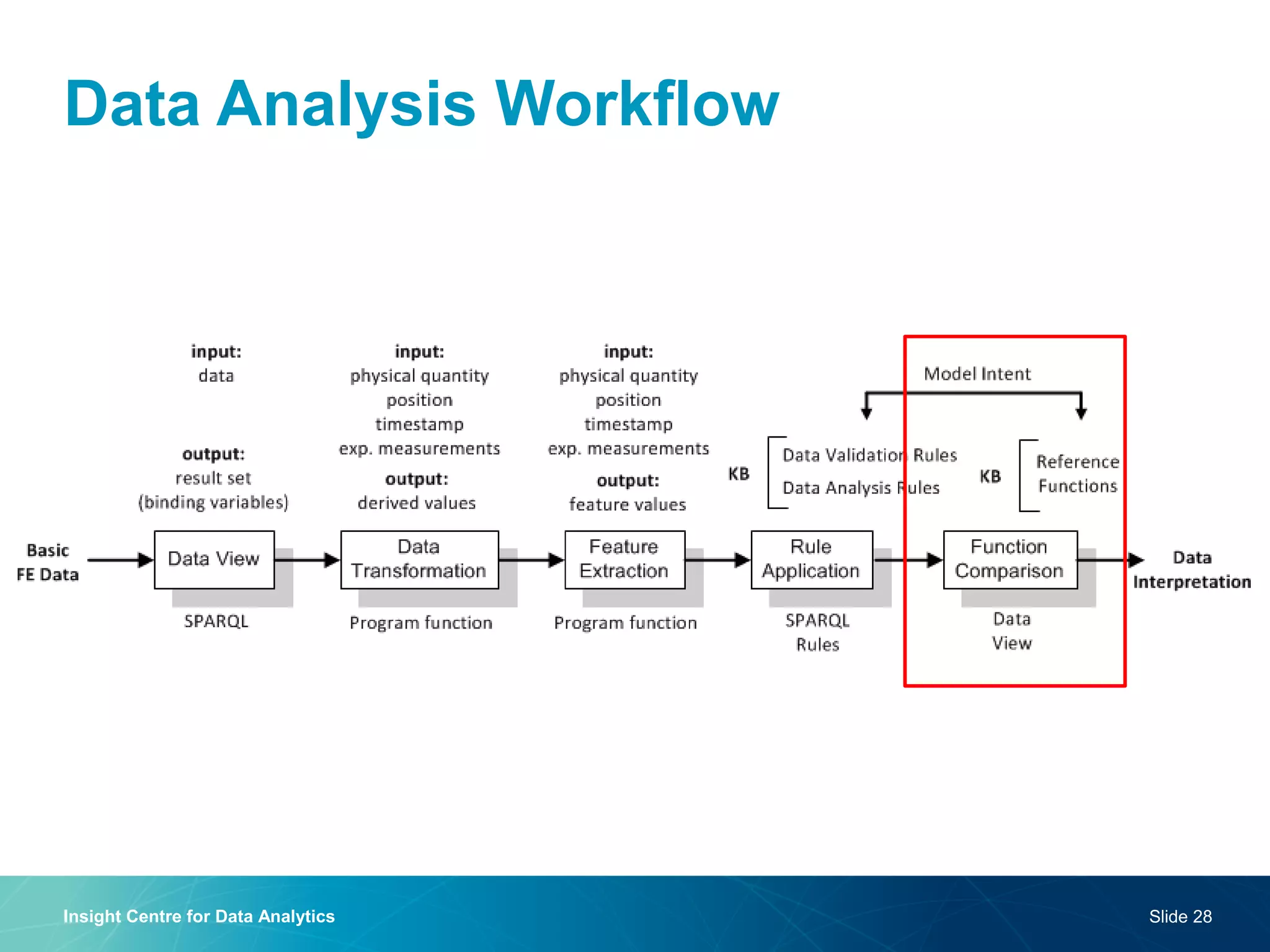
Data Analysis Workflow 
Insight Centre for Data Analytics 
Slide 28
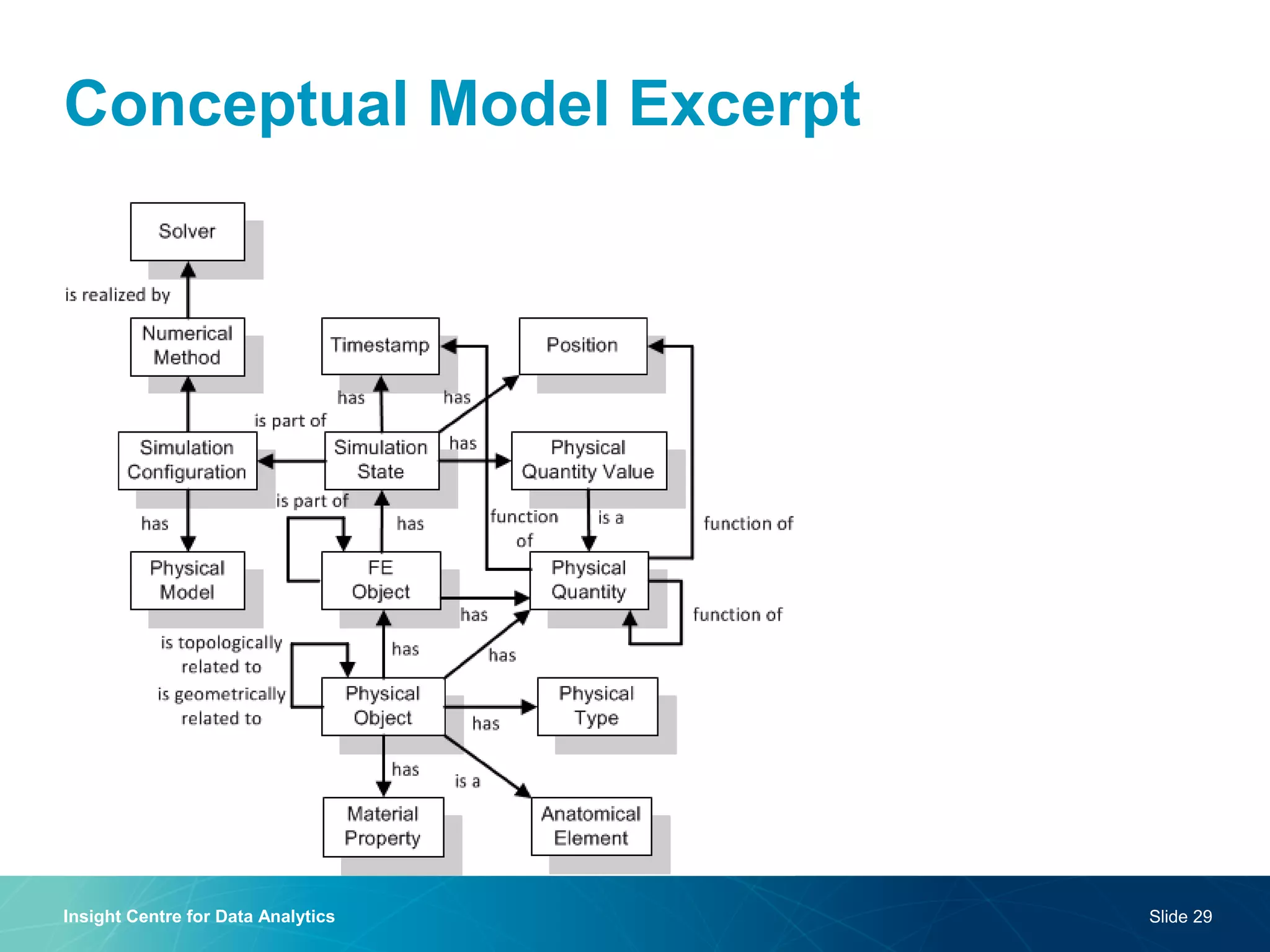
Conceptual Model Excerpt 
Insight Centre for Data Analytics 
Slide 29
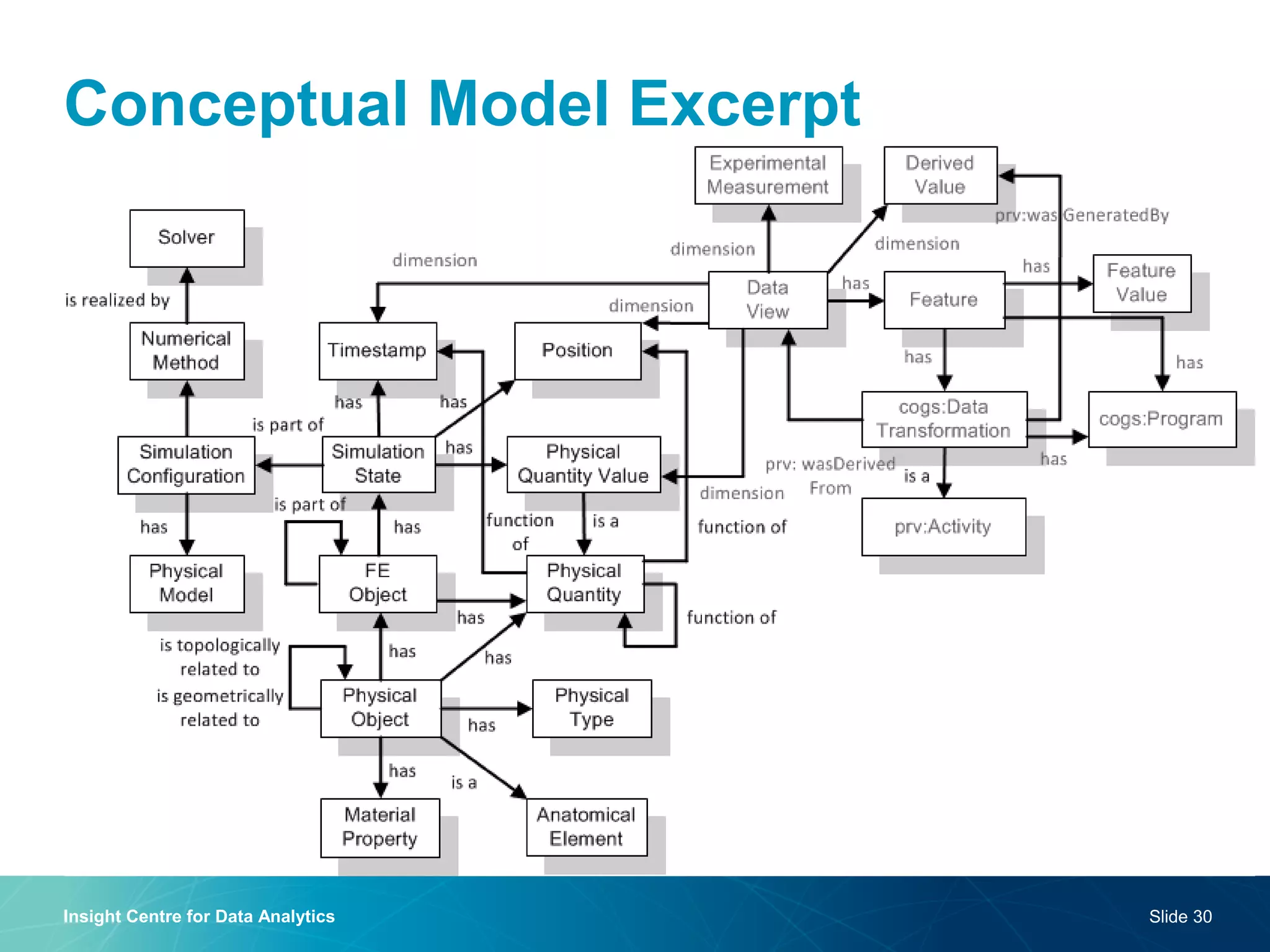
Conceptual Model Excerpt 
Insight Centre for Data Analytics 
Slide 30
Going back to the Cochlea simulation scenario 
02 May 2014 
Insight Centre for Data Analytics 
Slide 31
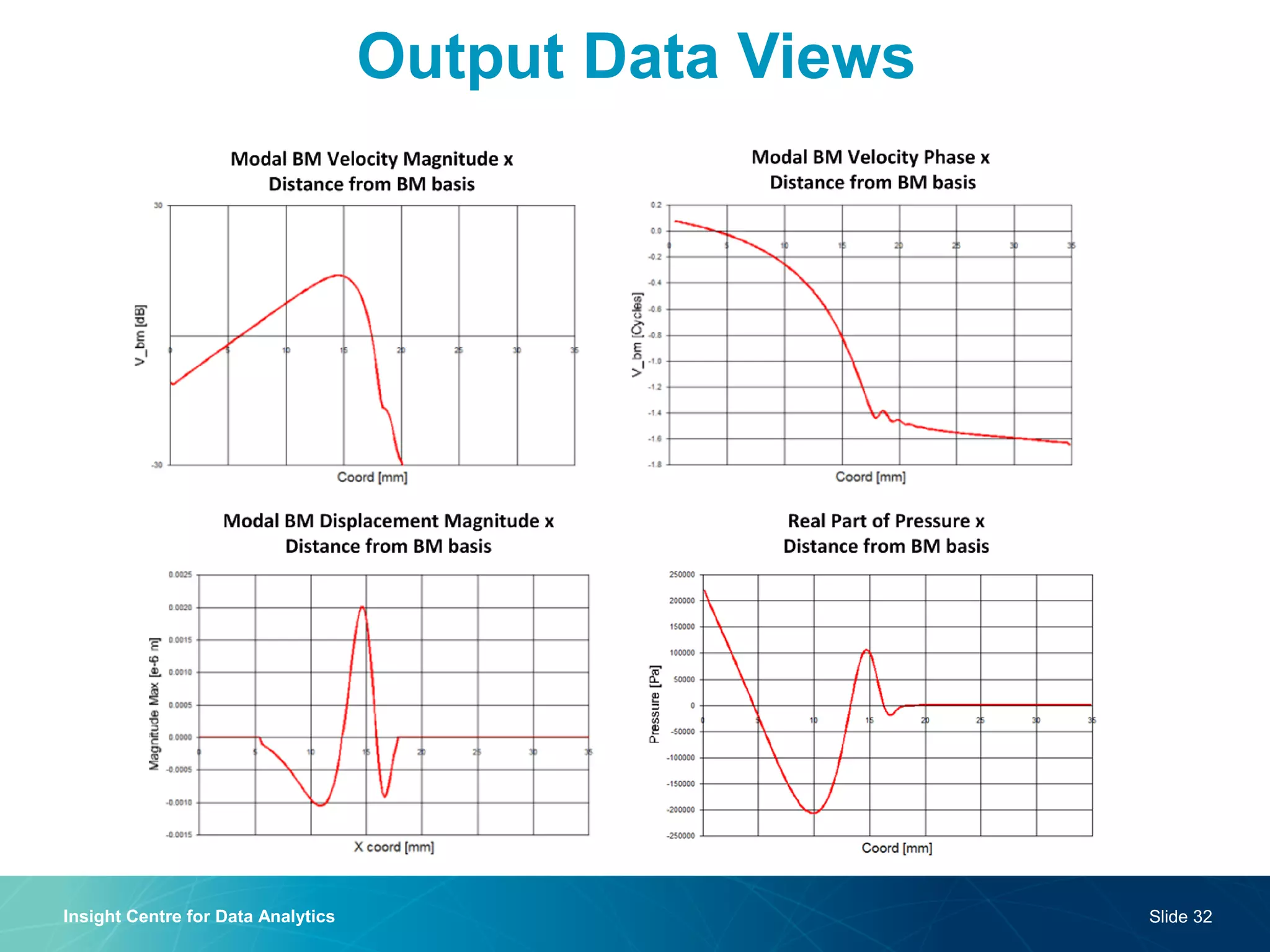
Output Data Views 
Insight Centre for Data Analytics 
Slide 32
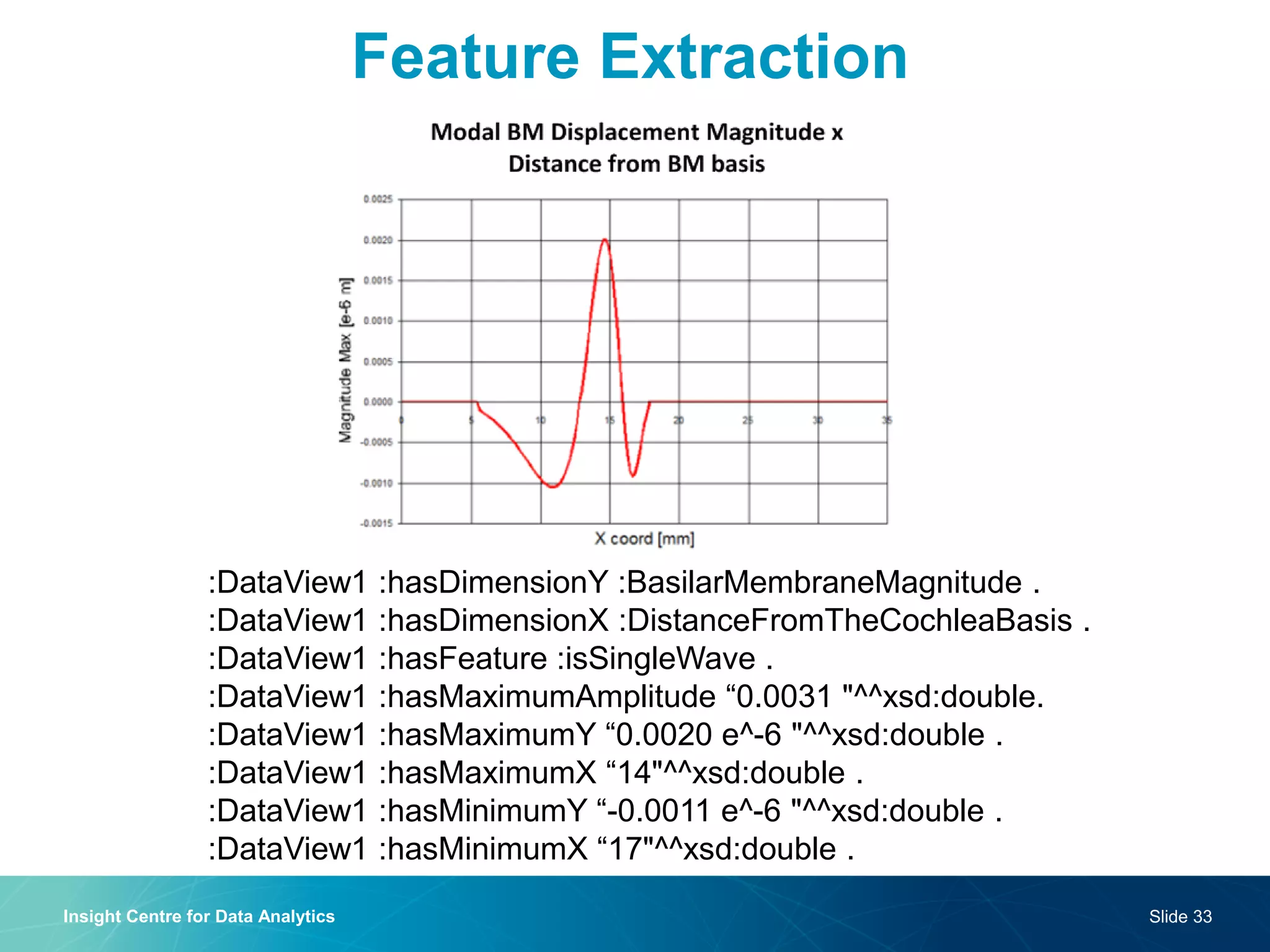
Feature Extraction 
Insight Centre for Data Analytics 
Slide 33 
:DataView1 :hasDimensionY :BasilarMembraneMagnitude . 
:DataView1 :hasDimensionX :DistanceFromTheCochleaBasis . 
:DataView1 :hasFeature :isSingleWave . 
:DataView1 :hasMaximumAmplitude “0.0031 "^^xsd:double. 
:DataView1 :hasMaximumY “0.0020 e^-6 "^^xsd:double . 
:DataView1 :hasMaximumX “14"^^xsd:double . 
:DataView1 :hasMinimumY “-0.0011 e^-6 "^^xsd:double . 
:DataView1 :hasMinimumX “17"^^xsd:double .
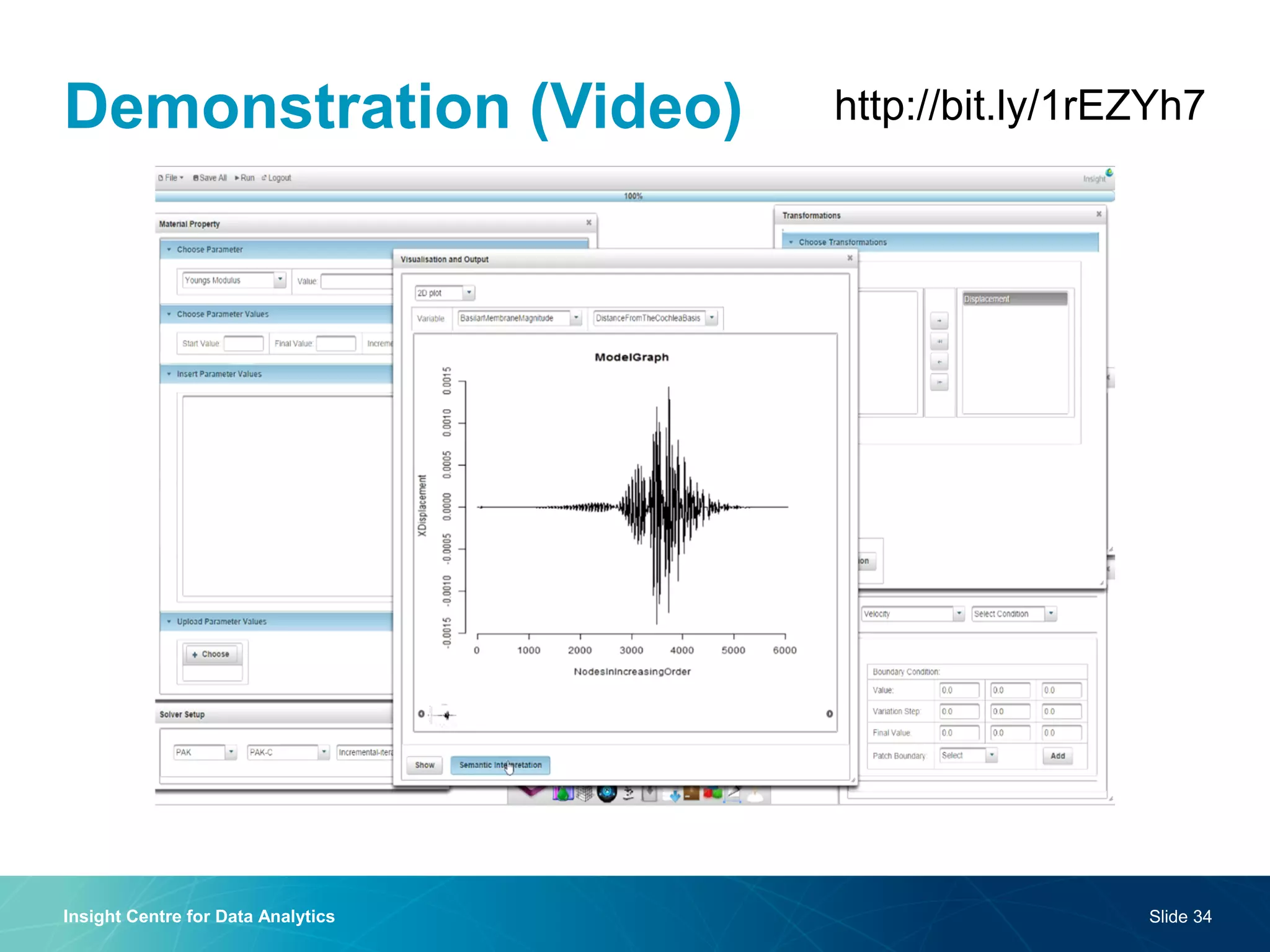
Demonstration (Video) 
Insight Centre for Data Analytics 
Slide 34 
http://bit.ly/1rEZYh7
Take-away message 
•Contemporary science demands new infrastructures to scale scientific discovery in a complex knowledge environment. 
•Numerical data is everywhere, not only in FE simulations. 
•In this work we started exploring how to represent and extract numerical data features to a conceptual level. 
•Which could match user intents specified as rules in the data. 
Insight Centre for Data Analytics 
Slide 35
Future Directions 
•Better integration of the proposed representation and data analysis framework to the TEDDY conceptual model. 
•Use of the feature set and rules as a heuristic method to prune the simulation configuration space. 
Insight Centre for Data Analytics 
Slide 36

A Semantic Web Platform for Automating the Interpretation of Finite Element Bio-simulations

  • 1.
    A Semantic WebPlatform for Automating the Interpretation of Finite Element Bio-simulations Andre Freitas, Kartik Asooja, Joao B. Jares, Stefan Decker, Ratnesh Sahay SWAT4LS 2014
  • 2.
    Insight Centre forData Analytics
  • 3.
    Goals Automate theinterpretation of finite element (FE) biosimulations ... ... by providing a supporting a symbolic representation of FE data. Insight Centre for Data Analytics Slide 3
  • 4.
    Reproducibility of FESimulations Insight Centre for Data Analytics Slide 4
  • 5.
    Efficiency & Automationof FE Simulations Insight Centre for Data Analytics Slide 5
  • 6.
    Motivational Scenario: Cochlearmechanics Insight Centre for Data Analytics Slide 6
  • 7.
    Characteristics of theFE Domain •Relatively small set of concepts Insight Centre for Data Analytics Slide 7
  • 8.
    Characteristics of theFE Domain •But difficult to represent •Physics, geometrical models, topological relations, algoithmic, mathematics Insight Centre for Data Analytics Slide 8
  • 9.
    Characteristics of theFE Domain •Most data is at the numeric level •Highly dependent on visualization (man in the middle) Insight Centre for Data Analytics Slide 9
  • 10.
    Dimensions of aFE Bio-simulation Insight Centre for Data Analytics Slide 10
  • 11.
    Geometrical Model InsightCentre for Data Analytics Slide 11
  • 12.
    Physics Model •FEequilibrium for solid •FE equilibrium for fluid Insight Centre for Data Analytics Slide 12
  • 13.
    Numerical Models/Solvers •Incremental-iterativeimplicit solution scheme Insight Centre for Data Analytics Slide 13
  • 14.
    Experimental Data •A Insight Centre for Data Analytics Slide 14
  • 15.
    And others ...(which are not covered here) •Anatomical •Physiological •Histological •... 02 May 2014 Insight Centre for Data Analytics Slide 15
  • 16.
    Lid-driven cavity flow Insight Centre for Data Analytics Slide 16 Physical Model Solver FEM Model If there a vortex close to the lid?
  • 17.
    Lid-driven cavity flow Insight Centre for Data Analytics Slide 17 Physical Model Solver FEM Model If there a vortex close to the lid? Informal definition of a valid simulation
  • 18.
    Numerical Data Interpretation 02 May 2014 Insight Centre for Data Analytics Slide 18 informal description of the simulation Rules using references to anatomical, physical and data feature elements Is translated into Multiple simulations Feature extraction Interpretation = rules applied over data at the symbolic level
  • 19.
    Automatic Interpretation InsightCentre for Data Analytics Slide 19 Expected physical behavior (Experiment intent): Velocity in X starts at zero at the bottom of the box followed by a slow velocity decrease reaching a minima which is followed by a very fast velocity increase close to the lid. Numeric Level Symbolic Lifting IF Predicates
  • 20.
    Data View InsightCentre for Data Analytics Slide 20 Data Selection y 0.05
  • 21.
    Feature Extraction (SymbolicLifting) Insight Centre for Data Analytics Slide 21 Minima=(0.055,-0.20) fast increase slow decrease followed by (avg first derivative > 35) velocity starts at 0 at the bottom maximum velocity is 0.93 at the lid Based on the TEDDY ontology
  • 22.
    Data Interpretation Statements Insight Centre for Data Analytics Slide 22 :DataView1 :hasDimensionY :VelocityX . :DataView1 :hasDimensionX :DistanceFromTheCavityBase . :DataView1 :x0 “0.0"^^xsd:double . :DataView1 :y0 “0.0"^^xsd:double . :DataView1 :hasMinimumX “-0.055"^^xsd:double . :DataView1 :hasMinimumY “-0.20"^^xsd:double . :DataView1 :hasFeature :PositiveSecondDerivative . :DataView1 :hasBehaviour :BehaviourRegion1 . :DataView1 :hasBehaviour :BehaviourRegion2 . :BehaviourRegion1 :avgFirstDerivative “-3.63"^^xsd:double . :BehaviourRegion1 :hasFeature EndRegion . :BehaviourRegion1 :hasFeature :Decreases . :BehaviourRegion1 :hasFeature :DecreasesSlowly . :BehaviourRegion2 :avgFirstDerivative “33.35"^^xsd:double . :BehaviourRegion2 :hasFeature EndRegion . :BehaviourRegion2 :hasFeature :Increases . :BehaviourRegion2 :hasFeature :IncreasesFast . :BehaviourRegion1 :isFollowedBy :BehaviourRegion1 . : LidSimulation :hasInterpretation :ValidVelocityBehaviour . Data Analysis Rule
  • 23.
    Data Analysis Rules Insight Centre for Data Analytics Slide 23 CONSTRUCT { :LidSimulation sif: hasInterpretation :ValidVelocityBehaviour } WHERE { ?dataview rdf:type dao:DataView . ?dataview dao:hasFeature ?x . ... } IF( minima(velocity) is negative AND decreases very slowly(velocity) AND increases very fast (velocity) ) VALID VELOCITY BEHAVIOUR SPARQL Rule
  • 24.
    Data Analysis Workflow Insight Centre for Data Analytics Slide 24
  • 25.
    Data Analysis Workflow Insight Centre for Data Analytics Slide 25
  • 26.
    Data Analysis Workflow Insight Centre for Data Analytics Slide 26
  • 27.
    Data Analysis Workflow Insight Centre for Data Analytics Slide 27
  • 28.
    Data Analysis Workflow Insight Centre for Data Analytics Slide 28
  • 29.
    Conceptual Model Excerpt Insight Centre for Data Analytics Slide 29
  • 30.
    Conceptual Model Excerpt Insight Centre for Data Analytics Slide 30
  • 31.
    Going back tothe Cochlea simulation scenario 02 May 2014 Insight Centre for Data Analytics Slide 31
  • 32.
    Output Data Views Insight Centre for Data Analytics Slide 32
  • 33.
    Feature Extraction InsightCentre for Data Analytics Slide 33 :DataView1 :hasDimensionY :BasilarMembraneMagnitude . :DataView1 :hasDimensionX :DistanceFromTheCochleaBasis . :DataView1 :hasFeature :isSingleWave . :DataView1 :hasMaximumAmplitude “0.0031 "^^xsd:double. :DataView1 :hasMaximumY “0.0020 e^-6 "^^xsd:double . :DataView1 :hasMaximumX “14"^^xsd:double . :DataView1 :hasMinimumY “-0.0011 e^-6 "^^xsd:double . :DataView1 :hasMinimumX “17"^^xsd:double .
  • 34.
    Demonstration (Video) InsightCentre for Data Analytics Slide 34 http://bit.ly/1rEZYh7
  • 35.
    Take-away message •Contemporaryscience demands new infrastructures to scale scientific discovery in a complex knowledge environment. •Numerical data is everywhere, not only in FE simulations. •In this work we started exploring how to represent and extract numerical data features to a conceptual level. •Which could match user intents specified as rules in the data. Insight Centre for Data Analytics Slide 35
  • 36.
    Future Directions •Betterintegration of the proposed representation and data analysis framework to the TEDDY conceptual model. •Use of the feature set and rules as a heuristic method to prune the simulation configuration space. Insight Centre for Data Analytics Slide 36