Shifting business models –   
newspapers to online
Focus

 How the business model has changed

 Why the business model has change

 The internet

 Paywalls

 The New York Times
Background

 1702 – the first English daily newspaper was published
   called The Daily Courant

 1830 – number of newspapers published in the US is 715

 1856 – first full newspaper ad published in the New York
   Ledger

 1870 – 5091 newspapers published in the US

 Early 20th century - radio and TV news became more
   influential
Background continued

 1933 – war between newspaper and radio industries –
   American newspapers try to stop radio broadcasts
   delivering news – unsuccessful
 1954 – more radios than newspapers

 1967 – digital production processes of
   newspapers, including use of early computers
 2007 – 1456 Daily Newspapers in the United States

 2009 – worst year in print advertising revenue – big shift
   with newspapers moving to online
Very basic newspaper business model of
                                  old
      Journalists employed to find and write-up stories –
        outgoing

      Papers sent to print – outgoing

      Newspapers advertised – outgoing

      Copy sales revenue – retail and subscription
        - incoming

      Display and classified ads - incoming
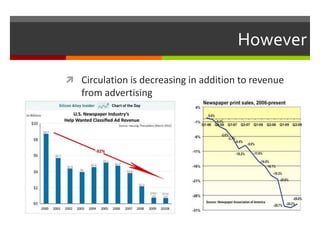
However

 Circulation is decreasing in addition to revenue
   from advertising
Problems the old business model faces

    Increased competition from other formats – radio &
      TV – still have many viewers/listeners
    Economic recession – double dip since 2008, not
      much investment, people not willing to spend
    Broadband subscription increasing – June 2012 –
      estimated population of the US 348,280,154 – of
      this, there were 273,785,413 internet users
    Hard to find exclusive stories – news breaks out on
      social media
Internet competition – the big one

   News is available everywhere – big corporations like
     Microsoft and AOL now provide news, for free.

   Blogs provide specific news to audiences

   Example – TMZ broke the news of Michael Jackson’s
     death

   http://www.tmz.com/2009/06/25/michael-jackson-
     dies-death-dead-cardiac-arrest/
Switch to online

 Online is becoming the format to read news

 Online magazines are constantly been set up, as
   well as iPad and other tablet and mobile devices –
   The Daily (later pulled)

 In the US, 65% of people aged 18-29 get their news
   from the internet

 28% of people from the UK and US access news via
   their mobile every week
Switch to digital continued…

 The shift is taking place at different rates – varying
   business ideas and models – US far quicker to
   embrace and share content than UK

 Moving online can build greater online audiences
   and can use cookies to target content and
   advertising
The problem with the internet

 Most readers spend far less time online – larger
   audience does not mean larger revenue generation
   from advertising

 Difficult to cash in on innovation
Why don’t audiences pay for content?

       People don’t want to pay for content on the
         internet – nothing physical, hard to adjust

       In the UK – only 4% of people said they would be
         willing to pay for their news website

       The news will always be accessible somewhere else
         for free

       People in the US are far more willing to pay –
         again, different speed of shift
Paywall

 What are they?

 Hard paywalls – The Times (UK) / Wall Street
   Journal

 Combination – The Boston Globe

 Soft – The New York Times, Financial Times
Does it work?

 The Times (UK) and Wall Street Journal both very
   secretive
 NRS Padd survey found that The Times have nearly
   8 million print followers but only 675,000 online
   readers
 The Times often makes things free for big events –
   e.g. Queens Jubilee
 Financial Times fairly successful - first half of 2012 –
   more people paying for digital than print
Case Study - New York Times

 Founded in 1851

 America’s most popular newspaper site

 Largest local metropolitan newspaper in the United
   States and third largest newspaper overall

 First implemented the ‘TimesSelect’ subscription
   program back in 2005 – similar to paywall
TimesSelect
The New Paywall

 Implemented soft-paywall strategy in March 2011

 Allows visitors to access 10 articles per month
   before prompting them to subscribe

 Their success far exceeded people’s expectations

 Have reached 640,000 paying subscribers recently
The New Paywall

 The company is expected to make more money
   from subscriptions that from advertising

 Douglas Arthur, analyst with Evercore Partners
   estimates total subscription sales will top $768.3
   million this year ($52 mil. More than advertising.)
The New Paywall
Barclays analyst Kannan Venkateshwar estimates that the paper will have more digital
than print subscribers in a few years
Underlying Problems with Paywall

   “When we launched our digital subscription plan we
     knew there were loopholes to access our content beyond
     the allotted numbers of articles each month. We have
     made some adjustments and will continue to make
     adjustments to optimize the gateway by implementing
     technical security solutions to prohibit abuse and protect
     the value of our content” – NYT cooperate
     communications Vice President Eileen Murphy (Feb.
     12, 2013)
   There are still plenty of ways to avoid paywall (Google
     chrome incognito mode, Firefox Private
     Browsing, clearing cache etc.)
The New York Times conclusion

 Although the paywall for The New York Times
   seems to be working, we feel that it is only a short
   term solution

 The New York Times also has a long way to go to
   close all loopholes in order to increase growth and
   revenue on its website
The future…

 The shifting model leaves uncertainty for
   Newspapers and their future

 http://www.telegraph.co.uk/finance/newsbysector/
   mediatechnologyandtelecoms/media/9614953/Gua
   rdian-seriously-discussing-end-to-print-edition.html
What the theorists say?

 “By understanding identity and the relevant
   relationships, journalists can create a platform for
   their work that will have a meaningful impact in the
   Web 2.0 era.” – Rachel Davis Mersey
 “"Fifteen years after the commercial debut of the
   Internet, publishers on average still depend on print
   advertising and circulation for 90 percent of their
   revenues. Stop the presses and newspaper
   companies are out of business. It's just that simple.”
   - Alan Mutter
What do we think?

Shifting business models

  • 1.
    Shifting business models–  newspapers to online
  • 2.
    Focus  How thebusiness model has changed  Why the business model has change  The internet  Paywalls  The New York Times
  • 3.
    Background  1702 –the first English daily newspaper was published called The Daily Courant  1830 – number of newspapers published in the US is 715  1856 – first full newspaper ad published in the New York Ledger  1870 – 5091 newspapers published in the US  Early 20th century - radio and TV news became more influential
  • 4.
    Background continued  1933– war between newspaper and radio industries – American newspapers try to stop radio broadcasts delivering news – unsuccessful  1954 – more radios than newspapers  1967 – digital production processes of newspapers, including use of early computers  2007 – 1456 Daily Newspapers in the United States  2009 – worst year in print advertising revenue – big shift with newspapers moving to online
  • 5.
    Very basic newspaperbusiness model of old  Journalists employed to find and write-up stories – outgoing  Papers sent to print – outgoing  Newspapers advertised – outgoing  Copy sales revenue – retail and subscription - incoming  Display and classified ads - incoming
  • 6.
    However  Circulation isdecreasing in addition to revenue from advertising
  • 7.
    Problems the oldbusiness model faces  Increased competition from other formats – radio & TV – still have many viewers/listeners  Economic recession – double dip since 2008, not much investment, people not willing to spend  Broadband subscription increasing – June 2012 – estimated population of the US 348,280,154 – of this, there were 273,785,413 internet users  Hard to find exclusive stories – news breaks out on social media
  • 8.
    Internet competition –the big one  News is available everywhere – big corporations like Microsoft and AOL now provide news, for free.  Blogs provide specific news to audiences  Example – TMZ broke the news of Michael Jackson’s death  http://www.tmz.com/2009/06/25/michael-jackson- dies-death-dead-cardiac-arrest/
  • 9.
    Switch to online Online is becoming the format to read news  Online magazines are constantly been set up, as well as iPad and other tablet and mobile devices – The Daily (later pulled)  In the US, 65% of people aged 18-29 get their news from the internet  28% of people from the UK and US access news via their mobile every week
  • 10.
    Switch to digitalcontinued…  The shift is taking place at different rates – varying business ideas and models – US far quicker to embrace and share content than UK  Moving online can build greater online audiences and can use cookies to target content and advertising
  • 11.
    The problem withthe internet  Most readers spend far less time online – larger audience does not mean larger revenue generation from advertising  Difficult to cash in on innovation
  • 12.
    Why don’t audiencespay for content?  People don’t want to pay for content on the internet – nothing physical, hard to adjust  In the UK – only 4% of people said they would be willing to pay for their news website  The news will always be accessible somewhere else for free  People in the US are far more willing to pay – again, different speed of shift
  • 13.
    Paywall  What arethey?  Hard paywalls – The Times (UK) / Wall Street Journal  Combination – The Boston Globe  Soft – The New York Times, Financial Times
  • 14.
    Does it work? The Times (UK) and Wall Street Journal both very secretive  NRS Padd survey found that The Times have nearly 8 million print followers but only 675,000 online readers  The Times often makes things free for big events – e.g. Queens Jubilee  Financial Times fairly successful - first half of 2012 – more people paying for digital than print
  • 15.
    Case Study -New York Times  Founded in 1851  America’s most popular newspaper site  Largest local metropolitan newspaper in the United States and third largest newspaper overall  First implemented the ‘TimesSelect’ subscription program back in 2005 – similar to paywall
  • 16.
  • 17.
    The New Paywall Implemented soft-paywall strategy in March 2011  Allows visitors to access 10 articles per month before prompting them to subscribe  Their success far exceeded people’s expectations  Have reached 640,000 paying subscribers recently
  • 18.
    The New Paywall The company is expected to make more money from subscriptions that from advertising  Douglas Arthur, analyst with Evercore Partners estimates total subscription sales will top $768.3 million this year ($52 mil. More than advertising.)
  • 19.
    The New Paywall Barclaysanalyst Kannan Venkateshwar estimates that the paper will have more digital than print subscribers in a few years
  • 20.
    Underlying Problems withPaywall  “When we launched our digital subscription plan we knew there were loopholes to access our content beyond the allotted numbers of articles each month. We have made some adjustments and will continue to make adjustments to optimize the gateway by implementing technical security solutions to prohibit abuse and protect the value of our content” – NYT cooperate communications Vice President Eileen Murphy (Feb. 12, 2013)  There are still plenty of ways to avoid paywall (Google chrome incognito mode, Firefox Private Browsing, clearing cache etc.)
  • 21.
    The New YorkTimes conclusion  Although the paywall for The New York Times seems to be working, we feel that it is only a short term solution  The New York Times also has a long way to go to close all loopholes in order to increase growth and revenue on its website
  • 22.
    The future…  Theshifting model leaves uncertainty for Newspapers and their future  http://www.telegraph.co.uk/finance/newsbysector/ mediatechnologyandtelecoms/media/9614953/Gua rdian-seriously-discussing-end-to-print-edition.html
  • 23.
    What the theoristssay?  “By understanding identity and the relevant relationships, journalists can create a platform for their work that will have a meaningful impact in the Web 2.0 era.” – Rachel Davis Mersey  “"Fifteen years after the commercial debut of the Internet, publishers on average still depend on print advertising and circulation for 90 percent of their revenues. Stop the presses and newspaper companies are out of business. It's just that simple.” - Alan Mutter
  • 24.
    What do wethink?