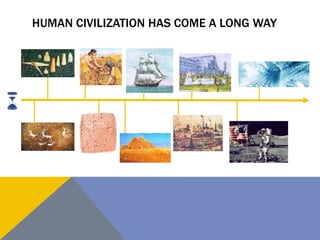
HUMAN CIVILIZATION HAS COME A LONG WAY
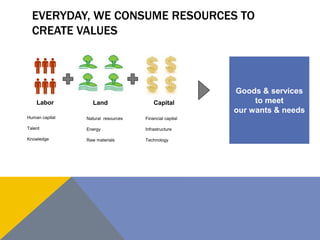
EVERYDAY, WE CONSUME RESOURCES TO 
CREATE VALUES 
Labor 
Human capital 
Talent 
Knowledge 
Land 
Natural resources 
Energy 
Raw materials 
Capital 
Financial capital 
Infrastructure 
Technology 
Goods & services 
to meet 
our wants & needs
MORE OFTEN THAN NOT, WE FAIL TO CONSUME 
RESOURCES IN EFFICIENT, OPTIMIZED MANNER 
 We consume resources in such a way that it caters to our individual needs 
and wants, but not to the interest of our entire human race collectively. 
 As a result, we waste a lot of resources. This is a problem when our 
population constantly grows and resources are depleting fast. It’s simply not 
sustainable. 
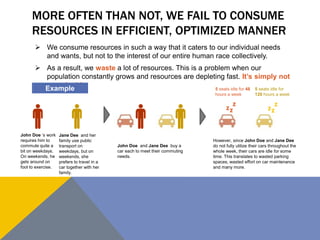
Example 
John Doe ‘s work 
requires him to 
commute quite a 
bit on weekdays. 
On weekends, he 
gets around on 
foot to exercise. 
Jane Dee and her 
family use public 
transport on 
weekdays, but on 
weekends, she 
prefers to travel in a 
car together with her 
family. 
John Doe and Jane Dee buy a 
car each to meet their commuting 
needs. 
5 seats idle for 48 
hours a week 
Z 
5 seats idle for 
120 hours a week 
Z Z 
Z 
Z 
Z 
However, since John Doe and Jane Dee 
do not fully utilize their cars throughout the 
whole week, their cars are idle for some 
time. This translates to wasted parking 
spaces, wasted effort on car maintenance 
and many more.
INEFFICIENT USE OF RESOURCES IS PARTLY, BUT 
NOT COMPLETELY DUE TO OUR SELFISHNESS 
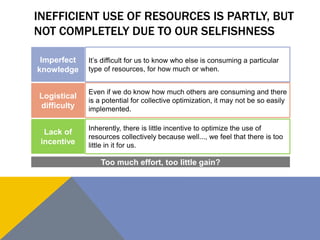
Imperfect 
knowledge 
Logistical 
difficulty 
Lack of 
incentive 
It’s difficult for us to know who else is consuming a particular 
type of resources, for how much or when. 
Even if we do know how much others are consuming and there 
is a potential for collective optimization, it may not be so easily 
implemented. 
Inherently, there is little incentive to optimize the use of 
resources collectively because well..., we feel that there is too 
little in it for us. 
Too much effort, too little gain?
SHARING ECONOMY COMES TO THE RESCUE! 
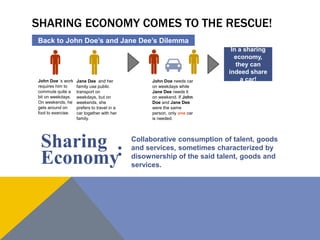
Back to John Doe’s and Jane Dee’s Dilemma 
John Doe ‘s work 
requires him to 
commute quite a 
bit on weekdays. 
On weekends, he 
gets around on 
foot to exercise. 
Jane Dee and her 
family use public 
transport on 
weekdays, but on 
weekends, she 
prefers to travel in a 
car together with her 
family. 
John Doe needs car 
on weekdays while 
Jane Dee needs it 
on weekend. If John 
Doe and Jane Dee 
were the same 
person, only one car 
is needed. 
In a sharing 
economy, 
they can 
indeed share 
a car! 
Sharing 
Economy: 
Collaborative consumption of talent, goods 
and services, sometimes characterized by 
disownership of the said talent, goods and 
services.
SHARING ECONOMY IS ON THE RISE ALL OVER 
THE WORLD 
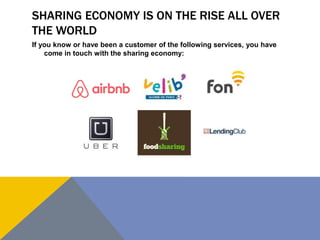
If you know or have been a customer of the following services, you have 
come in touch with the sharing economy:
FUELED BY INFORMATION TECHNOLOGY, 
PEOPLE NOW FIND THE INCENTIVE TO SHARE 
Information 
Technology 
Monetary 
Gain 
Social 
Awareness 
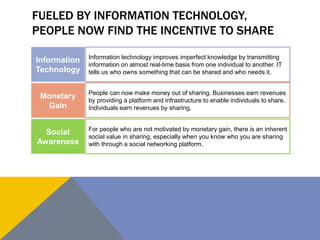
Information technology improves imperfect knowledge by transmitting 
information on almost real-time basis from one individual to another. IT 
tells us who owns something that can be shared and who needs it. 
People can now make money out of sharing. Businesses earn revenues 
by providing a platform and infrastructure to enable individuals to share. 
Individuals earn revenues by sharing. 
For people who are not motivated by monetary gain, there is an inherent 
social value in sharing, especially when you know who you are sharing 
with through a social networking platform.
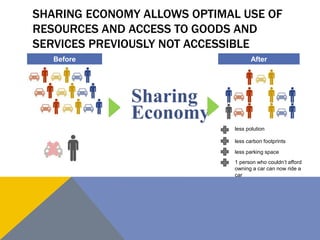
SHARING ECONOMY ALLOWS OPTIMAL USE OF 
RESOURCES AND ACCESS TO GOODS AND 
SERVICES PREVIOUSLY NOT ACCESSIBLE 
Before After 
Sharing 
Economy 
less polution 
less carbon footprints 
less parking space 
1 person who couldn’t afford 
owning a car can now ride a 
car
STAY TUNED FOR PART 2! 
Keep a look out for the next post if you are curious 
about: 
 How no single Finnish will be owning private cars by 2025 
 How a domestic helper’s son managed to pay his college without having to 
borrow from a single bank 
 How to eat home-cooked food without having to cook at home

Sharing economy - Part 1

  • 2.
    HUMAN CIVILIZATION HASCOME A LONG WAY
  • 3.
    EVERYDAY, WE CONSUMERESOURCES TO CREATE VALUES Labor Human capital Talent Knowledge Land Natural resources Energy Raw materials Capital Financial capital Infrastructure Technology Goods & services to meet our wants & needs
  • 4.
    MORE OFTEN THANNOT, WE FAIL TO CONSUME RESOURCES IN EFFICIENT, OPTIMIZED MANNER  We consume resources in such a way that it caters to our individual needs and wants, but not to the interest of our entire human race collectively.  As a result, we waste a lot of resources. This is a problem when our population constantly grows and resources are depleting fast. It’s simply not sustainable. Example John Doe ‘s work requires him to commute quite a bit on weekdays. On weekends, he gets around on foot to exercise. Jane Dee and her family use public transport on weekdays, but on weekends, she prefers to travel in a car together with her family. John Doe and Jane Dee buy a car each to meet their commuting needs. 5 seats idle for 48 hours a week Z 5 seats idle for 120 hours a week Z Z Z Z Z However, since John Doe and Jane Dee do not fully utilize their cars throughout the whole week, their cars are idle for some time. This translates to wasted parking spaces, wasted effort on car maintenance and many more.
  • 5.
    INEFFICIENT USE OFRESOURCES IS PARTLY, BUT NOT COMPLETELY DUE TO OUR SELFISHNESS Imperfect knowledge Logistical difficulty Lack of incentive It’s difficult for us to know who else is consuming a particular type of resources, for how much or when. Even if we do know how much others are consuming and there is a potential for collective optimization, it may not be so easily implemented. Inherently, there is little incentive to optimize the use of resources collectively because well..., we feel that there is too little in it for us. Too much effort, too little gain?
  • 6.
    SHARING ECONOMY COMESTO THE RESCUE! Back to John Doe’s and Jane Dee’s Dilemma John Doe ‘s work requires him to commute quite a bit on weekdays. On weekends, he gets around on foot to exercise. Jane Dee and her family use public transport on weekdays, but on weekends, she prefers to travel in a car together with her family. John Doe needs car on weekdays while Jane Dee needs it on weekend. If John Doe and Jane Dee were the same person, only one car is needed. In a sharing economy, they can indeed share a car! Sharing Economy: Collaborative consumption of talent, goods and services, sometimes characterized by disownership of the said talent, goods and services.
  • 7.
    SHARING ECONOMY ISON THE RISE ALL OVER THE WORLD If you know or have been a customer of the following services, you have come in touch with the sharing economy:
  • 8.
    FUELED BY INFORMATIONTECHNOLOGY, PEOPLE NOW FIND THE INCENTIVE TO SHARE Information Technology Monetary Gain Social Awareness Information technology improves imperfect knowledge by transmitting information on almost real-time basis from one individual to another. IT tells us who owns something that can be shared and who needs it. People can now make money out of sharing. Businesses earn revenues by providing a platform and infrastructure to enable individuals to share. Individuals earn revenues by sharing. For people who are not motivated by monetary gain, there is an inherent social value in sharing, especially when you know who you are sharing with through a social networking platform.
  • 9.
    SHARING ECONOMY ALLOWSOPTIMAL USE OF RESOURCES AND ACCESS TO GOODS AND SERVICES PREVIOUSLY NOT ACCESSIBLE Before After Sharing Economy less polution less carbon footprints less parking space 1 person who couldn’t afford owning a car can now ride a car
  • 10.
    STAY TUNED FORPART 2! Keep a look out for the next post if you are curious about:  How no single Finnish will be owning private cars by 2025  How a domestic helper’s son managed to pay his college without having to borrow from a single bank  How to eat home-cooked food without having to cook at home

Editor's Notes

  • #3 Human civilization has come a long way. Technology advancement. Creation of value. Resources