SFR: Scalable Forwarding with
RINA for Distributed Clouds
Fatma Hrizi, Anis Laouiti and Hakima Chaouchi
Telecom SudParis, France
6th International Conference NOF 2015,
MONTREAL, CANADA, SEPTEMBER 30, 2015
07/10/2015 1NOF 2015
Outline
• Intro & Motivation
• VIFIB Distributed Clouds
• RINA: Recursive InterNetwork Architecture
• SFR: Scalable Forwarding with RINA
• Simulation Results
• Conclusion
07/10/2015 2NOF 2015
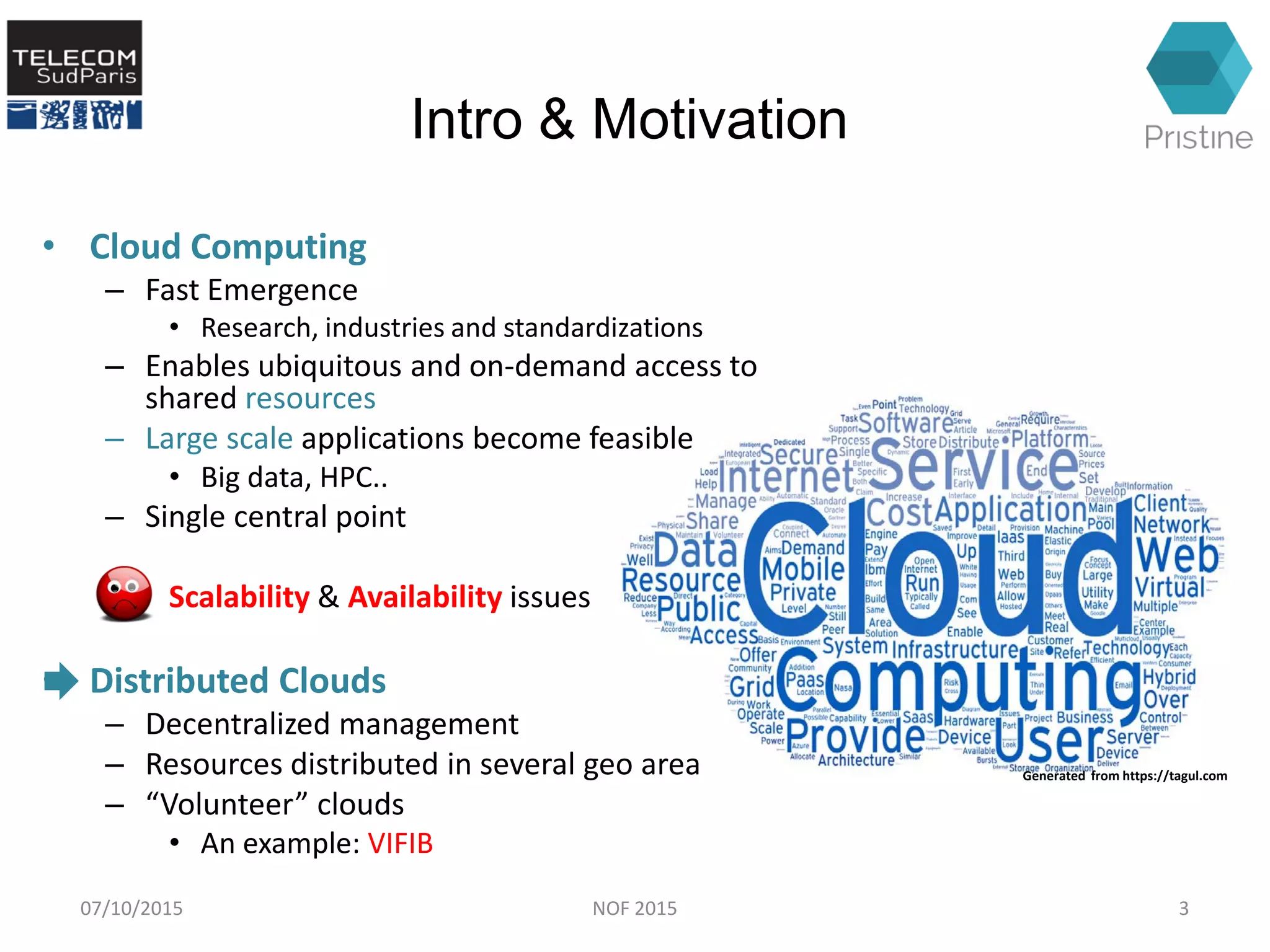
Generated from https://tagul.com
Intro & Motivation
• Cloud Computing
– Fast Emergence
• Research, industries and standardizations
– Enables ubiquitous and on-demand access to
shared resources
– Large scale applications become feasible
• Big data, HPC..
– Single central point
Scalability & Availability issues
• Distributed Clouds
– Decentralized management
– Resources distributed in several geo area
– “Volunteer” clouds
• An example: VIFIB
07/10/2015 3NOF 2015
VIFIB Distributed Clouds
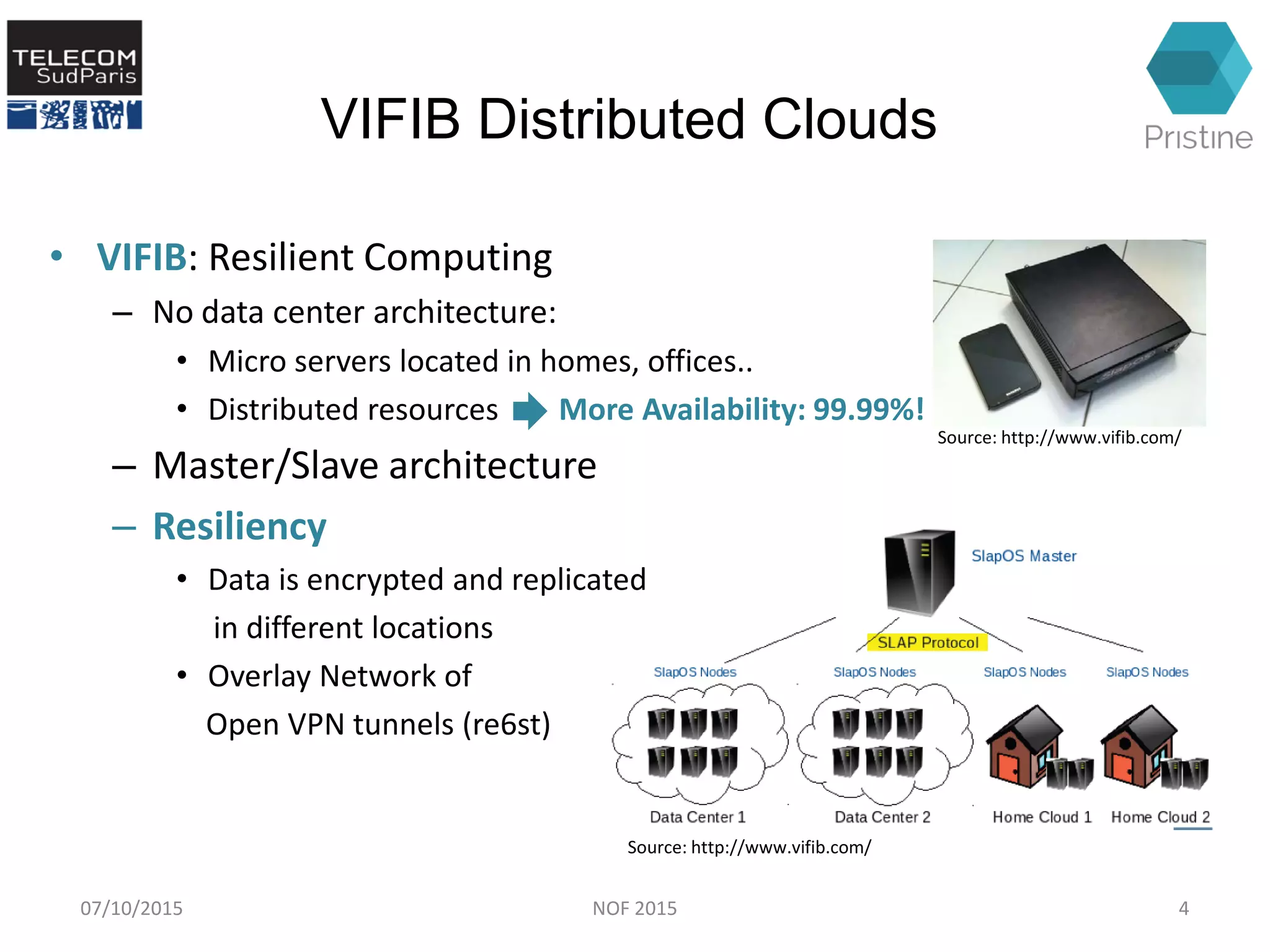
• VIFIB: Resilient Computing
– No data center architecture:
• Micro servers located in homes, offices..
• Distributed resources More Availability: 99.99%!
– Master/Slave architecture
– Resiliency
• Data is encrypted and replicated
in different locations
• Overlay Network of
Open VPN tunnels (re6st)
07/10/2015 NOF 2015 4
Source: http://www.vifib.com/
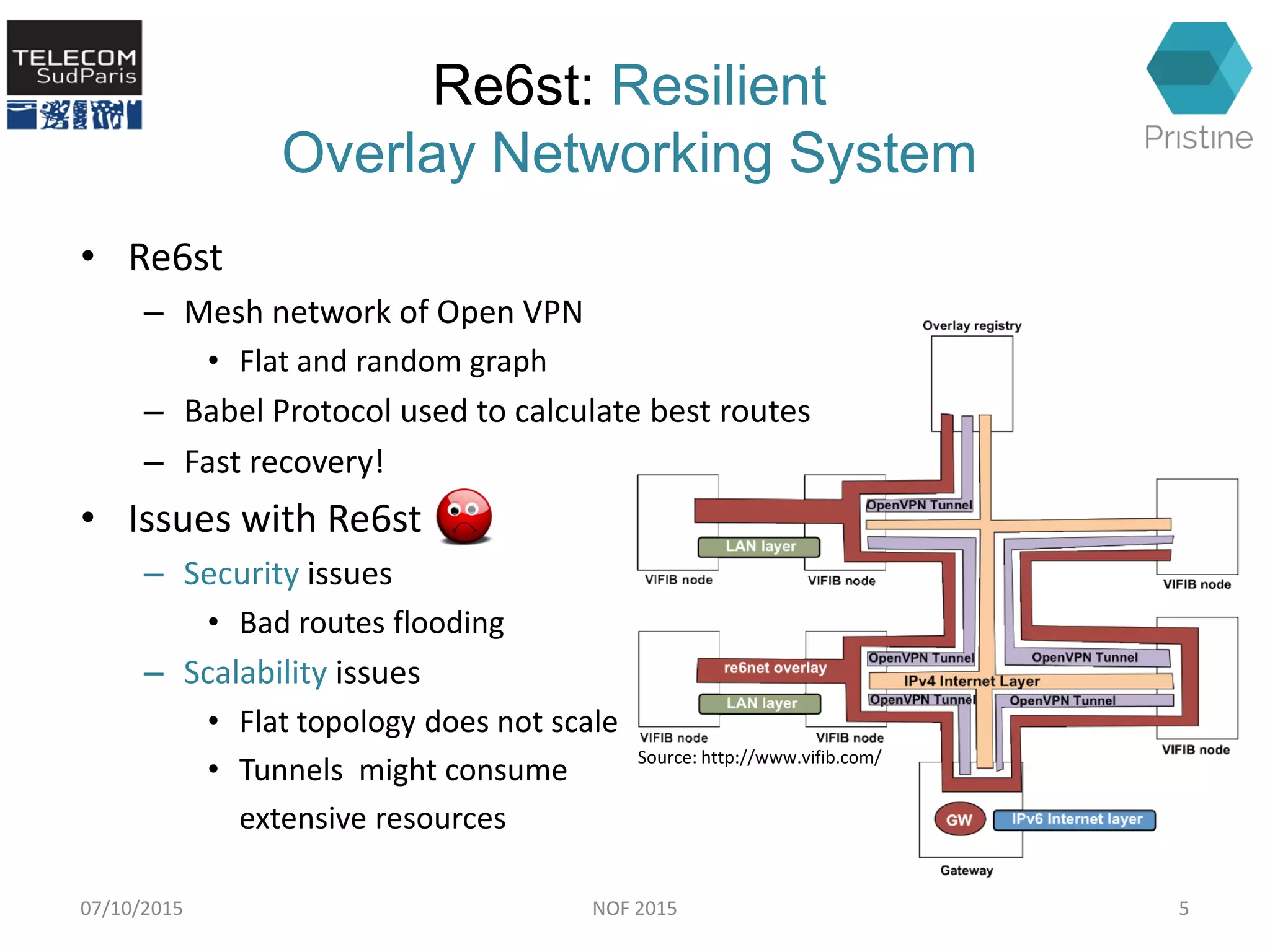
Re6st: Resilient
Overlay Networking System
• Re6st
– Mesh network of Open VPN
• Flat and random graph
– Babel Protocol used to calculate best routes
– Fast recovery!
• Issues with Re6st
– Security issues
• Bad routes flooding
– Scalability issues
• Flat topology does not scale
• Tunnels might consume
extensive resources
07/10/2015 NOF 2015 5
Source: http://www.vifib.com/
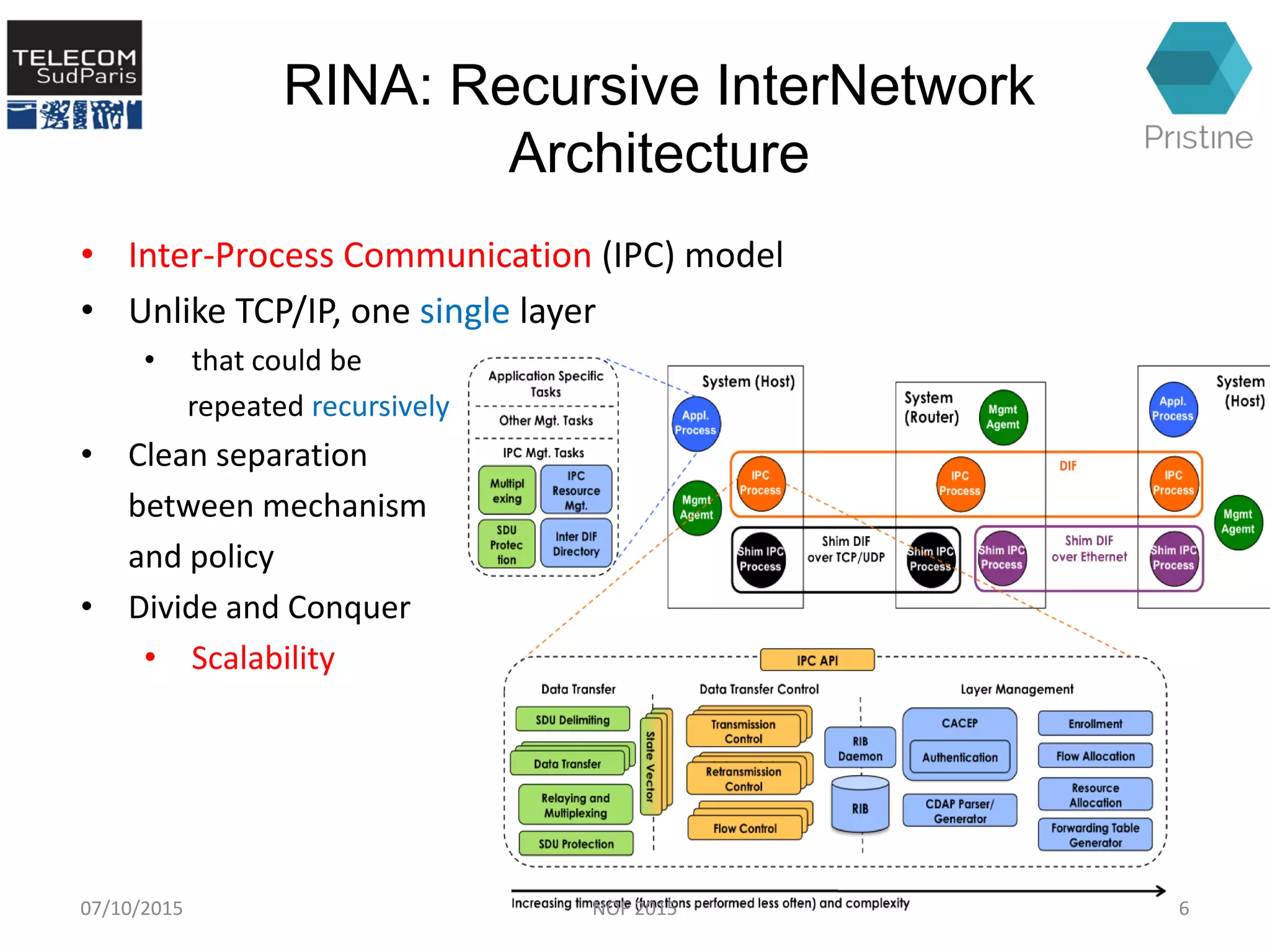
RINA: Recursive InterNetwork
Architecture
07/10/2015 NOF 2015 6
• Inter-Process Communication (IPC) model
• Unlike TCP/IP, one single layer
• that could be
repeated recursively
• Clean separation
between mechanism
and policy
• Divide and Conquer
• Scalability
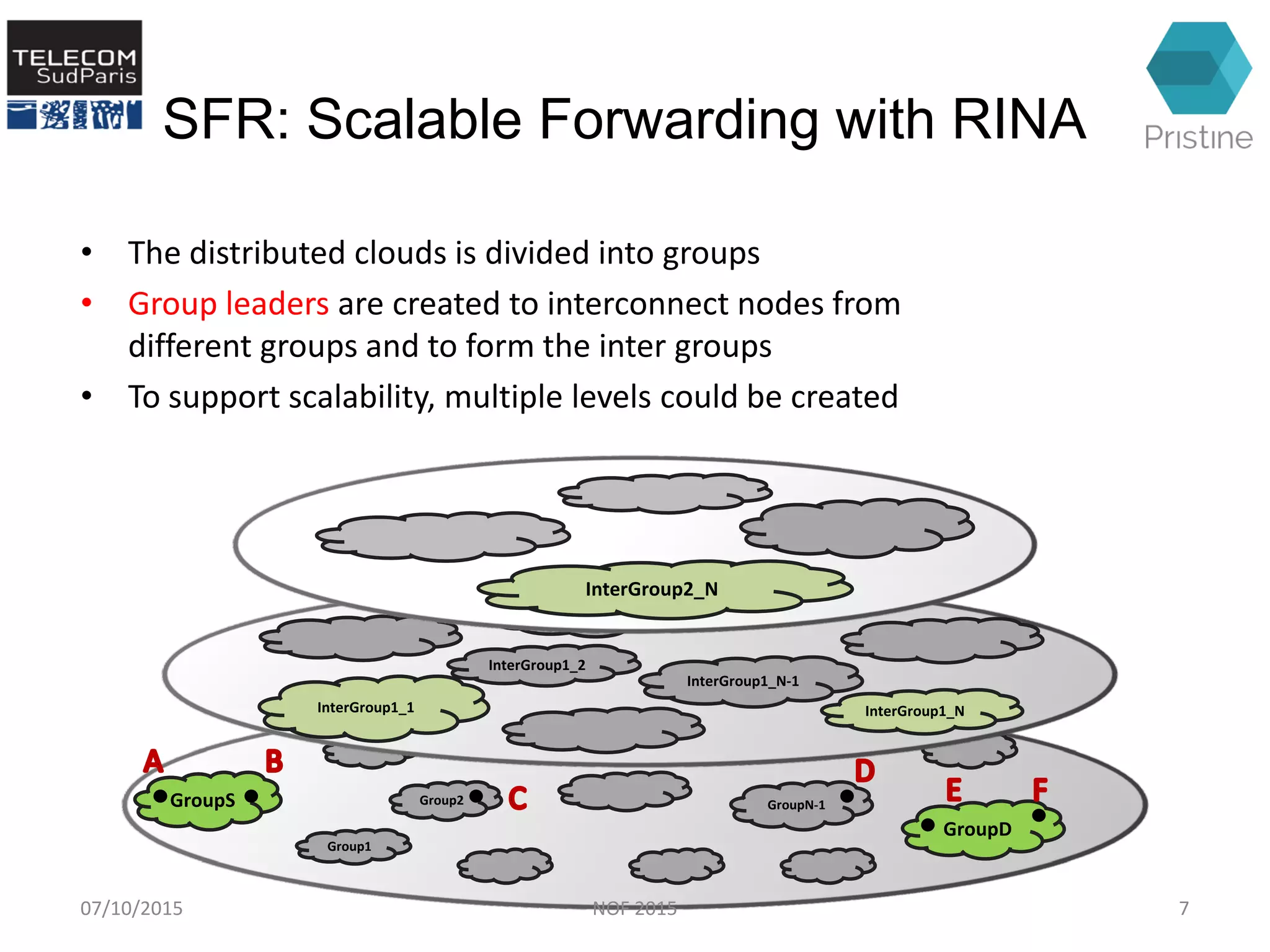
GroupS
Group1
GroupD
GroupN-1Group2
InterGroup1_NInterGroup1_1
InterGroup1_2
InterGroup1_N-1
InterGroup2_N
• The distributed clouds is divided into groups
• Group leaders are created to interconnect nodes from
different groups and to form the inter groups
• To support scalability, multiple levels could be created
SFR: Scalable Forwarding with RINA
07/10/2015 7NOF 2015
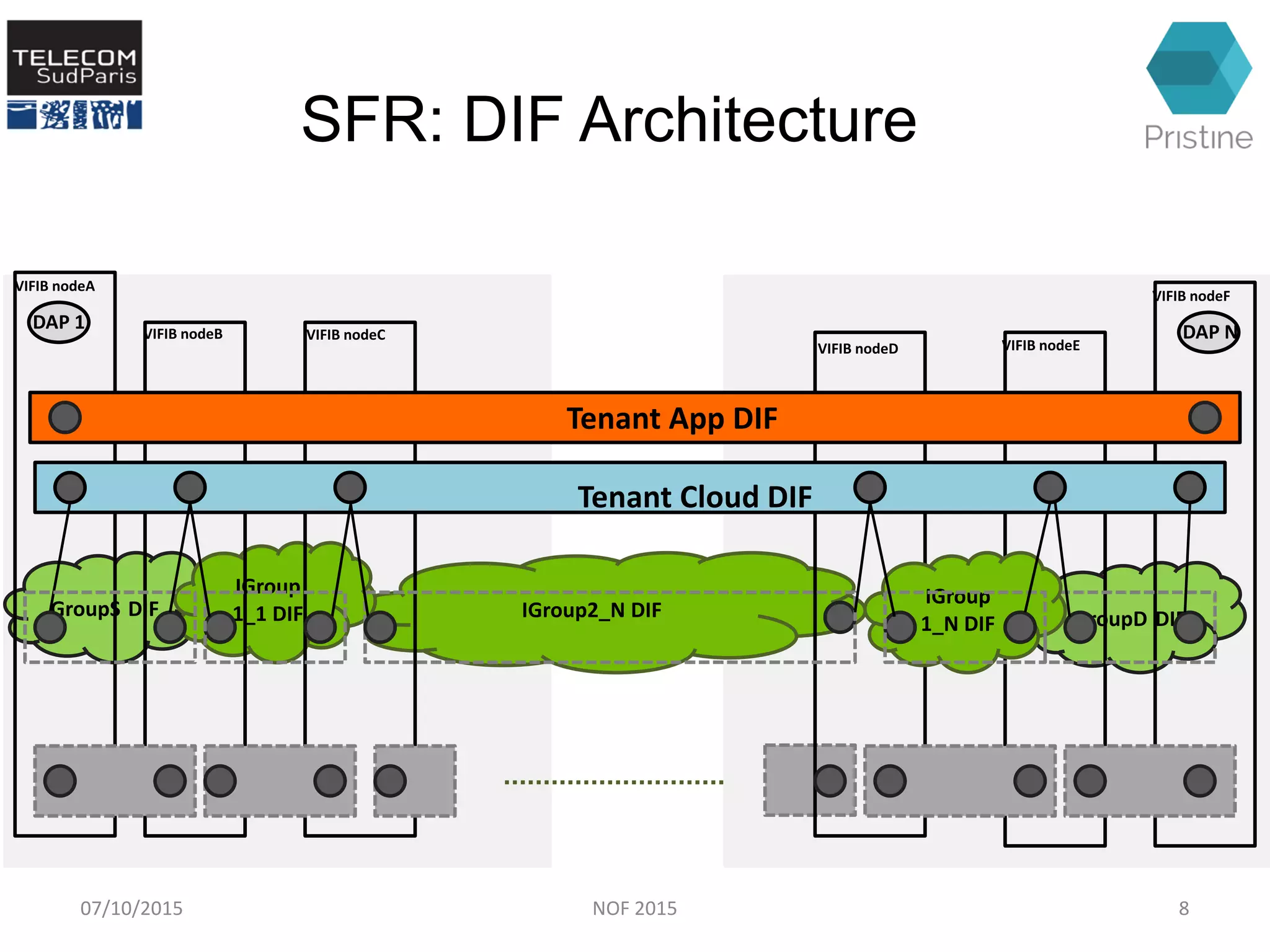
SFR: DIF Architecture
IGroup2_N DIF GroupD DIFGroupS DIF
IGroup
1_1 DIF
VIFIB nodeA
VIFIB nodeF
VIFIB nodeC
VIFIB nodeE
VIFIB nodeB
VIFIB nodeD
Tenant Cloud DIF
IGroup
1_N DIF
DAP 1 DAP N
Tenant App DIF
07/10/2015 8NOF 2015
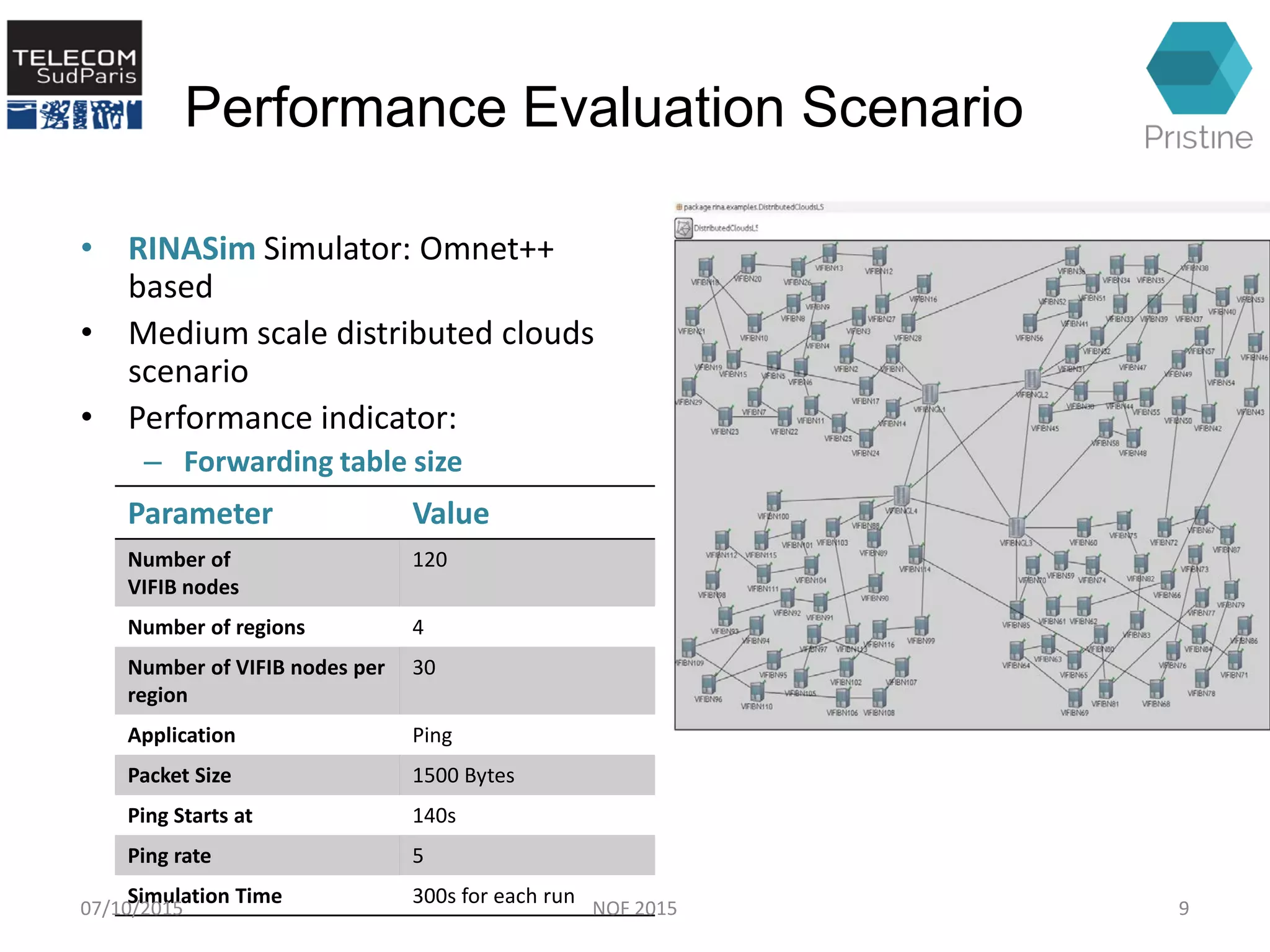
Performance Evaluation Scenario
Parameter Value
Number of
VIFIB nodes
120
Number of regions 4
Number of VIFIB nodes per
region
30
Application Ping
Packet Size 1500 Bytes
Ping Starts at 140s
Ping rate 5
Simulation Time 300s for each run
07/10/2015 9NOF 2015
• RINASim Simulator: Omnet++
based
• Medium scale distributed clouds
scenario
• Performance indicator:
– Forwarding table size
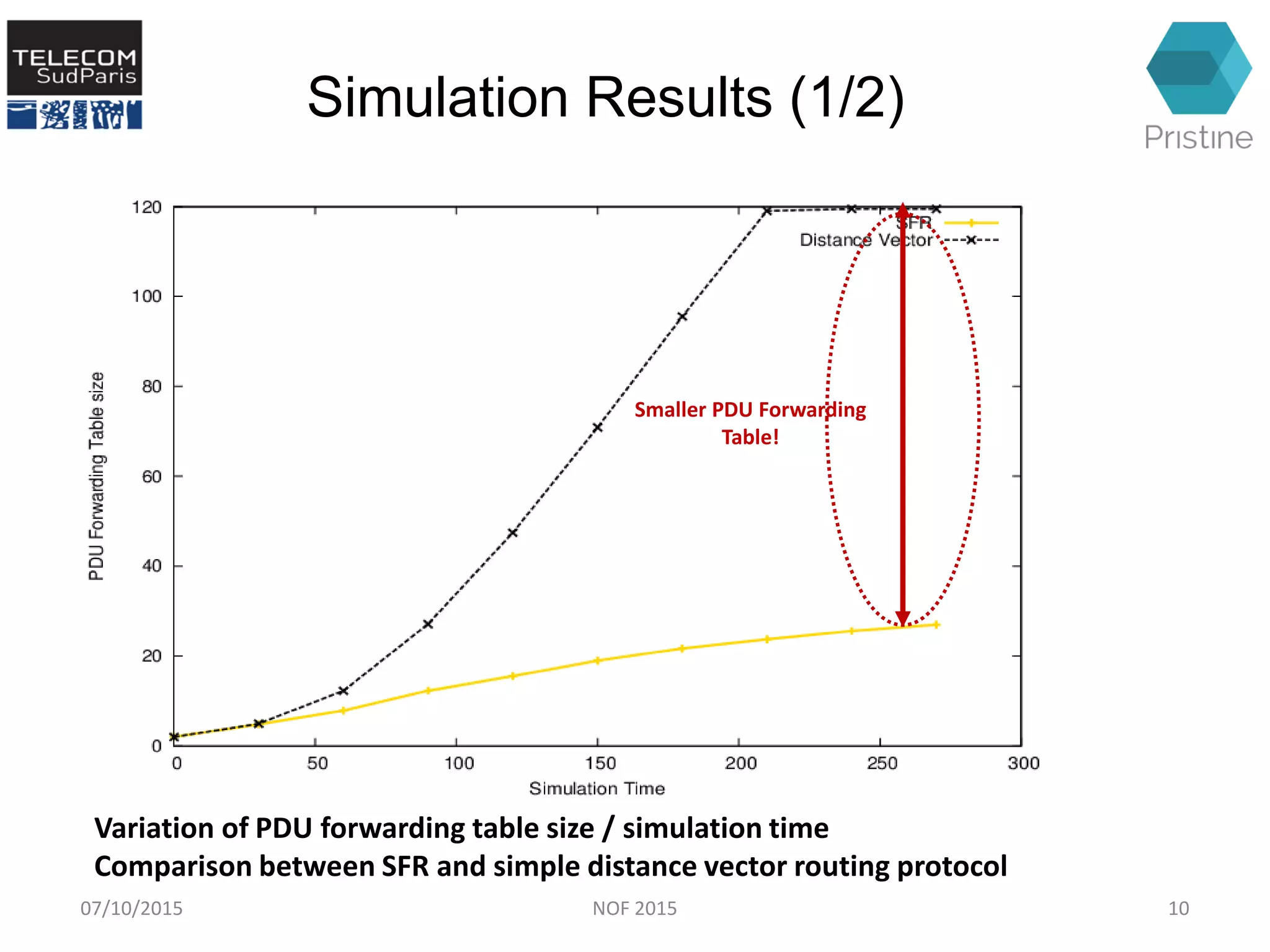
Simulation Results (1/2)
Smaller PDU Forwarding
Table!
Variation of PDU forwarding table size / simulation time
Comparison between SFR and simple distance vector routing protocol
07/10/2015 10NOF 2015
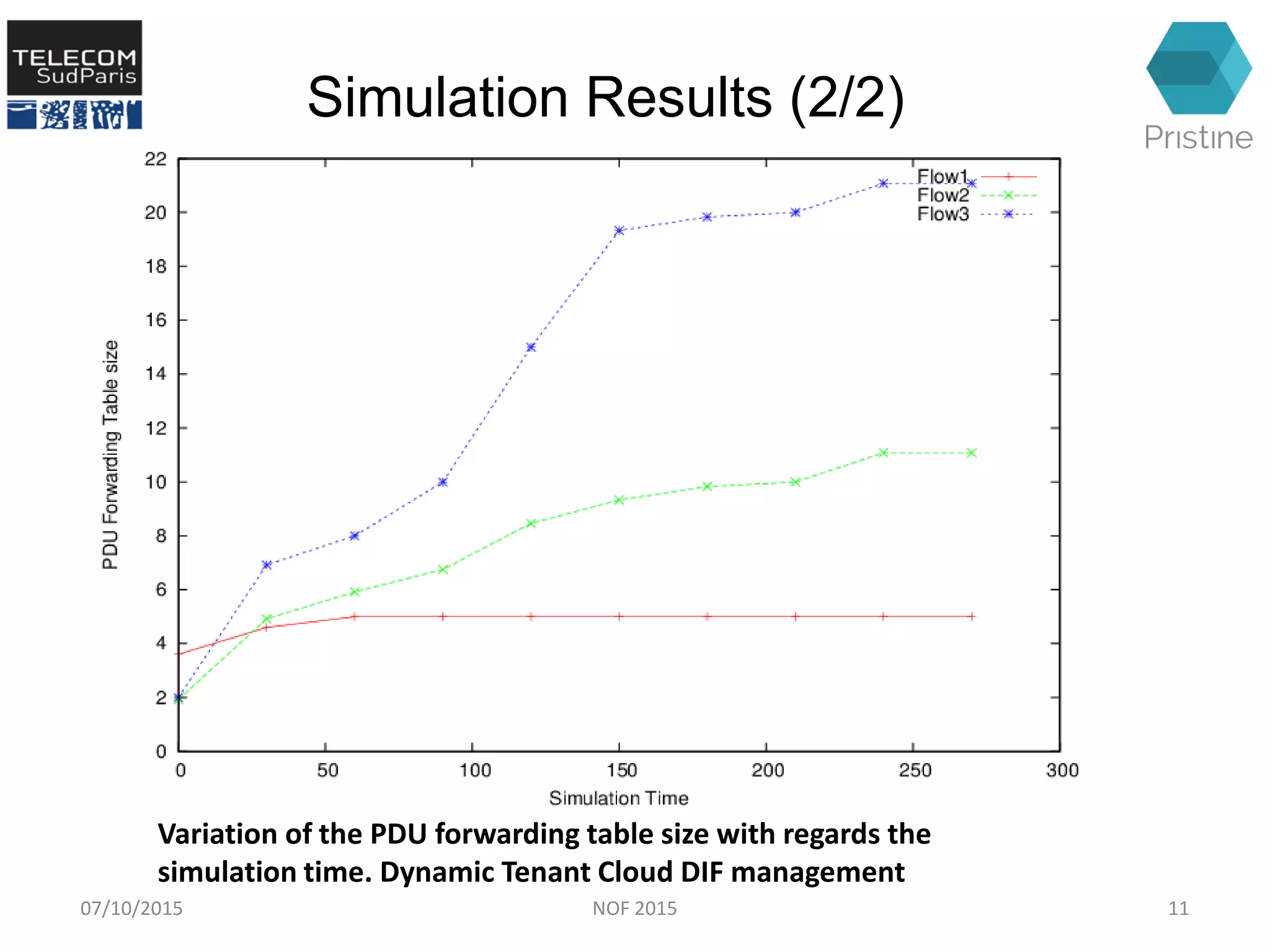
Variation of the PDU forwarding table size with regards the
simulation time. Dynamic Tenant Cloud DIF management
Simulation Results (2/2)
07/10/2015 11NOF 2015
Conclusion
• SFR: new and generic routing architecture for distributed
clouds
– Hierarchical DIF architecture
• SFR achieves better results compared to current distributed
clouds networking solutions
– The forwarding table size is drastically decreased
• In future works, we plan
– Further evaluate the assets of applying RINA to distributed clouds
• Consider more evaluation metrics: latency, throughput..
– Deploy SFR within VIFIB infrastructure to compare it to re6st
07/10/2015 12NOF 2015
Thank you for your
attention!
Questions?
07/10/2015 NOF 2015 13

SFR: Scalable Forwarding with RINA for Distributed Clouds

  • 1.
    SFR: Scalable Forwardingwith RINA for Distributed Clouds Fatma Hrizi, Anis Laouiti and Hakima Chaouchi Telecom SudParis, France 6th International Conference NOF 2015, MONTREAL, CANADA, SEPTEMBER 30, 2015 07/10/2015 1NOF 2015
  • 2.
    Outline • Intro &Motivation • VIFIB Distributed Clouds • RINA: Recursive InterNetwork Architecture • SFR: Scalable Forwarding with RINA • Simulation Results • Conclusion 07/10/2015 2NOF 2015
  • 3.
    Generated from https://tagul.com Intro& Motivation • Cloud Computing – Fast Emergence • Research, industries and standardizations – Enables ubiquitous and on-demand access to shared resources – Large scale applications become feasible • Big data, HPC.. – Single central point Scalability & Availability issues • Distributed Clouds – Decentralized management – Resources distributed in several geo area – “Volunteer” clouds • An example: VIFIB 07/10/2015 3NOF 2015
  • 4.
    VIFIB Distributed Clouds •VIFIB: Resilient Computing – No data center architecture: • Micro servers located in homes, offices.. • Distributed resources More Availability: 99.99%! – Master/Slave architecture – Resiliency • Data is encrypted and replicated in different locations • Overlay Network of Open VPN tunnels (re6st) 07/10/2015 NOF 2015 4 Source: http://www.vifib.com/ Source: http://www.vifib.com/
  • 5.
    Re6st: Resilient Overlay NetworkingSystem • Re6st – Mesh network of Open VPN • Flat and random graph – Babel Protocol used to calculate best routes – Fast recovery! • Issues with Re6st – Security issues • Bad routes flooding – Scalability issues • Flat topology does not scale • Tunnels might consume extensive resources 07/10/2015 NOF 2015 5 Source: http://www.vifib.com/
  • 6.
    RINA: Recursive InterNetwork Architecture 07/10/2015NOF 2015 6 • Inter-Process Communication (IPC) model • Unlike TCP/IP, one single layer • that could be repeated recursively • Clean separation between mechanism and policy • Divide and Conquer • Scalability
  • 7.
    GroupS Group1 GroupD GroupN-1Group2 InterGroup1_NInterGroup1_1 InterGroup1_2 InterGroup1_N-1 InterGroup2_N • The distributedclouds is divided into groups • Group leaders are created to interconnect nodes from different groups and to form the inter groups • To support scalability, multiple levels could be created SFR: Scalable Forwarding with RINA 07/10/2015 7NOF 2015
  • 8.
    SFR: DIF Architecture IGroup2_NDIF GroupD DIFGroupS DIF IGroup 1_1 DIF VIFIB nodeA VIFIB nodeF VIFIB nodeC VIFIB nodeE VIFIB nodeB VIFIB nodeD Tenant Cloud DIF IGroup 1_N DIF DAP 1 DAP N Tenant App DIF 07/10/2015 8NOF 2015
  • 9.
    Performance Evaluation Scenario ParameterValue Number of VIFIB nodes 120 Number of regions 4 Number of VIFIB nodes per region 30 Application Ping Packet Size 1500 Bytes Ping Starts at 140s Ping rate 5 Simulation Time 300s for each run 07/10/2015 9NOF 2015 • RINASim Simulator: Omnet++ based • Medium scale distributed clouds scenario • Performance indicator: – Forwarding table size
  • 10.
    Simulation Results (1/2) SmallerPDU Forwarding Table! Variation of PDU forwarding table size / simulation time Comparison between SFR and simple distance vector routing protocol 07/10/2015 10NOF 2015
  • 11.
    Variation of thePDU forwarding table size with regards the simulation time. Dynamic Tenant Cloud DIF management Simulation Results (2/2) 07/10/2015 11NOF 2015
  • 12.
    Conclusion • SFR: newand generic routing architecture for distributed clouds – Hierarchical DIF architecture • SFR achieves better results compared to current distributed clouds networking solutions – The forwarding table size is drastically decreased • In future works, we plan – Further evaluate the assets of applying RINA to distributed clouds • Consider more evaluation metrics: latency, throughput.. – Deploy SFR within VIFIB infrastructure to compare it to re6st 07/10/2015 12NOF 2015
  • 13.
    Thank you foryour attention! Questions? 07/10/2015 NOF 2015 13