Sex/Sexual Education
Sex Education
• Sex education is high quality teaching and learning about a broad
variety of topics related to sex and sexuality.
• It explores values and beliefs about those topics and helps people gain
the skills that are needed to navigate relationships with self, partners,
and community, and manage one’s own sexual health.
• Sex education may take place in schools, at home, in community
settings, or online.
Comprehensive sex education refers to programs
that cover a broad range of topics related to:
• Human development, including puberty, anatomy, sexual orientation, and
gender identity
• Relationships, including self, family, friendships, romantic relationships,
and health care providers
• Personal skills, including communication, boundary setting, negotiation,
and decision-making
• Sexual behavior, including the full spectrum of ways people choose to be,
or not be, sexual beings
• Sexual health, including sexually transmitted infections, birth control,
pregnancy, and abortion
• Society and culture, including media literacy, shame and stigma, and how
power, identity, and oppression impact sexual wellness and reproductive
freedom
Sexual Health Education Programs
• The rate of sexual assault among victims 12-years old or older
increased from 1.4 to 2.7 per 1,000 persons.
• This increasing rate of victimization is in line with recent research
from the Centers.
• An Sexual Violence Survey data illustrates the risk to male and female
victims, between ages 10-17, to be approximately 1 in 4 and 1 in 3
individuals, respectively
• studies have uncovered evidence indicating comprehensive programs
are successful when they include
health goals,
preventive methods,
physical/psychosocial risk and
protective factors,
• fostering of safe environments, and the incorporation of active
participation and multiple activities throughout the course
Advantages of Sexual Health Education
Policy
 Focus on preventing adverse sexual behavior and subsequent
consequences.
Professional development specifically targeted to teaching sexual
health content.
 Focus on teaching four domains (including several specific topics
under each domain):
Human sexuality
Pregnancy prevention
HIV prevention
Sexually transmitted diseases prevention.
• Tailored interventions for the needs, concerns, and expectations of
students.
Young people being educated to make informed decisions for their
sexual health.
Expanded health education topics reviewed in school.
• Aspects of the community, peers, youth, and academic collaboration in
the health education curriculum.
Primary focus on HIV/AIDS, STD prevention, alcohol, and drug
education, with possible incorporation of sexual health education
• sex education that’s culturally responsive and inclusive helps young
people develop the social and emotional skills they need to become caring and
empathetic adults.
• This type of sex education early and often leads to appreciation of sexual diversity,
dating and intimate partner violence prevention, development of healthy
relationships, prevention of child sex abuse, improved social/emotional learning,
and increased media literacy.
• It also helps young people avoid unintended pregnancies and sexually transmitted
infections (STIs).
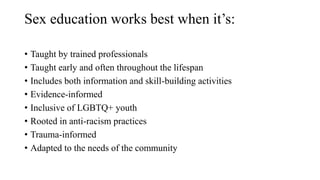
Sex education works best when it’s:
• Taught by trained professionals
• Taught early and often throughout the lifespan
• Includes both information and skill-building activities
• Evidence-informed
• Inclusive of LGBTQ+ youth
• Rooted in anti-racism practices
• Trauma-informed
• Adapted to the needs of the community
• https://portal.ct.gov/SDE/Publications/Sexual-Health-Education-
Component-of-Comprehensive-Health-Education/Components-of-
Sexual-Health-Education

sex education.pptx

  • 1.
  • 2.
    Sex Education • Sexeducation is high quality teaching and learning about a broad variety of topics related to sex and sexuality. • It explores values and beliefs about those topics and helps people gain the skills that are needed to navigate relationships with self, partners, and community, and manage one’s own sexual health. • Sex education may take place in schools, at home, in community settings, or online.
  • 3.
    Comprehensive sex educationrefers to programs that cover a broad range of topics related to: • Human development, including puberty, anatomy, sexual orientation, and gender identity • Relationships, including self, family, friendships, romantic relationships, and health care providers • Personal skills, including communication, boundary setting, negotiation, and decision-making • Sexual behavior, including the full spectrum of ways people choose to be, or not be, sexual beings • Sexual health, including sexually transmitted infections, birth control, pregnancy, and abortion • Society and culture, including media literacy, shame and stigma, and how power, identity, and oppression impact sexual wellness and reproductive freedom
  • 4.
    Sexual Health EducationPrograms • The rate of sexual assault among victims 12-years old or older increased from 1.4 to 2.7 per 1,000 persons. • This increasing rate of victimization is in line with recent research from the Centers. • An Sexual Violence Survey data illustrates the risk to male and female victims, between ages 10-17, to be approximately 1 in 4 and 1 in 3 individuals, respectively
  • 5.
    • studies haveuncovered evidence indicating comprehensive programs are successful when they include health goals, preventive methods, physical/psychosocial risk and protective factors, • fostering of safe environments, and the incorporation of active participation and multiple activities throughout the course
  • 6.
    Advantages of SexualHealth Education Policy  Focus on preventing adverse sexual behavior and subsequent consequences. Professional development specifically targeted to teaching sexual health content.  Focus on teaching four domains (including several specific topics under each domain): Human sexuality Pregnancy prevention HIV prevention Sexually transmitted diseases prevention.
  • 7.
    • Tailored interventionsfor the needs, concerns, and expectations of students. Young people being educated to make informed decisions for their sexual health. Expanded health education topics reviewed in school. • Aspects of the community, peers, youth, and academic collaboration in the health education curriculum. Primary focus on HIV/AIDS, STD prevention, alcohol, and drug education, with possible incorporation of sexual health education
  • 8.
    • sex educationthat’s culturally responsive and inclusive helps young people develop the social and emotional skills they need to become caring and empathetic adults. • This type of sex education early and often leads to appreciation of sexual diversity, dating and intimate partner violence prevention, development of healthy relationships, prevention of child sex abuse, improved social/emotional learning, and increased media literacy. • It also helps young people avoid unintended pregnancies and sexually transmitted infections (STIs).
  • 9.
    Sex education worksbest when it’s: • Taught by trained professionals • Taught early and often throughout the lifespan • Includes both information and skill-building activities • Evidence-informed • Inclusive of LGBTQ+ youth • Rooted in anti-racism practices • Trauma-informed • Adapted to the needs of the community
  • 10.