go urme t taste o fg our met taste of
108 July 2015 dotwnews.com dotwnews.com July 2015 109
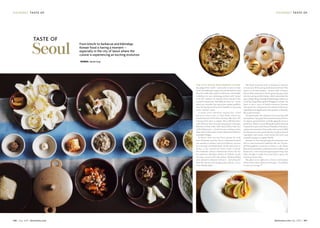
High-end Korean cuisine at La Ye
on
The love affair with Korean cuisine
has gripped the world – and nowhere more so than
Seoul.It’ssuddenlyinvoguetobeafoodieinKoreaand
they do it with style, passion and excess. Overweight
celebrities are now endorsing products with “proud
to be fat” routines on comedy shows, much to the
country’s amusement. And chefs are stars, too – ironic
when you consider that many have spoken publicly
about being disowned by their families for pursuing
such a “menial” career. 
It seems every television channel has a food
discovery show such as Tasty Road, which has
transformed two B-list divas into bona-fide stars. The
concept of the show is simple: They stuff their faces
with delicious food, leaving long queues of hungry
followers in their wake. Then there’s Please Take Care
of My Refrigerator, a South Korean cooking variety
show where chefs create creative dishes from leftovers
in people’s fridges.
In Seoul, there are two-hour queues for craft
beer, 40-minute waits for churros, restaurants booked
out months in advance and food delivery services
for every type of available grub. It’s the same story in
Jeonju, a city around two hours south of Seoul.
On weekends, culinary connoisseurs swarm the city
for authentic bibimbap, kettles of chilled, cloudy
rice beer served with side dishes, blood-pudding
stew, shaved-ice desserts and more – devouring the
food like locusts and disappearing without a trace
come Sunday night. 
The Seoul restaurant scene is dynamic as chefs try
tocomeupwiththenextgreatKoreanfoodtrend.This
season it’s all about fondue – Korean style. At James’
Cheese Ribs restaurant in Seoul, guests dip spicy pork
ribs into oozing melted cheese, which neutralises the
spice.BurgerKingevenhadafondueburgerwhereyou
could dip a large flame-grilled Whopper in cheese. Yet
there is also a wave of health-conscious Koreans
who queue for cold-press juices infused with fruits,
vegetables and supplements that promise to beautify,
detox and revitalise.
For gourmands, the emphasis is on sourcing, skill
andtradition.Top-gradeKoreanbeefrestaurantsfocus
on organic, grass-fed beef, carefully aging the meat to
perfection.There’soverwhelmingdemandforfarming
cooperatives such as the Korean Hansalim Federation,
a grassroots movement that works with around 2,000
local farmers to source pesticide-free, locally produced
vegetables and meats, from barley-fed pork and
artisanal sausages to organic kimchi.
Koreans are also championing old restaurants that
stick to time-honoured traditions like the 70-year-
old Hadongkwan restaurant in Seoul, a cult classic
favoured by presidents, politicians and socialites, and
famous for a slow-simmered gomtang beef soup that
takes all night to make. Once the batch is gone, the
restaurant closes shop. 
The place to eat right now is Seoul, a destination
where you’re wise to follow your hunger – it’s unlikely
to steer you wrong.
W
ood
-fired pizza at Fabbro
Words: Daniel Gray
From kimchi to barbecue and bibimbap,
Korean food is having a moment –
especially in the city of Seoul where the
cuisine is experiencing an exciting evolution
taste of
Seoul
go urme t taste o fg our met taste of
110 July 2015 dotwnews.com dotwnews.com July 2015 111
Seoul’s best 5
Five delectable spots to sample Seoul’s vibrant cuisine
La Yeon
Located in The Shilla hotel, La Yeon offers high-end Korean cuisine in an elegant atmosphere with
spectacular views of Namsan Mountain. Open since 2013, the kitchen is led by the learned hand
of chef Sung-il Kim and his team. The cuisine sticks to tradition with great emphasis on seasonal
ingredients, while the backing and resources of the Samsung family give the restaurant the luxury to
source the best. Its standout dish is gujeolpan, an ornate platter of thin flour pancakes used to wrap
nine seasonal ingredients. Other exemplary dishes include chargrilled pork belly and Gaduck Island
sea cucumber, braised beef galbijjim, and a cold seafood salad with pine nut dressing. It’s an exceptional
restaurant showcasing the skill and ingredients of Korea. 
The Shilla, 249 Dongho-ro, Jung-ru; Tel: +82 2 2230 3367; www.shilla.net
Han6gam
Located in the food section of the new Gran Seoul Mall near Jonggak station, this is a high-end beef
restaurant with an upscale atmosphere, surprising presentation, good service and great food. The
Korean beef is pristine – top quality, dry aged and marbled as intricately as a snowflake. A single
portion will start at KRW40,000 (US$36) and can go up to hundreds of thousands for a massive bone-in
rib-eye platter. Chefs use fine oak charcoal to grill the meat at the table, while sauces and dips such
as fresh wasabi, Dijon mustard and sea salt, along with salads and kimchi (fermented vegetables),
are served with the meal. Another exciting aspect is how they serve soju (a local spirit), which is
frozen then pounded with a rubber mallet to break up the ice crystals – resulting in an extra-smooth
beverage. Han6gam even serves dessert: homemade ice cream topped with roasted bean powder
makes for a fun finale.
Gran Seoul Mall, B1, Chunjin-Dong, Jongro-Gu; Tel: +82 2 2158 7933; www.han6gam.com
Fabbro
The second restaurant from chef Jae-sung Lee, who also owns the famous Daejangjangi (Blacksmith)
Hwadeok Pizza in Bukchon, Fabbro is an upscale Italian eatery set in a hanok (a traditional Korean
house). Serving a fusion of Korean and Italian cuisine, the pizzas and pastas are exemplary. Baked
in a wood-fire oven, the cheese-loaded Quattro Formaggi is served with a side of honey, apple and
brie, while the delectable selection of handmade pasta includes sumptuous reginette alla carbonara di
funghi and bouillabaisse-style seafood spaghetti al frutti di mare. Salads include a ricotta salad with
crescent moon pita and a crisp Caesar with a lovely confetti of cheese, while homemade tiramisu or
affogato for dessert completes the meal. Styled with antique furniture, the restaurant’s high open-beam
hanok ceilings are lit by simple iron candles. A former blacksmith by trade, chef Lee has handcrafted
many of the restaurant’s metal fixtures, plates and ornaments. The setting and food make Fabbro one
Korea’s standout restaurants.
Daejangjangi Fabbro, 202-1, Gahoe-Dong, Jongno-Gu; Tel: +82 2 764 4297
Balwoo Gongyang
The flagship restaurant run by the Jogyesa Temple Order of Monks sources the best locally grown,
seasonal produce – some of which is harvested at their own temples. Everything, including the
kimchi, is made on site. The food is prepared under the watchful eye of Master Dae An and her team.
Eschewing à la carte, multi-course menus at Balwoo Gongyang range from US$30 to $80 per person.
The highlights of the 15-dish “Enlightenment” menu include crunchy, light potato noodles in a green
pea stock; a crisp deodeok salad with refreshing mild horseradish dressing; and shiitake mushroom
crisps served with a spicy-yet-sweet sauce that are addictive. At times, Balwoo chefs let the ingredients
speak for themselves, such as the four-year-old Jiri Mountain ginseng, which is dipped into a citron
sauce. All in all, it’s a holistic experience not to be missed.
 Balwoo Gongyang, 5th floor, 56 Woojeongkuk-ro, Jongno-Gu; Tel: +82 2 2031 2081; www.baru.or.kr
Soigné Seoul
After working at Thomas Keller’s Per Se, Chef Jun Lee did a series of “pop ups” around Korea before
setting up his own space, Soigné, which has earned a reputation as one of Korea’s most creative and far-
reaching restaurants. Lee’s menu changes five times a year; the current theme is “The Eight Provinces
of Korea”, featuring highlights such as shark loin, buckwheat capellini with uni, and jeju chocolate
mousse. Lee’s most adventurous menu was “Episode Seven: Cinema Paradiso”, which recreated iconic
dishes from movies such as ratatouille from the eponymous kids’ film, an avocado salad plate inspired
by Jurassic Park and a Moulin Rouge-esque lobster truffle bisque. Lee is a fearless chef seeking to create
new flavours and concepts, and is a welcome surprise in Korea’s dining scene. 
B1F 549-17 Banpo Seocho; Tel: +82 2 3477 9386; www.soigneseoul.com

seoul (1)

  • 1.
    go urme ttaste o fg our met taste of 108 July 2015 dotwnews.com dotwnews.com July 2015 109 High-end Korean cuisine at La Ye on The love affair with Korean cuisine has gripped the world – and nowhere more so than Seoul.It’ssuddenlyinvoguetobeafoodieinKoreaand they do it with style, passion and excess. Overweight celebrities are now endorsing products with “proud to be fat” routines on comedy shows, much to the country’s amusement. And chefs are stars, too – ironic when you consider that many have spoken publicly about being disowned by their families for pursuing such a “menial” career.  It seems every television channel has a food discovery show such as Tasty Road, which has transformed two B-list divas into bona-fide stars. The concept of the show is simple: They stuff their faces with delicious food, leaving long queues of hungry followers in their wake. Then there’s Please Take Care of My Refrigerator, a South Korean cooking variety show where chefs create creative dishes from leftovers in people’s fridges. In Seoul, there are two-hour queues for craft beer, 40-minute waits for churros, restaurants booked out months in advance and food delivery services for every type of available grub. It’s the same story in Jeonju, a city around two hours south of Seoul. On weekends, culinary connoisseurs swarm the city for authentic bibimbap, kettles of chilled, cloudy rice beer served with side dishes, blood-pudding stew, shaved-ice desserts and more – devouring the food like locusts and disappearing without a trace come Sunday night.  The Seoul restaurant scene is dynamic as chefs try tocomeupwiththenextgreatKoreanfoodtrend.This season it’s all about fondue – Korean style. At James’ Cheese Ribs restaurant in Seoul, guests dip spicy pork ribs into oozing melted cheese, which neutralises the spice.BurgerKingevenhadafondueburgerwhereyou could dip a large flame-grilled Whopper in cheese. Yet there is also a wave of health-conscious Koreans who queue for cold-press juices infused with fruits, vegetables and supplements that promise to beautify, detox and revitalise. For gourmands, the emphasis is on sourcing, skill andtradition.Top-gradeKoreanbeefrestaurantsfocus on organic, grass-fed beef, carefully aging the meat to perfection.There’soverwhelmingdemandforfarming cooperatives such as the Korean Hansalim Federation, a grassroots movement that works with around 2,000 local farmers to source pesticide-free, locally produced vegetables and meats, from barley-fed pork and artisanal sausages to organic kimchi. Koreans are also championing old restaurants that stick to time-honoured traditions like the 70-year- old Hadongkwan restaurant in Seoul, a cult classic favoured by presidents, politicians and socialites, and famous for a slow-simmered gomtang beef soup that takes all night to make. Once the batch is gone, the restaurant closes shop.  The place to eat right now is Seoul, a destination where you’re wise to follow your hunger – it’s unlikely to steer you wrong. W ood -fired pizza at Fabbro Words: Daniel Gray From kimchi to barbecue and bibimbap, Korean food is having a moment – especially in the city of Seoul where the cuisine is experiencing an exciting evolution taste of Seoul
  • 2.
    go urme ttaste o fg our met taste of 110 July 2015 dotwnews.com dotwnews.com July 2015 111 Seoul’s best 5 Five delectable spots to sample Seoul’s vibrant cuisine La Yeon Located in The Shilla hotel, La Yeon offers high-end Korean cuisine in an elegant atmosphere with spectacular views of Namsan Mountain. Open since 2013, the kitchen is led by the learned hand of chef Sung-il Kim and his team. The cuisine sticks to tradition with great emphasis on seasonal ingredients, while the backing and resources of the Samsung family give the restaurant the luxury to source the best. Its standout dish is gujeolpan, an ornate platter of thin flour pancakes used to wrap nine seasonal ingredients. Other exemplary dishes include chargrilled pork belly and Gaduck Island sea cucumber, braised beef galbijjim, and a cold seafood salad with pine nut dressing. It’s an exceptional restaurant showcasing the skill and ingredients of Korea.  The Shilla, 249 Dongho-ro, Jung-ru; Tel: +82 2 2230 3367; www.shilla.net Han6gam Located in the food section of the new Gran Seoul Mall near Jonggak station, this is a high-end beef restaurant with an upscale atmosphere, surprising presentation, good service and great food. The Korean beef is pristine – top quality, dry aged and marbled as intricately as a snowflake. A single portion will start at KRW40,000 (US$36) and can go up to hundreds of thousands for a massive bone-in rib-eye platter. Chefs use fine oak charcoal to grill the meat at the table, while sauces and dips such as fresh wasabi, Dijon mustard and sea salt, along with salads and kimchi (fermented vegetables), are served with the meal. Another exciting aspect is how they serve soju (a local spirit), which is frozen then pounded with a rubber mallet to break up the ice crystals – resulting in an extra-smooth beverage. Han6gam even serves dessert: homemade ice cream topped with roasted bean powder makes for a fun finale. Gran Seoul Mall, B1, Chunjin-Dong, Jongro-Gu; Tel: +82 2 2158 7933; www.han6gam.com Fabbro The second restaurant from chef Jae-sung Lee, who also owns the famous Daejangjangi (Blacksmith) Hwadeok Pizza in Bukchon, Fabbro is an upscale Italian eatery set in a hanok (a traditional Korean house). Serving a fusion of Korean and Italian cuisine, the pizzas and pastas are exemplary. Baked in a wood-fire oven, the cheese-loaded Quattro Formaggi is served with a side of honey, apple and brie, while the delectable selection of handmade pasta includes sumptuous reginette alla carbonara di funghi and bouillabaisse-style seafood spaghetti al frutti di mare. Salads include a ricotta salad with crescent moon pita and a crisp Caesar with a lovely confetti of cheese, while homemade tiramisu or affogato for dessert completes the meal. Styled with antique furniture, the restaurant’s high open-beam hanok ceilings are lit by simple iron candles. A former blacksmith by trade, chef Lee has handcrafted many of the restaurant’s metal fixtures, plates and ornaments. The setting and food make Fabbro one Korea’s standout restaurants. Daejangjangi Fabbro, 202-1, Gahoe-Dong, Jongno-Gu; Tel: +82 2 764 4297 Balwoo Gongyang The flagship restaurant run by the Jogyesa Temple Order of Monks sources the best locally grown, seasonal produce – some of which is harvested at their own temples. Everything, including the kimchi, is made on site. The food is prepared under the watchful eye of Master Dae An and her team. Eschewing à la carte, multi-course menus at Balwoo Gongyang range from US$30 to $80 per person. The highlights of the 15-dish “Enlightenment” menu include crunchy, light potato noodles in a green pea stock; a crisp deodeok salad with refreshing mild horseradish dressing; and shiitake mushroom crisps served with a spicy-yet-sweet sauce that are addictive. At times, Balwoo chefs let the ingredients speak for themselves, such as the four-year-old Jiri Mountain ginseng, which is dipped into a citron sauce. All in all, it’s a holistic experience not to be missed.  Balwoo Gongyang, 5th floor, 56 Woojeongkuk-ro, Jongno-Gu; Tel: +82 2 2031 2081; www.baru.or.kr Soigné Seoul After working at Thomas Keller’s Per Se, Chef Jun Lee did a series of “pop ups” around Korea before setting up his own space, Soigné, which has earned a reputation as one of Korea’s most creative and far- reaching restaurants. Lee’s menu changes five times a year; the current theme is “The Eight Provinces of Korea”, featuring highlights such as shark loin, buckwheat capellini with uni, and jeju chocolate mousse. Lee’s most adventurous menu was “Episode Seven: Cinema Paradiso”, which recreated iconic dishes from movies such as ratatouille from the eponymous kids’ film, an avocado salad plate inspired by Jurassic Park and a Moulin Rouge-esque lobster truffle bisque. Lee is a fearless chef seeking to create new flavours and concepts, and is a welcome surprise in Korea’s dining scene.  B1F 549-17 Banpo Seocho; Tel: +82 2 3477 9386; www.soigneseoul.com