SEO
BASICS FOR BEGINNERS
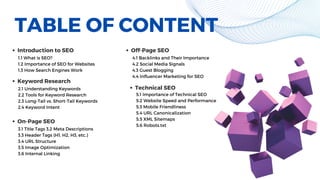
TABLE OF CONTENT
Introduction to SEO
1.1 What is SEO?
1.2 Importance of SEO for Websites
1.3 How Search Engines Work
Keyword Research
2.1 Understanding Keywords
2.2 Tools for Keyword Research
2.3 Long-Tail vs. Short-Tail Keywords
2.4 Keyword Intent
On-Page SEO
3.1 Title Tags 3.2 Meta Descriptions
3.3 Header Tags (H1, H2, H3, etc.)
3.4 URL Structure
3.5 Image Optimization
3.6 Internal Linking
Off-Page SEO
4.1 Backlinks and Their Importance
4.2 Social Media Signals
4.3 Guest Blogging
4.4 Influencer Marketing for SEO
Technical SEO
5.1 Importance of Technical SEO
5.2 Website Speed and Performance
5.3 Mobile Friendliness
5.4 URL Canonicalization
5.5 XML Sitemaps
5.6 Robots.txt
Search Engine Optimization (SEO) is the practice of optimizing a website to improve
its visibility and ranking on search engine results pages (SERPs). In simpler terms, it's
about making your website more attractive to search engines so that they rank it
higher when users search for relevant keywords.
SEO involves various strategies and techniques, both on and off your website, to
increase its chances of appearing in search engine results for queries related to your
content or business.
INTRODUCTION
WHAT IS SEO?
Increased Visibility: Higher rankings mean more visibility on search engines, leading to increased
chances of attracting visitors to your website.
Traffic Quality: SEO helps in attracting targeted and relevant traffic. Users searching for specific keywords
related to your content or business are more likely to find your site through organic search.
Credibility and Trust: Websites ranking higher in search results are often perceived as more credible and
trustworthy by users.
User Experience: Many SEO practices also contribute to a better user experience, such as fast-loading
pages, mobile optimization, and high-quality content.
IMPORTANCE OF SEO FOR WEBSITES
SEO is crucial for several reasons:
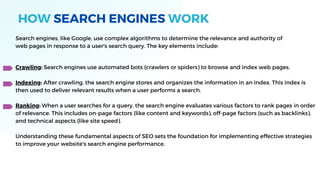
Crawling: Search engines use automated bots (crawlers or spiders) to browse and index web pages.
Indexing: After crawling, the search engine stores and organizes the information in an index. This index is
then used to deliver relevant results when a user performs a search.
Ranking: When a user searches for a query, the search engine evaluates various factors to rank pages in order
of relevance. This includes on-page factors (like content and keywords), off-page factors (such as backlinks),
and technical aspects (like site speed).
Understanding these fundamental aspects of SEO sets the foundation for implementing effective strategies
to improve your website's search engine performance.
HOW SEARCH ENGINES WORK
Search engines, like Google, use complex algorithms to determine the relevance and authority of
web pages in response to a user's search query. The key elements include:
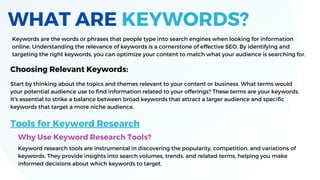
WHAT ARE KEYWORDS?
Keywords are the words or phrases that people type into search engines when looking for information
online. Understanding the relevance of keywords is a cornerstone of effective SEO. By identifying and
targeting the right keywords, you can optimize your content to match what your audience is searching for.
Start by thinking about the topics and themes relevant to your content or business. What terms would
your potential audience use to find information related to your offerings? These terms are your keywords.
It's essential to strike a balance between broad keywords that attract a larger audience and specific
keywords that target a more niche audience.
Choosing Relevant Keywords:
Tools for Keyword Research
Why Use Keyword Research Tools?
Keyword research tools are instrumental in discovering the popularity, competition, and variations of
keywords. They provide insights into search volumes, trends, and related terms, helping you make
informed decisions about which keywords to target.
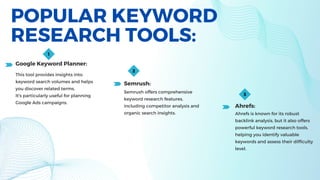
This tool provides insights into
keyword search volumes and helps
you discover related terms.
It's particularly useful for planning
Google Ads campaigns.
1
POPULAR KEYWORD
RESEARCH TOOLS:
Google Keyword Planner:
Semrush:
Ahrefs:
Semrush offers comprehensive
keyword research features,
including competitor analysis and
organic search insights. Ahrefs is known for its robust
backlink analysis, but it also offers
powerful keyword research tools,
helping you identify valuable
keywords and assess their difficulty
level.
2
3
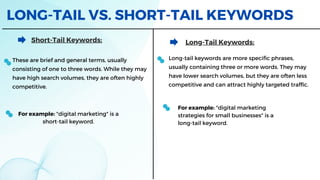
LONG-TAIL VS. SHORT-TAIL KEYWORDS
Short-Tail Keywords:
These are brief and general terms, usually
consisting of one to three words. While they may
have high search volumes, they are often highly
competitive.
Long-Tail Keywords:
For example: "digital marketing" is a
short-tail keyword.
Long-tail keywords are more specific phrases,
usually containing three or more words. They may
have lower search volumes, but they are often less
competitive and can attract highly targeted traffic.
For example: "digital marketing
strategies for small businesses" is a
long-tail keyword.
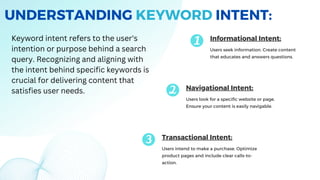
Transactional Intent:
Users intend to make a purchase. Optimize
product pages and include clear calls-to-
action.
Informational Intent:
Users seek information. Create content
that educates and answers questions.
Navigational Intent:
Users look for a specific website or page.
Ensure your content is easily navigable.
UNDERSTANDING KEYWORD INTENT:
Keyword intent refers to the user's
intention or purpose behind a search
query. Recognizing and aligning with
the intent behind specific keywords is
crucial for delivering content that
satisfies user needs.
LET'S
CONNECT
https://www.linkedin.com/in/tejaswini-g-347883256/

SEO basics for beginners

  • 1.
  • 2.
    TABLE OF CONTENT Introductionto SEO 1.1 What is SEO? 1.2 Importance of SEO for Websites 1.3 How Search Engines Work Keyword Research 2.1 Understanding Keywords 2.2 Tools for Keyword Research 2.3 Long-Tail vs. Short-Tail Keywords 2.4 Keyword Intent On-Page SEO 3.1 Title Tags 3.2 Meta Descriptions 3.3 Header Tags (H1, H2, H3, etc.) 3.4 URL Structure 3.5 Image Optimization 3.6 Internal Linking Off-Page SEO 4.1 Backlinks and Their Importance 4.2 Social Media Signals 4.3 Guest Blogging 4.4 Influencer Marketing for SEO Technical SEO 5.1 Importance of Technical SEO 5.2 Website Speed and Performance 5.3 Mobile Friendliness 5.4 URL Canonicalization 5.5 XML Sitemaps 5.6 Robots.txt
  • 3.
    Search Engine Optimization(SEO) is the practice of optimizing a website to improve its visibility and ranking on search engine results pages (SERPs). In simpler terms, it's about making your website more attractive to search engines so that they rank it higher when users search for relevant keywords. SEO involves various strategies and techniques, both on and off your website, to increase its chances of appearing in search engine results for queries related to your content or business. INTRODUCTION WHAT IS SEO?
  • 4.
    Increased Visibility: Higherrankings mean more visibility on search engines, leading to increased chances of attracting visitors to your website. Traffic Quality: SEO helps in attracting targeted and relevant traffic. Users searching for specific keywords related to your content or business are more likely to find your site through organic search. Credibility and Trust: Websites ranking higher in search results are often perceived as more credible and trustworthy by users. User Experience: Many SEO practices also contribute to a better user experience, such as fast-loading pages, mobile optimization, and high-quality content. IMPORTANCE OF SEO FOR WEBSITES SEO is crucial for several reasons:
  • 5.
    Crawling: Search enginesuse automated bots (crawlers or spiders) to browse and index web pages. Indexing: After crawling, the search engine stores and organizes the information in an index. This index is then used to deliver relevant results when a user performs a search. Ranking: When a user searches for a query, the search engine evaluates various factors to rank pages in order of relevance. This includes on-page factors (like content and keywords), off-page factors (such as backlinks), and technical aspects (like site speed). Understanding these fundamental aspects of SEO sets the foundation for implementing effective strategies to improve your website's search engine performance. HOW SEARCH ENGINES WORK Search engines, like Google, use complex algorithms to determine the relevance and authority of web pages in response to a user's search query. The key elements include:
  • 6.
    WHAT ARE KEYWORDS? Keywordsare the words or phrases that people type into search engines when looking for information online. Understanding the relevance of keywords is a cornerstone of effective SEO. By identifying and targeting the right keywords, you can optimize your content to match what your audience is searching for. Start by thinking about the topics and themes relevant to your content or business. What terms would your potential audience use to find information related to your offerings? These terms are your keywords. It's essential to strike a balance between broad keywords that attract a larger audience and specific keywords that target a more niche audience. Choosing Relevant Keywords: Tools for Keyword Research Why Use Keyword Research Tools? Keyword research tools are instrumental in discovering the popularity, competition, and variations of keywords. They provide insights into search volumes, trends, and related terms, helping you make informed decisions about which keywords to target.
  • 7.
    This tool providesinsights into keyword search volumes and helps you discover related terms. It's particularly useful for planning Google Ads campaigns. 1 POPULAR KEYWORD RESEARCH TOOLS: Google Keyword Planner: Semrush: Ahrefs: Semrush offers comprehensive keyword research features, including competitor analysis and organic search insights. Ahrefs is known for its robust backlink analysis, but it also offers powerful keyword research tools, helping you identify valuable keywords and assess their difficulty level. 2 3
  • 8.
    LONG-TAIL VS. SHORT-TAILKEYWORDS Short-Tail Keywords: These are brief and general terms, usually consisting of one to three words. While they may have high search volumes, they are often highly competitive. Long-Tail Keywords: For example: "digital marketing" is a short-tail keyword. Long-tail keywords are more specific phrases, usually containing three or more words. They may have lower search volumes, but they are often less competitive and can attract highly targeted traffic. For example: "digital marketing strategies for small businesses" is a long-tail keyword.
  • 9.
    Transactional Intent: Users intendto make a purchase. Optimize product pages and include clear calls-to- action. Informational Intent: Users seek information. Create content that educates and answers questions. Navigational Intent: Users look for a specific website or page. Ensure your content is easily navigable. UNDERSTANDING KEYWORD INTENT: Keyword intent refers to the user's intention or purpose behind a search query. Recognizing and aligning with the intent behind specific keywords is crucial for delivering content that satisfies user needs.
  • 10.