A Smart City-Smart Bay Project:
Establishing an integrated water monitoring system for decision
support in Dublin Bay
Fiona Regan, Timothy Sullivan, Ciprian Briciu, Helen Cooney, Dian Zhang*, Edel
O’Connor*, Noel O’Connor*, Alan Smeaton*
Marine and Environmental Sensing Technology Hub (MESTECH), National Centre for Sensor Research
Dublin City University
*CLARITY Centre for Sensor Web Technologies, Dublin City University
Dublin, Ireland
Project	
  Ra+onale	
  
Design,	
  deployment	
  and	
  integra2on	
  of	
  an	
  autonomous	
  real-­‐2me	
  
mul2modal	
  sensing	
  network	
  for	
  improved	
  decision	
  making	
  
Research	
  Objec+ves	


•  Improve	
  Water	
  quality	
  monitoring	
  
•  Improve	
  discrete	
  sampling	
  regimes	


•  Iden+fy	
  and	
  Improve	
  detec+on	
  of	
  Security	
  threats	
  
•  Iden2fy	
  threats	
  to	
  health	
  
(microbial	
  and	
  other	
  pollutants)	
  
•  Enhanced	
  Signal	
  processing:	
  
Develop	
  surrogate	
  measurements	
  
•  Produce	
  Baseline	
  datasets	
  on	
  water	
  quality	


Introduc+on	


Ra+onale	


Study	
  site	


Methods	


Instrumenta+on	


Data	
  analysis	


Results	


Conclusions	
  
Current	
  and	
  future	
  Network	
  Distribu+on	
  by	
  2014	
  
River	
  Liffey	
  
Dublin	
  Bay	
  
Dublin	
  City	
  Centre	
  
2	
  km	
  
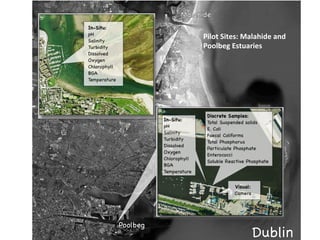
Pilot	
  Sites:	
  Malahide	
  and	
  
Poolbeg	
  Estuaries	


Introduc+on	


Ra+onale	


Study	
  site	


Methods	


Instrumenta+on	


Data	
  analysis	


Results	


Conclusions	
  
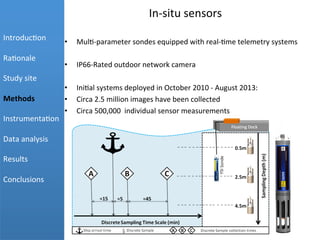
In-­‐situ	
  sensors	
  
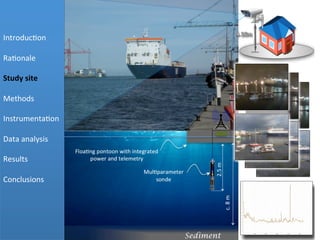
•  Mul+-­‐parameter	
  sondes	
  equipped	
  with	
  real-­‐+me	
  telemetry	
  systems	


•  IP66-­‐Rated	
  outdoor	
  network	
  camera	


•  Ini+al	
  systems	
  deployed	
  in	
  October	
  2010	
  -­‐	
  August	
  2013:	
  
•  Circa	
  2.5	
  million	
  images	
  have	
  been	
  collected	
  
•  Circa	
  500,000	
  	
  individual	
  sensor	
  measurements	


Introduc+on	


Ra+onale	


Study	
  site	


Methods	


Instrumenta+on	


Data	
  analysis	


Results	


Conclusions	


Introduc+on	


Ra+onale	


Study	
  Site	


Methods	


Instrumenta+on	


Data	
  analysis	


Results	


Conclusions	
  
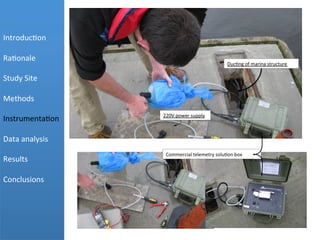
Duc+ng	
  of	
  marina	
  structure	
  
220V	
  power	
  supply	
  
Commercial	
  telemetry	
  solu+on	
  box	
  
 
Data	
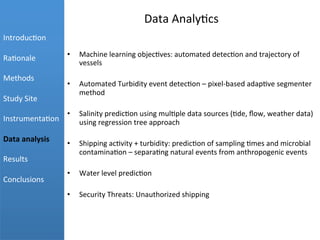
  Analy+cs	
  
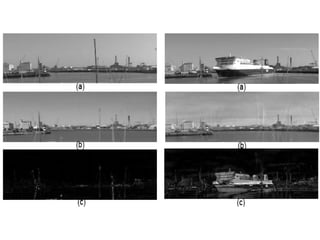
•  Machine	
  learning	
  objec+ves:	
  automated	
  detec+on	
  and	
  trajectory	
  of	
  
vessels	
  
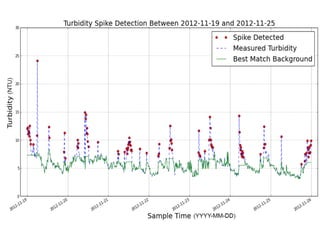
•  Automated	
  Turbidity	
  event	
  detec+on	
  –	
  pixel-­‐based	
  adap+ve	
  segmenter	
  
method	
  
•  Salinity	
  predic+on	
  using	
  mul+ple	
  data	
  sources	
  (+de,	
  flow,	
  weather	
  data)	
  
using	
  regression	
  tree	
  approach	
  
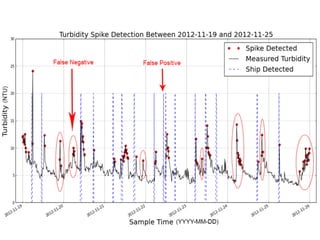
•  Shipping	
  ac+vity	
  +	
  turbidity:	
  predic+on	
  of	
  sampling	
  +mes	
  and	
  microbial	
  
contamina+on	
  –	
  separa+ng	
  natural	
  events	
  from	
  anthropogenic	
  events	
  
•  Water	
  level	
  predic+on	
  
•  Security	
  Threats:	
  Unauthorized	
  shipping	


Introduc+on	


Ra+onale	


Methods	


Study	
  Site	


Instrumenta+on	


Data	
  analysis	


Results	


Conclusions	
  
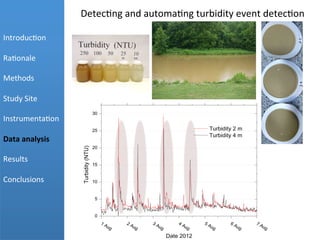
1 Aug
2 Aug
3 Aug
4 Aug
5 Aug
6 Aug
7 Aug
0
5
10
15
20
25
30
Turbidity 2 m
Turbidity 4 m
Turbidity(NTU)
Date 2012
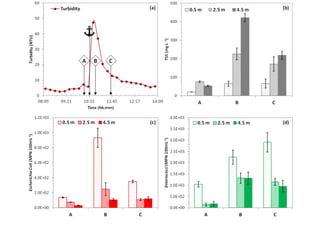
Detec+ng	
  and	
  automa+ng	
  turbidity	
  event	
  detec+on	


Introduc+on	


Ra+onale	


Methods	


Study	
  Site	


Instrumenta+on	


Data	
  analysis	


Results	


Conclusions	
  
Conclusions	
  
•  An	
  extensive	
  network	
  of	
  both	
  in-­‐situ	
  aqua+c	
  sensors	
  and	
  visual	
  sensing	
  
systems	
  have	
  been	
  and	
  are	
  in	
  process	
  of	
  deployment	
  in	
  Dublin	
  Bay	


•  The	
  network	
  has	
  already	
  had	
  demonstrable	
  impact	
  on	
  monitoring	
  and	
  
understanding	
  dynamic	
  processes	
  in	
  Dublin	
  Bay	
  
•  Incorpora+on	
  of	
  visual	
  sensing	
  nodes	
  into	
  the	
  network	
  has	
  proven	
  
advantageous	
  
•  Machine	
  learning	
  and	
  increased	
  compu+ng	
  power	
  has	
  aided	
  in	
  data	
  
analysis	
  –	
  future	
  work	
  will	
  emphasize	
  data	
  analy+cs	


•  Challenges	
  remain:	
  Increased	
  spa+al	
  coverage,	
  Biofouling!,	
  Cost,	
  
Transla2on	
  of	
  data	
  into	
  knowledge	


Thank	
  You!	
  Ques+ons?	
  
Contacts:	
  +m.sullivan@dcu.ie;	
  fiona.regan@dcu.ie	


Sensorcomm3 t sullivan

  • 1.
    A Smart City-SmartBay Project: Establishing an integrated water monitoring system for decision support in Dublin Bay Fiona Regan, Timothy Sullivan, Ciprian Briciu, Helen Cooney, Dian Zhang*, Edel O’Connor*, Noel O’Connor*, Alan Smeaton* Marine and Environmental Sensing Technology Hub (MESTECH), National Centre for Sensor Research Dublin City University *CLARITY Centre for Sensor Web Technologies, Dublin City University Dublin, Ireland
  • 2.
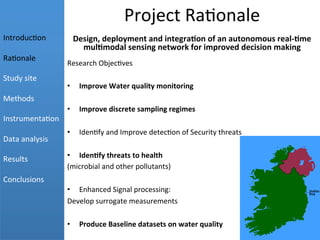
    Project  Ra+onale   Design,  deployment  and  integra2on  of  an  autonomous  real-­‐2me   mul2modal  sensing  network  for  improved  decision  making   Research  Objec+ves     •  Improve  Water  quality  monitoring   •  Improve  discrete  sampling  regimes     •  Iden+fy  and  Improve  detec+on  of  Security  threats   •  Iden2fy  threats  to  health   (microbial  and  other  pollutants)   •  Enhanced  Signal  processing:   Develop  surrogate  measurements   •  Produce  Baseline  datasets  on  water  quality         Introduc+on     Ra+onale     Study  site     Methods     Instrumenta+on     Data  analysis     Results     Conclusions  
  • 4.
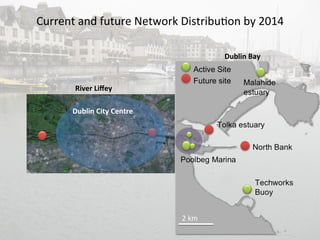
    Current  and  future  Network  Distribu+on  by  2014   River  Liffey   Dublin  Bay   Dublin  City  Centre   2  km  
  • 5.
    Pilot  Sites:  Malahide  and   Poolbeg  Estuaries  
  • 6.
          Introduc+on     Ra+onale     Study  site     Methods     Instrumenta+on     Data  analysis     Results     Conclusions  
  • 7.
    In-­‐situ  sensors   • Mul+-­‐parameter  sondes  equipped  with  real-­‐+me  telemetry  systems     •  IP66-­‐Rated  outdoor  network  camera     •  Ini+al  systems  deployed  in  October  2010  -­‐  August  2013:   •  Circa  2.5  million  images  have  been  collected   •  Circa  500,000    individual  sensor  measurements         Introduc+on     Ra+onale     Study  site     Methods     Instrumenta+on     Data  analysis     Results     Conclusions  
  • 8.
          Introduc+on     Ra+onale     Study  Site     Methods     Instrumenta+on     Data  analysis     Results     Conclusions   Duc+ng  of  marina  structure   220V  power  supply   Commercial  telemetry  solu+on  box  
  • 9.
      Data  Analy+cs   • Machine  learning  objec+ves:  automated  detec+on  and  trajectory  of   vessels   •  Automated  Turbidity  event  detec+on  –  pixel-­‐based  adap+ve  segmenter   method   •  Salinity  predic+on  using  mul+ple  data  sources  (+de,  flow,  weather  data)   using  regression  tree  approach   •  Shipping  ac+vity  +  turbidity:  predic+on  of  sampling  +mes  and  microbial   contamina+on  –  separa+ng  natural  events  from  anthropogenic  events   •  Water  level  predic+on   •  Security  Threats:  Unauthorized  shipping         Introduc+on     Ra+onale     Methods     Study  Site     Instrumenta+on     Data  analysis     Results     Conclusions  
  • 10.
    1 Aug 2 Aug 3Aug 4 Aug 5 Aug 6 Aug 7 Aug 0 5 10 15 20 25 30 Turbidity 2 m Turbidity 4 m Turbidity(NTU) Date 2012 Detec+ng  and  automa+ng  turbidity  event  detec+on         Introduc+on     Ra+onale     Methods     Study  Site     Instrumenta+on     Data  analysis     Results     Conclusions  
  • 17.
    Conclusions   •  An  extensive  network  of  both  in-­‐situ  aqua+c  sensors  and  visual  sensing   systems  have  been  and  are  in  process  of  deployment  in  Dublin  Bay     •  The  network  has  already  had  demonstrable  impact  on  monitoring  and   understanding  dynamic  processes  in  Dublin  Bay   •  Incorpora+on  of  visual  sensing  nodes  into  the  network  has  proven   advantageous   •  Machine  learning  and  increased  compu+ng  power  has  aided  in  data   analysis  –  future  work  will  emphasize  data  analy+cs       •  Challenges  remain:  Increased  spa+al  coverage,  Biofouling!,  Cost,   Transla2on  of  data  into  knowledge        
  • 18.
    Thank  You!  Ques+ons?   Contacts:  +m.sullivan@dcu.ie;  fiona.regan@dcu.ie