SELF-MANAGEMENT EDUCATION
1
Objectives
After completing this module the participant
will be able to
 Discuss the value of education in helping women have
healthy pregnancies
 Implement all components of the teaching process, that
is assessment, planning, implementation and evaluation
 Discuss ways to make communication more effective
 Define what is meant by a patient centered approach to
care.
 Discuss the impact of gestational diabetes and
psychological needs of women and their families
2
Diabetes Self-Management Education
Purpose
To prepare those affected by GDM to
 Make informed decisions
 Cope with the demands of a pregnancy complicated by
GDM
 Make changes in their behaviour that support their
self-management efforts
3
Evidence for diabetes education
Traditional knowledge-based diabetes
education is essential but not sufficient for
sustained behaviour change.
While no single strategy or programme shows
any clear advantage, interventions that
incorporate behavioural and affective
components are more effective.
4
(Piette, Weinberger, McPhee, 2000)
Barlow, Wright, Sheasby, Turner, Hainsworth, 2002
Roter, Hall, Merisca, Nordstrom, Cretin, Svarstad, 1998
Evidence for diabetes education
Diabetes self-management education (DSME)
is effective for improving psychosocial and
health outcomes, particularly in the short-term.
On-going support is critical to sustain
progress made by participants during the
DSME program.
5
Norris, Lau, Smith, Schmid, Engelgau, 2002
Skinner, Cradock, Arundel, Graham, 2003
Barlow, Wright, Sheasby, Turner, Hainsworth, 2002
Brown, 1999
Norris, Lau, Smith, Schmid, Engelgau, 2002
Roter, Hall, Merisca, Nordstrom, Cretin, Svarstard, 1998
Why is self-management important?
People want to be healthy and have healthy babies.
Gestational diabetes needs to be self-managed.
Person is responsible for their day-to-day care.
24-hours-a-day management is necessary.
Active, informed self-management leads to better long-term
outcomes.
6
Funnell, Brown, Childs, Haas, Hosey, Jensen, et al., 2007
Norris, Lau, Smith, 2002
Gary, Genkinger, Guallar, Peyrot, Brancati, 2003
Duncan, Birkmeyer, Coughlin, Ouijan, Sherr, Boren, 2009
What do people need to understand?
Their own personal goals, values and feelings
Diabetes care and treatment (advantages/
disadvantages)
Behaviour change and problem-solving strategies
Who is the decision-maker – the woman, the
husband, the mother-in-law?
How to assume day-to-day responsibility
7
Funnell, Anderson, 2004
Self-management abilities
The ability to self-manage is enhanced by
 Considering the individual’s need(s)
 Teaching skills to optimise outcomes
 Facilitating behaviour change
 Providing emotional support
8
Von Kroff, Gruman, Schaefer, 1997
Fisher, Brownson, O’Toole, Shetty, et al., 2005
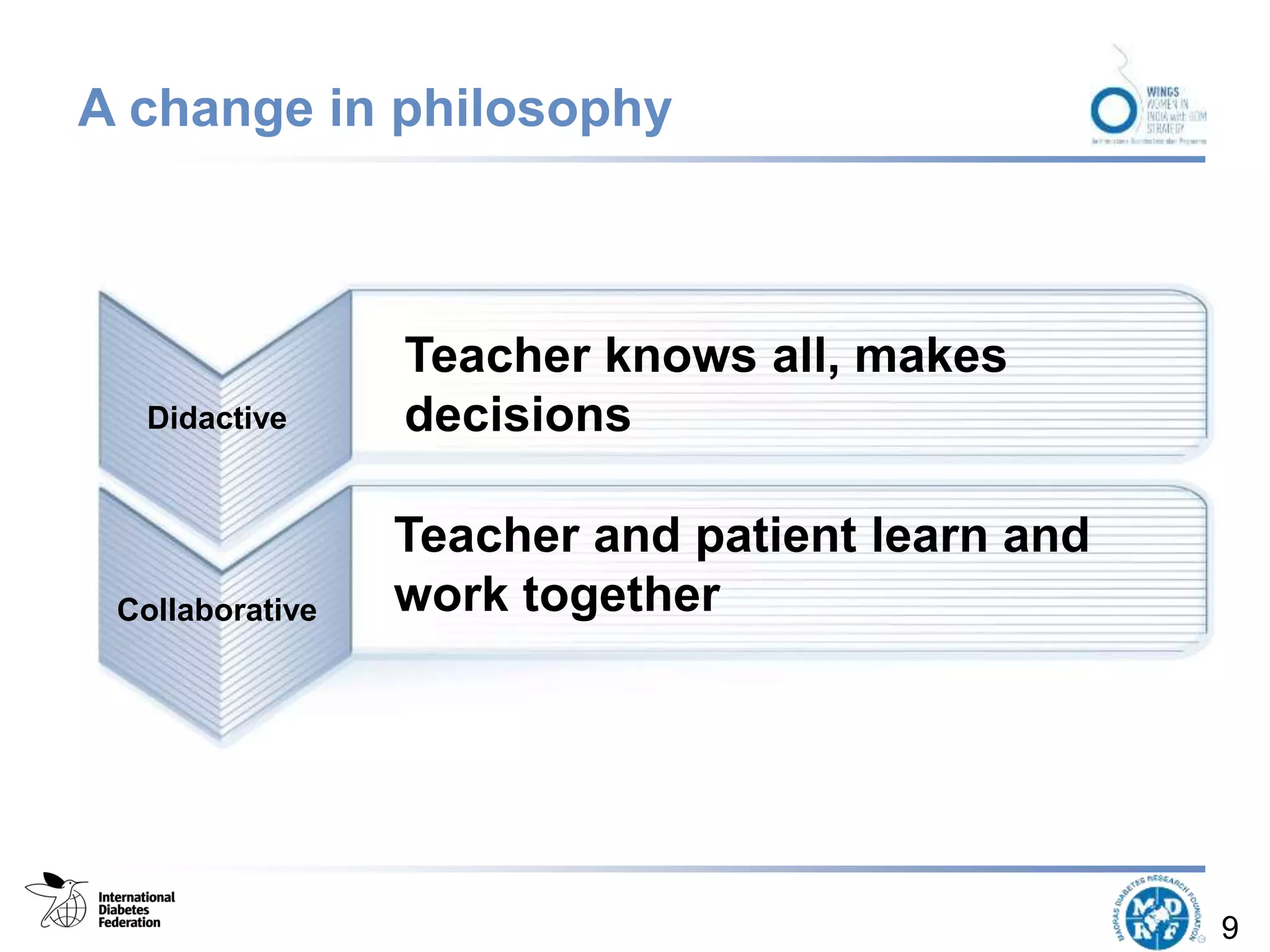
A change in philosophy
9
Didactive
Collaborative
Teacher and patient learn and
work together
Teacher knows all, makes
decisions
So what should we do?
10
Medical
Model
Self-
Management
Education
Tell the person
Cover the basics
Judge compliance
Teach to the person
Patient centered
Ask the person
Learn with the person
Partnership approach
Reframe our attitudes and behaviours
Educate for informed, self-directed decisions
and problem-solving
Ask questions
Identify problems
Address concerns
11
Teaching
Deliberate interventions that involve sharing
information and experiences to meet intended
learner outcomes.
12
Bastable, 2008
Teaching does not necessarily result in
learning
When was the last time someone
taught you?
Did you learn anything?
13
Learning
Active, ongoing process that results in
changes in insight, behaviour, perception or
motivation
Change may be positive or negative
14
Who is the Learner
and
Who is the Teacher?
15
16
Communication Skills
17
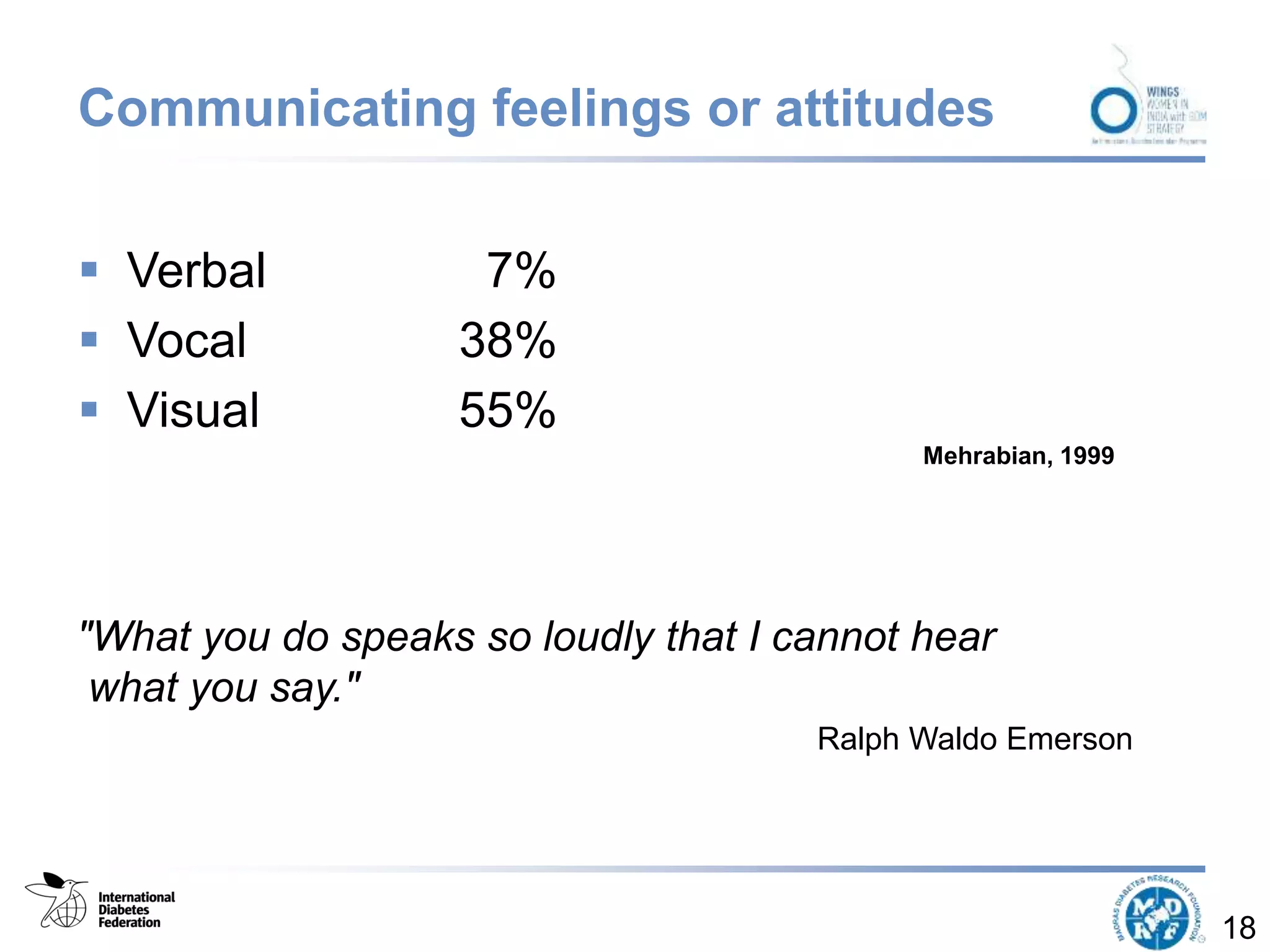
Communicating feelings or attitudes
 Verbal 7%
 Vocal 38%
 Visual 55%
18
Mehrabian, 1999
"What you do speaks so loudly that I cannot hear
what you say."
Ralph Waldo Emerson
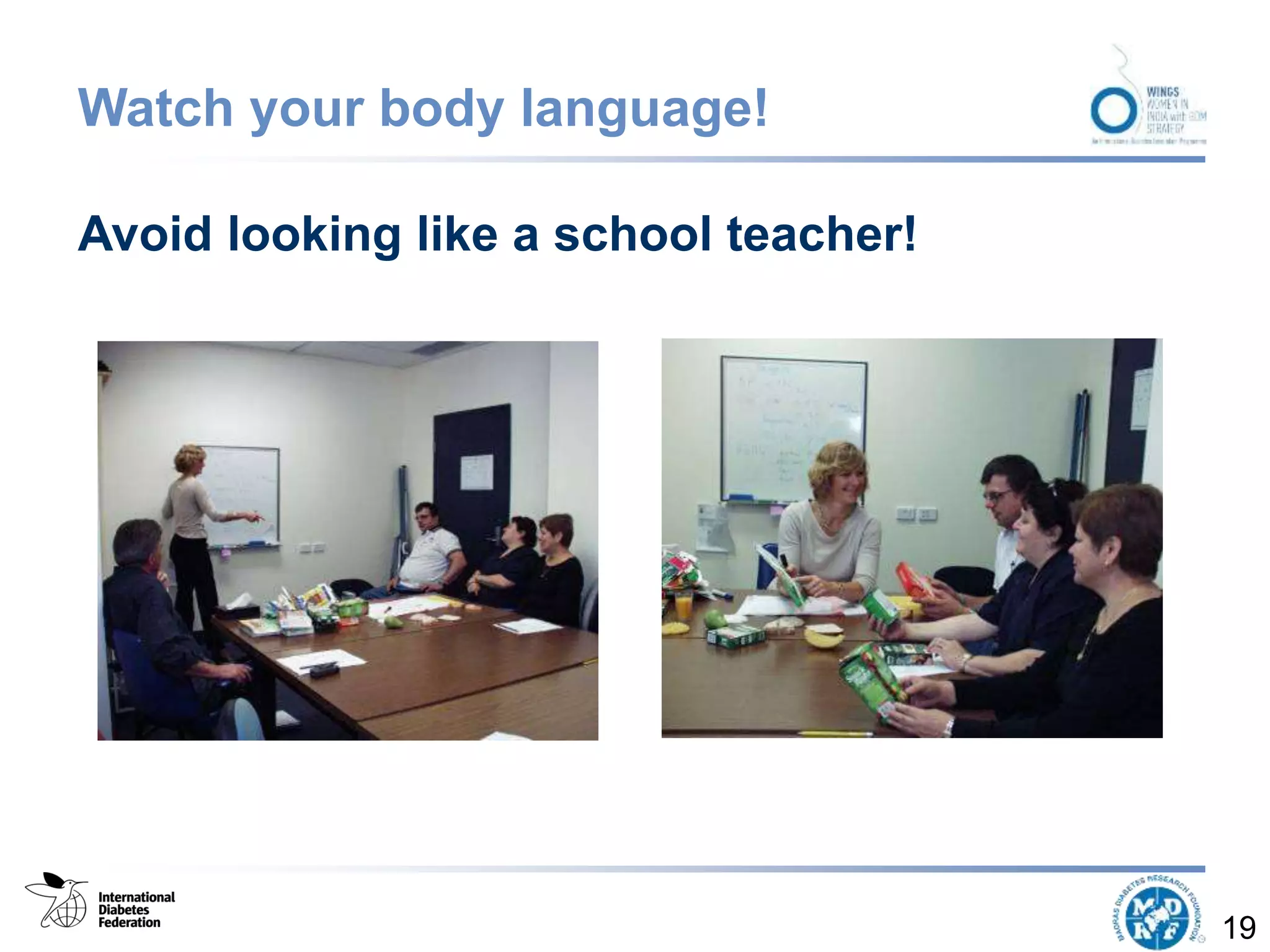
Watch your body language!
Avoid looking like a school teacher!
19
Tips for plain speaking
Introduce your subject and state a purpose
Paint a picture, make it visual
Keep it organised
Move from simple to complex
Repetition is important – three times
Summarise
Evaluate
20
Belton, Simpson, 2010
Tips for plain speaking
Use the active voice
The person should be the subject of the
message
You may require medication to achieve target
blood glucose levels
Vs
Some women may require medication to
achieve target blood glucose levels
21
Communication
Open-ended question
 At what time do you take your medication at home?
Closed question
 Do you take your medication on time at home?
22
Develop listening skills
You can’t talk when you listen
Listen – don’t plan your response
Give the person your full attention
Paraphrase and ask if you heard correctly
 So, you are saying….
 It sounds like…..
 You are wondering if....
 I hear you saying….
23
Reflective listening
24
The words
the speaker
says
What the
speaker
means
How the
listener
interprets
the words
The words
the listener
hears
The teaching process
Assessment
Planning
Implementation
Evaluation
25
Assessment
Goals
 Establish trust
 Determine priorities
 Assess current health status, knowledge and self-
care practices
 Determine family role or other support
 Identify available resources
 Identify barriers to learning and self-management
26
There is a difference
Health professionals and women with GDM
may have different opinions on what is
important
Ask the woman what is important to her.
27
Suhonen, Nenonen, Laukka, Valimaki, 2005
Timmins, 2005
Giving the diagnosis
Will my baby be ok? – 1st question often asked
Is this temporary? – 2nd question
Questions provide an opportunity for teaching
 Must answer truthfully
 Must convey importance of management during
pregnancy for healthy outcome but also for future
health of baby and mother
Risk of type 2
Risk of obesity
Assessment
Considerations
 Should be non-threatening and non-judgemental
 Consider the cultural and health beliefs of the
person
 Consider physical environment
 Building rapport takes time
29
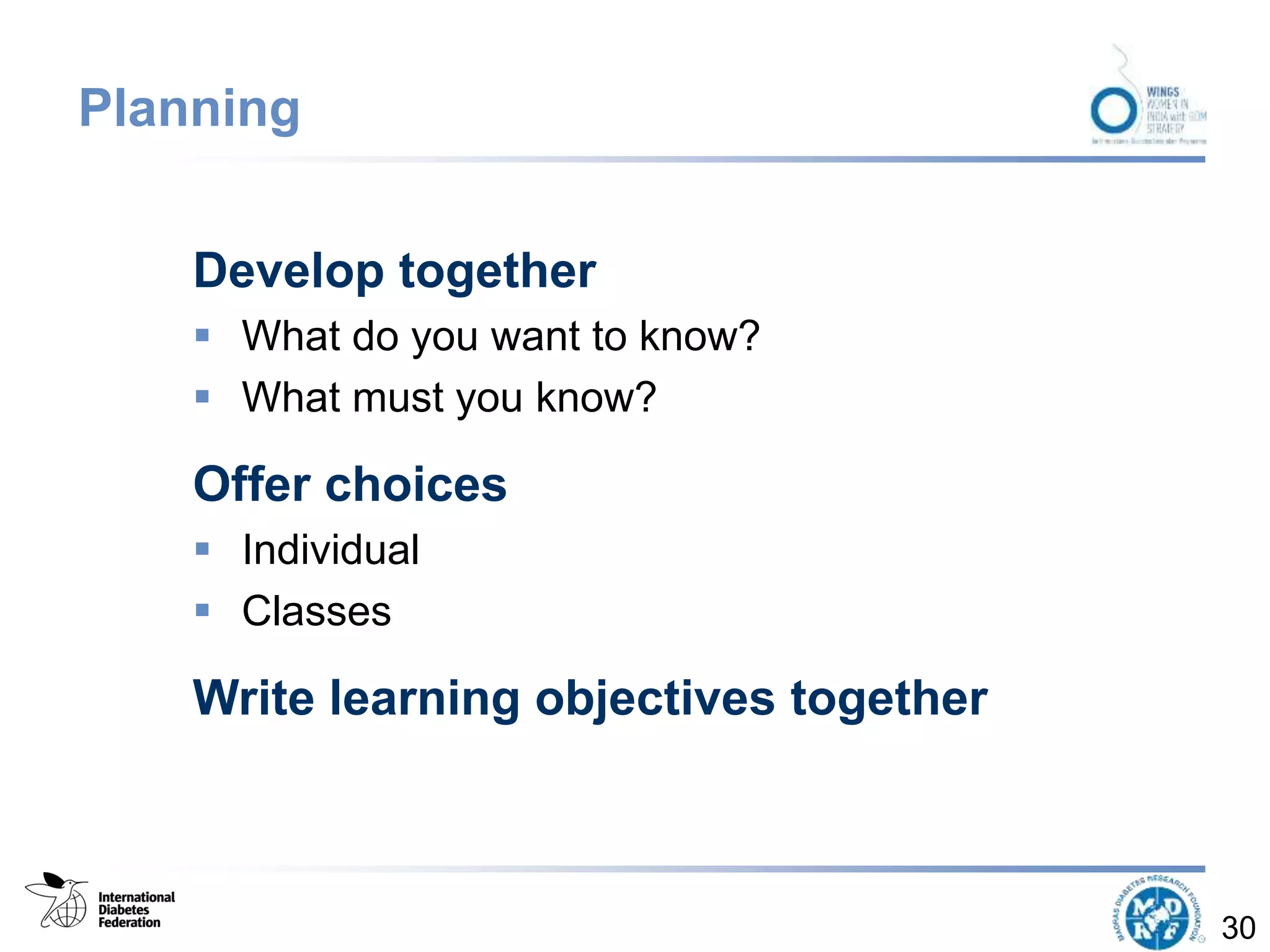
Planning
Develop together
 What do you want to know?
 What must you know?
Offer choices
 Individual
 Classes
Write learning objectives together
30
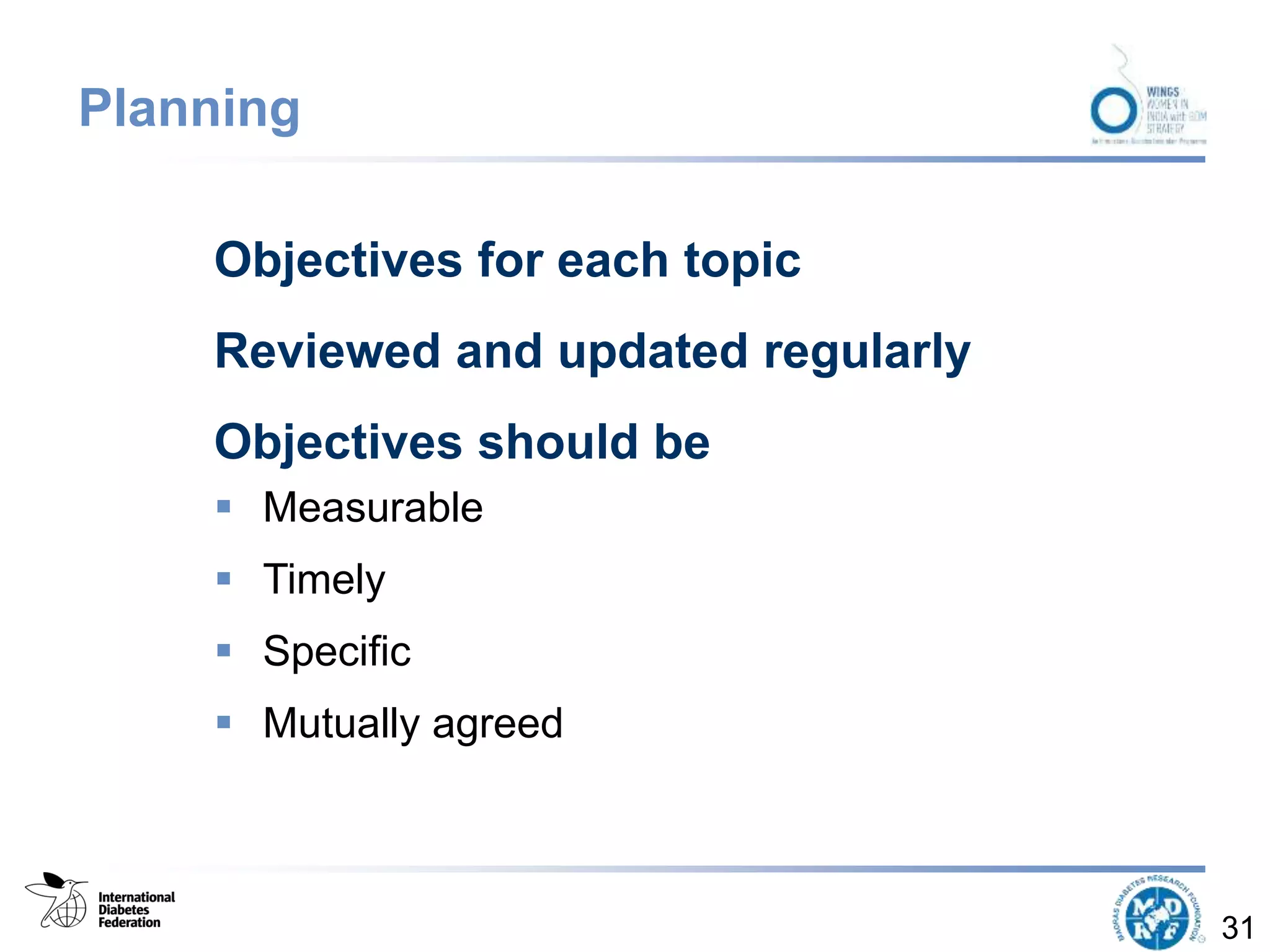
Planning
Objectives for each topic
Reviewed and updated regularly
Objectives should be
 Measurable
 Timely
 Specific
 Mutually agreed
31
Implementation
Communication is the key
 Simple words
 Open-ended questions
 Encouragement
 Positive feedback
 Positive, caring attitude
 Active listening
 Repetition
32
Belton, Simpson, 2010
Implementation
Determine priorities
 Begin with the learner’s wishes
 Most important topics first and last
Conducive environment
Simple to complex
Be specific
Repeat! Repeat! Repeat!
33
Belton, Simpson, 2010
Evaluation
Integral part of programme management
Through all phases
Plans should include how and when to
evaluate
Not an afterthought!
34
Evaluation
Clear description
 Objectives that are
- Measurable
- Specific
- Centered on the person
- Timed
35
Evaluation
Individual evaluation
 Have objectives been met?
 Open-ended questions
 How are skills used?
 “Do you understand?” is not a valid question
 Ask the person with diabetes to explain information to
you – “teach-back”
36
Belton, Simpson, 2010
5 steps to self directed goal
setting for behaviour change
1. Identify the problem
2. Explore feelings
3. Set goals
4. Make a plan
5. Evaluate the results
37
Funnell, Anderson, 2004
What is the problem?
What do you find the easiest thing to manage
in your diabetes?
What is the most difficult/worst thing about
caring for your diabetes?
What are your greatest concerns/fears/
worries?
What makes this so hard for you?
Why is that happening?
38
Funnell, Anderson, 2004
How do you feel?
What are your thoughts and feelings about?
How will you feel if this doesn’t change?
Do you feel ________ about _______?
39
Funnell, Anderson, 2004
What do you want?
How does this need to change for you to feel
better about it?
What will you gain/give-up?
What can you do?
What do you want to do?
On a scale of 1-10, how important is this?
40
Funnell, Anderson, 2004
What will you do?
Can you/do you want to/will you?
What might work?
What has/hasn’t worked?
What do you need to do to get started?
What one step can you take this week?
41
Funnell, Anderson, 2004
SMART behavioural goals
Eat three meals
 I will eat three meals every day starting tomorrow.
I will walk more
 I will walk for 10 minutes at my lunch hour for four days
next week
42
Funnell, Anderson, 2004
How did it work?
What did you learn?
What barriers did you encounter?
What support did you have?
What did you learn about yourself?
What would you do the same or differently next
time?
43
Funnell, Anderson, 2004
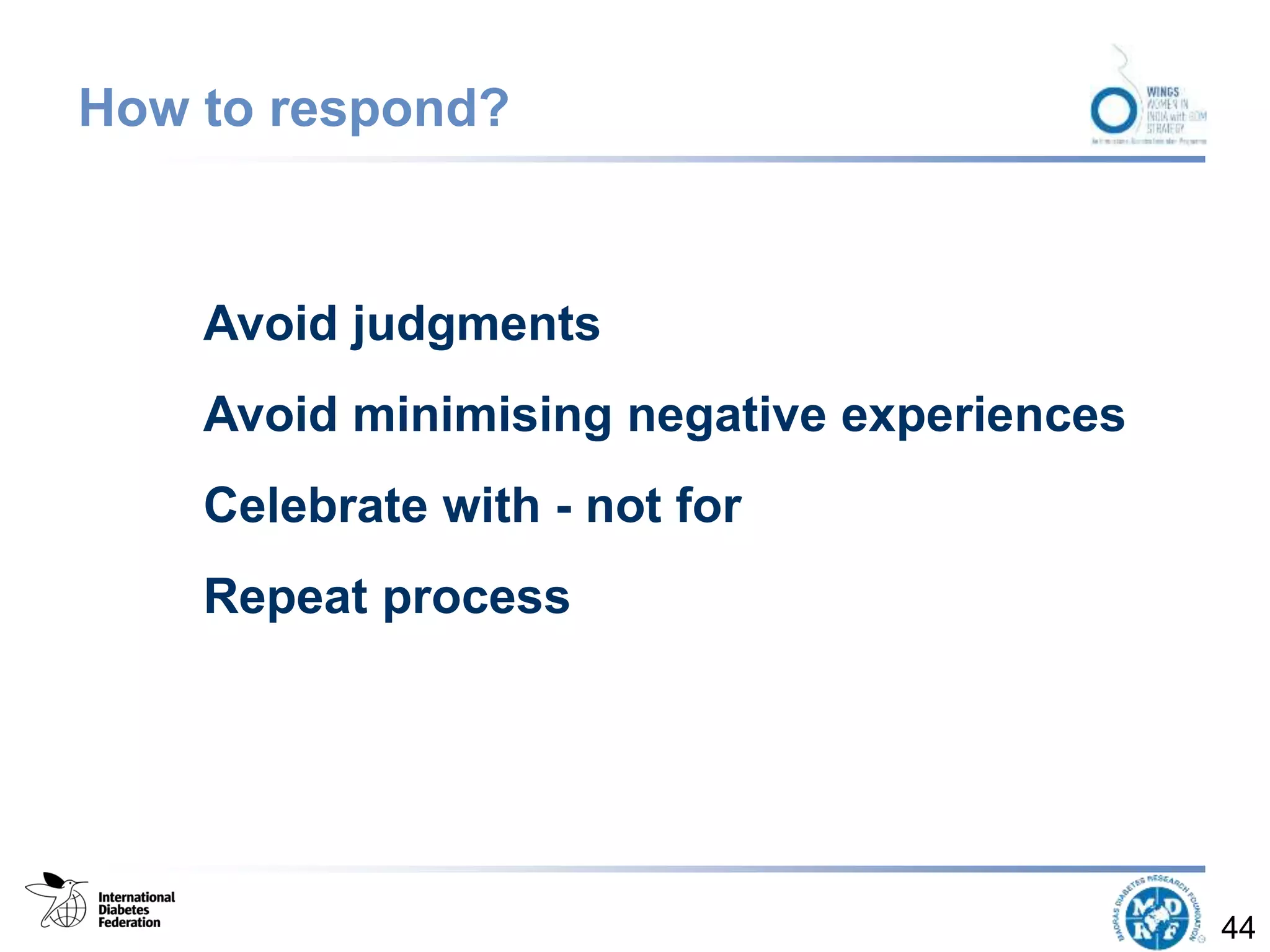
How to respond?
Avoid judgments
Avoid minimising negative experiences
Celebrate with - not for
Repeat process
44
Patient-Centered education
Interventions are more effective when
 Tailored to individual preferences
 Tailored to the person’s social/cultural environment
 Actively engage the person in goal-setting
 Incorporate coping skills
 Provide follow-up support
45
Piette, Weinberger, McPhee, 2000
Activity
Imagine you have just been told you have
gestational diabetes
Think of three things you would need to
change to manage your diabetes
Then ask yourself
 What would be easiest for you?
 What would be hardest?
46
Activity
 What do you feel is supportive behaviour from
close family, friends, or the health professional?
 What is not supportive?
 If you had gestational diabetes, what would you
expect from the people listed above?
47
Summary
Be selective
Be specific
Prioritise
Categorise
Repeat
Reinforce
48
References (1 of 2)
Anderson, R.M., Funnell, M.M., Arnold, M.S). Using the empowerment approach to help patients change behavior. In Anderson, B.J., Rubin,
R.R., eds. Practical Psychology for Diabetes Clinicians, 2nd edition. Alexandria: American Diabetes Association; 2002.
Anderson, R.M., Funnell, M.M. The Art of Empowerment: Stories and Strategies for Diabetes Educators. 2nd ed. Alexandria: American
Diabetes Association; 2005.
Bastable, S. Nurse as Educator. 3rd ed. Sudbury, MA: Jones & Bartlett Publishers; 2008.
Barlow J, Wright C, Sheasby J, Turner A, Hainsworth J. Self-management approaches for people with chronic conditions: a review. Patient
Educ Couns 2002 (48) : 17787.
Belton AB, Simpson N. The How To of Patient Education. 2nd Ed. Streetsville, ON: RJ & Associates; 2010.
Brown SA. Interventions to promote diabetes self-management: State of the science. Diabetes Educ, 25(Suppl) 1999: 52–61.
Canadian Diabetes Association Clinical Practice Guidelines Expert Committee. 2008 Clinical Practice Guidelines for the Prevention and
Management of Diabetes in Canada. Can J Diab. 32,(suppl 1); 2008 :S82-83.
Duncan, I., Birkmeyer, C., Coughlin, S., Qijuan, (E)L., Sherr, D., & Boren, S. Assessing the value of diabetes education. The Diabetes Educator
2009; 35: 752-760.
Fisher EB, Brownson CA, O’Toole ML, Shetty G et al. Ecological Approaches to Self-Management: The Case of Diabetes, Am J Public Health
2005; 95:1523–1535.
Funnell MM, Anderson RM. Patient empowerment: A look back, a look ahead. Diabetes Educ, 2003; 29: 454-64.
Funnell MM, Anderson RM, Arnold MS, Barr PA, Donnelly MB, Johnson PD, Taylor-Moon D, White NH. (1991). Empowerment: An idea whose
time has come in diabetes patient education. Diabetes Educ 1991; 17: 37-41.
Funnell MM, Anderson RM. Empowerment and self-management education. Clinical Diabetes 2004 ; 22:123-127.
Funnell, M.M., Brown, T.L., Childs, B.P., Haas, L.B., Hosey, G.M., Jensen, B., Maryniuk, M., Peyrot, M., Piette, J.D., Reader, D., Siminerio,
L.M., Weinger, K. and Weiss M.A. National Standards for Diabetes Self-management Education. Diabetes Care 2007; 30:1630-1637.
49
References (2 of 2)
Gary, T.L., Genkinger, J.M., Guallar, E., Peyrot, M. & Brancati, F.L. Meta-analysis of randomized educational and behavioral interventions in
type 2 diabetes. The Diabetes Educator 2003;29:488-501.
Harvey, J.N., Lawson, V. L. The importance of health belief models in determining self-care behaviour in diabetes, Diabetic Medicine
2009;26:5–13.
International Diabetes Federation. Standards for Diabetes Education, 4th ed. Brussels: IDF; 2009.
International Diabetes Federation. Diabetes Atlas, 3rd ed. Brussels: IDF; 2009.
Knowles, M. The Adult Learner: a neglected species. Houston, Gulf Publishing Co; 1984.
Mehrabian, A. In P. Bender. Secrets of Power Presentations. Webcom: Toronto The Achievement Group;1999.
Norris, S.L., Lau, J., Smith, S.J., Schmid, C.H., Engelgau, M.M. Self-management education for adults with type 2 diabetes: A meta-analysis on
the effect on glycemic control. Diabetes Care 2002;25:115971.
Piette, J.D., Glasgow, R.E. Education and self-monitoring of blood glucose. In Gerstein HC, Haynes RB, eds. Evidence-based diabetes care.
Hamilton: B.C. Decker, Inc. 2001.
Piette, J.D., Weinberger, M., McPhee, S.J. The effect of automated calls with telephone nurse follow-up on patient-centered outcomes of
diabetes care: a randomized, controlled trial. Medical Care 2000;38:21830.
Roter, D.L., Hall, J.A., Merisca, R., Nordstrom, B., Cretin, D., Svarstad, B. Effectiveness of interventions to improve patient compliance: A meta-
analysis. Medical Care 1998;36:113861.
Simmons, David. Personal barriers to diabetes care: Is it me, them or us? Diabetes Spectrum 2001:10-12.
Skinner, T.C., Cradock, S., Arundel, F., Graham, W. Four theories and a philosophy: self-management education for individuals newly
diagnosed with type 2 diabetes. Diabetes Spectrum 2003;16:75-80.
Suhonen, R., Nenonen, H., Laukka, A., Valimaki, M. Patients’ informational needs and information received in hospital. J Clin Nursing 2005;
14(10):1167-76.
Timmins, F. Contemporary issue in coronary care nursing. New York: Routledge; 2005.
Von Kroff, M., Gruman, J., Schaefer, J., et al. Collaborative management of chronic illness. Ann Intern Med 1997;127(12):1097-102.
50

self-management education

  • 1.
  • 2.
    Objectives After completing thismodule the participant will be able to  Discuss the value of education in helping women have healthy pregnancies  Implement all components of the teaching process, that is assessment, planning, implementation and evaluation  Discuss ways to make communication more effective  Define what is meant by a patient centered approach to care.  Discuss the impact of gestational diabetes and psychological needs of women and their families 2
  • 3.
    Diabetes Self-Management Education Purpose Toprepare those affected by GDM to  Make informed decisions  Cope with the demands of a pregnancy complicated by GDM  Make changes in their behaviour that support their self-management efforts 3
  • 4.
    Evidence for diabeteseducation Traditional knowledge-based diabetes education is essential but not sufficient for sustained behaviour change. While no single strategy or programme shows any clear advantage, interventions that incorporate behavioural and affective components are more effective. 4 (Piette, Weinberger, McPhee, 2000) Barlow, Wright, Sheasby, Turner, Hainsworth, 2002 Roter, Hall, Merisca, Nordstrom, Cretin, Svarstad, 1998
  • 5.
    Evidence for diabeteseducation Diabetes self-management education (DSME) is effective for improving psychosocial and health outcomes, particularly in the short-term. On-going support is critical to sustain progress made by participants during the DSME program. 5 Norris, Lau, Smith, Schmid, Engelgau, 2002 Skinner, Cradock, Arundel, Graham, 2003 Barlow, Wright, Sheasby, Turner, Hainsworth, 2002 Brown, 1999 Norris, Lau, Smith, Schmid, Engelgau, 2002 Roter, Hall, Merisca, Nordstrom, Cretin, Svarstard, 1998
  • 6.
    Why is self-managementimportant? People want to be healthy and have healthy babies. Gestational diabetes needs to be self-managed. Person is responsible for their day-to-day care. 24-hours-a-day management is necessary. Active, informed self-management leads to better long-term outcomes. 6 Funnell, Brown, Childs, Haas, Hosey, Jensen, et al., 2007 Norris, Lau, Smith, 2002 Gary, Genkinger, Guallar, Peyrot, Brancati, 2003 Duncan, Birkmeyer, Coughlin, Ouijan, Sherr, Boren, 2009
  • 7.
    What do peopleneed to understand? Their own personal goals, values and feelings Diabetes care and treatment (advantages/ disadvantages) Behaviour change and problem-solving strategies Who is the decision-maker – the woman, the husband, the mother-in-law? How to assume day-to-day responsibility 7 Funnell, Anderson, 2004
  • 8.
    Self-management abilities The abilityto self-manage is enhanced by  Considering the individual’s need(s)  Teaching skills to optimise outcomes  Facilitating behaviour change  Providing emotional support 8 Von Kroff, Gruman, Schaefer, 1997 Fisher, Brownson, O’Toole, Shetty, et al., 2005
  • 9.
    A change inphilosophy 9 Didactive Collaborative Teacher and patient learn and work together Teacher knows all, makes decisions
  • 10.
    So what shouldwe do? 10 Medical Model Self- Management Education Tell the person Cover the basics Judge compliance Teach to the person Patient centered Ask the person Learn with the person Partnership approach
  • 11.
    Reframe our attitudesand behaviours Educate for informed, self-directed decisions and problem-solving Ask questions Identify problems Address concerns 11
  • 12.
    Teaching Deliberate interventions thatinvolve sharing information and experiences to meet intended learner outcomes. 12 Bastable, 2008
  • 13.
    Teaching does notnecessarily result in learning When was the last time someone taught you? Did you learn anything? 13
  • 14.
    Learning Active, ongoing processthat results in changes in insight, behaviour, perception or motivation Change may be positive or negative 14
  • 15.
    Who is theLearner and Who is the Teacher? 15
  • 16.
  • 17.
  • 18.
    Communicating feelings orattitudes  Verbal 7%  Vocal 38%  Visual 55% 18 Mehrabian, 1999 "What you do speaks so loudly that I cannot hear what you say." Ralph Waldo Emerson
  • 19.
    Watch your bodylanguage! Avoid looking like a school teacher! 19
  • 20.
    Tips for plainspeaking Introduce your subject and state a purpose Paint a picture, make it visual Keep it organised Move from simple to complex Repetition is important – three times Summarise Evaluate 20 Belton, Simpson, 2010
  • 21.
    Tips for plainspeaking Use the active voice The person should be the subject of the message You may require medication to achieve target blood glucose levels Vs Some women may require medication to achieve target blood glucose levels 21
  • 22.
    Communication Open-ended question  Atwhat time do you take your medication at home? Closed question  Do you take your medication on time at home? 22
  • 23.
    Develop listening skills Youcan’t talk when you listen Listen – don’t plan your response Give the person your full attention Paraphrase and ask if you heard correctly  So, you are saying….  It sounds like…..  You are wondering if....  I hear you saying…. 23
  • 24.
    Reflective listening 24 The words thespeaker says What the speaker means How the listener interprets the words The words the listener hears
  • 25.
  • 26.
    Assessment Goals  Establish trust Determine priorities  Assess current health status, knowledge and self- care practices  Determine family role or other support  Identify available resources  Identify barriers to learning and self-management 26
  • 27.
    There is adifference Health professionals and women with GDM may have different opinions on what is important Ask the woman what is important to her. 27 Suhonen, Nenonen, Laukka, Valimaki, 2005 Timmins, 2005
  • 28.
    Giving the diagnosis Willmy baby be ok? – 1st question often asked Is this temporary? – 2nd question Questions provide an opportunity for teaching  Must answer truthfully  Must convey importance of management during pregnancy for healthy outcome but also for future health of baby and mother Risk of type 2 Risk of obesity
  • 29.
    Assessment Considerations  Should benon-threatening and non-judgemental  Consider the cultural and health beliefs of the person  Consider physical environment  Building rapport takes time 29
  • 30.
    Planning Develop together  Whatdo you want to know?  What must you know? Offer choices  Individual  Classes Write learning objectives together 30
  • 31.
    Planning Objectives for eachtopic Reviewed and updated regularly Objectives should be  Measurable  Timely  Specific  Mutually agreed 31
  • 32.
    Implementation Communication is thekey  Simple words  Open-ended questions  Encouragement  Positive feedback  Positive, caring attitude  Active listening  Repetition 32 Belton, Simpson, 2010
  • 33.
    Implementation Determine priorities  Beginwith the learner’s wishes  Most important topics first and last Conducive environment Simple to complex Be specific Repeat! Repeat! Repeat! 33 Belton, Simpson, 2010
  • 34.
    Evaluation Integral part ofprogramme management Through all phases Plans should include how and when to evaluate Not an afterthought! 34
  • 35.
    Evaluation Clear description  Objectivesthat are - Measurable - Specific - Centered on the person - Timed 35
  • 36.
    Evaluation Individual evaluation  Haveobjectives been met?  Open-ended questions  How are skills used?  “Do you understand?” is not a valid question  Ask the person with diabetes to explain information to you – “teach-back” 36 Belton, Simpson, 2010
  • 37.
    5 steps toself directed goal setting for behaviour change 1. Identify the problem 2. Explore feelings 3. Set goals 4. Make a plan 5. Evaluate the results 37 Funnell, Anderson, 2004
  • 38.
    What is theproblem? What do you find the easiest thing to manage in your diabetes? What is the most difficult/worst thing about caring for your diabetes? What are your greatest concerns/fears/ worries? What makes this so hard for you? Why is that happening? 38 Funnell, Anderson, 2004
  • 39.
    How do youfeel? What are your thoughts and feelings about? How will you feel if this doesn’t change? Do you feel ________ about _______? 39 Funnell, Anderson, 2004
  • 40.
    What do youwant? How does this need to change for you to feel better about it? What will you gain/give-up? What can you do? What do you want to do? On a scale of 1-10, how important is this? 40 Funnell, Anderson, 2004
  • 41.
    What will youdo? Can you/do you want to/will you? What might work? What has/hasn’t worked? What do you need to do to get started? What one step can you take this week? 41 Funnell, Anderson, 2004
  • 42.
    SMART behavioural goals Eatthree meals  I will eat three meals every day starting tomorrow. I will walk more  I will walk for 10 minutes at my lunch hour for four days next week 42 Funnell, Anderson, 2004
  • 43.
    How did itwork? What did you learn? What barriers did you encounter? What support did you have? What did you learn about yourself? What would you do the same or differently next time? 43 Funnell, Anderson, 2004
  • 44.
    How to respond? Avoidjudgments Avoid minimising negative experiences Celebrate with - not for Repeat process 44
  • 45.
    Patient-Centered education Interventions aremore effective when  Tailored to individual preferences  Tailored to the person’s social/cultural environment  Actively engage the person in goal-setting  Incorporate coping skills  Provide follow-up support 45 Piette, Weinberger, McPhee, 2000
  • 46.
    Activity Imagine you havejust been told you have gestational diabetes Think of three things you would need to change to manage your diabetes Then ask yourself  What would be easiest for you?  What would be hardest? 46
  • 47.
    Activity  What doyou feel is supportive behaviour from close family, friends, or the health professional?  What is not supportive?  If you had gestational diabetes, what would you expect from the people listed above? 47
  • 48.
  • 49.
    References (1 of2) Anderson, R.M., Funnell, M.M., Arnold, M.S). Using the empowerment approach to help patients change behavior. In Anderson, B.J., Rubin, R.R., eds. Practical Psychology for Diabetes Clinicians, 2nd edition. Alexandria: American Diabetes Association; 2002. Anderson, R.M., Funnell, M.M. The Art of Empowerment: Stories and Strategies for Diabetes Educators. 2nd ed. Alexandria: American Diabetes Association; 2005. Bastable, S. Nurse as Educator. 3rd ed. Sudbury, MA: Jones & Bartlett Publishers; 2008. Barlow J, Wright C, Sheasby J, Turner A, Hainsworth J. Self-management approaches for people with chronic conditions: a review. Patient Educ Couns 2002 (48) : 17787. Belton AB, Simpson N. The How To of Patient Education. 2nd Ed. Streetsville, ON: RJ & Associates; 2010. Brown SA. Interventions to promote diabetes self-management: State of the science. Diabetes Educ, 25(Suppl) 1999: 52–61. Canadian Diabetes Association Clinical Practice Guidelines Expert Committee. 2008 Clinical Practice Guidelines for the Prevention and Management of Diabetes in Canada. Can J Diab. 32,(suppl 1); 2008 :S82-83. Duncan, I., Birkmeyer, C., Coughlin, S., Qijuan, (E)L., Sherr, D., & Boren, S. Assessing the value of diabetes education. The Diabetes Educator 2009; 35: 752-760. Fisher EB, Brownson CA, O’Toole ML, Shetty G et al. Ecological Approaches to Self-Management: The Case of Diabetes, Am J Public Health 2005; 95:1523–1535. Funnell MM, Anderson RM. Patient empowerment: A look back, a look ahead. Diabetes Educ, 2003; 29: 454-64. Funnell MM, Anderson RM, Arnold MS, Barr PA, Donnelly MB, Johnson PD, Taylor-Moon D, White NH. (1991). Empowerment: An idea whose time has come in diabetes patient education. Diabetes Educ 1991; 17: 37-41. Funnell MM, Anderson RM. Empowerment and self-management education. Clinical Diabetes 2004 ; 22:123-127. Funnell, M.M., Brown, T.L., Childs, B.P., Haas, L.B., Hosey, G.M., Jensen, B., Maryniuk, M., Peyrot, M., Piette, J.D., Reader, D., Siminerio, L.M., Weinger, K. and Weiss M.A. National Standards for Diabetes Self-management Education. Diabetes Care 2007; 30:1630-1637. 49
  • 50.
    References (2 of2) Gary, T.L., Genkinger, J.M., Guallar, E., Peyrot, M. & Brancati, F.L. Meta-analysis of randomized educational and behavioral interventions in type 2 diabetes. The Diabetes Educator 2003;29:488-501. Harvey, J.N., Lawson, V. L. The importance of health belief models in determining self-care behaviour in diabetes, Diabetic Medicine 2009;26:5–13. International Diabetes Federation. Standards for Diabetes Education, 4th ed. Brussels: IDF; 2009. International Diabetes Federation. Diabetes Atlas, 3rd ed. Brussels: IDF; 2009. Knowles, M. The Adult Learner: a neglected species. Houston, Gulf Publishing Co; 1984. Mehrabian, A. In P. Bender. Secrets of Power Presentations. Webcom: Toronto The Achievement Group;1999. Norris, S.L., Lau, J., Smith, S.J., Schmid, C.H., Engelgau, M.M. Self-management education for adults with type 2 diabetes: A meta-analysis on the effect on glycemic control. Diabetes Care 2002;25:115971. Piette, J.D., Glasgow, R.E. Education and self-monitoring of blood glucose. In Gerstein HC, Haynes RB, eds. Evidence-based diabetes care. Hamilton: B.C. Decker, Inc. 2001. Piette, J.D., Weinberger, M., McPhee, S.J. The effect of automated calls with telephone nurse follow-up on patient-centered outcomes of diabetes care: a randomized, controlled trial. Medical Care 2000;38:21830. Roter, D.L., Hall, J.A., Merisca, R., Nordstrom, B., Cretin, D., Svarstad, B. Effectiveness of interventions to improve patient compliance: A meta- analysis. Medical Care 1998;36:113861. Simmons, David. Personal barriers to diabetes care: Is it me, them or us? Diabetes Spectrum 2001:10-12. Skinner, T.C., Cradock, S., Arundel, F., Graham, W. Four theories and a philosophy: self-management education for individuals newly diagnosed with type 2 diabetes. Diabetes Spectrum 2003;16:75-80. Suhonen, R., Nenonen, H., Laukka, A., Valimaki, M. Patients’ informational needs and information received in hospital. J Clin Nursing 2005; 14(10):1167-76. Timmins, F. Contemporary issue in coronary care nursing. New York: Routledge; 2005. Von Kroff, M., Gruman, J., Schaefer, J., et al. Collaborative management of chronic illness. Ann Intern Med 1997;127(12):1097-102. 50