Security by
Design: Building a
Resilient
Digital Future
In today’s interconnected world, cybersecurity is no longer an afterthought; it’s a
fundamental requirement for any organization or individual relying on digital
technologies.
As cyber threats continue to evolve and grow in sophistication, a proactive approach
to security has become imperative. This is where the concept of “Security by Design”
comes into play.
In this blog, we’ll delve into the principles of Security by Design, why it’s crucial,
and how it can help build a resilient digital future.
Introduction
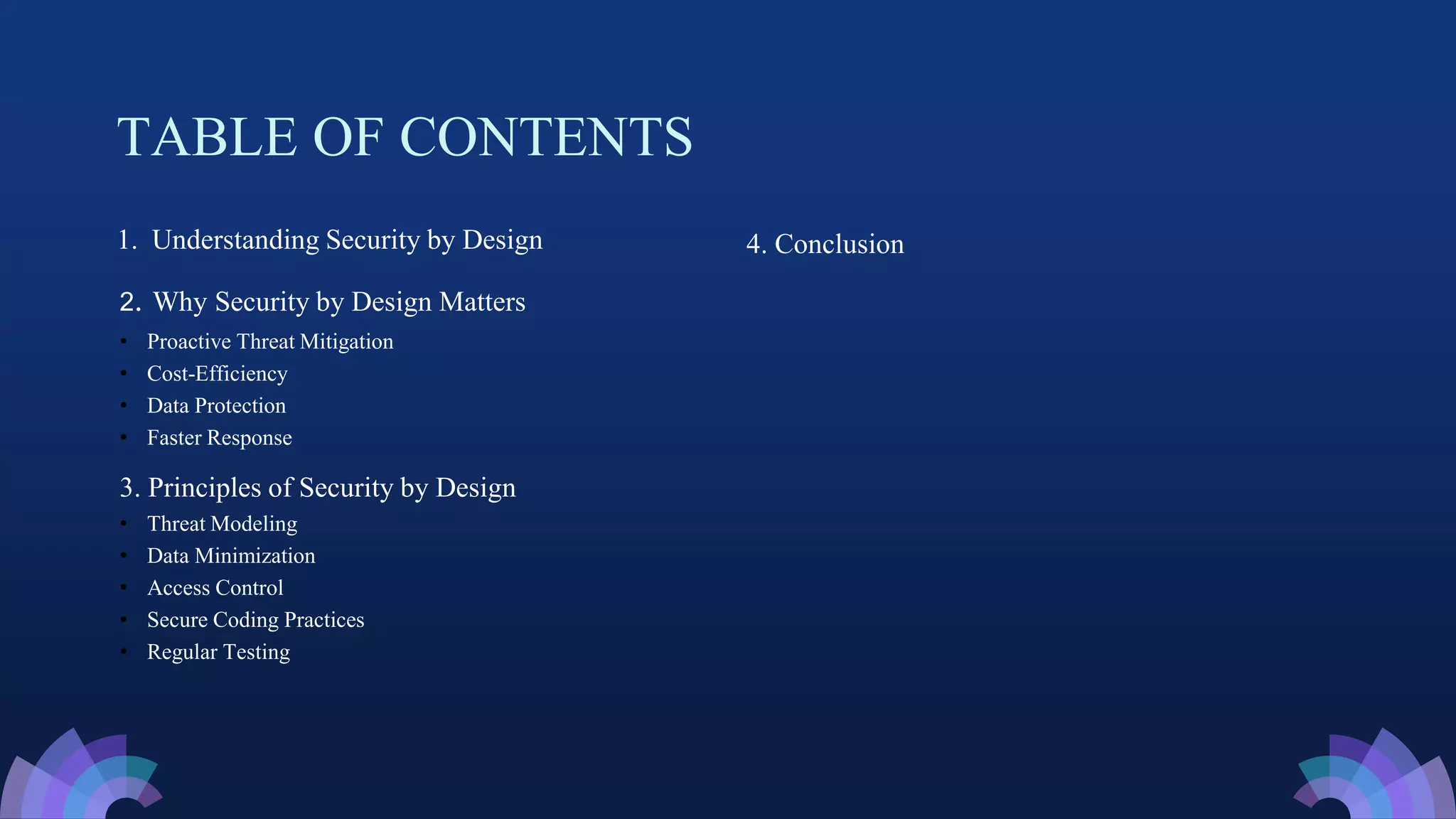
TABLE OF CONTENTS
1. Understanding Security by Design
2. Why Security by Design Matters
• Proactive Threat Mitigation
• Cost-Efficiency
• Data Protection
• Faster Response
3. Principles of Security by Design
• Threat Modeling
• Data Minimization
• Access Control
• Secure Coding Practices
• Regular Testing
4. Conclusion
01
Understanding Security by Design
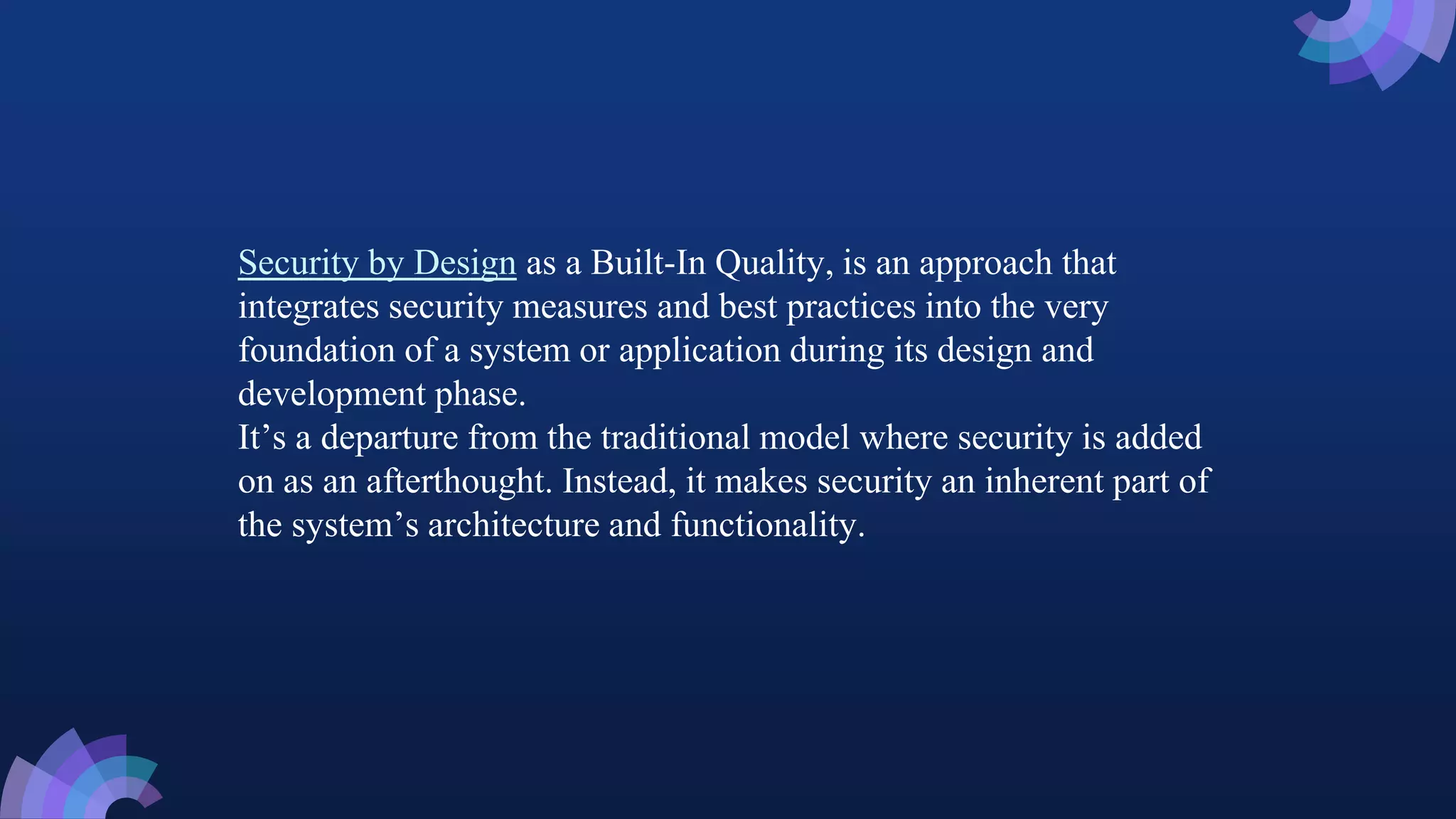
Security by Design as a Built-In Quality, is an approach that
integrates security measures and best practices into the very
foundation of a system or application during its design and
development phase.
It’s a departure from the traditional model where security is added
on as an afterthought. Instead, it makes security an inherent part of
the system’s architecture and functionality.
02
Why Security by Design Matters
Proactive Threat Mitigation: With cyber threats constantly evolving, reactive
security measures are no longer sufficient. It allows organizations to anticipate
and mitigate threats before they can exploit vulnerabilities.
This approach involves threat modeling, where potential threats and
vulnerabilities are identified early in the design phase.
Cost-Efficiency: Building Security into the design phase can be more cost-
effective than retrofitting security measures onto an existing system. It helps
reduce the financial impact of breaches and compliance violations by addressing
security issues upfront.
Data Protection: As data breaches become more common and costly, Security
by Design ensures that sensitive data is protected from the outset. By
implementing data minimization principles, organizations collect and store only
the data necessary for the system’s function, reducing the potential impact of a
data breach.
Faster Response: In the event of a security incident, systems designed with
security in mind can respond more effectively and swiftly, minimizing potential
damage. This includes implementing robust access controls, secure coding
practices, and regular testing.
03
Principles of Security by Design
Threat Modeling: Identify potential threats and vulnerabilities early in the
design phase. This involves assessing the system’s architecture, data flows, and
potential weak points. By understanding potential risks, organizations can
develop effective countermeasures.
Data Minimization: Collect and store only the data necessary for the system’s
function. This reduces the potential impact of a data breach, as there’s less
sensitive data to compromise.
Access Control: Implement robust access controls and authentication
mechanisms to ensure that only authorized users can interact with the system.
This principle includes role-based access control and strong authentication
methods.
Secure Coding Practices: Developers should follow secure coding guidelines to
prevent common vulnerabilities like SQL Injection and cross-site scripting
(XSS). Regular code reviews and security audits are essential for maintaining
code integrity.
Regular Testing: Continuously test the system for security flaws and implement
regular security assessments and penetration testing. By identifying
vulnerabilities early and addressing them promptly, organizations can reduce the
risk of exploitation.
04
Conclusion
Security by Design is not just a trend; it’s a fundamental shift in how we
approach cybersecurity. By embedding security into the design and
development process, we create a digital landscape that is more resilient, cost-
effective, and capable of withstanding the ever-evolving threat landscape.
It’s time for organizations and individuals to embrace as a critical component
of their digital future.
THANKS
SYDNEY, AUSTRALIA
ADELAIDE, AUSTRALIA
+61 426746288
DELHI , INDIA
+91 7291043169
https://metaorangedigital.com/
info@metaorangedigital.com

Security_by_Design.pdf

  • 1.
    Security by Design: Buildinga Resilient Digital Future
  • 2.
    In today’s interconnectedworld, cybersecurity is no longer an afterthought; it’s a fundamental requirement for any organization or individual relying on digital technologies. As cyber threats continue to evolve and grow in sophistication, a proactive approach to security has become imperative. This is where the concept of “Security by Design” comes into play. In this blog, we’ll delve into the principles of Security by Design, why it’s crucial, and how it can help build a resilient digital future. Introduction
  • 3.
    TABLE OF CONTENTS 1.Understanding Security by Design 2. Why Security by Design Matters • Proactive Threat Mitigation • Cost-Efficiency • Data Protection • Faster Response 3. Principles of Security by Design • Threat Modeling • Data Minimization • Access Control • Secure Coding Practices • Regular Testing 4. Conclusion
  • 4.
  • 5.
    Security by Designas a Built-In Quality, is an approach that integrates security measures and best practices into the very foundation of a system or application during its design and development phase. It’s a departure from the traditional model where security is added on as an afterthought. Instead, it makes security an inherent part of the system’s architecture and functionality.
  • 6.
    02 Why Security byDesign Matters
  • 7.
    Proactive Threat Mitigation:With cyber threats constantly evolving, reactive security measures are no longer sufficient. It allows organizations to anticipate and mitigate threats before they can exploit vulnerabilities. This approach involves threat modeling, where potential threats and vulnerabilities are identified early in the design phase.
  • 8.
    Cost-Efficiency: Building Securityinto the design phase can be more cost- effective than retrofitting security measures onto an existing system. It helps reduce the financial impact of breaches and compliance violations by addressing security issues upfront.
  • 9.
    Data Protection: Asdata breaches become more common and costly, Security by Design ensures that sensitive data is protected from the outset. By implementing data minimization principles, organizations collect and store only the data necessary for the system’s function, reducing the potential impact of a data breach.
  • 10.
    Faster Response: Inthe event of a security incident, systems designed with security in mind can respond more effectively and swiftly, minimizing potential damage. This includes implementing robust access controls, secure coding practices, and regular testing.
  • 11.
  • 12.
    Threat Modeling: Identifypotential threats and vulnerabilities early in the design phase. This involves assessing the system’s architecture, data flows, and potential weak points. By understanding potential risks, organizations can develop effective countermeasures.
  • 13.
    Data Minimization: Collectand store only the data necessary for the system’s function. This reduces the potential impact of a data breach, as there’s less sensitive data to compromise.
  • 14.
    Access Control: Implementrobust access controls and authentication mechanisms to ensure that only authorized users can interact with the system. This principle includes role-based access control and strong authentication methods.
  • 15.
    Secure Coding Practices:Developers should follow secure coding guidelines to prevent common vulnerabilities like SQL Injection and cross-site scripting (XSS). Regular code reviews and security audits are essential for maintaining code integrity.
  • 16.
    Regular Testing: Continuouslytest the system for security flaws and implement regular security assessments and penetration testing. By identifying vulnerabilities early and addressing them promptly, organizations can reduce the risk of exploitation.
  • 17.
  • 18.
    Security by Designis not just a trend; it’s a fundamental shift in how we approach cybersecurity. By embedding security into the design and development process, we create a digital landscape that is more resilient, cost- effective, and capable of withstanding the ever-evolving threat landscape. It’s time for organizations and individuals to embrace as a critical component of their digital future.
  • 19.
    THANKS SYDNEY, AUSTRALIA ADELAIDE, AUSTRALIA +61426746288 DELHI , INDIA +91 7291043169 https://metaorangedigital.com/ info@metaorangedigital.com