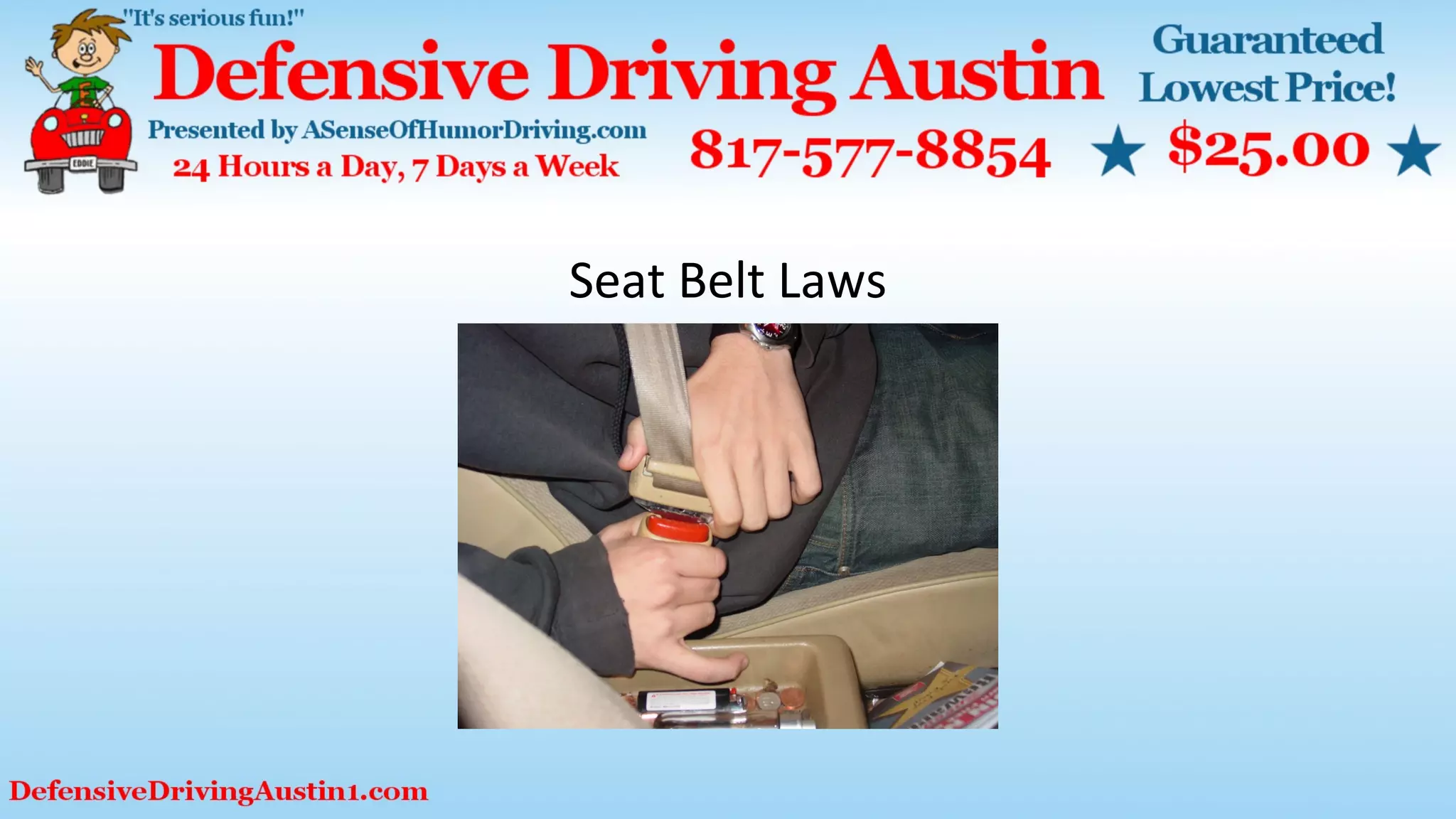
Seat Belt Laws
Seat belt laws are important in making sure the seat belts
are made correctly and that everyone is using them
correctly.
Seat belts have been around since the 1880s; they are
placed in cars to reduce the risk of injury or death.
Since there was an increase in the amount of cars on the
road in 1959, congress passed a law requiring all
automakers to comply with certain safety standards?
Today there are specific requirements for everything
involving the seat belt, even down to the mechanisms and
materials that can be used to produce the seat belt.
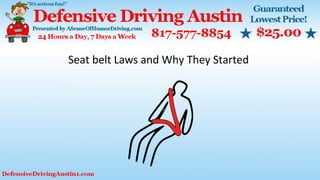
Seat belt Laws and Why They Started
Seat belts are designed to be able to stand the forces of a
high-speed car accident.
Seat belt laws require everyone to wear a seat belt.
If you’re not wearing a seat belt, then your body will move
about freely in the car.
This is a problem because the body will start bumping into
solid surfaces, other people in the vehicle, or ejected from
the car through an opening.
Some classic signs that a person may not have been
wearing their seat belt are head trauma, chest trauma, and
a spider-web design in the windshield.
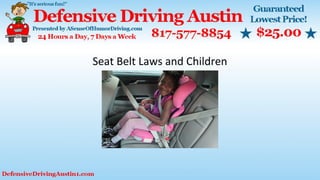
Seat Belt Laws and Children
Children also have some seat belt laws that they are
required to follow in order to be a passenger in the vehicle.
Any child under three must be firmly secured into an
appropriate car seat, unless they are riding in a taxi.
Children from three through twelve, or 135 centimeters,
can ride in rear seats without a car seat if seat belts are not
available to stabilize the car seat; but they cannot ride in
the front without an appropriate child seat.
If a child is twelve and older, or above 135 centimeters,
then the child is able to ride in the front or back seats
without having sit in a child appropriate seat.
Exceptions to Seat Belt Laws
Officers are now on the lookout for anyone who does not
follow the seat belt laws.
Seat belts stick out from the clothing and are easy for an
officer to spot.
The only exceptions to the seat belt laws is if you work
somewhere where you only travel less than fifty meters, a
medical condition that makes it impossible to wear the
appropriate seat belt, riding in reverse, or if a child is
between three and twelve and your only driving a short
distance with no appropriate seat available.

Seat belt laws

  • 1.
  • 2.
    Seat belt lawsare important in making sure the seat belts are made correctly and that everyone is using them correctly.
  • 3.
    Seat belts havebeen around since the 1880s; they are placed in cars to reduce the risk of injury or death.
  • 4.
    Since there wasan increase in the amount of cars on the road in 1959, congress passed a law requiring all automakers to comply with certain safety standards?
  • 5.
    Today there arespecific requirements for everything involving the seat belt, even down to the mechanisms and materials that can be used to produce the seat belt.
  • 6.
    Seat belt Lawsand Why They Started
  • 7.
    Seat belts aredesigned to be able to stand the forces of a high-speed car accident.
  • 8.
    Seat belt lawsrequire everyone to wear a seat belt.
  • 9.
    If you’re notwearing a seat belt, then your body will move about freely in the car.
  • 10.
    This is aproblem because the body will start bumping into solid surfaces, other people in the vehicle, or ejected from the car through an opening.
  • 11.
    Some classic signsthat a person may not have been wearing their seat belt are head trauma, chest trauma, and a spider-web design in the windshield.
  • 12.
    Seat Belt Lawsand Children
  • 13.
    Children also havesome seat belt laws that they are required to follow in order to be a passenger in the vehicle.
  • 14.
    Any child underthree must be firmly secured into an appropriate car seat, unless they are riding in a taxi.
  • 15.
    Children from threethrough twelve, or 135 centimeters, can ride in rear seats without a car seat if seat belts are not available to stabilize the car seat; but they cannot ride in the front without an appropriate child seat.
  • 16.
    If a childis twelve and older, or above 135 centimeters, then the child is able to ride in the front or back seats without having sit in a child appropriate seat.
  • 17.
  • 18.
    Officers are nowon the lookout for anyone who does not follow the seat belt laws.
  • 19.
    Seat belts stickout from the clothing and are easy for an officer to spot.
  • 20.
    The only exceptionsto the seat belt laws is if you work somewhere where you only travel less than fifty meters, a medical condition that makes it impossible to wear the appropriate seat belt, riding in reverse, or if a child is between three and twelve and your only driving a short distance with no appropriate seat available.