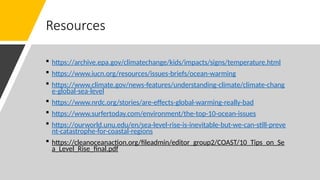
Rising Sea Temperature
Aaliyah Taylor
What is rising sea temperatures?
The leading cause of rising sea levels worldwide is climate warming due to
extreme greenhouse gases released into the atmosphere. The heat from
the warming atmosphere increases the temperature of the sea surface.
Water expands as it heats, and the expanded volume makes sea-level rise.
Temperatures have increased throughout the last 30 years, and 2001 to
2010 was the warmest decade recorded in known years. As the Earth
warms, heat waves become more common in many places, including the
United States. Heatwaves occur when a region undergoes extreme high
temperatures for numerous days and evenings.
What do rising temperatures mean?
Higher temps mean that heatwaves happen more often
and last more extended periods, too. In addition, hotter
temperatures can lead to a chain reaction of changes
around the world. Rising air temperature also influences
the oceans, climate patterns, snow and ice, and plants
and creatures. If we keep increasing greenhouse gases
into the environment at the current pace, the standard
global temperature could rise by about 4 to 12°F by 2100.
Nevertheless, if we make essential changes, like
practicing using more renewable resources rather than
fossil fuels, the development will be more minor—about
2 to 5°F.
Does it matter?
Yes, very much so. Higher temperatures indicate
heatwaves are prone to occur often and last longer, too.
Heatwaves can be hazardous, causing illnesses such as
heat cramps, heat stroke, or even death. Warmer
temperatures can also point to a chain reaction of other
variations around the world. For instance, raising air
temperature impacts our oceans, snow and ice, weather
patterns, rainfall, and plants and animals. So, the hotter
it gets, the more drastic the impacts on humanity and the
environment will be.
How to stop/slow rising sea levels
If we stop the production of greenhouse
emissions right now— which is not
exactly realistic — sea levels will rise. That
is not to say that what we do does not
matter. On the contrary, it matters a great
deal. However, the sea level rise we see
today results from global warming that
started from emissions released decades
ago. This is because large forms of water,
such as the oceans, hold a high heat
capacity.
This means that variations in sea level lag
slow the warming from the atmosphere.
But changes are possible if we:
• Reduce footprint
• Protecting wetlands
• Plant more vegetation and trees
• Reduce energy use
• Push for climate action plans
Resources
 https://archive.epa.gov/climatechange/kids/impacts/signs/temperature.html
 https://www.iucn.org/resources/issues-briefs/ocean-warming
 https://www.climate.gov/news-features/understanding-climate/climate-chang
e-global-sea-level
 https://www.nrdc.org/stories/are-effects-global-warming-really-bad
 https://www.surfertoday.com/environment/the-top-10-ocean-issues
 https://ourworld.unu.edu/en/sea-level-rise-is-inevitable-but-we-can-still-preve
nt-catastrophe-for-coastal-regions
 https://cleanoceanaction.org/fileadmin/editor_group2/COAST/10_Tips_on_Se
a_Level_Rise_final.pdf

Sea Temp along with how it affects the world

  • 1.
  • 2.
    What is risingsea temperatures? The leading cause of rising sea levels worldwide is climate warming due to extreme greenhouse gases released into the atmosphere. The heat from the warming atmosphere increases the temperature of the sea surface. Water expands as it heats, and the expanded volume makes sea-level rise. Temperatures have increased throughout the last 30 years, and 2001 to 2010 was the warmest decade recorded in known years. As the Earth warms, heat waves become more common in many places, including the United States. Heatwaves occur when a region undergoes extreme high temperatures for numerous days and evenings.
  • 3.
    What do risingtemperatures mean? Higher temps mean that heatwaves happen more often and last more extended periods, too. In addition, hotter temperatures can lead to a chain reaction of changes around the world. Rising air temperature also influences the oceans, climate patterns, snow and ice, and plants and creatures. If we keep increasing greenhouse gases into the environment at the current pace, the standard global temperature could rise by about 4 to 12°F by 2100. Nevertheless, if we make essential changes, like practicing using more renewable resources rather than fossil fuels, the development will be more minor—about 2 to 5°F.
  • 4.
    Does it matter? Yes,very much so. Higher temperatures indicate heatwaves are prone to occur often and last longer, too. Heatwaves can be hazardous, causing illnesses such as heat cramps, heat stroke, or even death. Warmer temperatures can also point to a chain reaction of other variations around the world. For instance, raising air temperature impacts our oceans, snow and ice, weather patterns, rainfall, and plants and animals. So, the hotter it gets, the more drastic the impacts on humanity and the environment will be.
  • 5.
    How to stop/slowrising sea levels If we stop the production of greenhouse emissions right now— which is not exactly realistic — sea levels will rise. That is not to say that what we do does not matter. On the contrary, it matters a great deal. However, the sea level rise we see today results from global warming that started from emissions released decades ago. This is because large forms of water, such as the oceans, hold a high heat capacity. This means that variations in sea level lag slow the warming from the atmosphere. But changes are possible if we: • Reduce footprint • Protecting wetlands • Plant more vegetation and trees • Reduce energy use • Push for climate action plans
  • 6.
    Resources  https://archive.epa.gov/climatechange/kids/impacts/signs/temperature.html  https://www.iucn.org/resources/issues-briefs/ocean-warming https://www.climate.gov/news-features/understanding-climate/climate-chang e-global-sea-level  https://www.nrdc.org/stories/are-effects-global-warming-really-bad  https://www.surfertoday.com/environment/the-top-10-ocean-issues  https://ourworld.unu.edu/en/sea-level-rise-is-inevitable-but-we-can-still-preve nt-catastrophe-for-coastal-regions  https://cleanoceanaction.org/fileadmin/editor_group2/COAST/10_Tips_on_Se a_Level_Rise_final.pdf