SCREEN PPT 1.pptx a good sense which explain tourism
1.
Screen to Strategy:Impact
of Social Media on Society
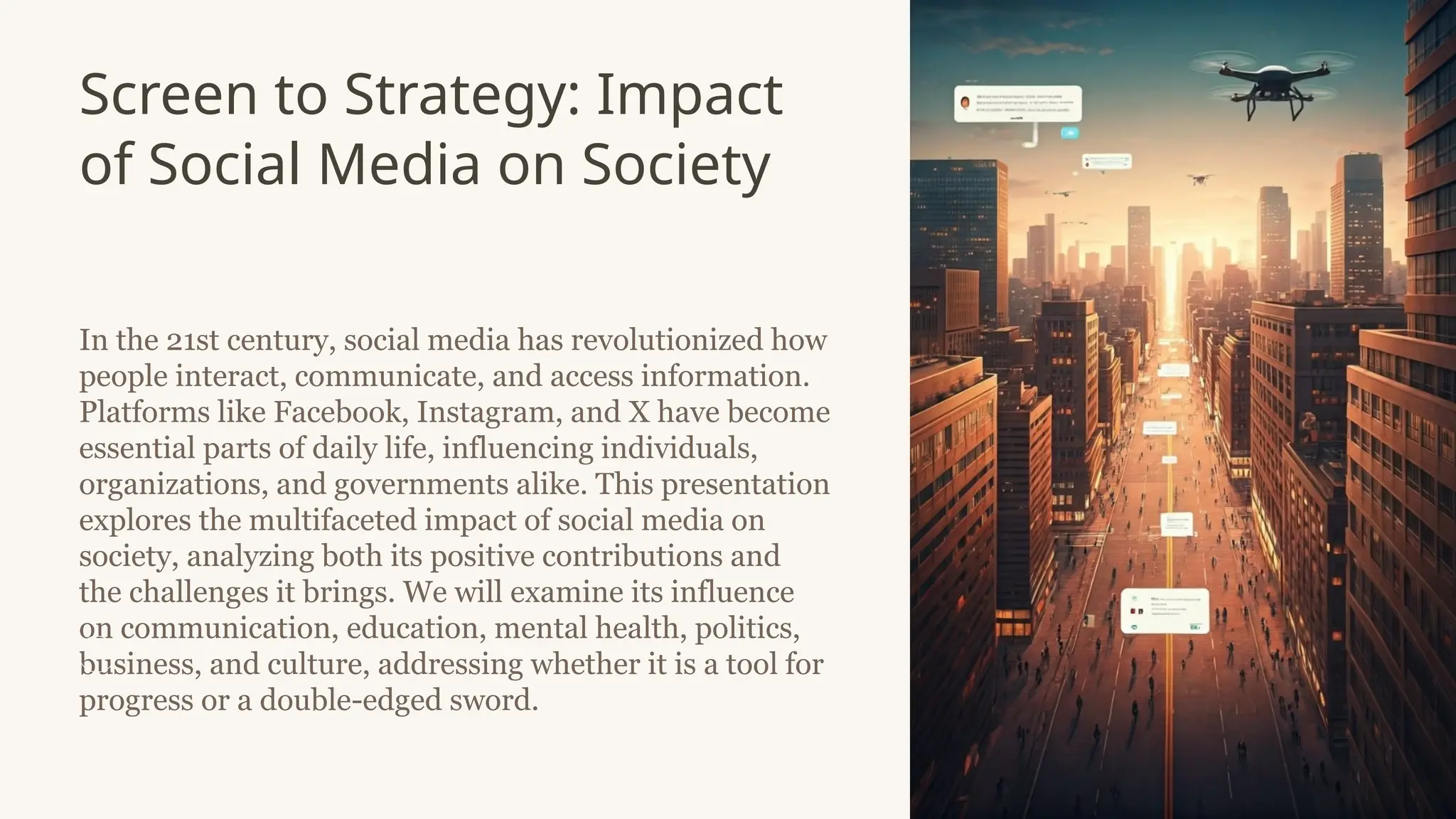
In the 21st century, social media has revolutionized how
people interact, communicate, and access information.
Platforms like Facebook, Instagram, and X have become
essential parts of daily life, influencing individuals,
organizations, and governments alike. This presentation
explores the multifaceted impact of social media on
society, analyzing both its positive contributions and
the challenges it brings. We will examine its influence
on communication, education, mental health, politics,
business, and culture, addressing whether it is a tool for
progress or a double-edged sword.
2.
What is SocialMedia?
Definition
Social media encompasses websites,
platforms, and mobile apps enabling users to
create, share, and interact with content within
virtual communities. These platforms
emphasize user-generated content, allowing
individuals to contribute and communicate in
real time.
Types of Platforms
• Social Networking Sites (e.g., Facebook, LinkedIn)
• Microblogging Sites (e.g., X)
• Media Sharing Networks (e.g., Instagram,
TikTok, YouTube)
• Messaging Apps (e.g., WhatsApp, Messenger, Snapchat)
Social media plays a critical role in education, entertainment, business, and even politics,
transforming individual lives and entire societies. Its wide reach presents both opportunities and
challenges in the digital era, influencing how we communicate, learn, shop, and socialize.
3.
Is Social MediaGood or Bad?
Why Social Media is Good
Provides a platform for communication,
creativity, self-expression, and access to
information. Plays a crucial role in social
activism and encourages global
understanding.
Why Social Media is Bad
Can lead to addiction, reduced productivity,
and mental health issues. Major source of
misinformation, fake news, and manipulation.
Privacy violations and data misuse are major
concerns.
The question of whether social media is good or bad does not have a simple answer. Like most
powerful tools, its impact depends on how it is used.
4.
Positive Impacts ofSocial Media
Enhanced
Communication
Social media allows
individuals to maintain
relationships and build
communities regardless of
geographical barriers,
essential in countries with
limited access to traditional
media.
Access to Information
Social media provides
immediate access to news and
information, allowing users to
stay informed about global
events as they unfold, a crucial
tool in times of political
upheaval.
Educational Opportunities
Social media has become an
invaluable tool for education,
offering courses on various
subjects and facilitating
informal learning through
online communities and peer-
to-peer knowledge sharing.
Social media empowers individuals and groups to advocate for change. Hashtags like #MeToo
and #BlackLivesMatter have fueled social movements, raising awareness about social, political,
and environmental issues, mobilizing support for causes that might otherwise be sidelined.
5.
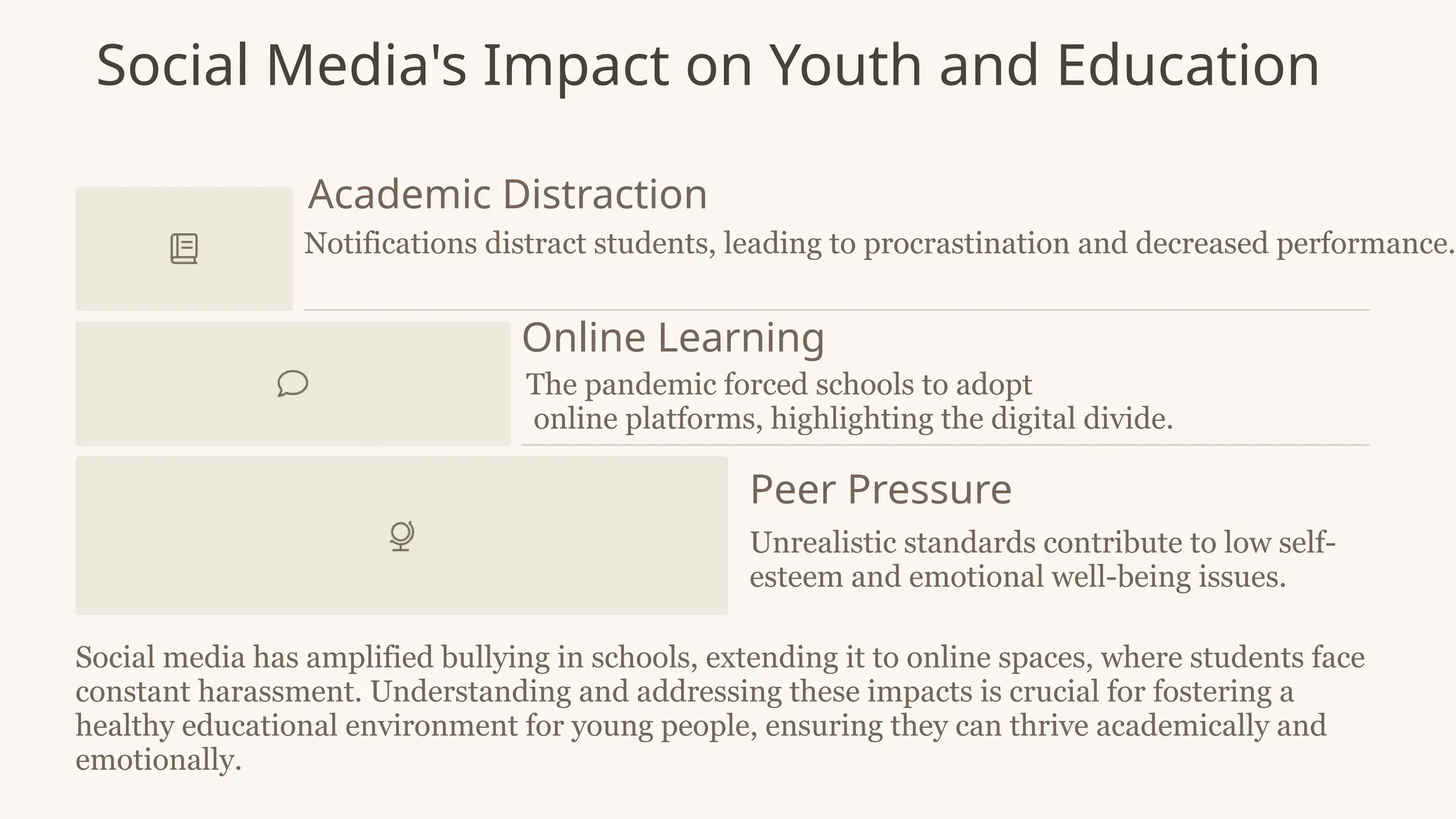
Social Media's Impacton Youth and Education
Academic Distraction
Notifications distract students, leading to procrastination and decreased performance.
Online Learning
The pandemic forced schools to adopt
online platforms, highlighting the digital divide.
Peer Pressure
Unrealistic standards contribute to low self-
esteem and emotional well-being issues.
Social media has amplified bullying in schools, extending it to online spaces, where students face
constant harassment. Understanding and addressing these impacts is crucial for fostering a
healthy educational environment for young people, ensuring they can thrive academically and
emotionally.
6.
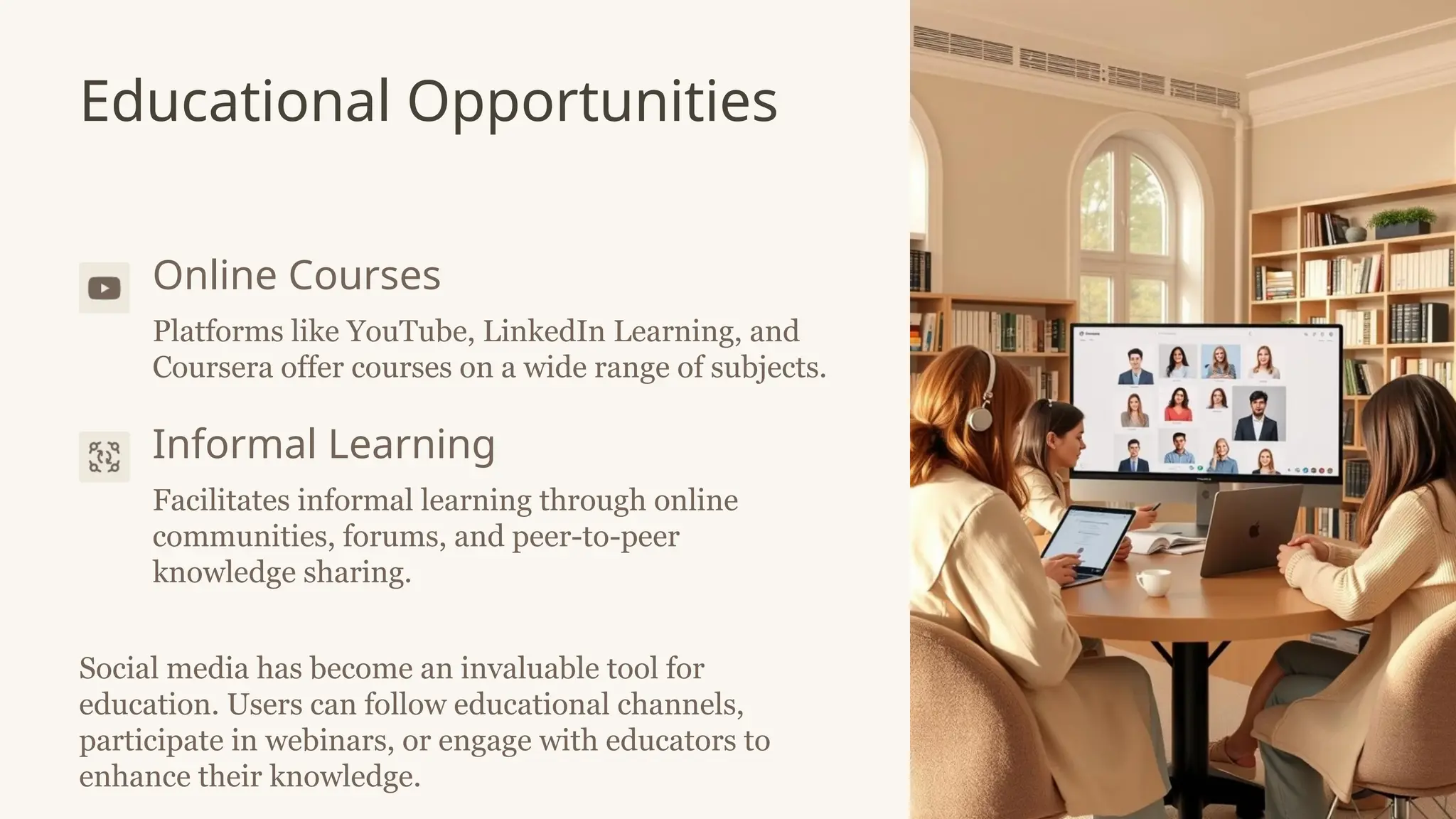
Educational Opportunities
Online Courses
Platformslike YouTube, LinkedIn Learning, and
Coursera offer courses on a wide range of subjects.
Informal Learning
Facilitates informal learning through online
communities, forums, and peer-to-peer
knowledge sharing.
Social media has become an invaluable tool for
education. Users can follow educational channels,
participate in webinars, or engage with educators to
enhance their knowledge.
7.
The Role ofSocial Media in Society
Communication
Allows instant connection
across geographic
boundaries.
Information Sharing
Serves as a major source of
news and information.
Activism
Empowers users to be part of
social change.
Social media plays a transformative and multi-dimensional role in today's society, influencing
how people communicate, express themselves, access information, and engage with the world
around them.
8.
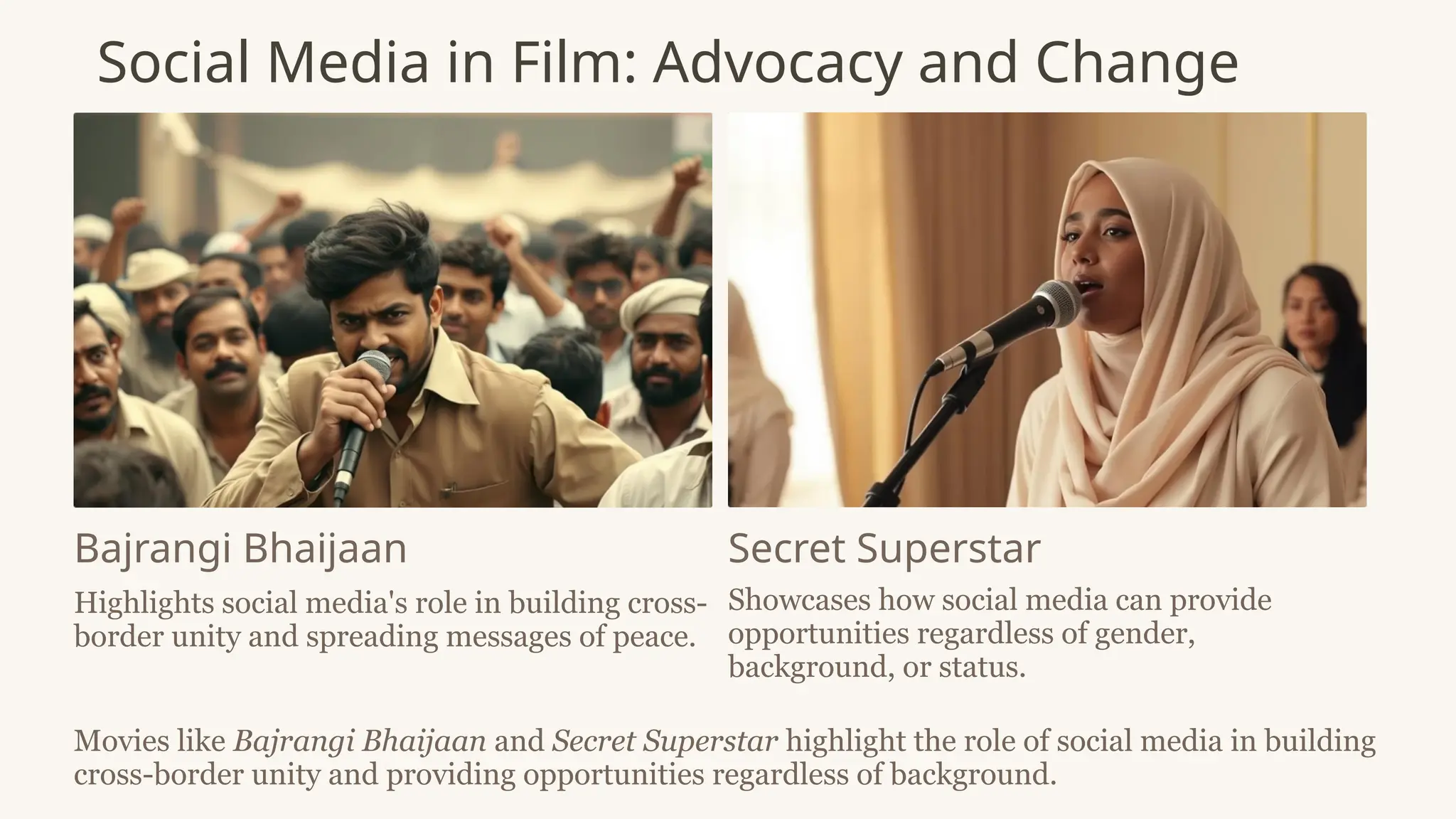
Social Media inFilm: Advocacy and Change
Bajrangi Bhaijaan
Highlights social media's role in building cross-
border unity and spreading messages of peace.
Secret Superstar
Showcases how social media can provide
opportunities regardless of gender,
background, or status.
Movies like Bajrangi Bhaijaan and Secret Superstar highlight the role of social media in building
cross-border unity and providing opportunities regardless of background.
9.
Negative Impacts ofSocial
Media
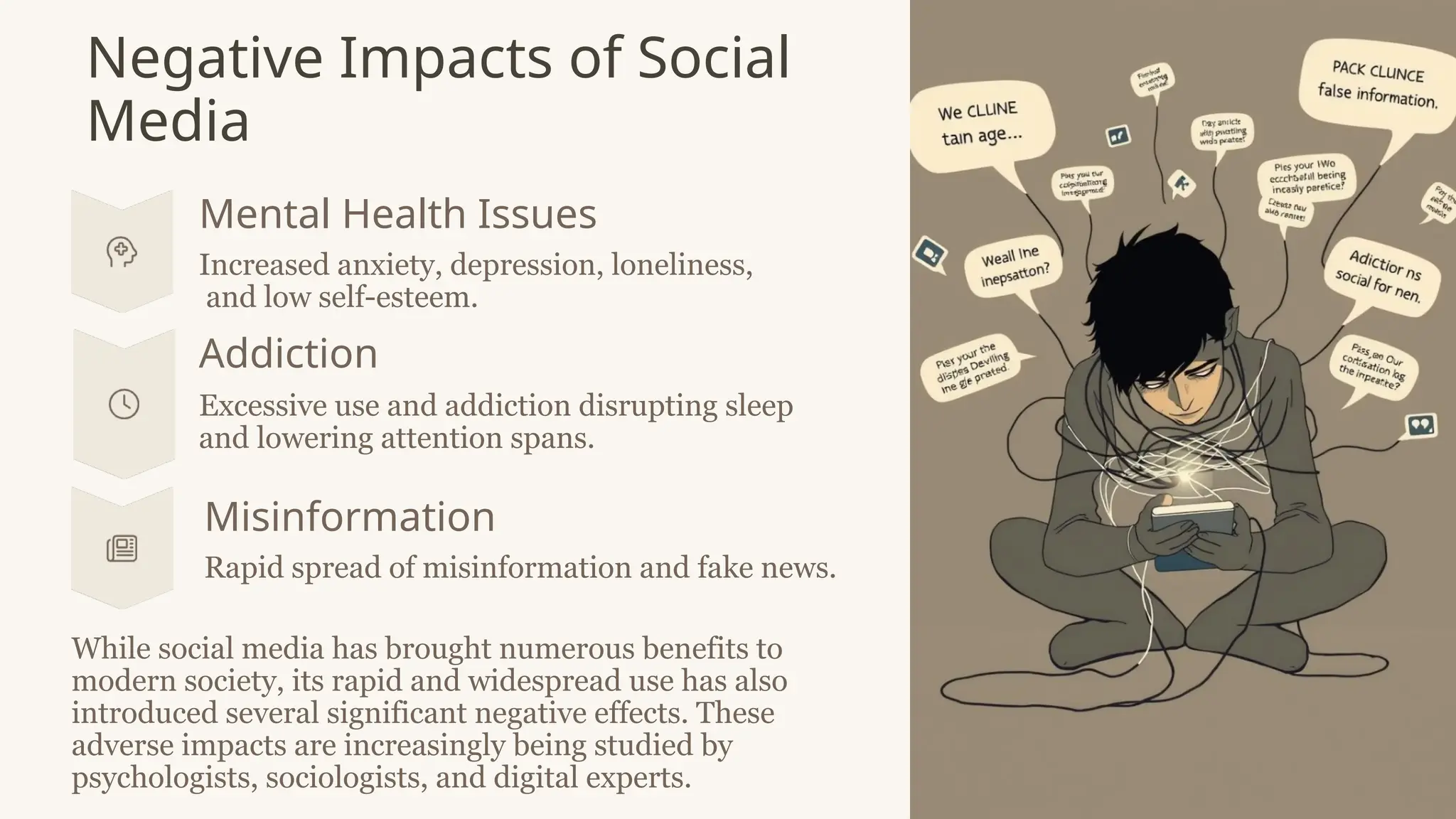
Mental Health Issues
Increased anxiety, depression, loneliness,
and low self-esteem.
Addiction
Excessive use and addiction disrupting sleep
and lowering attention spans.
Misinformation
Rapid spread of misinformation and fake news.
While social media has brought numerous benefits to
modern society, its rapid and widespread use has also
introduced several significant negative effects. These
adverse impacts are increasingly being studied by
psychologists, sociologists, and digital experts.
10.
Conclusion: Navigating the
SocialMedia Landscape
Social media, a powerful tool, influences
communication, expression, and societal engagement.
It connects the world, enables creativity, and facilitates
access to information. However, it also presents
challenges such as addiction, mental health issues, and
misinformation. Films like Bajrangi Bhaijaan,
Secret Superstar, and Chhapaak highlight social
media's potential for awareness, empowerment, and
justice.
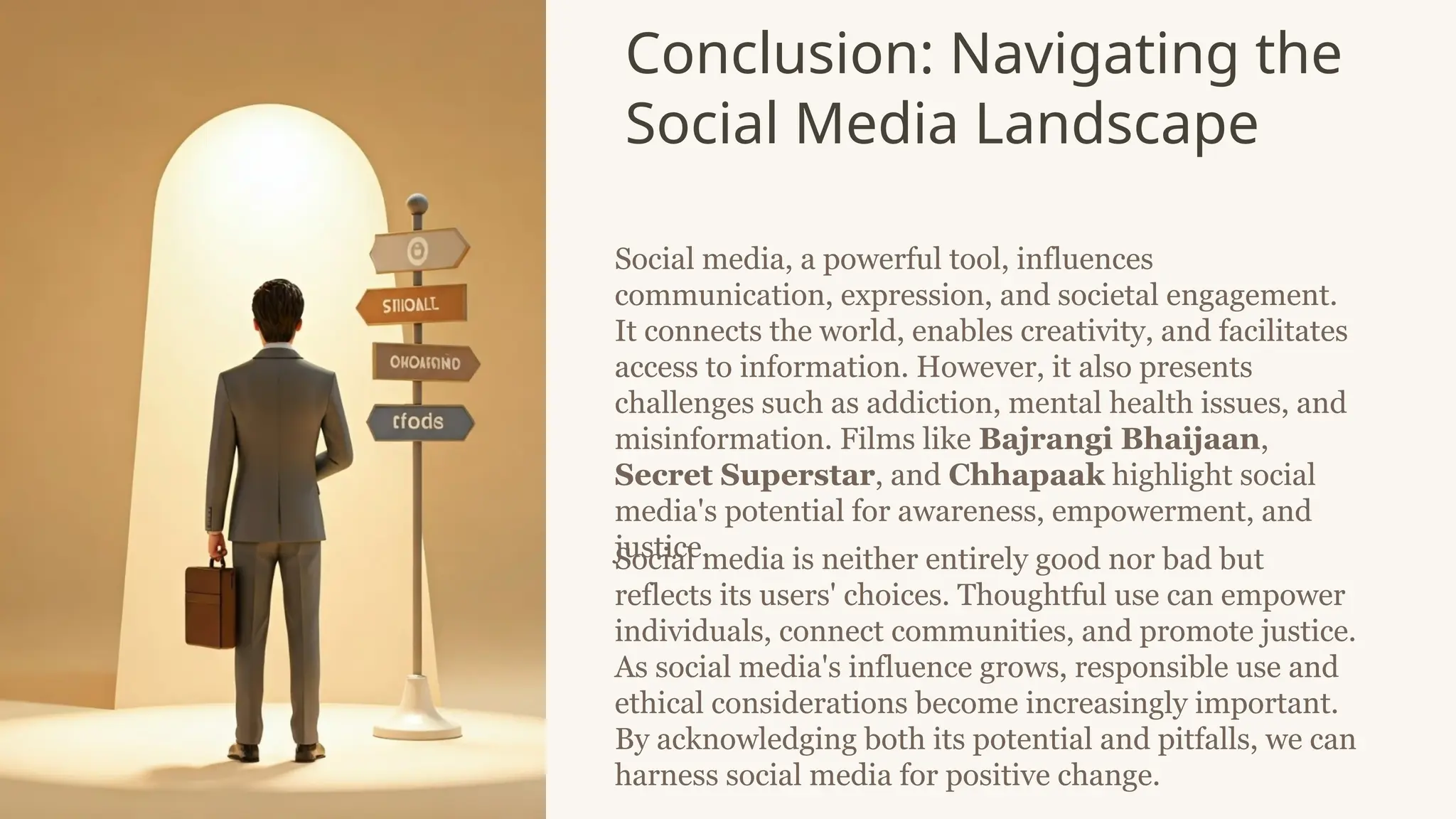
Social media is neither entirely good nor bad but
reflects its users' choices. Thoughtful use can empower
individuals, connect communities, and promote justice.
As social media's influence grows, responsible use and
ethical considerations become increasingly important.
By acknowledging both its potential and pitfalls, we can
harness social media for positive change.