Put generative Software Development to
work for your business
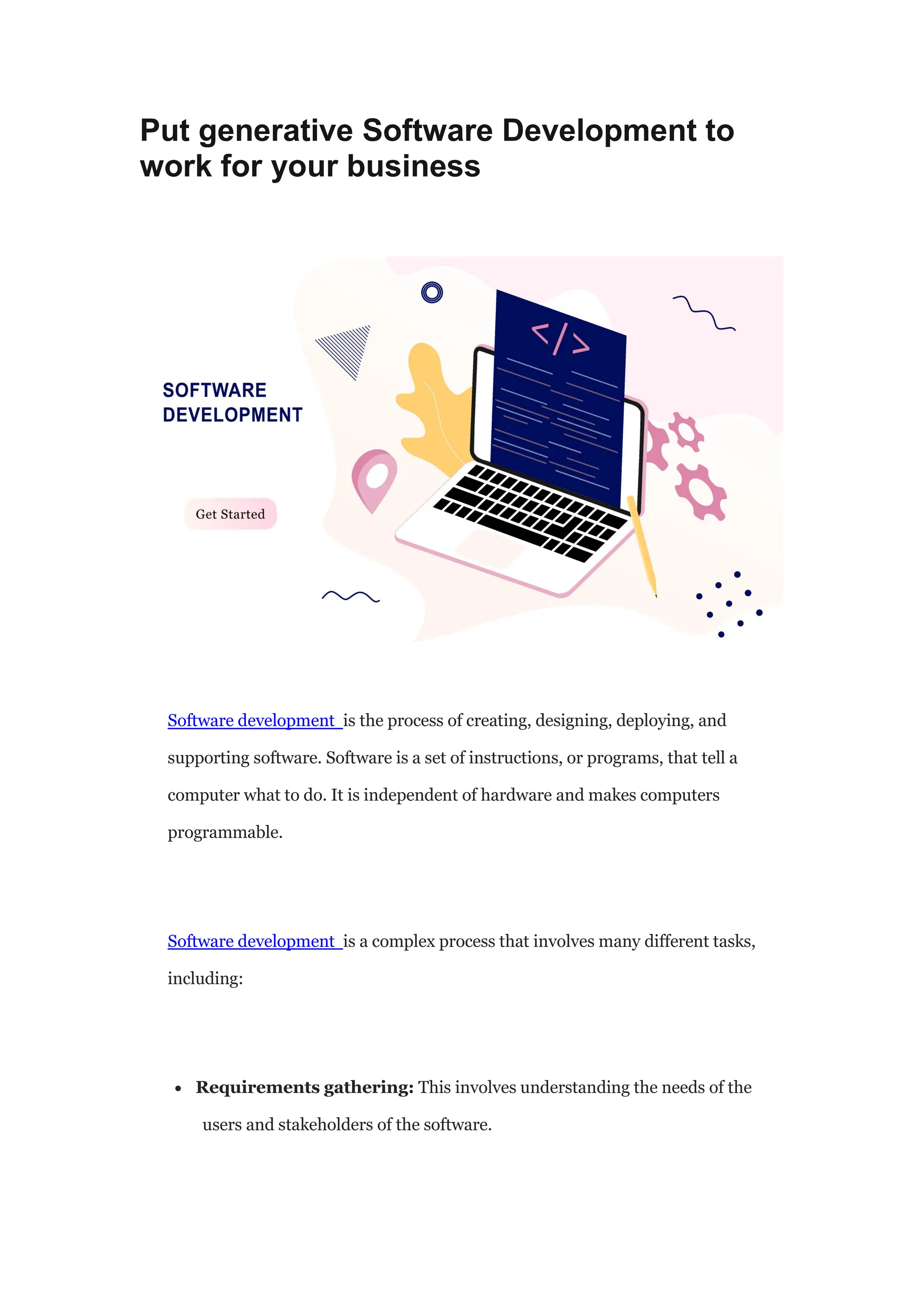
Software development is the process of creating, designing, deploying, and
supporting software. Software is a set of instructions, or programs, that tell a
computer what to do. It is independent of hardware and makes computers
programmable.
Software development is a complex process that involves many different tasks,
including:
 Requirements gathering: This involves understanding the needs of the
users and stakeholders of the software.
 System design: This involves designing the overall architecture of the
software system, including its components and how they will interact with
each other.
 Implementation: This involves writing the code that implements the
software system.
 Testing: This involves testing the software system to ensure that it meets
the requirements and is free of bugs.
 Deployment: This involves making the software system available to users.
 Maintenance: This involves fixing bugs and adding new features to the
software system.
Software development tools
There are many different software development tools available, including:
 Integrated development environments (IDE): These tools provide a
comprehensive environment for software development, including code
editing, debugging, and testing.
 Version control systems: These tools track changes to code over time
and allow developers to collaborate on projects.
 Build tools: These tools automate the process of compiling and
packaging software.
 Testing tools: These tools help developers to test their software for bugs
and performance issues.
Software development career
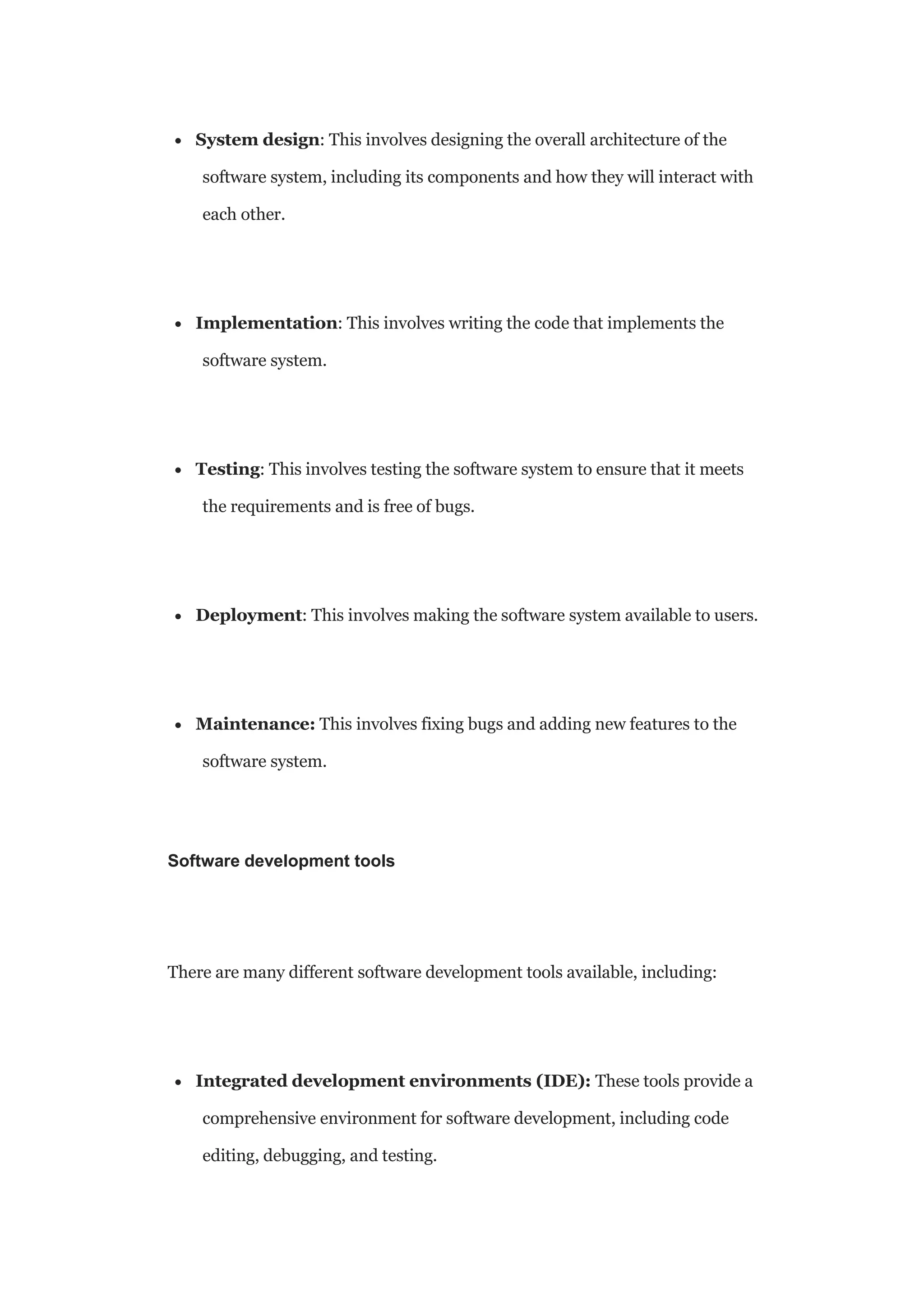
Software development is a high-demand career with good job prospects and
salaries. According to the US Bureau of Labor Statistics, employment of
software developers is projected to grow 22% from 2020 to 2030, much faster
than the average for all occupations.
To become a software developer, you need to have a strong understanding of
computer science fundamentals, including programming languages, data
structures, and algorithms. You can learn these skills through a bachelor’s
degree in computer science or a related field, or through self-study.
Once you have the necessary skills, you can start your career as a software
developer by applying for entry-level positions. As you gain experience, you
can advance to more senior positions and take on more challenging projects.
Software development is constantly evolving, with new technologies and
methodologies emerging all the time. Some of the key trends that are shaping
the future of software development include:
 Artificial intelligence (AI): AI is being used to automate many aspects
of software development, from code generation to bug detection.
 Cloud computing: Cloud computing is making it easier for developers to
build and deploy software applications.
 Low-code/no-code development: Low-code/no-code development
platforms are making it possible for people with little or no coding
experience to create software applications.
These trends are making software development more accessible and efficient
than ever before. As a result, we can expect to see even more innovative and
groundbreaking software applications being developed in the years to come.
Conclusion
Software Development are all related to the process of creating
software. However, they each have different specific focuses and
goals.Software development refers to the general process of designing,
creating, testing, and maintaining software. This can include creating new
software or updating existing software.
SciPy Technologies.pdf

SciPy Technologies.pdf

  • 1.
    Put generative SoftwareDevelopment to work for your business Software development is the process of creating, designing, deploying, and supporting software. Software is a set of instructions, or programs, that tell a computer what to do. It is independent of hardware and makes computers programmable. Software development is a complex process that involves many different tasks, including:  Requirements gathering: This involves understanding the needs of the users and stakeholders of the software.
  • 2.
     System design:This involves designing the overall architecture of the software system, including its components and how they will interact with each other.  Implementation: This involves writing the code that implements the software system.  Testing: This involves testing the software system to ensure that it meets the requirements and is free of bugs.  Deployment: This involves making the software system available to users.  Maintenance: This involves fixing bugs and adding new features to the software system. Software development tools There are many different software development tools available, including:  Integrated development environments (IDE): These tools provide a comprehensive environment for software development, including code editing, debugging, and testing.
  • 3.
     Version controlsystems: These tools track changes to code over time and allow developers to collaborate on projects.  Build tools: These tools automate the process of compiling and packaging software.  Testing tools: These tools help developers to test their software for bugs and performance issues. Software development career Software development is a high-demand career with good job prospects and salaries. According to the US Bureau of Labor Statistics, employment of software developers is projected to grow 22% from 2020 to 2030, much faster than the average for all occupations.
  • 4.
    To become asoftware developer, you need to have a strong understanding of computer science fundamentals, including programming languages, data structures, and algorithms. You can learn these skills through a bachelor’s degree in computer science or a related field, or through self-study. Once you have the necessary skills, you can start your career as a software developer by applying for entry-level positions. As you gain experience, you can advance to more senior positions and take on more challenging projects. Software development is constantly evolving, with new technologies and methodologies emerging all the time. Some of the key trends that are shaping the future of software development include:
  • 5.
     Artificial intelligence(AI): AI is being used to automate many aspects of software development, from code generation to bug detection.  Cloud computing: Cloud computing is making it easier for developers to build and deploy software applications.  Low-code/no-code development: Low-code/no-code development platforms are making it possible for people with little or no coding experience to create software applications. These trends are making software development more accessible and efficient than ever before. As a result, we can expect to see even more innovative and groundbreaking software applications being developed in the years to come.
  • 6.
    Conclusion Software Development areall related to the process of creating software. However, they each have different specific focuses and goals.Software development refers to the general process of designing, creating, testing, and maintaining software. This can include creating new software or updating existing software.