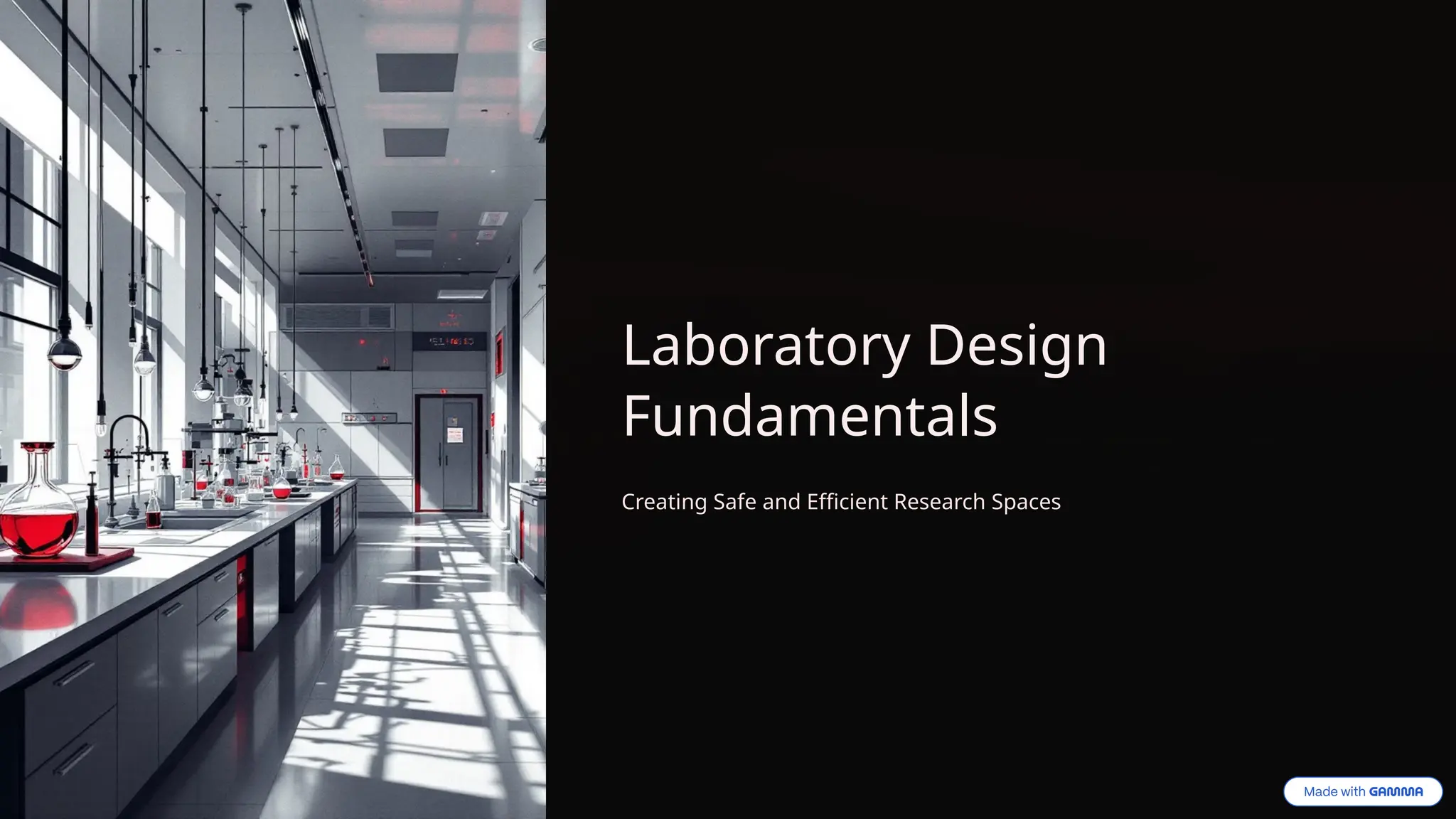
Laboratory Design
Fundamentals
Creating Safe and Efficient Research Spaces
Site Planning and Building
Infrastructure Requirements
Strategic Location
Select sites with accessible transportation
routes, utility connections, and minimal
environmental impact. Consider proximity
to universities and research hubs.
Structural Foundation
Design foundations to support heavy
equipment loads, vibration isolation, and
chemical storage. Reinforce flooring for
high-density apparatus installations.
Building Envelope
Implement climate-controlled exteriors with blast-resistant windows, sealed penetrations, and
durable materials resistant to chemical exposure and weathering.
Laboratory Classification
Systems
BSL Levels and Chemical Safety Standards
Biosafety Levels (BSL)
BSL-1: Minimal risk agents, basic safety
protocols
BSL-2: Moderate risk pathogens,
biological safety cabinets required
BSL-3: Serious airborne diseases,
controlled access and specialized
ventilation
BSL-4: Maximum containment for
dangerous exotic agents
Chemical Safety Classification
General Chemistry: Standard fume
hoods and PPE
Hazardous Materials: Enhanced
ventilation and spill containment
Explosive/Reactive: Isolated zones
with blast protection
Radiological: Shielding and
contamination monitoring systems
HVAC Systems
Ventilation, Air Quality, and Contamination Control
Air Exchange
Maintain 6-12 air changes per hour in general labs, 15-20 for high-
hazard areas. Ensure negative pressure to prevent contamination
spread.
Filtration Systems
Deploy HEPA filters (99.97% efficiency) for particle removal. Implement
activated carbon filters for chemical vapors and odor control.
Environmental Monitoring
Install continuous monitoring for temperature (20-25°C), humidity (30-
60%), and pressure differentials with automated alarm systems.
Specialized Equipment Zones
Fume Hoods
Variable air volume (VAV) hoods maintain
80-120 linear feet per minute face
velocity. Position near walls with
dedicated exhaust systems away from
doorways.
Biosafety Cabinets
Class II Type A2 cabinets provide
personnel, product, and environmental
protection. Install in low-traffic areas
with minimal air disruption for optimal
performance.
Instrumentation Areas
Designate vibration-isolated benches for
sensitive equipment. Provide dedicated
circuits, climate control, and data
connectivity for chromatography and
spectroscopy systems.
Utilities Distribution
Electrical, Plumbing, and Gas Supply Systems
01
Electrical Infrastructure
Install 208V/240V circuits for equipment, emergency backup
generators, and uninterruptible power supplies (UPS) for
critical instruments. Provide ground fault protection
throughout.
02
Plumbing Systems
Design separate drainage for chemical waste, biological waste,
and general wastewater. Include acid-resistant piping,
temperature-controlled water supplies, and backflow
preventers.
03
Gas Distribution
Centralize compressed gas storage in ventilated rooms. Run
color-coded piping for nitrogen, oxygen, natural gas, and
specialty gases with pressure regulators at each outlet.
04
Utility Corridors
Create accessible chase spaces above or beside labs for easy
maintenance and future upgrades. Label all utilities clearly with
standardized identification systems.
Safety Features
Emergency Systems, Eyewash Stations, and Decontamination Areas
Emergency Showers &
Eyewash
Position within 10 seconds
(approximately 100 feet) of hazard
areas. Ensure 15-minute continuous
flow capability with tepid water (60-
90°F). Test weekly and maintain clear
access paths.
Fire Suppression
Install sprinkler systems, fire
extinguishers (ABC and specialized
types), and fire blankets. Include smoke
detectors, heat sensors, and automated
alarm notifications to emergency
services.
Spill Response
Stock spill kits for chemical, biological,
and radiological incidents. Provide
neutralizing agents, absorbent
materials, PPE, and disposal containers
at strategic locations throughout the
facility.
Flexible Laboratory Design
Modular Furniture and Adaptable Workspaces
Modern laboratories require adaptability to accommodate evolving research needs
and emerging technologies. Modular design principles enable rapid reconfiguration
without major renovations.
Mobile Benching
Systems
Wheeled workstations with
quick-disconnect utilities allow
researchers to reorganize spaces
within hours rather than weeks.
Overhead Service
Carriers
Suspended utility systems deliver
power, data, and gases from the
ceiling, eliminating floor-
mounted obstacles and
maximizing flexibility.
Demountable Partitions
Non-permanent walls enable space reconfiguration while maintaining
acoustic isolation and containment when needed.
Regulatory Compliance
Building Codes, OSHA Standards, and Environmental Guidelines
OSHA Standards
Comply with 29 CFR 1910.1450
Laboratory Standard covering chemical
hygiene plans, PPE requirements, and
exposure monitoring protocols.
Building Codes
Follow International Building Code
(IBC) and NFPA standards for fire
safety, egress routes, occupancy
classifications, and hazardous material
storage limits.
Environmental Protection
Adhere to EPA regulations for waste disposal, air emissions, and water discharge.
Obtain necessary permits and maintain detailed documentation.
Regular inspections, staff training, and documentation updates ensure ongoing
compliance. Designate a safety officer to oversee regulatory adherence and coordinate
with local authorities.
Future-Proofing Your Lab
Sustainability, Technology Integration, and Expansion Planning
Sustainable Design
Implement LED lighting, low-flow fume hoods, and heat recovery systems to reduce
energy consumption by 30-50%. Pursue LEED certification for environmental leadership.
Smart Laboratory Systems
Integrate IoT sensors for real-time monitoring, automated inventory management,
and predictive maintenance. Deploy cloud-based LIMS for data management and
collaboration.
Growth Capacity
Reserve 20-30% additional utility capacity and structural support for future
equipment. Design utility chases and service corridors to accommodate expansion
without major disruption.
Planning for the future ensures your laboratory remains cutting-edge, efficient, and adaptable to
emerging scientific disciplines and technological advances.
Science Laboratory-Design-Fundamentals (2).pptx

  • 1.
    Laboratory Design Fundamentals Creating Safeand Efficient Research Spaces
  • 2.
    Site Planning andBuilding Infrastructure Requirements Strategic Location Select sites with accessible transportation routes, utility connections, and minimal environmental impact. Consider proximity to universities and research hubs. Structural Foundation Design foundations to support heavy equipment loads, vibration isolation, and chemical storage. Reinforce flooring for high-density apparatus installations. Building Envelope Implement climate-controlled exteriors with blast-resistant windows, sealed penetrations, and durable materials resistant to chemical exposure and weathering.
  • 3.
    Laboratory Classification Systems BSL Levelsand Chemical Safety Standards Biosafety Levels (BSL) BSL-1: Minimal risk agents, basic safety protocols BSL-2: Moderate risk pathogens, biological safety cabinets required BSL-3: Serious airborne diseases, controlled access and specialized ventilation BSL-4: Maximum containment for dangerous exotic agents Chemical Safety Classification General Chemistry: Standard fume hoods and PPE Hazardous Materials: Enhanced ventilation and spill containment Explosive/Reactive: Isolated zones with blast protection Radiological: Shielding and contamination monitoring systems
  • 4.
    HVAC Systems Ventilation, AirQuality, and Contamination Control Air Exchange Maintain 6-12 air changes per hour in general labs, 15-20 for high- hazard areas. Ensure negative pressure to prevent contamination spread. Filtration Systems Deploy HEPA filters (99.97% efficiency) for particle removal. Implement activated carbon filters for chemical vapors and odor control. Environmental Monitoring Install continuous monitoring for temperature (20-25°C), humidity (30- 60%), and pressure differentials with automated alarm systems.
  • 5.
    Specialized Equipment Zones FumeHoods Variable air volume (VAV) hoods maintain 80-120 linear feet per minute face velocity. Position near walls with dedicated exhaust systems away from doorways. Biosafety Cabinets Class II Type A2 cabinets provide personnel, product, and environmental protection. Install in low-traffic areas with minimal air disruption for optimal performance. Instrumentation Areas Designate vibration-isolated benches for sensitive equipment. Provide dedicated circuits, climate control, and data connectivity for chromatography and spectroscopy systems.
  • 6.
    Utilities Distribution Electrical, Plumbing,and Gas Supply Systems 01 Electrical Infrastructure Install 208V/240V circuits for equipment, emergency backup generators, and uninterruptible power supplies (UPS) for critical instruments. Provide ground fault protection throughout. 02 Plumbing Systems Design separate drainage for chemical waste, biological waste, and general wastewater. Include acid-resistant piping, temperature-controlled water supplies, and backflow preventers. 03 Gas Distribution Centralize compressed gas storage in ventilated rooms. Run color-coded piping for nitrogen, oxygen, natural gas, and specialty gases with pressure regulators at each outlet. 04 Utility Corridors Create accessible chase spaces above or beside labs for easy maintenance and future upgrades. Label all utilities clearly with standardized identification systems.
  • 7.
    Safety Features Emergency Systems,Eyewash Stations, and Decontamination Areas Emergency Showers & Eyewash Position within 10 seconds (approximately 100 feet) of hazard areas. Ensure 15-minute continuous flow capability with tepid water (60- 90°F). Test weekly and maintain clear access paths. Fire Suppression Install sprinkler systems, fire extinguishers (ABC and specialized types), and fire blankets. Include smoke detectors, heat sensors, and automated alarm notifications to emergency services. Spill Response Stock spill kits for chemical, biological, and radiological incidents. Provide neutralizing agents, absorbent materials, PPE, and disposal containers at strategic locations throughout the facility.
  • 8.
    Flexible Laboratory Design ModularFurniture and Adaptable Workspaces Modern laboratories require adaptability to accommodate evolving research needs and emerging technologies. Modular design principles enable rapid reconfiguration without major renovations. Mobile Benching Systems Wheeled workstations with quick-disconnect utilities allow researchers to reorganize spaces within hours rather than weeks. Overhead Service Carriers Suspended utility systems deliver power, data, and gases from the ceiling, eliminating floor- mounted obstacles and maximizing flexibility. Demountable Partitions Non-permanent walls enable space reconfiguration while maintaining acoustic isolation and containment when needed.
  • 9.
    Regulatory Compliance Building Codes,OSHA Standards, and Environmental Guidelines OSHA Standards Comply with 29 CFR 1910.1450 Laboratory Standard covering chemical hygiene plans, PPE requirements, and exposure monitoring protocols. Building Codes Follow International Building Code (IBC) and NFPA standards for fire safety, egress routes, occupancy classifications, and hazardous material storage limits. Environmental Protection Adhere to EPA regulations for waste disposal, air emissions, and water discharge. Obtain necessary permits and maintain detailed documentation. Regular inspections, staff training, and documentation updates ensure ongoing compliance. Designate a safety officer to oversee regulatory adherence and coordinate with local authorities.
  • 10.
    Future-Proofing Your Lab Sustainability,Technology Integration, and Expansion Planning Sustainable Design Implement LED lighting, low-flow fume hoods, and heat recovery systems to reduce energy consumption by 30-50%. Pursue LEED certification for environmental leadership. Smart Laboratory Systems Integrate IoT sensors for real-time monitoring, automated inventory management, and predictive maintenance. Deploy cloud-based LIMS for data management and collaboration. Growth Capacity Reserve 20-30% additional utility capacity and structural support for future equipment. Design utility chases and service corridors to accommodate expansion without major disruption. Planning for the future ensures your laboratory remains cutting-edge, efficient, and adaptable to emerging scientific disciplines and technological advances.