MICROBIOLOGY
THE
3 SUB TOPICS
*ORIGIN AND EVOLUTION OF
MICROBIOLOGY
*MICROBIAL DIVERSITY
*MICROBIAL ANATOMY
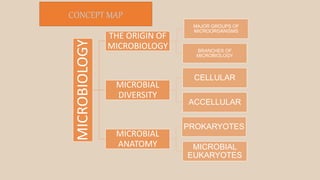
MICROBIOLOGY
THE ORIGIN OF
MICROBIOLOGY
MAJOR GROUPS OF
MICROORGANISMS
BRANCHES OF
MICROBIOLOGY
MICROBIAL
DIVERSITY
CELLULAR
ACCELLULAR
MICROBIAL
ANATOMY
PROKARYOTES
MICROBIAL
EUKARYOTES
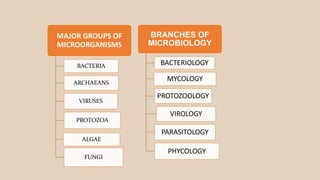
MAJOR GROUPS OF
MICROORGANISMS
BACTERIA
ARCHAEANS
VIRUSES
PROTOZOA
ALGAE
FUNGI
BRANCHES OF
MICROBIOLOGY
BACTERIOLOGY
MYCOLOGY
PROTOZOOLOGY
VIROLOGY
PARASITOLOGY
PHYCOLOGY
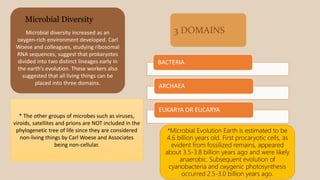
Microbial diversity increased as an
oxygen-rich environment developed. Carl
Woese and colleagues, studying ribosomal
RNA sequences, suggest that prokaryotes
divided into two distinct lineages early in
the earth’s evolution. These workers also
suggested that all living things can be
placed into three domains.
Microbial Diversity
3 DOMAINS
BACTERIA
ARCHAEA
EUKARYA OR EUCARYA
* The other groups of microbes such as viruses,
viroids, satellites and prions are NOT included in the
phylogenetic tree of life since they are considered
non-living things by Carl Woese and Associates
being non-cellular.
*Microbial Evolution Earth is estimated to be
4.6 billion years old. First procaryotic cells, as
evident from fossilized remains, appeared
about 3.5-3.8 billion years ago and were likely
anaerobic. Subsequent evolution of
cyanobacteria and oxygenic photosynthesis
occurred 2.5-3.0 billion years ago.
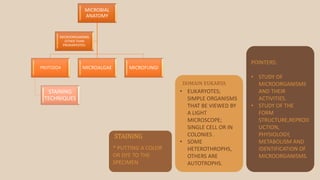
• EUKARYOTES;
SIMPLE ORGANISMS
THAT BE VIEWED BY
A LIGHT
MICROSCOPE;
SINGLE CELL OR IN
COLONIES .
• SOME
HETEROTHROPHS,
OTHERS ARE
AUTOTROPHS.
DOMAIN EUKARYA
* PUTTING A COLOR
OR DYE TO THE
SPECIMEN
STAINING
POINTERS:
• STUDY OF
MICROORGANISMS
AND THEIR
ACTIVITIES.
• STUDY OF THE
FORM
STRUCTURE,REPROD
UCTION,
PHYSIOLOGY,
METABOLISM AND
IDENTIFICATION OF
MICROORGANISMS.
MICROBIAL
ANATOMY
PROTOZOA
STAINING
TECHNIQUES
MICROALGAE MICROFUNGI
MICROORGANISMS
OTHER THAN
PROKARYOTES:

SCIENCE - CONCEPT MAP - MICROBIOLOGY.pptx

  • 1.
    MICROBIOLOGY THE 3 SUB TOPICS *ORIGINAND EVOLUTION OF MICROBIOLOGY *MICROBIAL DIVERSITY *MICROBIAL ANATOMY
  • 2.
    MICROBIOLOGY THE ORIGIN OF MICROBIOLOGY MAJORGROUPS OF MICROORGANISMS BRANCHES OF MICROBIOLOGY MICROBIAL DIVERSITY CELLULAR ACCELLULAR MICROBIAL ANATOMY PROKARYOTES MICROBIAL EUKARYOTES
  • 3.
    MAJOR GROUPS OF MICROORGANISMS BACTERIA ARCHAEANS VIRUSES PROTOZOA ALGAE FUNGI BRANCHESOF MICROBIOLOGY BACTERIOLOGY MYCOLOGY PROTOZOOLOGY VIROLOGY PARASITOLOGY PHYCOLOGY
  • 4.
    Microbial diversity increasedas an oxygen-rich environment developed. Carl Woese and colleagues, studying ribosomal RNA sequences, suggest that prokaryotes divided into two distinct lineages early in the earth’s evolution. These workers also suggested that all living things can be placed into three domains. Microbial Diversity 3 DOMAINS BACTERIA ARCHAEA EUKARYA OR EUCARYA * The other groups of microbes such as viruses, viroids, satellites and prions are NOT included in the phylogenetic tree of life since they are considered non-living things by Carl Woese and Associates being non-cellular. *Microbial Evolution Earth is estimated to be 4.6 billion years old. First procaryotic cells, as evident from fossilized remains, appeared about 3.5-3.8 billion years ago and were likely anaerobic. Subsequent evolution of cyanobacteria and oxygenic photosynthesis occurred 2.5-3.0 billion years ago.
  • 5.
    • EUKARYOTES; SIMPLE ORGANISMS THATBE VIEWED BY A LIGHT MICROSCOPE; SINGLE CELL OR IN COLONIES . • SOME HETEROTHROPHS, OTHERS ARE AUTOTROPHS. DOMAIN EUKARYA * PUTTING A COLOR OR DYE TO THE SPECIMEN STAINING POINTERS: • STUDY OF MICROORGANISMS AND THEIR ACTIVITIES. • STUDY OF THE FORM STRUCTURE,REPROD UCTION, PHYSIOLOGY, METABOLISM AND IDENTIFICATION OF MICROORGANISMS. MICROBIAL ANATOMY PROTOZOA STAINING TECHNIQUES MICROALGAE MICROFUNGI MICROORGANISMS OTHER THAN PROKARYOTES: