The Five Evidences of Evolution
SB5: Students will evaluate the role of natural selection in the
development of the theory of evolution.
Support for Evolution
 1 ) The fossil record
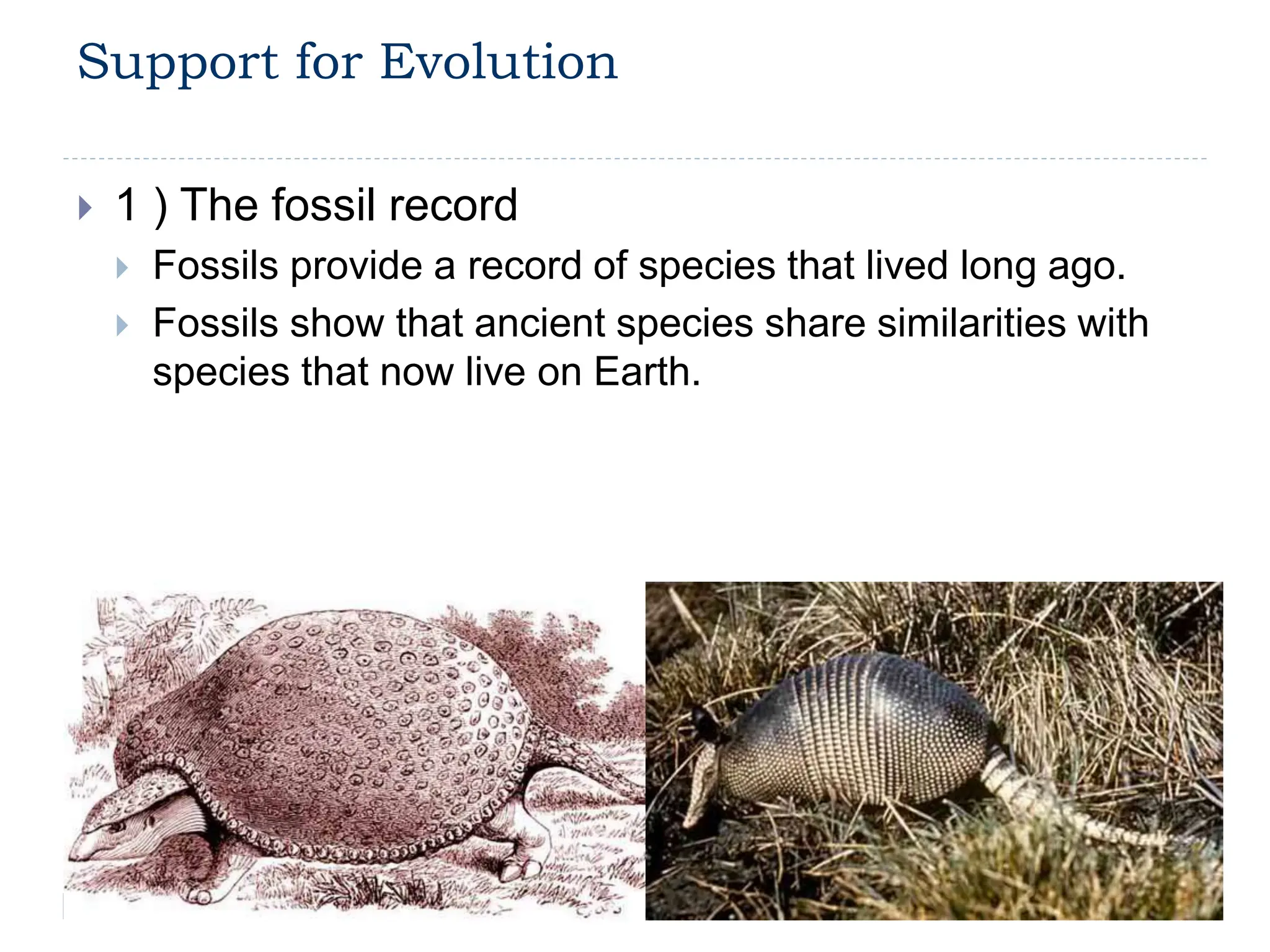
 Fossils provide a record of species that lived long ago.
 Fossils show that ancient species share similarities with
species that now live on Earth.
Evidence of Evolution
 2) Anatomical Evidence
 A) Derived traits are newly
evolved features, such as
feathers, that do not
appear in the fossils of
common ancestors.
 B) Ancestral traits are
more primitive features,
such as teeth and tails,
that do appear in
ancestral forms.
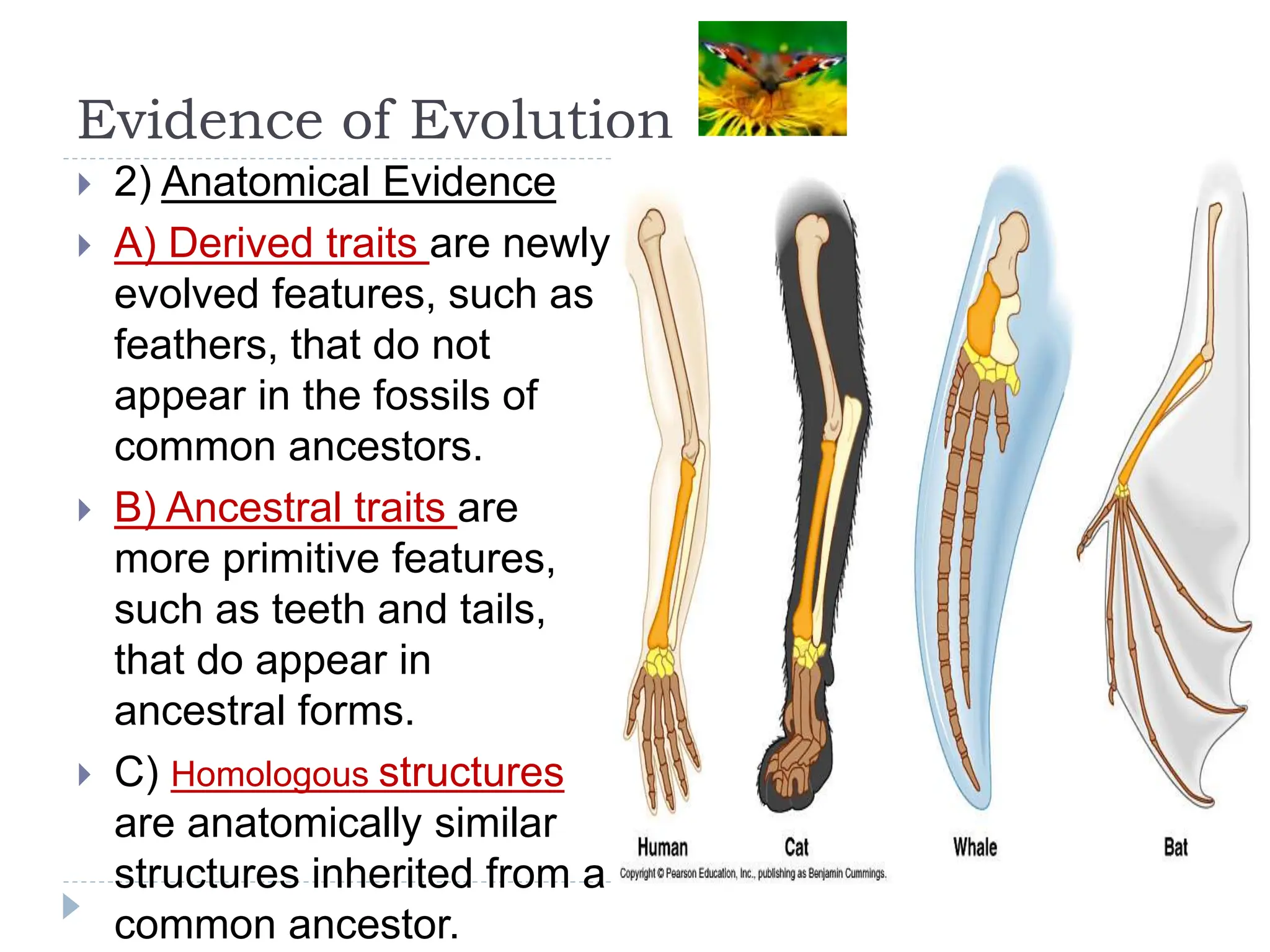
 C) Homologous structures
are anatomically similar
structures inherited from a
common ancestor.
 D) Analogous structures
can be used for the
same purpose and can
be superficially similar in
construction, but are not
inherited from a
common ancestor.
E) Vestigial Structures
 Structures that are the
reduced forms of
functional structures in
other organisms
 Evolutionary theory
predicts that features of
ancestors that no longer
have a function for that
species will become
smaller over time until
they are lost.
Evidence of Evolution
3) Comparative Embryology
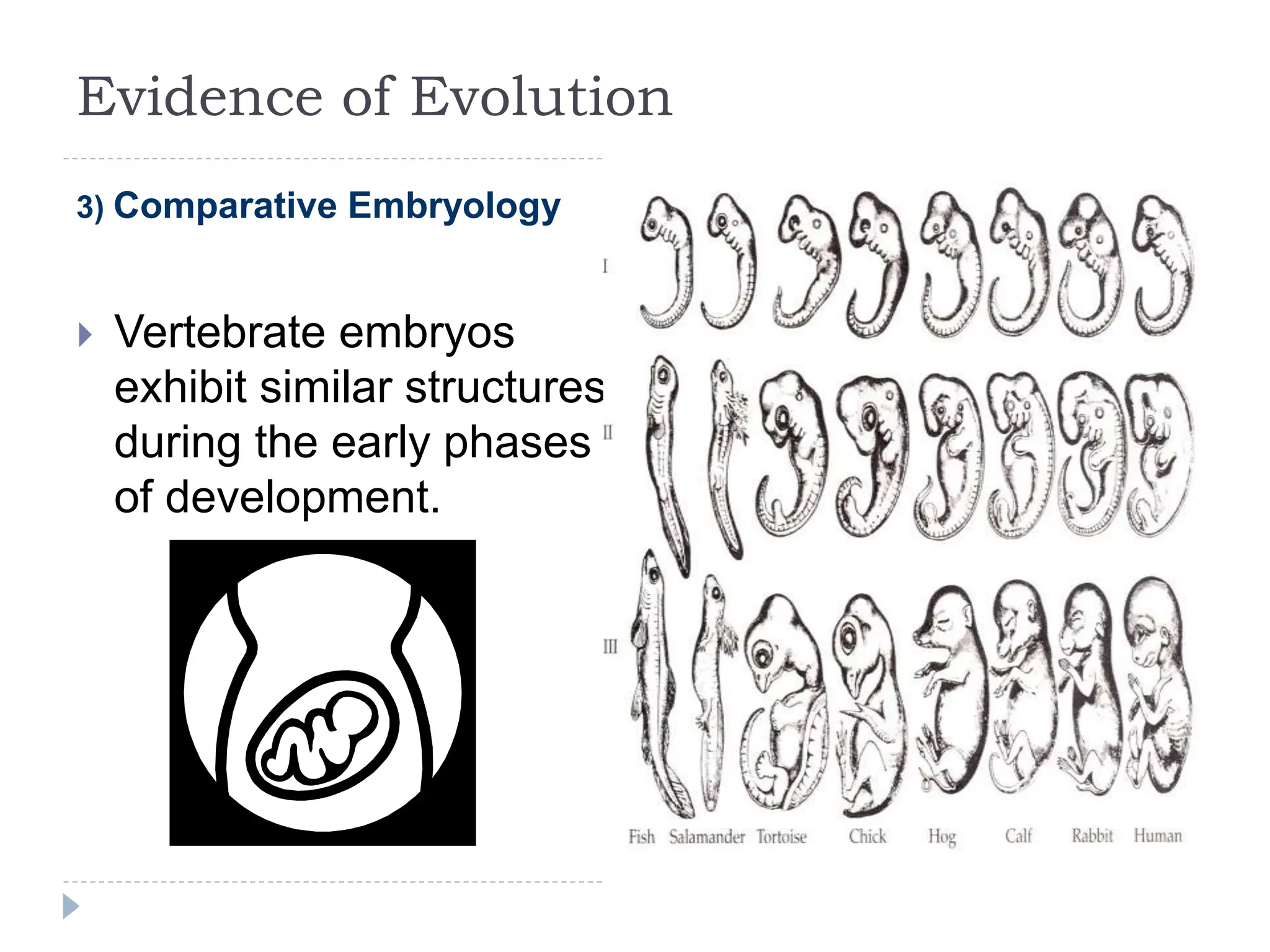
 Vertebrate embryos
exhibit similar structures
during the early phases
of development.
Evidence of Evolution
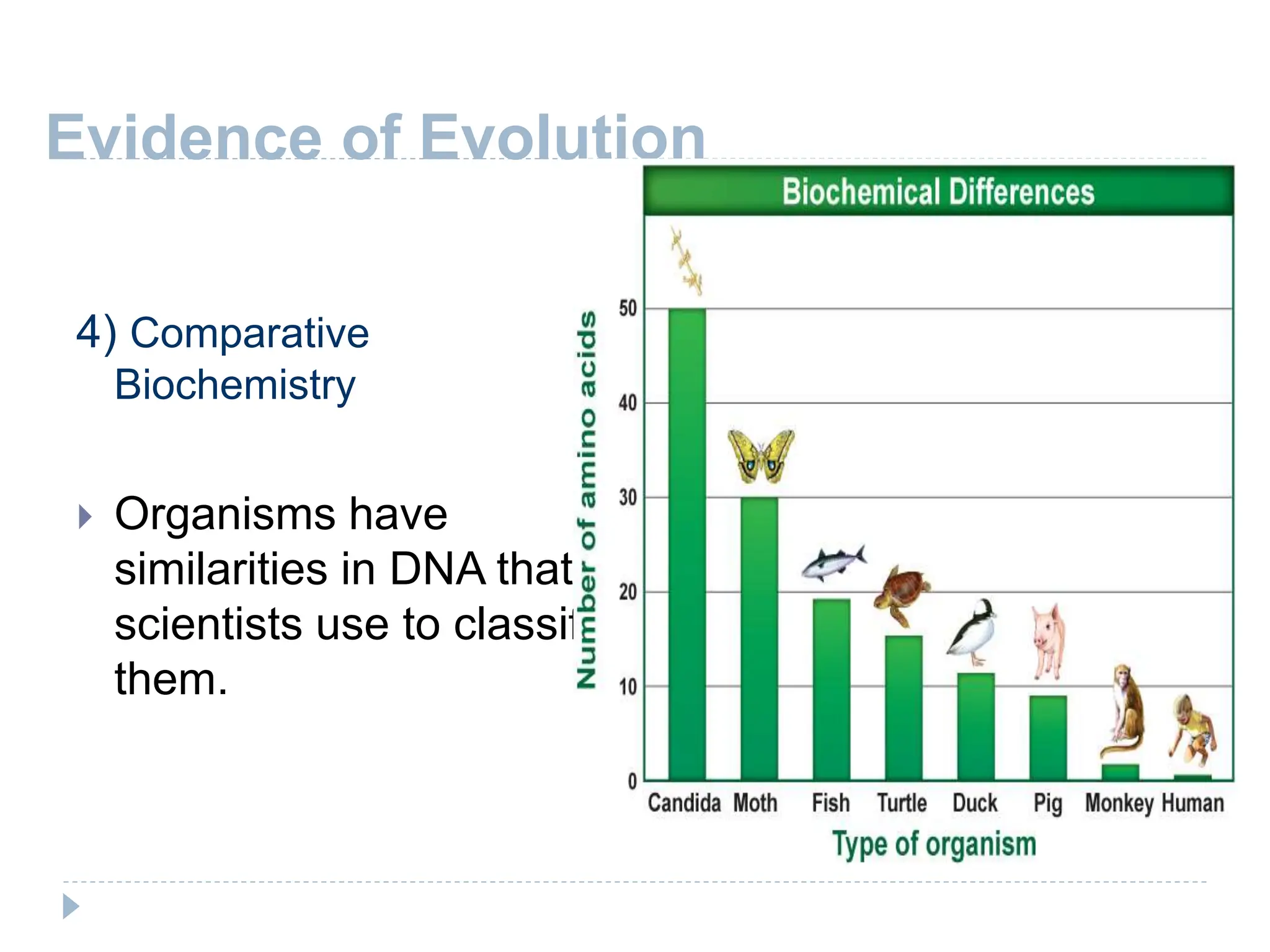
4) Comparative
Biochemistry
 Organisms have
similarities in DNA that
scientists use to classify
them.
5) Geographical Distribution
 The distribution of plants
and animals that Darwin
saw during his South
American travels first
suggested evolution to
Darwin.
 He noticed that animals
and plants that were on
the same islands had
evolved similar traits but
they still were more
similar to organisms from
their native country/island.
 Picture of a English rabbit and
Mara

science 10 Evidence of Evolution 2nd.ppt

  • 1.
    The Five Evidencesof Evolution SB5: Students will evaluate the role of natural selection in the development of the theory of evolution.
  • 2.
    Support for Evolution 1 ) The fossil record  Fossils provide a record of species that lived long ago.  Fossils show that ancient species share similarities with species that now live on Earth.
  • 3.
    Evidence of Evolution 2) Anatomical Evidence  A) Derived traits are newly evolved features, such as feathers, that do not appear in the fossils of common ancestors.  B) Ancestral traits are more primitive features, such as teeth and tails, that do appear in ancestral forms.  C) Homologous structures are anatomically similar structures inherited from a common ancestor.
  • 4.
     D) Analogousstructures can be used for the same purpose and can be superficially similar in construction, but are not inherited from a common ancestor.
  • 5.
    E) Vestigial Structures Structures that are the reduced forms of functional structures in other organisms  Evolutionary theory predicts that features of ancestors that no longer have a function for that species will become smaller over time until they are lost.
  • 6.
    Evidence of Evolution 3)Comparative Embryology  Vertebrate embryos exhibit similar structures during the early phases of development.
  • 7.
    Evidence of Evolution 4)Comparative Biochemistry  Organisms have similarities in DNA that scientists use to classify them.
  • 8.
    5) Geographical Distribution The distribution of plants and animals that Darwin saw during his South American travels first suggested evolution to Darwin.  He noticed that animals and plants that were on the same islands had evolved similar traits but they still were more similar to organisms from their native country/island.  Picture of a English rabbit and Mara