A snapshot of the dialectical 
relationship between public and 
private sector in Vancouver 2010- 
2014
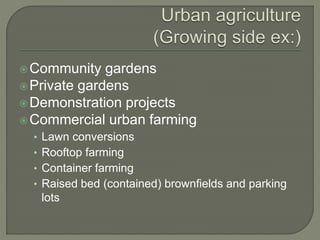
Community gardens 
Private gardens 
Demonstration projects 
Commercial urban farming 
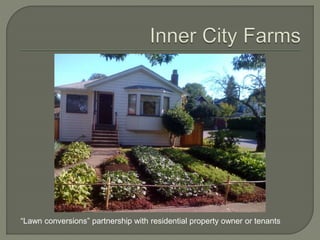
• Lawn conversions 
• Rooftop farming 
• Container farming 
• Raised bed (contained) brownfields and parking 
lots
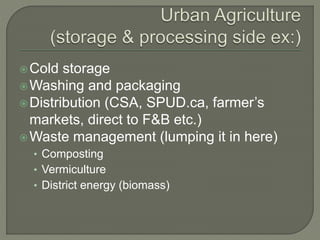
Cold storage 
Washing and packaging 
Distribution (CSA, SPUD.ca, farmer’s 
markets, direct to F&B etc.) 
Waste management (lumping it in here) 
• Composting 
• Vermiculture 
• District energy (biomass)
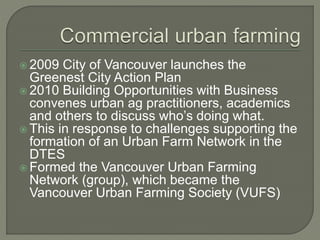
 2009 City of Vancouver launches the 
Greenest City Action Plan 
 2010 Building Opportunities with Business 
convenes urban ag practitioners, academics 
and others to discuss who’s doing what. 
 This in response to challenges supporting the 
formation of an Urban Farm Network in the 
DTES 
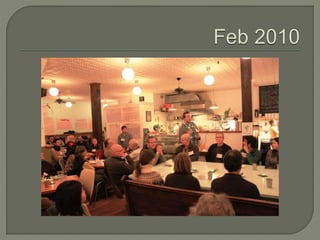
Formed the Vancouver Urban Farming 
Network (group), which became the 
Vancouver Urban Farming Society (VUFS)
 Organized the first Vancouver 
Urban Farming Forum (Policy 
barriers the focus of 1st event) 
• Attendees from all over BC and 
Washington State 
• Have been three more since then 
looking at capacity building and 
resource sharing, best practices 
• Worked with UBC Grad Student Marc 
Shutzbank to create and administer 
the city’s first Urban Farming Census
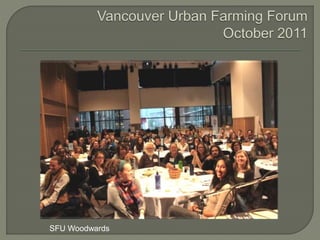
SFU Woodwards
 Worked closely with COV Social Planning team 
responsible for drafting up Vancouver’s Food Strategy
• Improve Food Security and Food Access 
• Social Justice and Community Economic 
Development 
• Education 
• Community Building 
• Fetish (Gourmands) my opinion only… 
• Because they can, and why not? 
• Etc.
• Access to capital (debt and/or equity financing) 
• Formal legitimacy (business licenses, permits, 
insurance) 
• “Nuisance bylaws” and complaints 
• Tenure of land 
• Scalability 
• Making a profit and being self sustaining (off-farm 
income still making up a large portion)
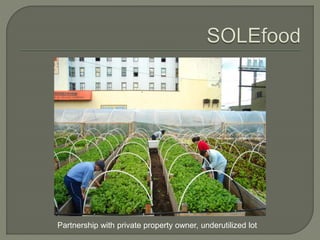
Partnership with private property owner, underutilized lot
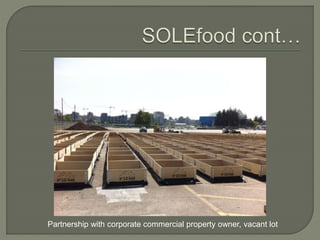
Partnership with corporate commercial property owner, vacant lot
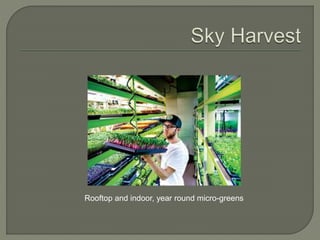
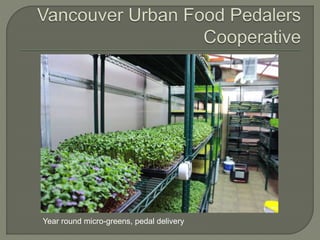
Rooftop and indoor, year round micro-greens
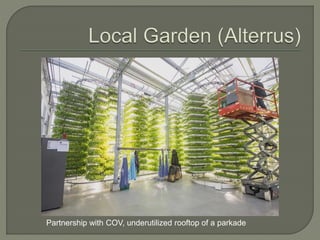
Partnership with COV, underutilized rooftop of a parkade
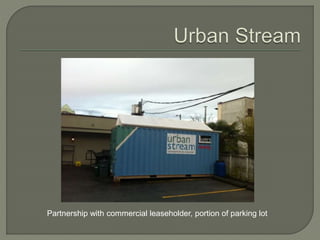
Partnership with commercial leaseholder, portion of parking lot
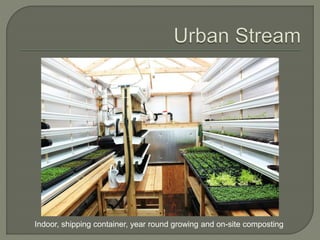
Indoor, shipping container, year round growing and on-site composting
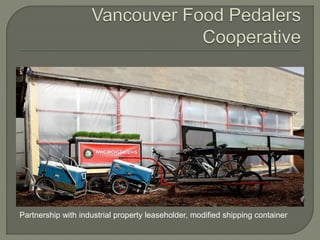
Partnership with industrial property leaseholder, modified shipping container
Year round micro-greens, pedal delivery
“Lawn conversions” partnership with residential property owner or tenants
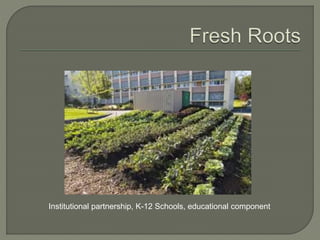
Institutional partnership, K-12 Schools, educational component
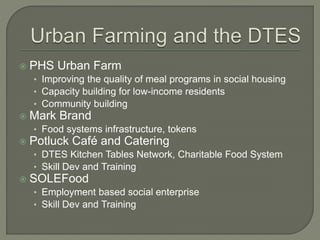
 PHS Urban Farm 
• Improving the quality of meal programs in social housing 
• Capacity building for low-income residents 
• Community building 
 Mark Brand 
• Food systems infrastructure, tokens 
 Potluck Café and Catering 
• DTES Kitchen Tables Network, Charitable Food System 
• Skill Dev and Training 
 SOLEFood 
• Employment based social enterprise 
• Skill Dev and Training
Everywhere! 
 Is that a good thing? 
Good question! 
Thanks, Wes 
What are the alternatives? Urban Ag 
Zone? Easing approved uses in several 
areas? Attaching provisions to existing 
zoning? Laissez Faire (until someone gets 
anthrax…)
Hard to regulate something that doesn’t exist….
Wes Regan 
https://www.linkedin.com/in/wesleyregan 
wregan@sfu.ca 
www.shapecontent.com
Wes Regan 
https://www.linkedin.com/in/wesleyregan 
wregan@sfu.ca 
www.shapecontent.com

Scarp urban ag pres

  • 1.
    A snapshot ofthe dialectical relationship between public and private sector in Vancouver 2010- 2014
  • 2.
    Community gardens Privategardens Demonstration projects Commercial urban farming • Lawn conversions • Rooftop farming • Container farming • Raised bed (contained) brownfields and parking lots
  • 3.
    Cold storage Washingand packaging Distribution (CSA, SPUD.ca, farmer’s markets, direct to F&B etc.) Waste management (lumping it in here) • Composting • Vermiculture • District energy (biomass)
  • 4.
     2009 Cityof Vancouver launches the Greenest City Action Plan  2010 Building Opportunities with Business convenes urban ag practitioners, academics and others to discuss who’s doing what.  This in response to challenges supporting the formation of an Urban Farm Network in the DTES Formed the Vancouver Urban Farming Network (group), which became the Vancouver Urban Farming Society (VUFS)
  • 5.
     Organized thefirst Vancouver Urban Farming Forum (Policy barriers the focus of 1st event) • Attendees from all over BC and Washington State • Have been three more since then looking at capacity building and resource sharing, best practices • Worked with UBC Grad Student Marc Shutzbank to create and administer the city’s first Urban Farming Census
  • 9.
  • 10.
     Worked closelywith COV Social Planning team responsible for drafting up Vancouver’s Food Strategy
  • 11.
    • Improve FoodSecurity and Food Access • Social Justice and Community Economic Development • Education • Community Building • Fetish (Gourmands) my opinion only… • Because they can, and why not? • Etc.
  • 12.
    • Access tocapital (debt and/or equity financing) • Formal legitimacy (business licenses, permits, insurance) • “Nuisance bylaws” and complaints • Tenure of land • Scalability • Making a profit and being self sustaining (off-farm income still making up a large portion)
  • 14.
    Partnership with privateproperty owner, underutilized lot
  • 15.
    Partnership with corporatecommercial property owner, vacant lot
  • 16.
    Rooftop and indoor,year round micro-greens
  • 17.
    Partnership with COV,underutilized rooftop of a parkade
  • 18.
    Partnership with commercialleaseholder, portion of parking lot
  • 19.
    Indoor, shipping container,year round growing and on-site composting
  • 20.
    Partnership with industrialproperty leaseholder, modified shipping container
  • 21.
  • 22.
    “Lawn conversions” partnershipwith residential property owner or tenants
  • 23.
    Institutional partnership, K-12Schools, educational component
  • 24.
     PHS UrbanFarm • Improving the quality of meal programs in social housing • Capacity building for low-income residents • Community building  Mark Brand • Food systems infrastructure, tokens  Potluck Café and Catering • DTES Kitchen Tables Network, Charitable Food System • Skill Dev and Training  SOLEFood • Employment based social enterprise • Skill Dev and Training
  • 25.
    Everywhere!  Isthat a good thing? Good question! Thanks, Wes What are the alternatives? Urban Ag Zone? Easing approved uses in several areas? Attaching provisions to existing zoning? Laissez Faire (until someone gets anthrax…)
  • 26.
    Hard to regulatesomething that doesn’t exist….
  • 27.
    Wes Regan https://www.linkedin.com/in/wesleyregan wregan@sfu.ca www.shapecontent.com
  • 28.
    Wes Regan https://www.linkedin.com/in/wesleyregan wregan@sfu.ca www.shapecontent.com

Editor's Notes

  • #10 Urban Stream a Founding Member VUFS has held two major urban farming forums in Vancouver to examine issues of policy and regulatory barriers and best practices or emerging trends in urban agriculture and urban farming more specifically Liaises with Vancouver Food Policy Council and with Social Planning (COV) and collaborates with numerous partners to build capacity and give professional development support as well as policy advocacy voice to urban food growers (of which there are more than you might think)
  • #27 Company founded in 2009, grew out of UBC Applied Engineering Thesis Reaching numerous GCAP Goals (green jobs, food scraps diversion, food production) 2nd unit was under production when a “concerned neighbour” contacted the City to complain that someone was doing something in a shipping container City enforces a stop-work order and subsequently massacres our design with a bunch of risk management features that treat our unit like we were building a condo tower. Sets us back several months and nearly bankrupts the company as drafting, architectural and other consulting fees begin to add up as per the City’s numerous requirements.