The Scarlet LetterBy Nathaniel Hawthorne
“I believe that The Scarlet Letter, like all great novels, enriches our sense of human experience and complicates and humanizes our approach to it.”from Solitude, Love, and Anguish: The Tragic Design of the Scarlet Letter  by Seymour L. Gross
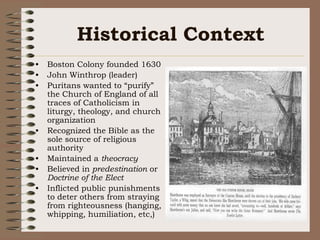
Historical ContextBoston Colony founded 1630John Winthrop (leader)Puritans wanted to “purify” the Church of England of all traces of Catholicism in liturgy, theology, and church organization Recognized the Bible as the sole source of religious authorityMaintained a theocracyBelieved in predestination or Doctrine of the Elect Inflicted public punishments to deter others from straying from righteousness (hanging, whipping, humiliation, etc,)
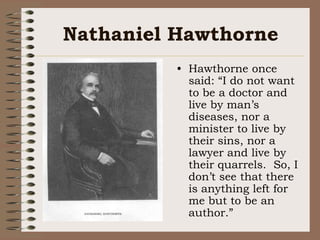
Nathaniel HawthorneHawthorne once said: “I do not want to be a doctor and live by man’s diseases, nor a minister to live by their sins, nor a lawyer and live by their quarrels.  So, I don’t see that there is anything left for me but to be an author.”
About the AuthorBorn July 4, 1804 in Salem, Mass.Reclusive at timesServed as a magazine editorWorked in the Salem Custom HouseLived at Brook FarmWrote Twice-Told Tales, The House of Seven Gables, The Scarlet Letter, etc.Married Sophia Peabody and fathered Una (who became the model for Pearl)Served as the United States Consul to LiverpoolDied in 1864  Buried in Concord, MassachusettsGreat-great-great-great grandfather, John Hathorne, was judge at Salem witch trials
Plot/SettingThe novel is set in the mid 1600s in Boston, Massachusetts.The plot encompasses a seven year period.The plot involves the love triangle of wife-lover-husband.The major theme of the novel is developed in the context of good vs. evil.
Point of ViewThird-Person Omniscient…Hawthorne reveals the inner and outer workings of the characters and provides social criticism, history, and psychology.
CharactersHester Prynne- wearer of the scarlet letterPearl- child of Hester; living symbol of Hester’s sinRoger Chillingworth- learned scholar; doctorArthur Dimmesdale- admired young ministerGovernor Bellingham- governor and magistrate of Massachusetts Bay ColonyRev. John Wilson- senior minister of colonyMistress Hibbins- Gov. Bellingham’s sister
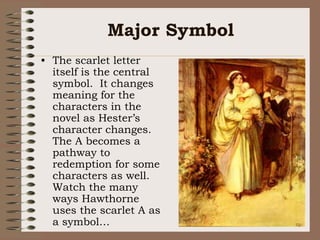
Major SymbolThe scarlet letter itself is the central symbol.  It changes meaning for the characters in the novel as Hester’s character changes.  The A becomes a pathway to redemption for some characters as well.  Watch the many ways Hawthorne uses the scarlet A as a symbol…
VocabularyEdificeVenerableTown beadleIniquityIgnominiousPilloryPreternaturalRemonstranceImperceptibleEminentPeremptoryEfficacyLeechFeignTalismanInscrutable
Vocabulary (cont.)NonentityTransgressorMagistrateRetributionOrthodoxEtherealSextonPestilenceForebodeEstrangeNecromancerScourgeInsidiousRepudiateSagaciousGesticulation
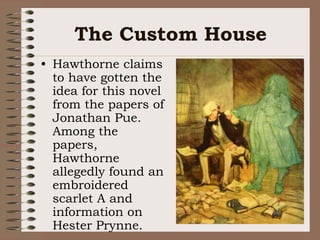
The Custom HouseHawthorne claims to have gotten the idea for this novel from the papers of Jonathan Pue.  Among the papers, Hawthorne allegedly found an embroidered scarlet A and information on Hester Prynne.
The Custom HouseDescribes the interior/exterior of the Custom HouseDescribes Hawthorne’s feelings about his native town of SalemMakes critical comments about the Whig party/ reveals Hawthorne’s involvement as a DemocratDescribes his early attempts to write Hester’s story.

Scarlet letter

  • 1.
    The Scarlet LetterByNathaniel Hawthorne
  • 2.
    “I believe thatThe Scarlet Letter, like all great novels, enriches our sense of human experience and complicates and humanizes our approach to it.”from Solitude, Love, and Anguish: The Tragic Design of the Scarlet Letter by Seymour L. Gross
  • 3.
    Historical ContextBoston Colonyfounded 1630John Winthrop (leader)Puritans wanted to “purify” the Church of England of all traces of Catholicism in liturgy, theology, and church organization Recognized the Bible as the sole source of religious authorityMaintained a theocracyBelieved in predestination or Doctrine of the Elect Inflicted public punishments to deter others from straying from righteousness (hanging, whipping, humiliation, etc,)
  • 4.
    Nathaniel HawthorneHawthorne oncesaid: “I do not want to be a doctor and live by man’s diseases, nor a minister to live by their sins, nor a lawyer and live by their quarrels. So, I don’t see that there is anything left for me but to be an author.”
  • 5.
    About the AuthorBornJuly 4, 1804 in Salem, Mass.Reclusive at timesServed as a magazine editorWorked in the Salem Custom HouseLived at Brook FarmWrote Twice-Told Tales, The House of Seven Gables, The Scarlet Letter, etc.Married Sophia Peabody and fathered Una (who became the model for Pearl)Served as the United States Consul to LiverpoolDied in 1864 Buried in Concord, MassachusettsGreat-great-great-great grandfather, John Hathorne, was judge at Salem witch trials
  • 6.
    Plot/SettingThe novel isset in the mid 1600s in Boston, Massachusetts.The plot encompasses a seven year period.The plot involves the love triangle of wife-lover-husband.The major theme of the novel is developed in the context of good vs. evil.
  • 7.
    Point of ViewThird-PersonOmniscient…Hawthorne reveals the inner and outer workings of the characters and provides social criticism, history, and psychology.
  • 8.
    CharactersHester Prynne- wearerof the scarlet letterPearl- child of Hester; living symbol of Hester’s sinRoger Chillingworth- learned scholar; doctorArthur Dimmesdale- admired young ministerGovernor Bellingham- governor and magistrate of Massachusetts Bay ColonyRev. John Wilson- senior minister of colonyMistress Hibbins- Gov. Bellingham’s sister
  • 9.
    Major SymbolThe scarletletter itself is the central symbol. It changes meaning for the characters in the novel as Hester’s character changes. The A becomes a pathway to redemption for some characters as well. Watch the many ways Hawthorne uses the scarlet A as a symbol…
  • 10.
  • 11.
  • 12.
    The Custom HouseHawthorneclaims to have gotten the idea for this novel from the papers of Jonathan Pue. Among the papers, Hawthorne allegedly found an embroidered scarlet A and information on Hester Prynne.
  • 13.
    The Custom HouseDescribesthe interior/exterior of the Custom HouseDescribes Hawthorne’s feelings about his native town of SalemMakes critical comments about the Whig party/ reveals Hawthorne’s involvement as a DemocratDescribes his early attempts to write Hester’s story.