SUSTAINABLE
DUST CONTROL
TO PROTECT
VIBRANT
ECOSYSTEMS
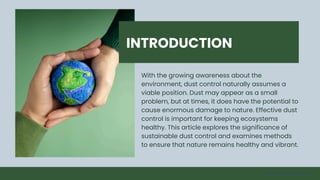
INTRODUCTION
With the growing awareness about the
environment, dust control naturally assumes a
viable position. Dust may appear as a small
problem, but at times, it does have the potential to
cause enormous damage to nature. Effective dust
control is important for keeping ecosystems
healthy. This article explores the significance of
sustainable dust control and examines methods
to ensure that nature remains healthy and vibrant.
Learn and Act Lecture Series: Orcas
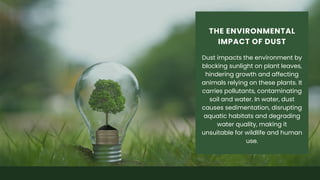
Dust impacts the environment by
blocking sunlight on plant leaves,
hindering growth and affecting
animals relying on these plants. It
carries pollutants, contaminating
soil and water. In water, dust
causes sedimentation, disrupting
aquatic habitats and degrading
water quality, making it
unsuitable for wildlife and human
use.
THE ENVIRONMENTAL
IMPACT OF DUST
Using methods to control dust in a way that's good for
the environment is important. It helps reduce how
much dust affects ecosystems, making sure nature
stays healthy. The following methods in the next slide
discuss the importance of sustainable dust control and
how to use them effectively.
SUSTAINABLE DUST CONTROL
METHODS
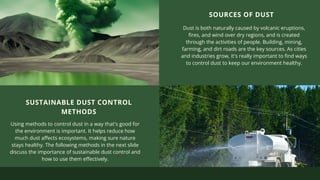
Dust is both naturally caused by volcanic eruptions,
fires, and wind over dry regions, and is created
through the activities of people. Building, mining,
farming, and dirt roads are the key sources. As cities
and industries grow, it's really important to find ways
to control dust to keep our environment healthy.
SOURCES OF DUST
Vegetative Cover
One of the best
ways to control
dust is by planting
plants and trees.
They work like
natural shields,
catching dust and
keeping it from
flying around. On
farms, planting
cover crops can
stop soil from
washing away and
making dust.
Watering and
Chemical
Stabilizers
Watering is a common dust
control method, especially
in construction sites and
unpaved roads. Also, the
dust particles may be kept
settled on the ground with
regular watering. That is a
water-intensive process
and requires sustained
effort; therefore, in many
cases, it might not be
viable, especially in those
regions where accessibility
or shortage of water is a
problem.
Using Modern
Dust Control
Solutions
Companies like EP&A
Envirotac, Inc. offer
innovative dust
control solutions and
soil stabilization
methods that
exemplify sustainable
practices. Their
product, Rhino Snot,
is a liquid polymer
that effectively
stabilizes soil and
controls dust
emissions
Windbreaks and
Barriers
It involves reducing wind
speed, thereby reducing
its speed and trapping
dust particles. They may
be either natural
windbreaks—one line of
trees—or artificial ones,
like fences and walls.
Windbreaks perform well
within the agricultural
setting where crops get
protection from wind-
caused erosion and
habitat for wildlife.
Using better ways to take care of
soil can greatly lessen dust.
Methods like no-till farming, crop
rotation, and using natural
materials to cover soil help keep it
strong and stop it from washing
away. These methods not only cut
down on dust but also make the
soil fertile and help enhance
biodiversity.
Soil Management
Practices
Proper urban planning and
infrastructure are crucial for dust
control. Paving roads, creating
green spaces, and using dust-
suppressing materials in
construction reduce dust
pollution. Urban planners and
developers should prioritize
sustainable practices to ensure
long-term environmental health.
Urban Planning and
Infrastructure Development
The Value of Collective
Action in Dust Control
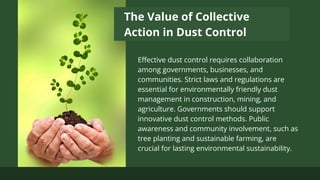
Effective dust control requires collaboration
among governments, businesses, and
communities. Strict laws and regulations are
essential for environmentally friendly dust
management in construction, mining, and
agriculture. Governments should support
innovative dust control methods. Public
awareness and community involvement, such as
tree planting and sustainable farming, are
crucial for lasting environmental sustainability.
The Future of
Sustainable Dust
Control
The future of dust control lies in using eco-friendly
methods and ensuring long-term environmental care.
New technologies and increased environmental
awareness offer better dust control options, such as
plant-based dust blockers, advanced monitoring, and
climate-resilient vegetation. Integrating dust control
into broader conservation plans leads to lasting
improvements.
Scientists, government leaders, and communities must
collaborate to develop and implement innovative dust
control solutions. As we understand dust's
environmental impact better, it's crucial to enhance our
strategies. Companies like EP&A Envirotac, Inc.
contribute significantly by creating eco-friendly dust
control products, highlighting the importance of
sustainable practices for long-term ecological health.
THANK YOU
CONTACT US
(760) 600-5759
www.envirotacinc.com

Save Orcas and Dolphins Wide Presentation (Presentation).pdf

  • 1.
  • 2.
    INTRODUCTION With the growingawareness about the environment, dust control naturally assumes a viable position. Dust may appear as a small problem, but at times, it does have the potential to cause enormous damage to nature. Effective dust control is important for keeping ecosystems healthy. This article explores the significance of sustainable dust control and examines methods to ensure that nature remains healthy and vibrant. Learn and Act Lecture Series: Orcas
  • 3.
    Dust impacts theenvironment by blocking sunlight on plant leaves, hindering growth and affecting animals relying on these plants. It carries pollutants, contaminating soil and water. In water, dust causes sedimentation, disrupting aquatic habitats and degrading water quality, making it unsuitable for wildlife and human use. THE ENVIRONMENTAL IMPACT OF DUST
  • 4.
    Using methods tocontrol dust in a way that's good for the environment is important. It helps reduce how much dust affects ecosystems, making sure nature stays healthy. The following methods in the next slide discuss the importance of sustainable dust control and how to use them effectively. SUSTAINABLE DUST CONTROL METHODS Dust is both naturally caused by volcanic eruptions, fires, and wind over dry regions, and is created through the activities of people. Building, mining, farming, and dirt roads are the key sources. As cities and industries grow, it's really important to find ways to control dust to keep our environment healthy. SOURCES OF DUST
  • 5.
    Vegetative Cover One ofthe best ways to control dust is by planting plants and trees. They work like natural shields, catching dust and keeping it from flying around. On farms, planting cover crops can stop soil from washing away and making dust. Watering and Chemical Stabilizers Watering is a common dust control method, especially in construction sites and unpaved roads. Also, the dust particles may be kept settled on the ground with regular watering. That is a water-intensive process and requires sustained effort; therefore, in many cases, it might not be viable, especially in those regions where accessibility or shortage of water is a problem. Using Modern Dust Control Solutions Companies like EP&A Envirotac, Inc. offer innovative dust control solutions and soil stabilization methods that exemplify sustainable practices. Their product, Rhino Snot, is a liquid polymer that effectively stabilizes soil and controls dust emissions Windbreaks and Barriers It involves reducing wind speed, thereby reducing its speed and trapping dust particles. They may be either natural windbreaks—one line of trees—or artificial ones, like fences and walls. Windbreaks perform well within the agricultural setting where crops get protection from wind- caused erosion and habitat for wildlife.
  • 6.
    Using better waysto take care of soil can greatly lessen dust. Methods like no-till farming, crop rotation, and using natural materials to cover soil help keep it strong and stop it from washing away. These methods not only cut down on dust but also make the soil fertile and help enhance biodiversity. Soil Management Practices Proper urban planning and infrastructure are crucial for dust control. Paving roads, creating green spaces, and using dust- suppressing materials in construction reduce dust pollution. Urban planners and developers should prioritize sustainable practices to ensure long-term environmental health. Urban Planning and Infrastructure Development
  • 7.
    The Value ofCollective Action in Dust Control Effective dust control requires collaboration among governments, businesses, and communities. Strict laws and regulations are essential for environmentally friendly dust management in construction, mining, and agriculture. Governments should support innovative dust control methods. Public awareness and community involvement, such as tree planting and sustainable farming, are crucial for lasting environmental sustainability.
  • 8.
    The Future of SustainableDust Control The future of dust control lies in using eco-friendly methods and ensuring long-term environmental care. New technologies and increased environmental awareness offer better dust control options, such as plant-based dust blockers, advanced monitoring, and climate-resilient vegetation. Integrating dust control into broader conservation plans leads to lasting improvements. Scientists, government leaders, and communities must collaborate to develop and implement innovative dust control solutions. As we understand dust's environmental impact better, it's crucial to enhance our strategies. Companies like EP&A Envirotac, Inc. contribute significantly by creating eco-friendly dust control products, highlighting the importance of sustainable practices for long-term ecological health.
  • 9.
    THANK YOU CONTACT US (760)600-5759 www.envirotacinc.com