SANITARY MICROBILOGY
What Is Sanitary Microbiology?
 It is an applied science related to the use of microorganisms in the
field of sanitary engineering.
 Sanitary microbiology is usually divided into two general regions,
one dealing with water supply and purification and the other dealing
with waste disposal.
(Continued)
 The water microbiologists determine the efficiency of each unit
process used in water purification with respect to the removal
of the various types of pathogenic microorganisms.
 The waste disposal microbiologist is concerned not only with
water microbiology but also with soil microbiology.
Microorganisms of Importance
 The microorganisms are generally classified into two major
groups, plants and animals.
 The plants are made up of virus, rickettsiae, bacteria, fungi, and
algae; while the animals consist of protozoa, rotifers, and
crustaceans.
 It is the latter two groups of animals that sometimes are
classified as macroscopic rather than microscopic.
Plants
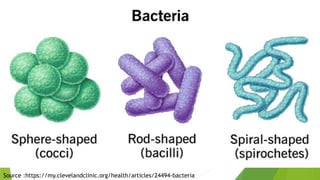
 The bacteria are the basic units of plant life, being single-cell
microorganisms which take in soluble food and convert it to new cells.
 It was originally thought that the bacteria were the smallest plant cells,
but both the rickettsiae and the viruses are smaller.
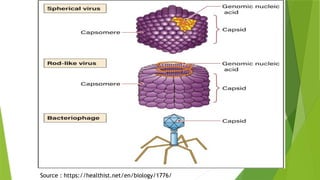
 The viruses are the smallest plant cells known at the present time. Like
the rickettsiae the viruses are intracellular parasites, deriving their
nutrients from the host organisms.
 The viruses which are parasitic to bacteria have been designated as
bacteriophages.
Source :https://my.clevelandclinic.org/health/articles/24494-bacteria
Source : https://healthist.net/en/biology/1776/
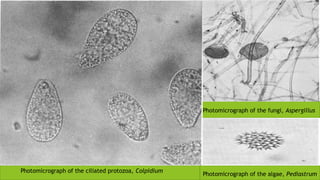
Photomicrograph of the algae, Pediastrum
Photomicrograph of the fungi, Aspergillus
Photomicrograph of the ciliated protozoa, Colpidium
Animals
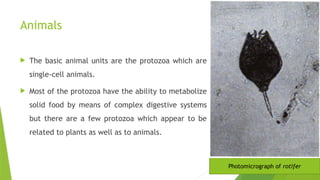
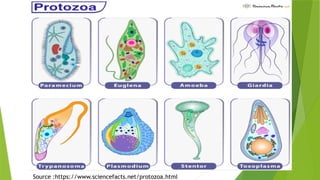
 The basic animal units are the protozoa which are
single-cell animals.
 Most of the protozoa have the ability to metabolize
solid food by means of complex digestive systems
but there are a few protozoa which appear to be
related to plants as well as to animals.
Photomicrograph of rotifer
Source :https://www.sciencefacts.net/protozoa.html
Genetically modified microorganism
(GMO) ?
 A genetically modified microorganism (GMO) is a microorganism
(like bacteria, fungi, or viruses) whose genetic material (DNA) has
been altered in a way that does not occur naturally through
mating or natural recombination.
 Why GMOs are mostly not used:
1. Environmental risks
2. Human health concerns
3. Ethical and social considerations
Environmental Risks
 Disruption of ecosystems: GMOs could outcompete native species
for resources, leading to a decrease in biodiversity.
 Gene transfer to wild populations: The modified genes could be
transferred to wild populations of microorganisms, potentially
creating new problems.
 Unintended effects on other organisms: GMOs could have
unintended effects on other organisms in the environment, such as
beneficial insects or soil microorganisms.
Human health concerns
 Toxicity: The GMO could produce toxins that are harmful to
humans.
 Antibiotic resistance: The GMO could contain genes that confer
resistance to antibiotics, which could be transferred to human
pathogens.
 Gene transfer to human cells: There is a theoretical risk that
genes from GMOs could be transferred to human cells, although
this is considered unlikely.
Ethical and social considerations
 Playing God/Interfering with Nature :Some argue that modifying
microorganisms is an unnatural intervention that oversteps human
boundaries. This raises questions about the limits of human
manipulation of nature and the potential for unintended
consequences.
 Environmental Justice :The potential environmental risks of
GMOs may disproportionately affect certain communities, raising
concerns about environmental justice and the fair distribution of
environmental risks and benefits.
THANK YOU

Sanitary Microbiologynew(Microbilogy).pptx

  • 1.
  • 2.
    What Is SanitaryMicrobiology?  It is an applied science related to the use of microorganisms in the field of sanitary engineering.  Sanitary microbiology is usually divided into two general regions, one dealing with water supply and purification and the other dealing with waste disposal.
  • 3.
    (Continued)  The watermicrobiologists determine the efficiency of each unit process used in water purification with respect to the removal of the various types of pathogenic microorganisms.  The waste disposal microbiologist is concerned not only with water microbiology but also with soil microbiology.
  • 4.
    Microorganisms of Importance The microorganisms are generally classified into two major groups, plants and animals.  The plants are made up of virus, rickettsiae, bacteria, fungi, and algae; while the animals consist of protozoa, rotifers, and crustaceans.  It is the latter two groups of animals that sometimes are classified as macroscopic rather than microscopic.
  • 5.
    Plants  The bacteriaare the basic units of plant life, being single-cell microorganisms which take in soluble food and convert it to new cells.  It was originally thought that the bacteria were the smallest plant cells, but both the rickettsiae and the viruses are smaller.  The viruses are the smallest plant cells known at the present time. Like the rickettsiae the viruses are intracellular parasites, deriving their nutrients from the host organisms.  The viruses which are parasitic to bacteria have been designated as bacteriophages.
  • 6.
  • 7.
  • 8.
    Photomicrograph of thealgae, Pediastrum Photomicrograph of the fungi, Aspergillus Photomicrograph of the ciliated protozoa, Colpidium
  • 9.
    Animals  The basicanimal units are the protozoa which are single-cell animals.  Most of the protozoa have the ability to metabolize solid food by means of complex digestive systems but there are a few protozoa which appear to be related to plants as well as to animals. Photomicrograph of rotifer
  • 10.
  • 11.
    Genetically modified microorganism (GMO)?  A genetically modified microorganism (GMO) is a microorganism (like bacteria, fungi, or viruses) whose genetic material (DNA) has been altered in a way that does not occur naturally through mating or natural recombination.  Why GMOs are mostly not used: 1. Environmental risks 2. Human health concerns 3. Ethical and social considerations
  • 12.
    Environmental Risks  Disruptionof ecosystems: GMOs could outcompete native species for resources, leading to a decrease in biodiversity.  Gene transfer to wild populations: The modified genes could be transferred to wild populations of microorganisms, potentially creating new problems.  Unintended effects on other organisms: GMOs could have unintended effects on other organisms in the environment, such as beneficial insects or soil microorganisms.
  • 13.
    Human health concerns Toxicity: The GMO could produce toxins that are harmful to humans.  Antibiotic resistance: The GMO could contain genes that confer resistance to antibiotics, which could be transferred to human pathogens.  Gene transfer to human cells: There is a theoretical risk that genes from GMOs could be transferred to human cells, although this is considered unlikely.
  • 14.
    Ethical and socialconsiderations  Playing God/Interfering with Nature :Some argue that modifying microorganisms is an unnatural intervention that oversteps human boundaries. This raises questions about the limits of human manipulation of nature and the potential for unintended consequences.  Environmental Justice :The potential environmental risks of GMOs may disproportionately affect certain communities, raising concerns about environmental justice and the fair distribution of environmental risks and benefits.
  • 15.