C.H.B.
Hepatitis C
in Liver Transplantation
Patterns of Recurrence and Therapy
Professor Didier Samuel
Centre Hépatobiliaire,
Inserm Unit 785, Paris XI University
Hopital Paul Brousse, Villejuif, France
C.H.B.
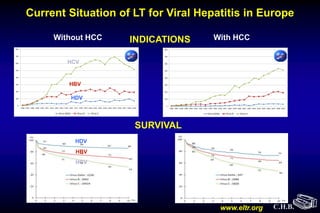
With HCCWithout HCC
0
100
200
300
400
500
600
700
800
1986 1987 1988 1989 1990 1991 1992 1993 1994 1995 1996 1997 1998 1999 2000 2001 2002 2003 2004 2005 2006 2007 2008 2009
Virus Delta Virus B Virus C
0
100
200
300
400
500
600
700
800
1986 1987 1988 1989 1990 1991 1992 1993 1994 1995 1996 1997 1998 1999 2000 2001 2002 2003 2004 2005 2006 2007 2008 2009
Virus Delta Virus B Virus C
www.eltr.org
HCV
HBV
HDV
INDICATIONS
SURVIVAL
HDV
HBV
HCV
Current Situation of LT for Viral Hepatitis in Europe
C.H.B.
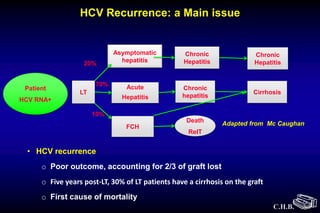
LT
Asymptomatic
hepatitis
Acute
Hepatitis
FCH
Chronic
Hepatitis
Chronic
hepatitis
Death
RelT
Cirrhosis
Chronic
Hepatitis
Patient
HCV RNA+
Adapted from Mc Caughan
20%
70%
10%
HCV Recurrence: a Main issue
• HCV recurrence
o Poor outcome, accounting for 2/3 of graft lost
o Five years post-LT, 30% of LT patients have a cirrhosis on the graft
o First cause of mortality
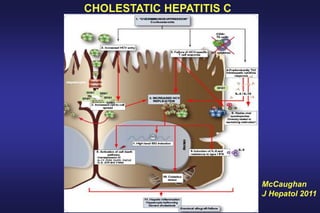
McCaughan
J Hepatol 2011
CHOLESTATIC HEPATITIS C
C.H.B.
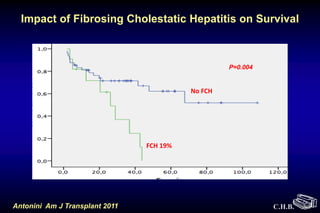
Impact of Fibrosing Cholestatic Hepatitis on Survival
No FCH
FCH 19%
P=0.004
Antonini Am J Transplant 2011
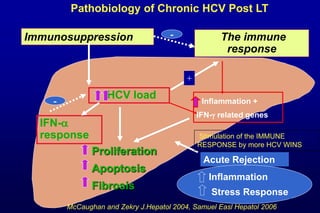
Immunosuppression
Proliferation
Apoptosis
Fibrosis
HCV load Inflammation +
IFN- related genes
IFN-
response
-
Acute Rejection
Inflammation
Stress Response
The immune
response
-
+
Pathobiology of Chronic HCV Post LT
McCaughan and Zekry J.Hepatol 2004, Samuel Easl Hepatol 2006
Stimulation of the IMMUNE
RESPONSE by more HCV WINS
C.H.B.
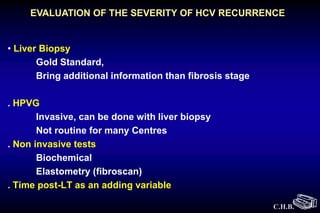
• Liver Biopsy
Gold Standard,
Bring additional information than fibrosis stage
. HPVG
Invasive, can be done with liver biopsy
Not routine for many Centres
. Non invasive tests
Biochemical
Elastometry (fibroscan)
. Time post-LT as an adding variable
EVALUATION OF THE SEVERITY OF HCV RECURRENCE
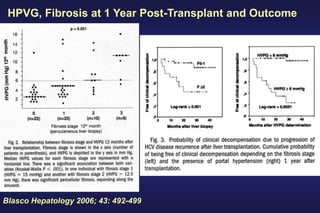
Blasco Hepatology 2006; 43: 492-499
HPVG, Fibrosis at 1 Year Post-Transplant and Outcome
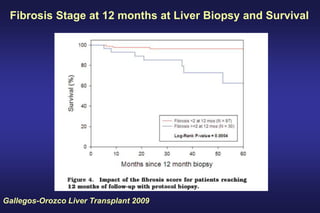
Gallegos-Orozco Liver Transplant 2009
Fibrosis Stage at 12 months at Liver Biopsy and Survival
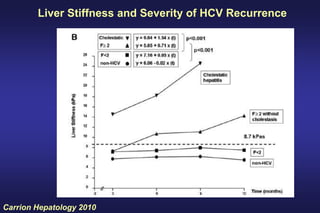
Carrion Hepatology 2010
Liver Stiffness and Severity of HCV Recurrence
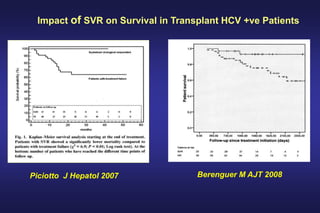
Piciotto J Hepatol 2007
Impact of SVR on Survival in Transplant HCV +ve Patients
Berenguer M AJT 2008
C.H.B.
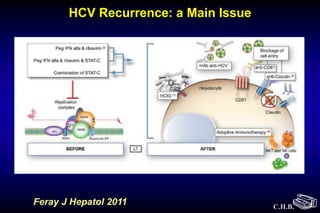
Feray J Hepatol 2011
HCV Recurrence: a Main Issue
Roche, Samuel Liver Int 2012
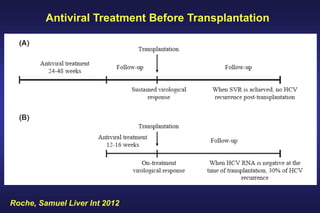
Antiviral Treatment Before Transplantation
C.H.B.
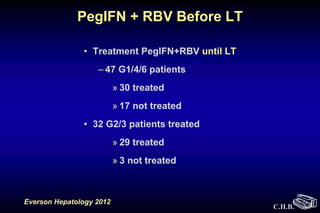
PegIFN + RBV Before LT
• Treatment PegIFN+RBV until LT
– 47 G1/4/6 patients
» 30 treated
» 17 not treated
• 32 G2/3 patients treated
» 29 treated
» 3 not treated
Everson Hepatology 2012
C.H.B.
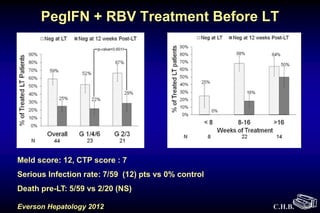
PegIFN + RBV Treatment Before LT
Everson Hepatology 2012
Meld score: 12, CTP score : 7
Serious Infection rate: 7/59 (12) pts vs 0% control
Death pre-LT: 5/59 vs 2/20 (NS)
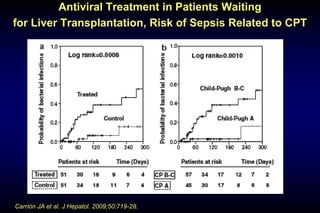
Antiviral Treatment in Patients Waiting
for Liver Transplantation, Risk of Sepsis Related to CPT
Carrión JA et al. J Hepatol. 2009;50:719-28.
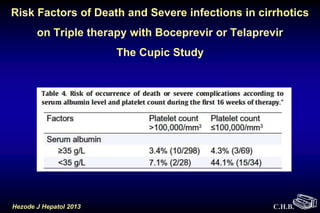
C.H.B.Hezode J Hepatol 2013
Risk Factors of Death and Severe infections in cirrhotics
on Triple therapy with Boceprevir or Telaprevir
The Cupic Study
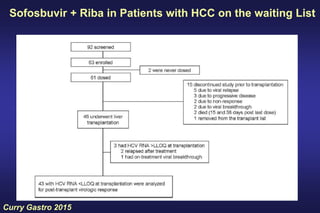
Curry Gastro 2015
Sofosbuvir + Riba in Patients with HCC on the waiting List
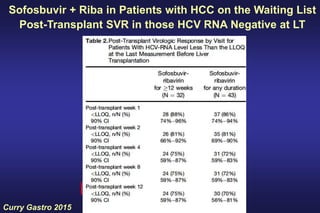
Curry Gastro 2015
Sofosbuvir + Riba in Patients with HCC on the Waiting List
Post-Transplant SVR in those HCV RNA Negative at LT
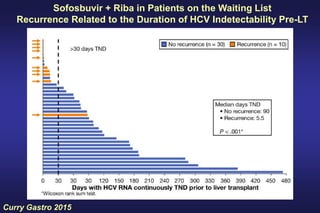
Curry Gastro 2015
Sofosbuvir + Riba in Patients on the Waiting List
Recurrence Related to the Duration of HCV Indetectability Pre-LT
• 108 patients randomised 1:1 to 12 or 24 weeks of treatment
• GT 1 or 4 treatment-naïve or -experienced patients with decompensated
cirrhosis (CTP class B [7–9] or C [score 10–12]*)
• Broad inclusion criteria
– No history of major organ transplant, including liver
– No hepatocellular carcinoma (HCC)
– Total bilirubin ≤10 mg/dL, Hb ≥10 g/dL
– CrCl ≥40 mL/min, platelets >30,000/mm3
Flamm S, et al. AASLD 2014; Oral #239.
LDV/SOF + RBV for 12 weeks is not an EMA-recommended treatment regimen;
*Patients with CTP scores 13–15 excluded; CrCl: creatinine clearance;
EMA: European Medicines Agency
SOLAR-1: LDV/SOF + RBV in Decompensated Cirrhosis
Wk 0 Wk 12 Wk 36Wk 24
SVR12N=53
SVR12N=55 LDV/SOF + RBV
LDV/SOF + RBV
Flamm S, et al. AASLD 2014; Oral #239.
LDV/SOF + RBV for 12 weeks is not an EMA-recommended treatment regimen;
Error bars represent 90% confidence intervals;
TE: treatment-experienced; TN: treatment-naïve
SOLAR-1: LDV/SOF + RBV in Decompensated Cirrhosis
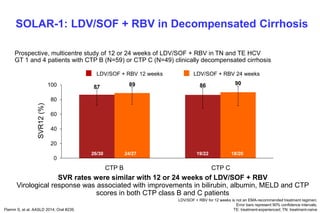
87 8689 90
0
20
40
60
80
100
CTP B CTP C
SVR12(%)
26/30 19/22 18/2024/27
LDV/SOF + RBV 12 weeks LDV/SOF + RBV 24 weeks
SVR rates were similar with 12 or 24 weeks of LDV/SOF + RBV
Virological response was associated with improvements in bilirubin, albumin, MELD and CTP
scores in both CTP class B and C patients
Prospective, multicentre study of 12 or 24 weeks of LDV/SOF + RBV in TN and TE HCV
GT 1 and 4 patients with CTP B (N=59) or CTP C (N=49) clinically decompensated cirrhosis
Flamm S, et al. AASLD 2014; Oral #239.
LDV/SOF + RBV for 12 weeks is not an EMA-recommended treatment regimen
*Missing FU-4: n=2 CTP B 12 wk; n=4 CTP B 24 wk; n=2 CTP C 12 wk;
n=7 CTP C 24 wk; BL: baseline; FU: follow-up
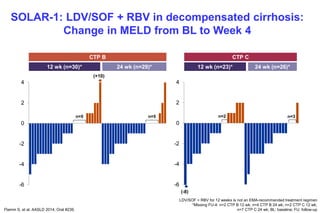
SOLAR-1: LDV/SOF + RBV in decompensated cirrhosis:
Change in MELD from BL to Week 4
(-8)
-6
-4
-2
0
2
4
-6
-4
-2
0
2
4
n=5 n=5 n=2 n=3
(+10)
CTP B CTP C
12 wk (n=30)* 24 wk (n=29)* 12 wk (n=23)* 24 wk (n=26)*
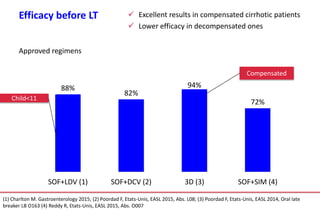
Efficacy before LT  Excellent results in compensated cirrhotic patients
 Lower efficacy in decompensated ones
Approved regimens
RBV RBV
ALLY
RBV RBV Δ
88%
82%
94%
72%
SOF+LDV (1) SOF+DCV (2) 3D (3) SOF+SIM (4)
Compensated
Child<11
(1) Charlton M. Gastroenterology 2015; (2) Poordad F, Etats-Unis, EASL 2015, Abs. L08; (3) Poordad F, Etats-Unis, EASL 2014, Oral late
breaker LB O163 (4) Reddy R, Etats-Unis, EASL 2015, Abs. O007
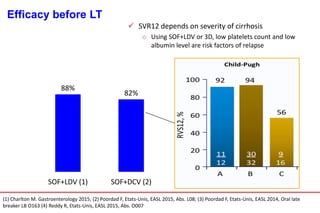
Efficacy before LT
 SVR12 depends on severity of cirrhosis
o Using SOF+LDV or 3D, low platelets count and low
albumin level are risk factors of relapse
RBV RBV
ALLY
RBV RBV Δ
88%
82%
94%
72%
SOF+LDV (1) SOF+DCV (2) 3D (3) SOF+SIM (4)
Compensated
(1) Charlton M. Gastroenterology 2015; (2) Poordad F, Etats-Unis, EASL 2015, Abs. L08; (3) Poordad F, Etats-Unis, EASL 2014, Oral late
breaker LB O163 (4) Reddy R, Etats-Unis, EASL 2015, Abs. O007
Efficacy before LT
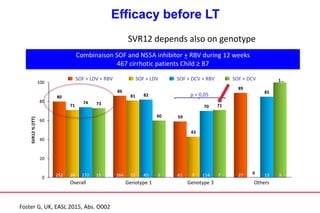
SVR12 depends also on genotype
RBV RBV
ALLY
RBV RBV Δ
80
86
59
89
71
81
43
0
74
82
70
85
73
60
71
1…
0
20
40
60
80
100
SVR12%(ITT)
252 28 172 15 164 21 45 5 61 7 114 7 27 13 3
SOF + LDV + RBV SOF + LDV SOF + DCV + RBV SOF + DCV
Overall Genotype 1 Genotype 3 Others
p < 0,05
Foster G, UK, EASL 2015, Abs. O002
Combinaison SOF and NS5A inhibitor + RBV during 12 weeks
467 cirrhotic patients Child ≥ B7
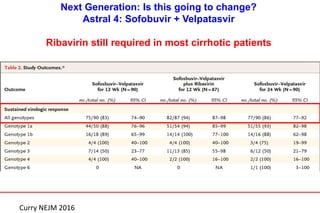
Next Generation: Is this going to change?
Astral 4: Sofobuvir + Velpatasvir
Ribavirin still required in most cirrhotic patients
Curry NEJM 2016
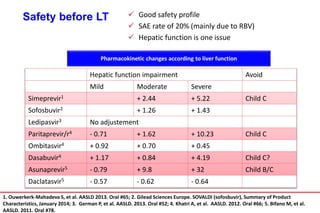
Safety before LT  Good safety profile
 SAE rate of 20% (mainly due to RBV)
 Hepatic function is one issue
1. Ouwerkerk-Mahadeva S, et al. AASLD 2013. Oral #65; 2. Gilead Sciences Europe. SOVALDI (sofosbuvir), Summary of Product
Characteristics, January 2014; 3. German P, et al. AASLD. 2013. Oral #52; 4. Khatri A, et al. AASLD. 2012. Oral #66; 5. Bifano M, et al.
AASLD. 2011. Oral #78.
Pharmacokinetic changes according to liver function
Hepatic function impairment Avoid
Mild Moderate Severe
Simeprevir1 + 2.44 + 5.22 Child C
Sofosbuvir2 + 1.26 + 1.43
Ledipasvir3 No adjustement
Paritaprevir/r4 - 0.71 + 1.62 + 10.23 Child C
Ombitasvir4 + 0.92 + 0.70 + 0.45
Dasabuvir4 + 1.17 + 0.84 + 4.19 Child C?
Asunaprevir5 - 0.79 + 9.8 + 32 Child B/C
Daclatasvir5 - 0.57 - 0.62 - 0.64
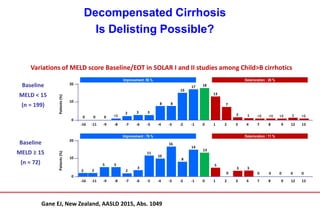
Decompensated Cirrhosis
Is Delisting Possible?
Baseline
MELD < 15
(n = 199)
Patients(%)
0
10
20
-16
0
-11 -9 -8 -7 -6 -5 -4 -3 -2 -1 0 1 2 3 4 7 8 9 12 13
Deterioration : 26 %
0 0
Improvement: 56 %
<1
2 3 3
8 8
15
17 18
13
7
2 1 <1 1<1 <1<1
Baseline
MELD ≥ 15
(n = 72)
Patients(%)
0
10
20
-16 -11 -9 -8 -7 -6 -5 -4 -3 -2 -1 0 1 2 3 4 7 8 9 12 13
Deterioration : 11 %Improvement : 76 %
5
2
3
11
10
16
8
14
13
5
0
3 3
0 00 00
5
22
Gane EJ, New Zealand, AASLD 2015, Abs. 1049
Variations of MELD score Baseline/EOT in SOLAR I and II studies among Child>B cirrhotics
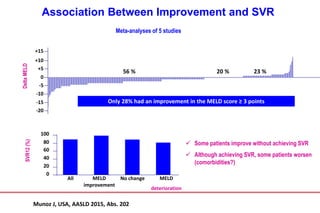
Association Between Improvement and SVR
Munoz J, USA, AASLD 2015, Abs. 202
Only 28% had an improvement in the MELD score ≥ 3 points
DeltaMELD
+10
+15
56 %+5
0
-5
-10
-15
-20
20 % 23 %
0
20
All MELD
improvement
No change MELD
deterioration
40
60
80
100
SVR12(%)
 Some patients improve without achieving SVR
 Although achieving SVR, some patients worsen
(comorbidities?)
Meta-analyses of 5 studies
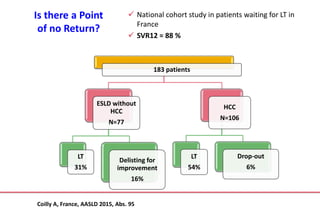
Is there a Point
of no Return?
 National cohort study in patients waiting for LT in
France
 SVR12 = 88 %
183 patients
ESLD without
HCC
N=77
LT
31%
Delisting for
improvement
16%
HCC
N=106
LT
54%
Drop-out
6%
Coilly A, France, AASLD 2015, Abs. 95
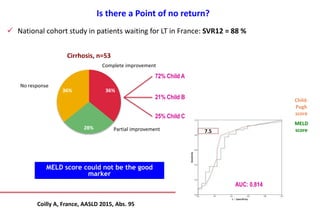
7.5
AUC: 0.814
Child-
Pugh
score
MELD
score
Complete improvement
No response
Partial improvement
Is there a Point of no return?
 National cohort study in patients waiting for LT in France: SVR12 = 88 %
Coilly A, France, AASLD 2015, Abs. 95
36%
28%
36%
Cirrhosis, n=53
21% Child B
25% Child C
72% Child A
MELD score could not be the good
marker
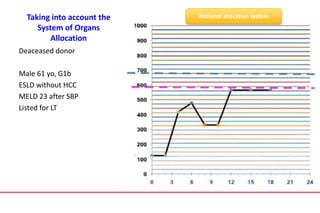
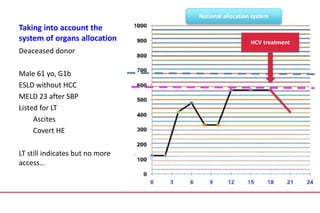
Taking into account the
System of Organs
Allocation
Deaceased donor
Male 61 yo, G1b
ESLD without HCC
MELD 23 after SBP
Listed for LT
National allocation system
Taking into account the
system of organs allocation
Deaceased donor
Male 61 yo, G1b
ESLD without HCC
MELD 23 after SBP
Listed for LT
Ascites
Covert HE
LT still indicates but no more
access…
National allocation system
HCV treatment
C.H.B.
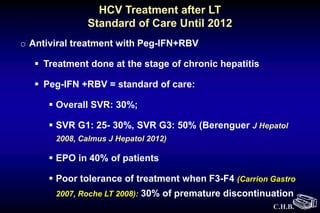
o Antiviral treatment with Peg-IFN+RBV
 Treatment done at the stage of chronic hepatitis
 Peg-IFN +RBV = standard of care:
 Overall SVR: 30%;
 SVR G1: 25- 30%, SVR G3: 50% (Berenguer J Hepatol
2008, Calmus J Hepatol 2012)
 EPO in 40% of patients
 Poor tolerance of treatment when F3-F4 (Carrion Gastro
2007, Roche LT 2008): 30% of premature discontinuation
HCV Treatment after LT
Standard of Care Until 2012
C.H.B.
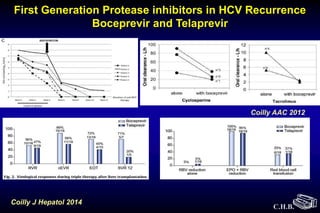
Coilly AAC 2012
Coilly J Hepatol 2014
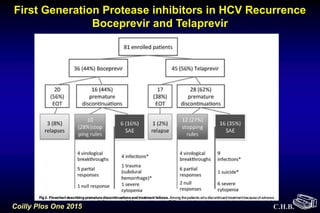
First Generation Protease inhibitors in HCV Recurrence
Boceprevir and Telaprevir
C.H.B.
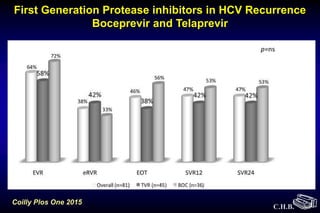
Coilly Plos One 2015
First Generation Protease inhibitors in HCV Recurrence
Boceprevir and Telaprevir
C.H.B.Coilly Plos One 2015
First Generation Protease inhibitors in HCV Recurrence
Boceprevir and Telaprevir
C.H.B.
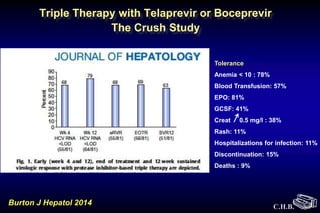
Triple Therapy with Telaprevir or Boceprevir
The Crush Study
Burton J Hepatol 2014
Tolerance
Anemia < 10 : 78%
Blood Transfusion: 57%
EPO: 81%
GCSF: 41%
Creat 0.5 mg/l : 38%
Rash: 11%
Hospitalizations for infection: 11%
Discontinuation: 15%
Deaths : 9%
C.H.B.
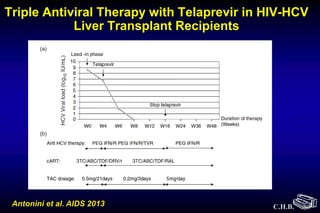
Triple Antiviral Therapy with Telaprevir in HIV-HCV
Liver Transplant Recipients
Antonini et al. AIDS 2013
C.H.B.
The Advent of Second Generation DAAs
After Liver Transplantation
C.H.B.
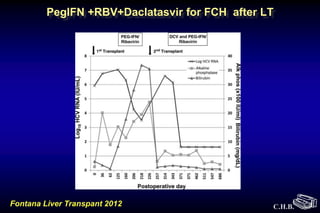
PegIFN +RBV+Daclatasvir for FCH after LT
Fontana Liver Transpant 2012
C.H.B.
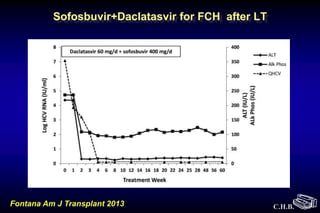
Sofosbuvir+Daclatasvir for FCH after LT
Fontana Am J Transplant 2013
C.H.B.
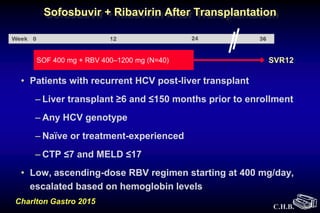
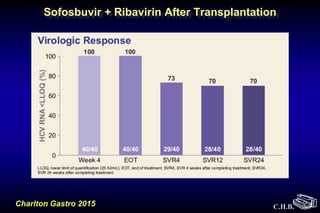
Sofosbuvir + Ribavirin After Transplantation
Charlton Gastro 2015
SOF 400 mg + RBV 400‒1200 mg (N=40) SVR12
• Patients with recurrent HCV post-liver transplant
– Liver transplant ≥6 and ≤150 months prior to enrollment
– Any HCV genotype
– Naïve or treatment-experienced
– CTP ≤7 and MELD ≤17
• Low, ascending-dose RBV regimen starting at 400 mg/day,
escalated based on hemoglobin levels
C.H.B.
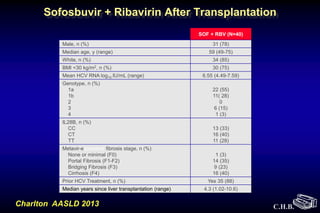
Sofosbuvir + Ribavirin After Transplantation
Charlton AASLD 2013
SOF + RBV (N=40)
Male, n (%) 31 (78)
Median age, y (range) 59 (49-75)
White, n (%) 34 (85)
BMI <30 kg/m2, n (%) 30 (75)
Mean HCV RNA log10 IU/mL (range) 6.55 (4.49-7.59)
Genotype, n (%)
1a
1b
2
3
4
22 (55)
11( 28)
0
6 (15)
1 (3)
IL28B, n (%)
CC
CT
TT
13 (33)
16 (40)
11 (28)
Metavir-equivalent fibrosis stage, n (%)
None or minimal (F0)
Portal Fibrosis (F1-F2)
Bridging Fibrosis (F3)
Cirrhosis (F4)
1 (3)
14 (35)
9 (23)
16 (40)
Prior HCV Treatment, n (%) Yes 35 (88)
Median years since liver transplantation (range) 4.3 (1.02-10.6)
C.H.B.
Sofosbuvir + Ribavirin After Transplantation
Charlton Gastro 2015
C.H.B.
Sofosbuvir + Ribavirin After Transplantation
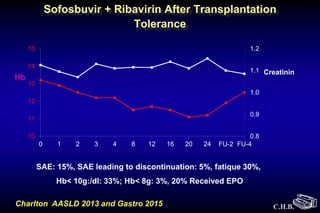
Tolerance
Charlton AASLD 2013 and Gastro 2015
0.8
0.9
1.0
1.1
1.2
10
11
12
13
14
15
0 1 2 3 4 8 12 16 20 24 FU-2 FU-4
Hb
Creatinin
SAE: 15%, SAE leading to discontinuation: 5%, fatique 30%,
Hb< 10g:/dl: 33%; Hb< 8g: 3%, 20% Received EPO
C.H.B.
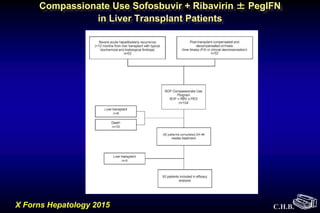
Compassionate Use Sofosbuvir + Ribavirin ± PegIFN
in Liver Transplant Patients
X Forns Hepatology 2015
C.H.B.
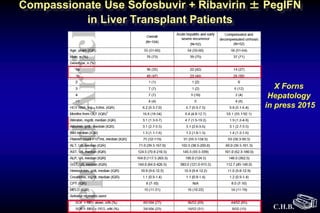
Compassionate Use Sofosbuvir + Ribavirin ± PegIFN
in Liver Transplant Patients
X Forns
Hepatology
in press 2015
C.H.B.
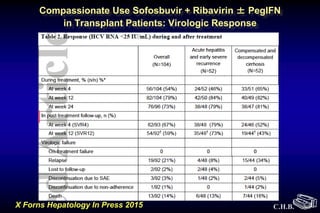
Compassionate Use Sofosbuvir + Ribavirin ± PegIFN
in Transplant Patients: Virologic Response
X Forns Hepatology In Press 2015
C.H.B.
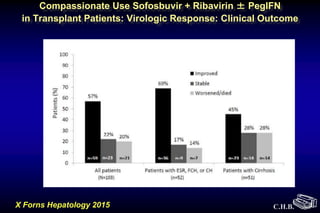
Compassionate Use Sofosbuvir + Ribavirin ± PegIFN
in Transplant Patients: Virologic Response: Clinical Outcome
X Forns Hepatology 2015
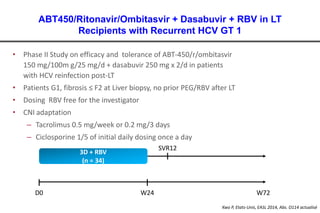
ABT450/Ritonavir/Ombitasvir + Dasabuvir + RBV in LT
Recipients with Recurrent HCV GT 1
• Phase II Study on efficacy and tolerance of ABT-450/r/ombitasvir
150 mg/100m g/25 mg/d + dasabuvir 250 mg x 2/d in patients
with HCV reinfection post-LT
• Patients G1, fibrosis ≤ F2 at Liver biopsy, no prior PEG/RBV after LT
• Dosing RBV free for the investigator
• CNI adaptation
– Tacrolimus 0.5 mg/week or 0.2 mg/3 days
– Ciclosporine 1/5 of initial daily dosing once a day
3D + RBV
(n = 34)
SVR12
D0 W24 W72
Kwo P, Etats-Unis, EASL 2014, Abs. O114 actualisé
C.H.B.
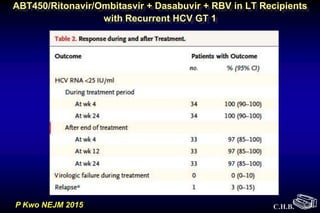
ABT450/Ritonavir/Ombitasvir + Dasabuvir + RBV in LT Recipients
with Recurrent HCV GT 1
P Kwo NEJM 2015
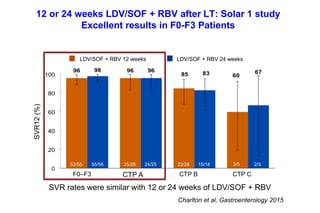
12 or 24 weeks LDV/SOF + RBV after LT: Solar 1 study
Excellent results in F0-F3 Patients
F0–F3
SVR12(%)
53/55 22/26 15/18
CTP B
55/56 25/26 24/25 2/3
CTP A
LDV/SOF + RBV 12 weeks LDV/SOF + RBV 24 weeks
3/5
CTP C
SVR rates were similar with 12 or 24 weeks of LDV/SOF + RBV
Charlton et al, Gastroenterology 2015
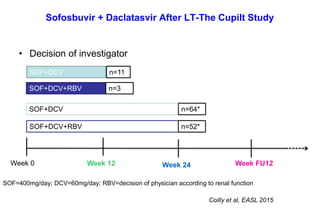
Sofosbuvir + Daclatasvir After LT-The Cupilt Study
• Decision of investigator
Week 0 Week 12 Week 24 Week FU12
SOF=400mg/day; DCV=60mg/day; RBV=decision of physician according to renal function
SOF+DCV
SOF+DCV+RBV
SOF+DCV+RBV
SOF+DCV
n=11
n=3
n=52*
n=64*
Coilly et al, EASL 2015
Sofosbuvir + Daclatasvir After LT-The Cupilt Study
Virological Kinetics
Coilly et al, EASL 2015
 Mean time to achieve undetectability: 5.7±3.3 weeks [1-20]
0
1
2
3
4
5
6
7
8
0 4 8 12 16 20 24
HCVRNA(logIU/mL)
Week
SOF+DCV (n=75)
SOF+DCV+RBV (n=55) p=ns
Sofosbuvir + Daclatasvir After LT-The Cupilt Study
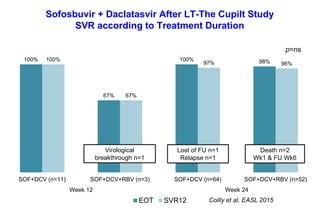
SVR according to Treatment Duration
Coilly et al, EASL 2015
100%
67%
100% 98%100%
67%
97% 96%
SOF+DCV (n=11) SOF+DCV+RBV (n=3) SOF+DCV (n=64) SOF+DCV+RBV (n=52)
Week 12 Week 24
EOT SVR12
Virological
breakthrough n=1
Lost of FU n=1
Relapse n=1
Death n=2
Wk1 & FU Wk6
p=ns
Sofosbuvir + Daclatasvir After LT-The Cupilt Study
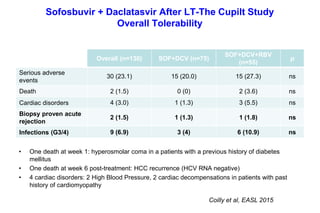
Overall Tolerability
Coilly et al, EASL 2015
• One death at week 1: hyperosmolar coma in a patients with a previous history of diabetes
mellitus
• One death at week 6 post-treatment: HCC recurrence (HCV RNA negative)
• 4 cardiac disorders: 2 High Blood Pressure, 2 cardiac decompensations in patients with past
history of cardiomyopathy
Overall (n=130) SOF+DCV (n=75)
SOF+DCV+RBV
(n=55)
p
Serious adverse
events
30 (23.1) 15 (20.0) 15 (27.3) ns
Death 2 (1.5) 0 (0) 2 (3.6) ns
Cardiac disorders 4 (3.0) 1 (1.3) 3 (5.5) ns
Biopsy proven acute
rejection
2 (1.5) 1 (1.3) 1 (1.8) ns
Infections (G3/4) 9 (6.9) 3 (4) 6 (10.9) ns
Sofosbuvir + Daclatasvir After LT-The Cupilt Study
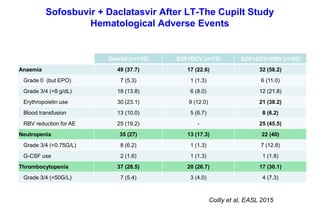
Hematological Adverse Events
Coilly et al, EASL 2015
Overall (n=130) SOF+DCV (n=75) SOF+DCV+RBV (n=55)
Anaemia 49 (37.7) 17 (22.6) 32 (58.2)
Grade 0 (but EPO) 7 (5.3) 1 (1.3) 6 (11.0)
Grade 3/4 (<8 g/dL) 18 (13.8) 6 (8.0) 12 (21.8)
Erythropoietin use 30 (23.1) 9 (12.0) 21 (38.2)
Blood transfusion 13 (10.0) 5 (6.7) 8 (6.2)
RBV reduction for AE 25 (19.2) - 25 (45.5)
Neutropenia 35 (27) 13 (17.3) 22 (40)
Grade 3/4 (<0.75G/L) 8 (6.2) 1 (1.3) 7 (12.8)
G-CSF use 2 (1.6) 1 (1.3) 1 (1.8)
Thrombocytopenia 37 (28.5) 20 (26.7) 17 (30.1)
Grade 3/4 (<50G/L) 7 (5.4) 3 (4.0) 4 (7.3)
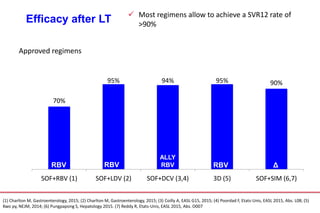
Efficacy after LT  Most regimens allow to achieve a SVR12 rate of
>90%
Approved regimens
70%
95% 94% 95% 90%
SOF+RBV (1) SOF+LDV (2) SOF+DCV (3,4) 3D (5) SOF+SIM (6,7)
RBV RBV
ALLY
RBV RBV Δ
(1) Charlton M, Gastroenterology, 2015; (2) Charlton M, Gastroenterology, 2015; (3) Coilly A, EASL G15, 2015; (4) Poordad F, Etats-Unis, EASL 2015, Abs. L08; (5)
Kwo py, NEJM, 2014; (6) Pungpapong S, Hepatology 2015. (7) Reddy R, Etats-Unis, EASL 2015, Abs. O007
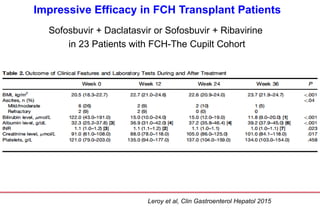
Leroy et al, Clin Gastroenterol Hepatol 2015
Impressive Efficacy in FCH Transplant Patients
Sofosbuvir + Daclatasvir or Sofosbuvir + Ribavirine
in 23 Patients with FCH-The Cupilt Cohort
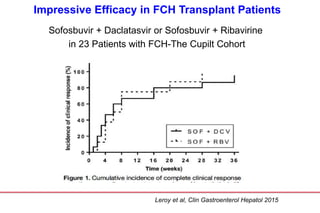
Leroy et al, Clin Gastroenterol Hepatol 2015
Sofosbuvir + Daclatasvir or Sofosbuvir + Ribavirine
in 23 Patients with FCH-The Cupilt Cohort
Impressive Efficacy in FCH Transplant Patients
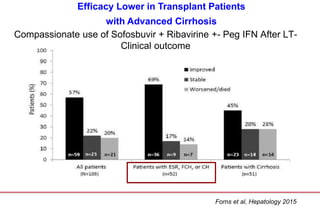
Compassionate use of Sofosbuvir + Ribavirine +- Peg IFN After LT-
Clinical outcome
Forns et al, Hepatology 2015
Efficacy Lower in Transplant Patients
with Advanced Cirrhosis
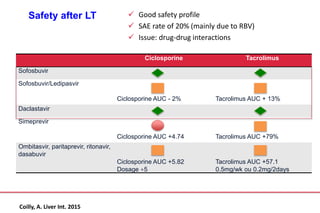
Ciclosporine Tacrolimus
Sofosbuvir
Sofosbuvir/Ledipasvir
Ciclosporine AUC - 2% Tacrolimus AUC + 13%
Daclastavir
Simeprevir
Ciclosporine AUC +4.74 Tacrolimus AUC +79%
Ombitasvir, paritaprevir, ritonavir,
dasabuvir
Ciclosporine AUC +5.82
Dosage ÷5
Tacrolimus AUC +57.1
0.5mg/wk ou 0.2mg/2days
Safety after LT  Good safety profile
 SAE rate of 20% (mainly due to RBV)
 Issue: drug-drug interactions
Coilly, A. Liver Int. 2015
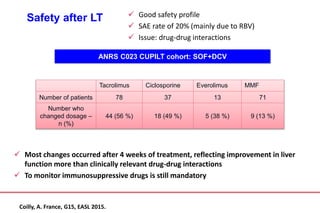
Safety after LT  Good safety profile
 SAE rate of 20% (mainly due to RBV)
 Issue: drug-drug interactions
Coilly, A. France, G15, EASL 2015.
ANRS C023 CUPILT cohort: SOF+DCV
Tacrolimus Ciclosporine Everolimus MMF
Number of patients 78 37 13 71
Number who
changed dosage –
n (%)
44 (56 %) 18 (49 %) 5 (38 %) 9 (13 %)
 Most changes occurred after 4 weeks of treatment, reflecting improvement in liver
function more than clinically relevant drug-drug interactions
 To monitor immunosuppressive drugs is still mandatory
C.H.B.
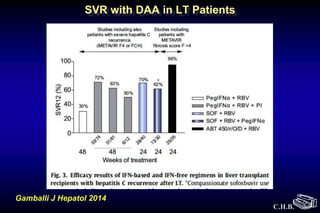
SVR with DAA in LT Patients
Gamballi J Hepatol 2014
C.H.B.
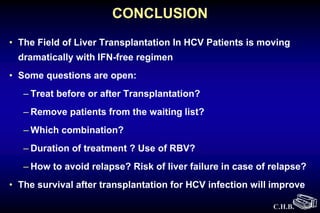
CONCLUSION
• The Field of Liver Transplantation In HCV Patients is moving
dramatically with IFN-free regimen
• Some questions are open:
– Treat before or after Transplantation?
– Remove patients from the waiting list?
– Which combination?
– Duration of treatment ? Use of RBV?
– How to avoid relapse? Risk of liver failure in case of relapse?
• The survival after transplantation for HCV infection will improve
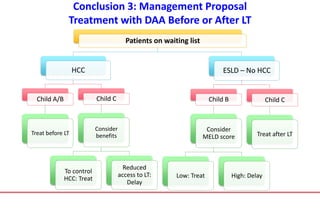
Conclusion 3: Management Proposal
Treatment with DAA Before or After LT
Patients on waiting list
HCC
Child A/B
Treat before LT
Child C
Consider
benefits
To control
HCC: Treat
Reduced
access to LT:
Delay
ESLD – No HCC
Child B
Consider
MELD score
Low: Treat High: Delay
Child C
Treat after LT
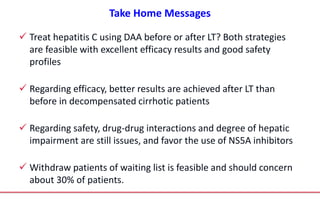
Take Home Messages
 Treat hepatitis C using DAA before or after LT? Both strategies
are feasible with excellent efficacy results and good safety
profiles
 Regarding efficacy, better results are achieved after LT than
before in decompensated cirrhotic patients
 Regarding safety, drug-drug interactions and degree of hepatic
impairment are still issues, and favor the use of NS5A inhibitors
 Withdraw patients of waiting list is feasible and should concern
about 30% of patients.
Centre Hépato-Biliaire
A Coilly
E De Martin
F Chiappini
B Roche
R Sobesky
F Saliba
T Antonini
JC Duclos-Vallée
And all the Team at The CHB

Samuel2 hcv lt du16

  • 1.
    C.H.B. Hepatitis C in LiverTransplantation Patterns of Recurrence and Therapy Professor Didier Samuel Centre Hépatobiliaire, Inserm Unit 785, Paris XI University Hopital Paul Brousse, Villejuif, France
  • 2.
    C.H.B. With HCCWithout HCC 0 100 200 300 400 500 600 700 800 19861987 1988 1989 1990 1991 1992 1993 1994 1995 1996 1997 1998 1999 2000 2001 2002 2003 2004 2005 2006 2007 2008 2009 Virus Delta Virus B Virus C 0 100 200 300 400 500 600 700 800 1986 1987 1988 1989 1990 1991 1992 1993 1994 1995 1996 1997 1998 1999 2000 2001 2002 2003 2004 2005 2006 2007 2008 2009 Virus Delta Virus B Virus C www.eltr.org HCV HBV HDV INDICATIONS SURVIVAL HDV HBV HCV Current Situation of LT for Viral Hepatitis in Europe
  • 3.
    C.H.B. LT Asymptomatic hepatitis Acute Hepatitis FCH Chronic Hepatitis Chronic hepatitis Death RelT Cirrhosis Chronic Hepatitis Patient HCV RNA+ Adapted fromMc Caughan 20% 70% 10% HCV Recurrence: a Main issue • HCV recurrence o Poor outcome, accounting for 2/3 of graft lost o Five years post-LT, 30% of LT patients have a cirrhosis on the graft o First cause of mortality
  • 4.
  • 5.
    C.H.B. Impact of FibrosingCholestatic Hepatitis on Survival No FCH FCH 19% P=0.004 Antonini Am J Transplant 2011
  • 6.
    Immunosuppression Proliferation Apoptosis Fibrosis HCV load Inflammation+ IFN- related genes IFN- response - Acute Rejection Inflammation Stress Response The immune response - + Pathobiology of Chronic HCV Post LT McCaughan and Zekry J.Hepatol 2004, Samuel Easl Hepatol 2006 Stimulation of the IMMUNE RESPONSE by more HCV WINS
  • 7.
    C.H.B. • Liver Biopsy GoldStandard, Bring additional information than fibrosis stage . HPVG Invasive, can be done with liver biopsy Not routine for many Centres . Non invasive tests Biochemical Elastometry (fibroscan) . Time post-LT as an adding variable EVALUATION OF THE SEVERITY OF HCV RECURRENCE
  • 8.
    Blasco Hepatology 2006;43: 492-499 HPVG, Fibrosis at 1 Year Post-Transplant and Outcome
  • 9.
    Gallegos-Orozco Liver Transplant2009 Fibrosis Stage at 12 months at Liver Biopsy and Survival
  • 10.
    Carrion Hepatology 2010 LiverStiffness and Severity of HCV Recurrence
  • 11.
    Piciotto J Hepatol2007 Impact of SVR on Survival in Transplant HCV +ve Patients Berenguer M AJT 2008
  • 12.
    C.H.B. Feray J Hepatol2011 HCV Recurrence: a Main Issue
  • 13.
    Roche, Samuel LiverInt 2012 Antiviral Treatment Before Transplantation
  • 14.
    C.H.B. PegIFN + RBVBefore LT • Treatment PegIFN+RBV until LT – 47 G1/4/6 patients » 30 treated » 17 not treated • 32 G2/3 patients treated » 29 treated » 3 not treated Everson Hepatology 2012
  • 15.
    C.H.B. PegIFN + RBVTreatment Before LT Everson Hepatology 2012 Meld score: 12, CTP score : 7 Serious Infection rate: 7/59 (12) pts vs 0% control Death pre-LT: 5/59 vs 2/20 (NS)
  • 16.
    Antiviral Treatment inPatients Waiting for Liver Transplantation, Risk of Sepsis Related to CPT Carrión JA et al. J Hepatol. 2009;50:719-28.
  • 17.
    C.H.B.Hezode J Hepatol2013 Risk Factors of Death and Severe infections in cirrhotics on Triple therapy with Boceprevir or Telaprevir The Cupic Study
  • 18.
    Curry Gastro 2015 Sofosbuvir+ Riba in Patients with HCC on the waiting List
  • 19.
    Curry Gastro 2015 Sofosbuvir+ Riba in Patients with HCC on the Waiting List Post-Transplant SVR in those HCV RNA Negative at LT
  • 20.
    Curry Gastro 2015 Sofosbuvir+ Riba in Patients on the Waiting List Recurrence Related to the Duration of HCV Indetectability Pre-LT
  • 21.
    • 108 patientsrandomised 1:1 to 12 or 24 weeks of treatment • GT 1 or 4 treatment-naïve or -experienced patients with decompensated cirrhosis (CTP class B [7–9] or C [score 10–12]*) • Broad inclusion criteria – No history of major organ transplant, including liver – No hepatocellular carcinoma (HCC) – Total bilirubin ≤10 mg/dL, Hb ≥10 g/dL – CrCl ≥40 mL/min, platelets >30,000/mm3 Flamm S, et al. AASLD 2014; Oral #239. LDV/SOF + RBV for 12 weeks is not an EMA-recommended treatment regimen; *Patients with CTP scores 13–15 excluded; CrCl: creatinine clearance; EMA: European Medicines Agency SOLAR-1: LDV/SOF + RBV in Decompensated Cirrhosis Wk 0 Wk 12 Wk 36Wk 24 SVR12N=53 SVR12N=55 LDV/SOF + RBV LDV/SOF + RBV
  • 22.
    Flamm S, etal. AASLD 2014; Oral #239. LDV/SOF + RBV for 12 weeks is not an EMA-recommended treatment regimen; Error bars represent 90% confidence intervals; TE: treatment-experienced; TN: treatment-naïve SOLAR-1: LDV/SOF + RBV in Decompensated Cirrhosis 87 8689 90 0 20 40 60 80 100 CTP B CTP C SVR12(%) 26/30 19/22 18/2024/27 LDV/SOF + RBV 12 weeks LDV/SOF + RBV 24 weeks SVR rates were similar with 12 or 24 weeks of LDV/SOF + RBV Virological response was associated with improvements in bilirubin, albumin, MELD and CTP scores in both CTP class B and C patients Prospective, multicentre study of 12 or 24 weeks of LDV/SOF + RBV in TN and TE HCV GT 1 and 4 patients with CTP B (N=59) or CTP C (N=49) clinically decompensated cirrhosis
  • 23.
    Flamm S, etal. AASLD 2014; Oral #239. LDV/SOF + RBV for 12 weeks is not an EMA-recommended treatment regimen *Missing FU-4: n=2 CTP B 12 wk; n=4 CTP B 24 wk; n=2 CTP C 12 wk; n=7 CTP C 24 wk; BL: baseline; FU: follow-up SOLAR-1: LDV/SOF + RBV in decompensated cirrhosis: Change in MELD from BL to Week 4 (-8) -6 -4 -2 0 2 4 -6 -4 -2 0 2 4 n=5 n=5 n=2 n=3 (+10) CTP B CTP C 12 wk (n=30)* 24 wk (n=29)* 12 wk (n=23)* 24 wk (n=26)*
  • 24.
    Efficacy before LT Excellent results in compensated cirrhotic patients  Lower efficacy in decompensated ones Approved regimens RBV RBV ALLY RBV RBV Δ 88% 82% 94% 72% SOF+LDV (1) SOF+DCV (2) 3D (3) SOF+SIM (4) Compensated Child<11 (1) Charlton M. Gastroenterology 2015; (2) Poordad F, Etats-Unis, EASL 2015, Abs. L08; (3) Poordad F, Etats-Unis, EASL 2014, Oral late breaker LB O163 (4) Reddy R, Etats-Unis, EASL 2015, Abs. O007
  • 25.
    Efficacy before LT SVR12 depends on severity of cirrhosis o Using SOF+LDV or 3D, low platelets count and low albumin level are risk factors of relapse RBV RBV ALLY RBV RBV Δ 88% 82% 94% 72% SOF+LDV (1) SOF+DCV (2) 3D (3) SOF+SIM (4) Compensated (1) Charlton M. Gastroenterology 2015; (2) Poordad F, Etats-Unis, EASL 2015, Abs. L08; (3) Poordad F, Etats-Unis, EASL 2014, Oral late breaker LB O163 (4) Reddy R, Etats-Unis, EASL 2015, Abs. O007
  • 26.
    Efficacy before LT SVR12depends also on genotype RBV RBV ALLY RBV RBV Δ 80 86 59 89 71 81 43 0 74 82 70 85 73 60 71 1… 0 20 40 60 80 100 SVR12%(ITT) 252 28 172 15 164 21 45 5 61 7 114 7 27 13 3 SOF + LDV + RBV SOF + LDV SOF + DCV + RBV SOF + DCV Overall Genotype 1 Genotype 3 Others p < 0,05 Foster G, UK, EASL 2015, Abs. O002 Combinaison SOF and NS5A inhibitor + RBV during 12 weeks 467 cirrhotic patients Child ≥ B7
  • 27.
    Next Generation: Isthis going to change? Astral 4: Sofobuvir + Velpatasvir Ribavirin still required in most cirrhotic patients Curry NEJM 2016
  • 28.
    Safety before LT Good safety profile  SAE rate of 20% (mainly due to RBV)  Hepatic function is one issue 1. Ouwerkerk-Mahadeva S, et al. AASLD 2013. Oral #65; 2. Gilead Sciences Europe. SOVALDI (sofosbuvir), Summary of Product Characteristics, January 2014; 3. German P, et al. AASLD. 2013. Oral #52; 4. Khatri A, et al. AASLD. 2012. Oral #66; 5. Bifano M, et al. AASLD. 2011. Oral #78. Pharmacokinetic changes according to liver function Hepatic function impairment Avoid Mild Moderate Severe Simeprevir1 + 2.44 + 5.22 Child C Sofosbuvir2 + 1.26 + 1.43 Ledipasvir3 No adjustement Paritaprevir/r4 - 0.71 + 1.62 + 10.23 Child C Ombitasvir4 + 0.92 + 0.70 + 0.45 Dasabuvir4 + 1.17 + 0.84 + 4.19 Child C? Asunaprevir5 - 0.79 + 9.8 + 32 Child B/C Daclatasvir5 - 0.57 - 0.62 - 0.64
  • 29.
    Decompensated Cirrhosis Is DelistingPossible? Baseline MELD < 15 (n = 199) Patients(%) 0 10 20 -16 0 -11 -9 -8 -7 -6 -5 -4 -3 -2 -1 0 1 2 3 4 7 8 9 12 13 Deterioration : 26 % 0 0 Improvement: 56 % <1 2 3 3 8 8 15 17 18 13 7 2 1 <1 1<1 <1<1 Baseline MELD ≥ 15 (n = 72) Patients(%) 0 10 20 -16 -11 -9 -8 -7 -6 -5 -4 -3 -2 -1 0 1 2 3 4 7 8 9 12 13 Deterioration : 11 %Improvement : 76 % 5 2 3 11 10 16 8 14 13 5 0 3 3 0 00 00 5 22 Gane EJ, New Zealand, AASLD 2015, Abs. 1049 Variations of MELD score Baseline/EOT in SOLAR I and II studies among Child>B cirrhotics
  • 30.
    Association Between Improvementand SVR Munoz J, USA, AASLD 2015, Abs. 202 Only 28% had an improvement in the MELD score ≥ 3 points DeltaMELD +10 +15 56 %+5 0 -5 -10 -15 -20 20 % 23 % 0 20 All MELD improvement No change MELD deterioration 40 60 80 100 SVR12(%)  Some patients improve without achieving SVR  Although achieving SVR, some patients worsen (comorbidities?) Meta-analyses of 5 studies
  • 31.
    Is there aPoint of no Return?  National cohort study in patients waiting for LT in France  SVR12 = 88 % 183 patients ESLD without HCC N=77 LT 31% Delisting for improvement 16% HCC N=106 LT 54% Drop-out 6% Coilly A, France, AASLD 2015, Abs. 95
  • 32.
    7.5 AUC: 0.814 Child- Pugh score MELD score Complete improvement Noresponse Partial improvement Is there a Point of no return?  National cohort study in patients waiting for LT in France: SVR12 = 88 % Coilly A, France, AASLD 2015, Abs. 95 36% 28% 36% Cirrhosis, n=53 21% Child B 25% Child C 72% Child A MELD score could not be the good marker
  • 33.
    Taking into accountthe System of Organs Allocation Deaceased donor Male 61 yo, G1b ESLD without HCC MELD 23 after SBP Listed for LT National allocation system
  • 34.
    Taking into accountthe system of organs allocation Deaceased donor Male 61 yo, G1b ESLD without HCC MELD 23 after SBP Listed for LT Ascites Covert HE LT still indicates but no more access… National allocation system HCV treatment
  • 35.
    C.H.B. o Antiviral treatmentwith Peg-IFN+RBV  Treatment done at the stage of chronic hepatitis  Peg-IFN +RBV = standard of care:  Overall SVR: 30%;  SVR G1: 25- 30%, SVR G3: 50% (Berenguer J Hepatol 2008, Calmus J Hepatol 2012)  EPO in 40% of patients  Poor tolerance of treatment when F3-F4 (Carrion Gastro 2007, Roche LT 2008): 30% of premature discontinuation HCV Treatment after LT Standard of Care Until 2012
  • 36.
    C.H.B. Coilly AAC 2012 CoillyJ Hepatol 2014 First Generation Protease inhibitors in HCV Recurrence Boceprevir and Telaprevir
  • 37.
    C.H.B. Coilly Plos One2015 First Generation Protease inhibitors in HCV Recurrence Boceprevir and Telaprevir
  • 38.
    C.H.B.Coilly Plos One2015 First Generation Protease inhibitors in HCV Recurrence Boceprevir and Telaprevir
  • 39.
    C.H.B. Triple Therapy withTelaprevir or Boceprevir The Crush Study Burton J Hepatol 2014 Tolerance Anemia < 10 : 78% Blood Transfusion: 57% EPO: 81% GCSF: 41% Creat 0.5 mg/l : 38% Rash: 11% Hospitalizations for infection: 11% Discontinuation: 15% Deaths : 9%
  • 40.
    C.H.B. Triple Antiviral Therapywith Telaprevir in HIV-HCV Liver Transplant Recipients Antonini et al. AIDS 2013
  • 41.
    C.H.B. The Advent ofSecond Generation DAAs After Liver Transplantation
  • 42.
    C.H.B. PegIFN +RBV+Daclatasvir forFCH after LT Fontana Liver Transpant 2012
  • 43.
    C.H.B. Sofosbuvir+Daclatasvir for FCHafter LT Fontana Am J Transplant 2013
  • 44.
    C.H.B. Sofosbuvir + RibavirinAfter Transplantation Charlton Gastro 2015 SOF 400 mg + RBV 400‒1200 mg (N=40) SVR12 • Patients with recurrent HCV post-liver transplant – Liver transplant ≥6 and ≤150 months prior to enrollment – Any HCV genotype – Naïve or treatment-experienced – CTP ≤7 and MELD ≤17 • Low, ascending-dose RBV regimen starting at 400 mg/day, escalated based on hemoglobin levels
  • 45.
    C.H.B. Sofosbuvir + RibavirinAfter Transplantation Charlton AASLD 2013 SOF + RBV (N=40) Male, n (%) 31 (78) Median age, y (range) 59 (49-75) White, n (%) 34 (85) BMI <30 kg/m2, n (%) 30 (75) Mean HCV RNA log10 IU/mL (range) 6.55 (4.49-7.59) Genotype, n (%) 1a 1b 2 3 4 22 (55) 11( 28) 0 6 (15) 1 (3) IL28B, n (%) CC CT TT 13 (33) 16 (40) 11 (28) Metavir-equivalent fibrosis stage, n (%) None or minimal (F0) Portal Fibrosis (F1-F2) Bridging Fibrosis (F3) Cirrhosis (F4) 1 (3) 14 (35) 9 (23) 16 (40) Prior HCV Treatment, n (%) Yes 35 (88) Median years since liver transplantation (range) 4.3 (1.02-10.6)
  • 46.
    C.H.B. Sofosbuvir + RibavirinAfter Transplantation Charlton Gastro 2015
  • 47.
    C.H.B. Sofosbuvir + RibavirinAfter Transplantation Tolerance Charlton AASLD 2013 and Gastro 2015 0.8 0.9 1.0 1.1 1.2 10 11 12 13 14 15 0 1 2 3 4 8 12 16 20 24 FU-2 FU-4 Hb Creatinin SAE: 15%, SAE leading to discontinuation: 5%, fatique 30%, Hb< 10g:/dl: 33%; Hb< 8g: 3%, 20% Received EPO
  • 48.
    C.H.B. Compassionate Use Sofosbuvir+ Ribavirin ± PegIFN in Liver Transplant Patients X Forns Hepatology 2015
  • 49.
    C.H.B. Compassionate Use Sofosbuvir+ Ribavirin ± PegIFN in Liver Transplant Patients X Forns Hepatology in press 2015
  • 50.
    C.H.B. Compassionate Use Sofosbuvir+ Ribavirin ± PegIFN in Transplant Patients: Virologic Response X Forns Hepatology In Press 2015
  • 51.
    C.H.B. Compassionate Use Sofosbuvir+ Ribavirin ± PegIFN in Transplant Patients: Virologic Response: Clinical Outcome X Forns Hepatology 2015
  • 52.
    ABT450/Ritonavir/Ombitasvir + Dasabuvir+ RBV in LT Recipients with Recurrent HCV GT 1 • Phase II Study on efficacy and tolerance of ABT-450/r/ombitasvir 150 mg/100m g/25 mg/d + dasabuvir 250 mg x 2/d in patients with HCV reinfection post-LT • Patients G1, fibrosis ≤ F2 at Liver biopsy, no prior PEG/RBV after LT • Dosing RBV free for the investigator • CNI adaptation – Tacrolimus 0.5 mg/week or 0.2 mg/3 days – Ciclosporine 1/5 of initial daily dosing once a day 3D + RBV (n = 34) SVR12 D0 W24 W72 Kwo P, Etats-Unis, EASL 2014, Abs. O114 actualisé
  • 53.
    C.H.B. ABT450/Ritonavir/Ombitasvir + Dasabuvir+ RBV in LT Recipients with Recurrent HCV GT 1 P Kwo NEJM 2015
  • 54.
    12 or 24weeks LDV/SOF + RBV after LT: Solar 1 study Excellent results in F0-F3 Patients F0–F3 SVR12(%) 53/55 22/26 15/18 CTP B 55/56 25/26 24/25 2/3 CTP A LDV/SOF + RBV 12 weeks LDV/SOF + RBV 24 weeks 3/5 CTP C SVR rates were similar with 12 or 24 weeks of LDV/SOF + RBV Charlton et al, Gastroenterology 2015
  • 55.
    Sofosbuvir + DaclatasvirAfter LT-The Cupilt Study • Decision of investigator Week 0 Week 12 Week 24 Week FU12 SOF=400mg/day; DCV=60mg/day; RBV=decision of physician according to renal function SOF+DCV SOF+DCV+RBV SOF+DCV+RBV SOF+DCV n=11 n=3 n=52* n=64* Coilly et al, EASL 2015
  • 56.
    Sofosbuvir + DaclatasvirAfter LT-The Cupilt Study Virological Kinetics Coilly et al, EASL 2015  Mean time to achieve undetectability: 5.7±3.3 weeks [1-20] 0 1 2 3 4 5 6 7 8 0 4 8 12 16 20 24 HCVRNA(logIU/mL) Week SOF+DCV (n=75) SOF+DCV+RBV (n=55) p=ns
  • 57.
    Sofosbuvir + DaclatasvirAfter LT-The Cupilt Study SVR according to Treatment Duration Coilly et al, EASL 2015 100% 67% 100% 98%100% 67% 97% 96% SOF+DCV (n=11) SOF+DCV+RBV (n=3) SOF+DCV (n=64) SOF+DCV+RBV (n=52) Week 12 Week 24 EOT SVR12 Virological breakthrough n=1 Lost of FU n=1 Relapse n=1 Death n=2 Wk1 & FU Wk6 p=ns
  • 58.
    Sofosbuvir + DaclatasvirAfter LT-The Cupilt Study Overall Tolerability Coilly et al, EASL 2015 • One death at week 1: hyperosmolar coma in a patients with a previous history of diabetes mellitus • One death at week 6 post-treatment: HCC recurrence (HCV RNA negative) • 4 cardiac disorders: 2 High Blood Pressure, 2 cardiac decompensations in patients with past history of cardiomyopathy Overall (n=130) SOF+DCV (n=75) SOF+DCV+RBV (n=55) p Serious adverse events 30 (23.1) 15 (20.0) 15 (27.3) ns Death 2 (1.5) 0 (0) 2 (3.6) ns Cardiac disorders 4 (3.0) 1 (1.3) 3 (5.5) ns Biopsy proven acute rejection 2 (1.5) 1 (1.3) 1 (1.8) ns Infections (G3/4) 9 (6.9) 3 (4) 6 (10.9) ns
  • 59.
    Sofosbuvir + DaclatasvirAfter LT-The Cupilt Study Hematological Adverse Events Coilly et al, EASL 2015 Overall (n=130) SOF+DCV (n=75) SOF+DCV+RBV (n=55) Anaemia 49 (37.7) 17 (22.6) 32 (58.2) Grade 0 (but EPO) 7 (5.3) 1 (1.3) 6 (11.0) Grade 3/4 (<8 g/dL) 18 (13.8) 6 (8.0) 12 (21.8) Erythropoietin use 30 (23.1) 9 (12.0) 21 (38.2) Blood transfusion 13 (10.0) 5 (6.7) 8 (6.2) RBV reduction for AE 25 (19.2) - 25 (45.5) Neutropenia 35 (27) 13 (17.3) 22 (40) Grade 3/4 (<0.75G/L) 8 (6.2) 1 (1.3) 7 (12.8) G-CSF use 2 (1.6) 1 (1.3) 1 (1.8) Thrombocytopenia 37 (28.5) 20 (26.7) 17 (30.1) Grade 3/4 (<50G/L) 7 (5.4) 3 (4.0) 4 (7.3)
  • 60.
    Efficacy after LT Most regimens allow to achieve a SVR12 rate of >90% Approved regimens 70% 95% 94% 95% 90% SOF+RBV (1) SOF+LDV (2) SOF+DCV (3,4) 3D (5) SOF+SIM (6,7) RBV RBV ALLY RBV RBV Δ (1) Charlton M, Gastroenterology, 2015; (2) Charlton M, Gastroenterology, 2015; (3) Coilly A, EASL G15, 2015; (4) Poordad F, Etats-Unis, EASL 2015, Abs. L08; (5) Kwo py, NEJM, 2014; (6) Pungpapong S, Hepatology 2015. (7) Reddy R, Etats-Unis, EASL 2015, Abs. O007
  • 61.
    Leroy et al,Clin Gastroenterol Hepatol 2015 Impressive Efficacy in FCH Transplant Patients Sofosbuvir + Daclatasvir or Sofosbuvir + Ribavirine in 23 Patients with FCH-The Cupilt Cohort
  • 62.
    Leroy et al,Clin Gastroenterol Hepatol 2015 Sofosbuvir + Daclatasvir or Sofosbuvir + Ribavirine in 23 Patients with FCH-The Cupilt Cohort Impressive Efficacy in FCH Transplant Patients
  • 63.
    Compassionate use ofSofosbuvir + Ribavirine +- Peg IFN After LT- Clinical outcome Forns et al, Hepatology 2015 Efficacy Lower in Transplant Patients with Advanced Cirrhosis
  • 64.
    Ciclosporine Tacrolimus Sofosbuvir Sofosbuvir/Ledipasvir Ciclosporine AUC- 2% Tacrolimus AUC + 13% Daclastavir Simeprevir Ciclosporine AUC +4.74 Tacrolimus AUC +79% Ombitasvir, paritaprevir, ritonavir, dasabuvir Ciclosporine AUC +5.82 Dosage ÷5 Tacrolimus AUC +57.1 0.5mg/wk ou 0.2mg/2days Safety after LT  Good safety profile  SAE rate of 20% (mainly due to RBV)  Issue: drug-drug interactions Coilly, A. Liver Int. 2015
  • 65.
    Safety after LT Good safety profile  SAE rate of 20% (mainly due to RBV)  Issue: drug-drug interactions Coilly, A. France, G15, EASL 2015. ANRS C023 CUPILT cohort: SOF+DCV Tacrolimus Ciclosporine Everolimus MMF Number of patients 78 37 13 71 Number who changed dosage – n (%) 44 (56 %) 18 (49 %) 5 (38 %) 9 (13 %)  Most changes occurred after 4 weeks of treatment, reflecting improvement in liver function more than clinically relevant drug-drug interactions  To monitor immunosuppressive drugs is still mandatory
  • 66.
    C.H.B. SVR with DAAin LT Patients Gamballi J Hepatol 2014
  • 67.
    C.H.B. CONCLUSION • The Fieldof Liver Transplantation In HCV Patients is moving dramatically with IFN-free regimen • Some questions are open: – Treat before or after Transplantation? – Remove patients from the waiting list? – Which combination? – Duration of treatment ? Use of RBV? – How to avoid relapse? Risk of liver failure in case of relapse? • The survival after transplantation for HCV infection will improve
  • 68.
    Conclusion 3: ManagementProposal Treatment with DAA Before or After LT Patients on waiting list HCC Child A/B Treat before LT Child C Consider benefits To control HCC: Treat Reduced access to LT: Delay ESLD – No HCC Child B Consider MELD score Low: Treat High: Delay Child C Treat after LT
  • 69.
    Take Home Messages Treat hepatitis C using DAA before or after LT? Both strategies are feasible with excellent efficacy results and good safety profiles  Regarding efficacy, better results are achieved after LT than before in decompensated cirrhotic patients  Regarding safety, drug-drug interactions and degree of hepatic impairment are still issues, and favor the use of NS5A inhibitors  Withdraw patients of waiting list is feasible and should concern about 30% of patients.
  • 70.
    Centre Hépato-Biliaire A Coilly EDe Martin F Chiappini B Roche R Sobesky F Saliba T Antonini JC Duclos-Vallée And all the Team at The CHB