RHEA R. AGRAMONTE
CONCEPTS IN PROBABILITY
AND STATISTICS
11th
GRADE
DEAR LORD,
WE COME TO YOU IN THE SPIRIT OF LEARNING,
HUMILITY AND LOVE.
WE ARE GRATEFUL FOR THIS OPPORTUNITY TO LEARN
FROM EACH OTHER AND GROW CLOSER IN OUR FAITH.
WE ASK YOU LORD TO BLESS OUR TIME TOGETHER AS
WE EXPLORE THE TEACHINGS OF JESUS CHRIST AND
EMBRACE THE LEARNING IN SCHOOL. IN THIS WE PRAY
IN JESUS NAME. AMEN
PRAYER
LET’S SING
What’s my area?
How about mine?
Im the largest, would
you mind to tell how
big is mine
LET’S DO SOME RECALL
GROUP 1
PURPLE
ORANGE
RED
PINK
BLACK
NAME IT COLORRECTLY AND
EXCELLENTLY (NICE)
GROUP 2
YELLOW
VIOLET
WHITE
BLUE
GRAY
1.What did you learn from the
activity?
2.Were you able to give the correct
color of each word?
3.If yes, how did you it?
Activity 2: TASTE LIKE UBE (UNDERSTANDING
BEYOND ESTIMATION)
GUIDE QUESTIONS:
1. Which of the pictures give you a complete concept of a
cake?
2. Based on no. 1, can you describe about the
characteristic of the cake?
3. What will you do to determine how the cake tastes
like?
4. If your answer is to get a piece of cake and taste it,
which one gives a best description about its taste?
Eat the entire piece taken or just take a part of that
piece of cake to taste?
THINK DEEPLY BUT WISELY:
1. Based on Activity 1, what are the things to consider
getting the activity done correctly?
2. Is it necessary to use first your senses before giving
your answer? Why?
3. Based on Activity 2, will it be possible that any
random people could taste that same cake and give
the same judgment about its taste as you?
4. In our class, If I am going to take 25 students and
tell something about them, will there be a possibility
that they might represent about your entire section?
RANDOM SAMPLING
The learner illustrates random sampling. (M11/12SP-
IIId-2 )
Enabling Objectives:
At the end of the lesson, learners are able to:
1. Define and differentiate random sampling and non-
random sampling techniques
2. Determine the different random sampling techniques
and describe each one.
TELL ME WHAT AM I:
1. Winner in the raffle draw during the PTA
General Assembly.
2.The Grade 12 students took the 2023
National Achievement Test.
3.You interviewed your best friend about
“FPJ Batang Quiapo” since she is an avid
fan of Coco Martin.
Watch Me and Tell Me What Am I
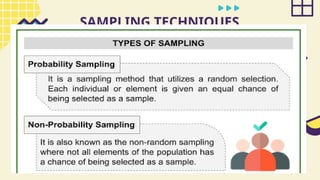
SAMPLING TECHNIQUES
RANDOM SAMPLING TECHNIQUES
STEPS TO CONDUCT SRS (SIMPLE RANDOM SAMPLING)
IT’S YOUR TIME
IT’S YOUR TIME
Guide Questions:
1. Based on Activity 2, what are the
advantages if greater sample is taken?
2. Will it also be true to random
sampling?
LET’S DIG MORE
Thoughts to Ponder About the Lesson:
Remember to SAMPLE in order not be HURT in life.
S-elect and in order not to be
A-void H-umiliated
M-isleading U-nderestimated
P-eople R-eprimanded and
L-ivingly T-rashed You Out
E-ngage with you
Think, Pair and
Share
Discuss with your pair, why is it
more advantageous to employ
random sampling when taking a
sample especially in conducting
a research?
Let’s VOLT In
1.What are the two kinds of
sampling?
2.How do they differ?
3.What are the random sampling
techniques?
4.Describe each one.
I. Determine whether the following is a random
sampling or non- random sampling technique
illustrated in the given situation.
1. Winning a lottery ball
2. Conduct interview to Kagawad Daisy
about barangay resolution on fist
fighting
3. Listing the names of the training
participants to join in the raffle draw
II. Identify the random sampling
techniques being described in each
statement.
1. List all the names of the students to avail free
miscellaneous fee.
2. In 11- HUMSS B, every student who is sitting in the 3rd
chair will prepare a song number.
3. Grade 11 students are grouped into their respective
strands then taken out respondents randomly from
each strand to answer the survey about the 25th
Anniversary of the Cityhood of Passi Celebration
4. Students are grouped into their respective grade level
where Grade 12 students will take the upcoming
National Achievement.
5. It is best employed when large population is concerned.
BRING ME HOME
What is Sloven’s formula and
its role in selecting the
sample size?
RHEA R. AGRAMONTE
THANK YOU AND
KEEP SAFE
11th
GRADE

sampling techniques- Statistics and Probability.pptx

  • 1.
    RHEA R. AGRAMONTE CONCEPTSIN PROBABILITY AND STATISTICS 11th GRADE
  • 2.
    DEAR LORD, WE COMETO YOU IN THE SPIRIT OF LEARNING, HUMILITY AND LOVE. WE ARE GRATEFUL FOR THIS OPPORTUNITY TO LEARN FROM EACH OTHER AND GROW CLOSER IN OUR FAITH. WE ASK YOU LORD TO BLESS OUR TIME TOGETHER AS WE EXPLORE THE TEACHINGS OF JESUS CHRIST AND EMBRACE THE LEARNING IN SCHOOL. IN THIS WE PRAY IN JESUS NAME. AMEN PRAYER
  • 3.
  • 4.
    What’s my area? Howabout mine? Im the largest, would you mind to tell how big is mine LET’S DO SOME RECALL
  • 5.
    GROUP 1 PURPLE ORANGE RED PINK BLACK NAME ITCOLORRECTLY AND EXCELLENTLY (NICE) GROUP 2 YELLOW VIOLET WHITE BLUE GRAY
  • 6.
    1.What did youlearn from the activity? 2.Were you able to give the correct color of each word? 3.If yes, how did you it?
  • 7.
    Activity 2: TASTELIKE UBE (UNDERSTANDING BEYOND ESTIMATION)
  • 8.
    GUIDE QUESTIONS: 1. Whichof the pictures give you a complete concept of a cake? 2. Based on no. 1, can you describe about the characteristic of the cake? 3. What will you do to determine how the cake tastes like? 4. If your answer is to get a piece of cake and taste it, which one gives a best description about its taste? Eat the entire piece taken or just take a part of that piece of cake to taste?
  • 9.
    THINK DEEPLY BUTWISELY: 1. Based on Activity 1, what are the things to consider getting the activity done correctly? 2. Is it necessary to use first your senses before giving your answer? Why? 3. Based on Activity 2, will it be possible that any random people could taste that same cake and give the same judgment about its taste as you? 4. In our class, If I am going to take 25 students and tell something about them, will there be a possibility that they might represent about your entire section?
  • 10.
    RANDOM SAMPLING The learnerillustrates random sampling. (M11/12SP- IIId-2 ) Enabling Objectives: At the end of the lesson, learners are able to: 1. Define and differentiate random sampling and non- random sampling techniques 2. Determine the different random sampling techniques and describe each one.
  • 11.
    TELL ME WHATAM I: 1. Winner in the raffle draw during the PTA General Assembly. 2.The Grade 12 students took the 2023 National Achievement Test. 3.You interviewed your best friend about “FPJ Batang Quiapo” since she is an avid fan of Coco Martin.
  • 12.
    Watch Me andTell Me What Am I
  • 13.
    Watch Me andTell Me What Am I
  • 14.
  • 15.
  • 16.
    STEPS TO CONDUCTSRS (SIMPLE RANDOM SAMPLING)
  • 17.
  • 18.
  • 19.
    Guide Questions: 1. Basedon Activity 2, what are the advantages if greater sample is taken? 2. Will it also be true to random sampling? LET’S DIG MORE
  • 20.
    Thoughts to PonderAbout the Lesson: Remember to SAMPLE in order not be HURT in life. S-elect and in order not to be A-void H-umiliated M-isleading U-nderestimated P-eople R-eprimanded and L-ivingly T-rashed You Out E-ngage with you
  • 21.
    Think, Pair and Share Discusswith your pair, why is it more advantageous to employ random sampling when taking a sample especially in conducting a research?
  • 22.
    Let’s VOLT In 1.Whatare the two kinds of sampling? 2.How do they differ? 3.What are the random sampling techniques? 4.Describe each one.
  • 23.
    I. Determine whetherthe following is a random sampling or non- random sampling technique illustrated in the given situation. 1. Winning a lottery ball 2. Conduct interview to Kagawad Daisy about barangay resolution on fist fighting 3. Listing the names of the training participants to join in the raffle draw
  • 24.
    II. Identify therandom sampling techniques being described in each statement. 1. List all the names of the students to avail free miscellaneous fee. 2. In 11- HUMSS B, every student who is sitting in the 3rd chair will prepare a song number. 3. Grade 11 students are grouped into their respective strands then taken out respondents randomly from each strand to answer the survey about the 25th Anniversary of the Cityhood of Passi Celebration 4. Students are grouped into their respective grade level where Grade 12 students will take the upcoming National Achievement. 5. It is best employed when large population is concerned.
  • 25.
    BRING ME HOME Whatis Sloven’s formula and its role in selecting the sample size?
  • 26.
    RHEA R. AGRAMONTE THANKYOU AND KEEP SAFE 11th GRADE