SQ 1
The norminal stress-strain curve of a metal, as obtained from a tensile test
defines the stresses for the onset of yield (σy) and final fracture (σf). However
it is known that metals can deform plastically at stresses, σ < σy by creep and
fracture at σ < σf by fatigue. Which conditions facilitate this kind of failure in
metals
SQ 2
Use a microstructural description to discuss in sufficient detail ONE
mechanism by which creep deformation can occur.
SQ3
Why are materials whose yield stresses are highly strain-rate dependant more
susceptible to brittle fracture than those materials whose yield stresses do
not exhibit marked strain-rate dependence
SQ4
Compare and contrast the deformation in a tensile test of a ductile polymer
such as high-density polyethylene with that of a ductile metal.
SQ5
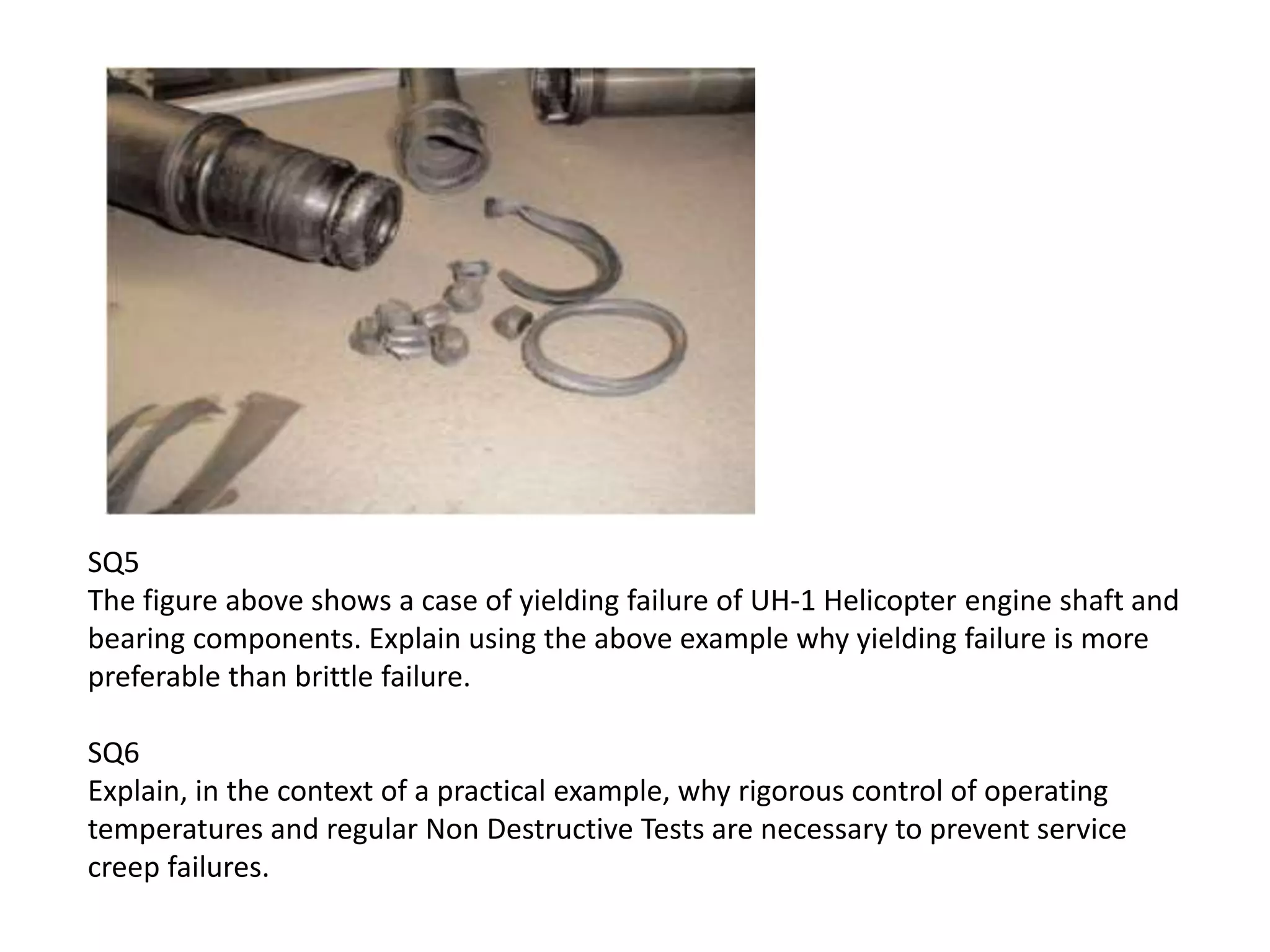
The figure above shows a case of yielding failure of UH-1 Helicopter engine shaft and
bearing components. Explain using the above example why yielding failure is more
preferable than brittle failure.
SQ6
Explain, in the context of a practical example, why rigorous control of operating
temperatures and regular Non Destructive Tests are necessary to prevent service
creep failures.

Sample questions mechanical properties

  • 1.
    SQ 1 The norminalstress-strain curve of a metal, as obtained from a tensile test defines the stresses for the onset of yield (σy) and final fracture (σf). However it is known that metals can deform plastically at stresses, σ < σy by creep and fracture at σ < σf by fatigue. Which conditions facilitate this kind of failure in metals SQ 2 Use a microstructural description to discuss in sufficient detail ONE mechanism by which creep deformation can occur. SQ3 Why are materials whose yield stresses are highly strain-rate dependant more susceptible to brittle fracture than those materials whose yield stresses do not exhibit marked strain-rate dependence SQ4 Compare and contrast the deformation in a tensile test of a ductile polymer such as high-density polyethylene with that of a ductile metal.
  • 2.
    SQ5 The figure aboveshows a case of yielding failure of UH-1 Helicopter engine shaft and bearing components. Explain using the above example why yielding failure is more preferable than brittle failure. SQ6 Explain, in the context of a practical example, why rigorous control of operating temperatures and regular Non Destructive Tests are necessary to prevent service creep failures.