Physiological Anatomy of
Salivary Gland and its
Composition
Dr Aqsa Jabeen
LEARNING OBJECTIVES
By the end of this lecture students of 2 year MBBS will be able to
• List the major and minor salivary glands
• Classify salivary glands on the basis of secretions
• Describe the structure of salivary gland
• Explain the composition of saliva
• Describe the mechanism of salivary secretion
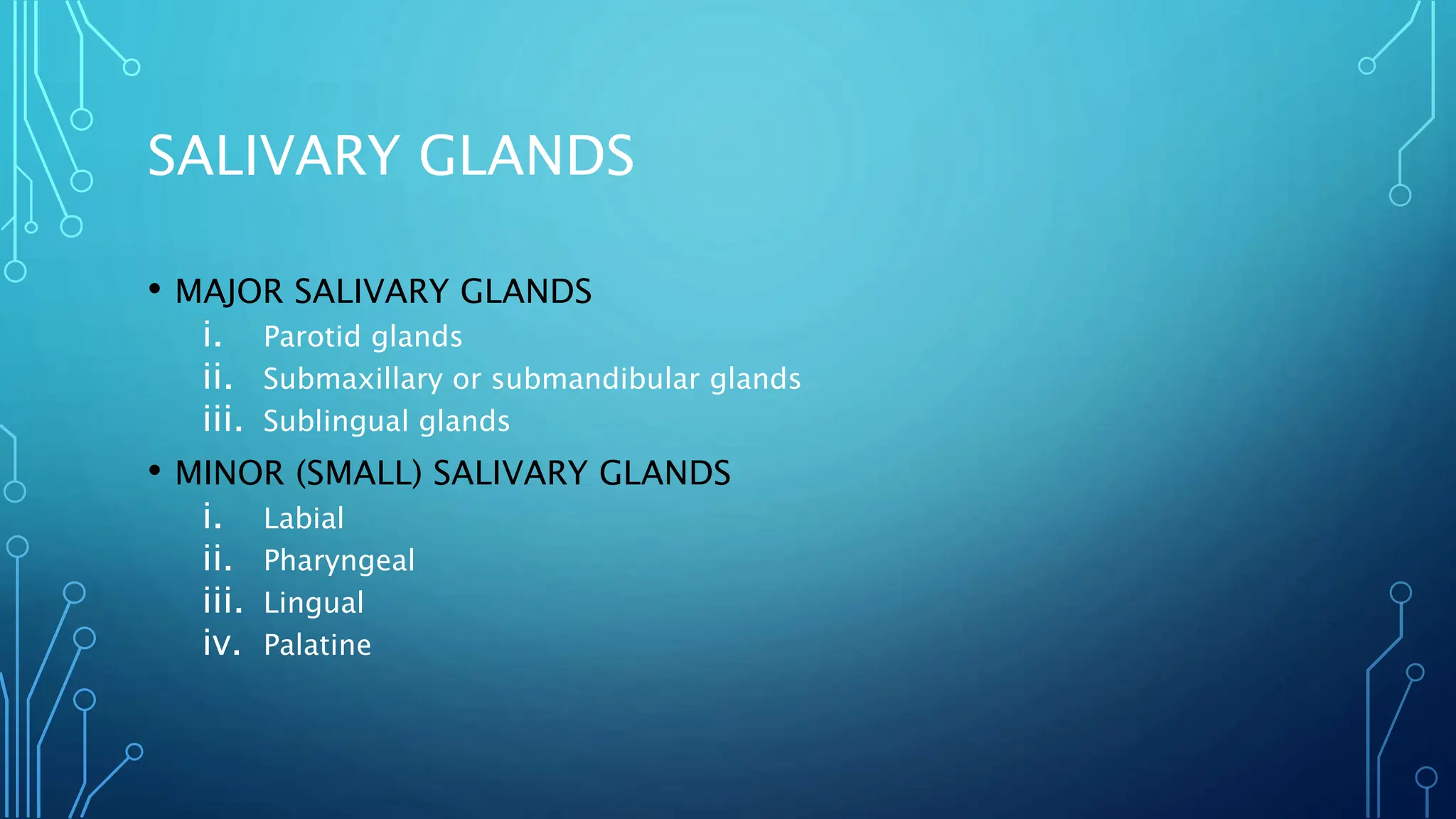
SALIVARY GLANDS
• MAJOR SALIVARY GLANDS
i. Parotid glands
ii. Submaxillary or submandibular glands
iii. Sublingual glands
• MINOR (SMALL) SALIVARY GLANDS
i. Labial
ii. Pharyngeal
iii. Lingual
iv. Palatine
SALIVARY GLANDS
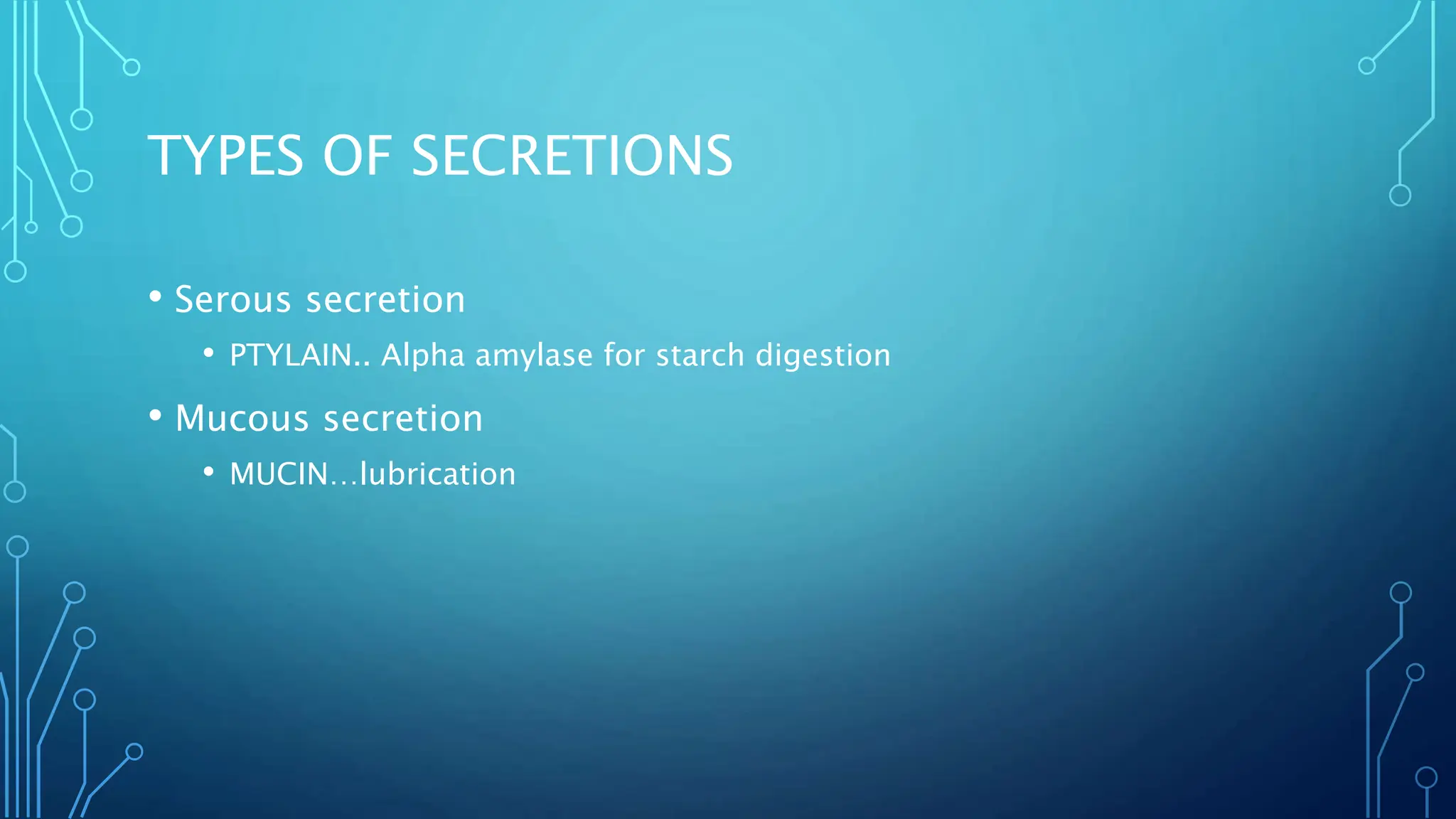
TYPES OF SECRETIONS
• Serous secretion
• PTYLAIN.. Alpha amylase for starch digestion
• Mucous secretion
• MUCIN…lubrication
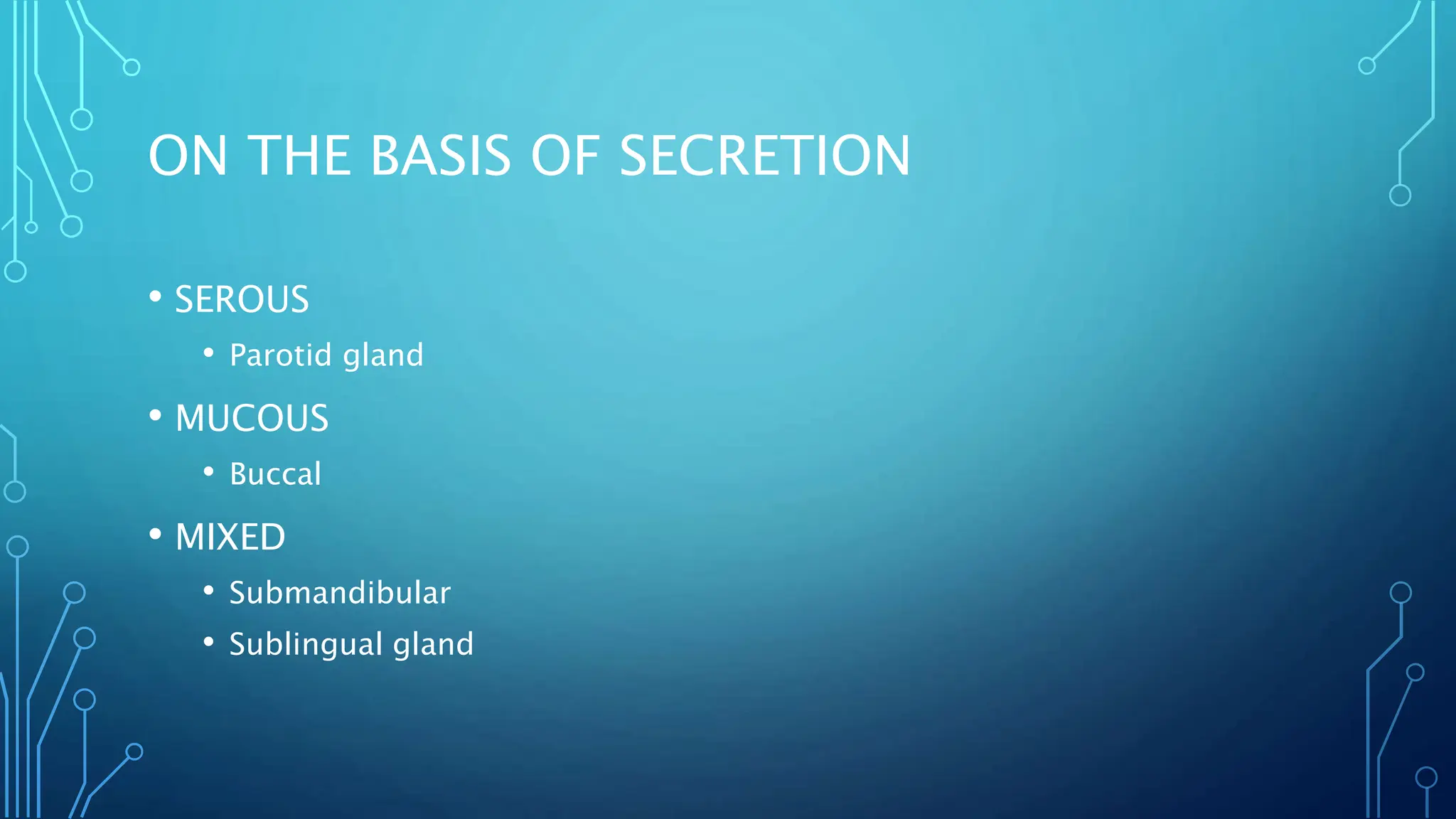
ON THE BASIS OF SECRETION
• SEROUS
• Parotid gland
• MUCOUS
• Buccal
• MIXED
• Submandibular
• Sublingual gland
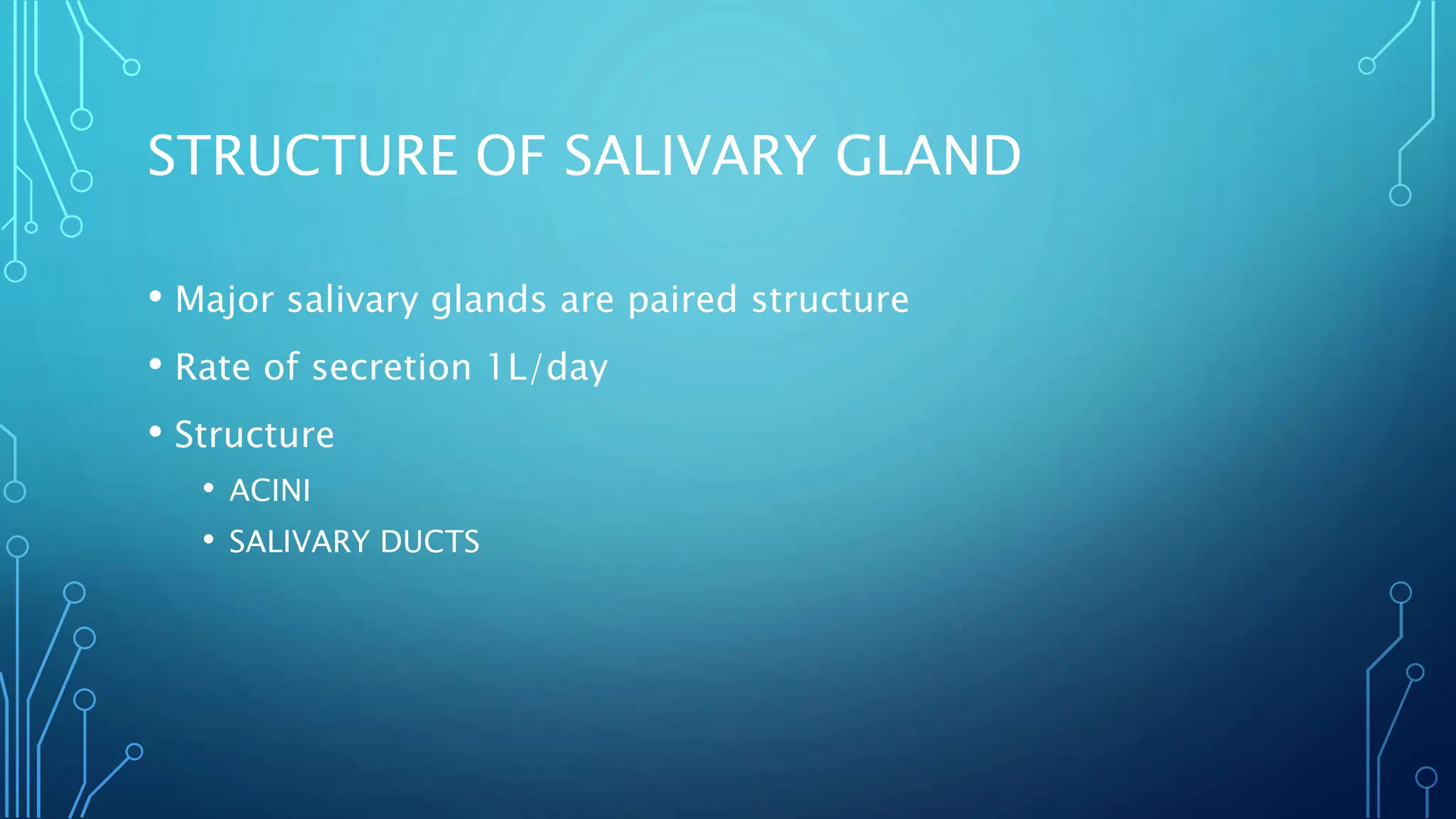
STRUCTURE OF SALIVARY GLAND
• Major salivary glands are paired structure
• Rate of secretion 1L/day
• Structure
• ACINI
• SALIVARY DUCTS
ACINUS
• Small group of cells which surround a central globular cavity
• Central cavity of each acinus is continuous with the lumen of
the duct.
SALIVARY DUCTS
• Fine duct draining each acinus is called intercalated duct
• Striated duct
• Excretory duct of the gland
COMPOSITION OF SALIVA
• Water 99.5%
• ELECTROLYTES
• LOWER ..NA AND CL
• HIGHER ..K AND HCO3
• PROTEINS
• AMYLASE
• LINGUAL LIPASE
• KALLIKLERIN
• MUCUS
• LYSOZYME
FORMATION OF SALIVA
First stage …Acini
Isotonic secretion
Second stage . . . Salivary ducts
Hypotonic secretion
ACINAR CELL SECRETION
• Primary secretion
• Isotonic
• Ptyalin , mucin , lipase in a solution of ions with concentration
not different ECF
ROLE PLAY OF PRIMARY SALIVA SECRETION
DUCTAL SECRETION
1. Active reabsorption of sodium in ductal cells
2. Active secretion of potassium into lumen
3. Passive reabsorption of chloride to balance electronegativity
4. Bicarbonate ions are secreted by ductal epithelium
ROLE PLAY OF SALIVA SECRETION
SUMMARY
• List the major and minor salivary glands
• Classify salivary glands on the basis of secretions
• Describe the structure of salivary gland
• Explain the composition of saliva
• Describe the mechanism of salivary secretion

salivary glands.pptx

  • 1.
    Physiological Anatomy of SalivaryGland and its Composition Dr Aqsa Jabeen
  • 2.
    LEARNING OBJECTIVES By theend of this lecture students of 2 year MBBS will be able to • List the major and minor salivary glands • Classify salivary glands on the basis of secretions • Describe the structure of salivary gland • Explain the composition of saliva • Describe the mechanism of salivary secretion
  • 3.
    SALIVARY GLANDS • MAJORSALIVARY GLANDS i. Parotid glands ii. Submaxillary or submandibular glands iii. Sublingual glands • MINOR (SMALL) SALIVARY GLANDS i. Labial ii. Pharyngeal iii. Lingual iv. Palatine
  • 4.
  • 5.
    TYPES OF SECRETIONS •Serous secretion • PTYLAIN.. Alpha amylase for starch digestion • Mucous secretion • MUCIN…lubrication
  • 6.
    ON THE BASISOF SECRETION • SEROUS • Parotid gland • MUCOUS • Buccal • MIXED • Submandibular • Sublingual gland
  • 7.
    STRUCTURE OF SALIVARYGLAND • Major salivary glands are paired structure • Rate of secretion 1L/day • Structure • ACINI • SALIVARY DUCTS
  • 8.
    ACINUS • Small groupof cells which surround a central globular cavity • Central cavity of each acinus is continuous with the lumen of the duct.
  • 10.
    SALIVARY DUCTS • Fineduct draining each acinus is called intercalated duct • Striated duct • Excretory duct of the gland
  • 11.
    COMPOSITION OF SALIVA •Water 99.5% • ELECTROLYTES • LOWER ..NA AND CL • HIGHER ..K AND HCO3 • PROTEINS • AMYLASE • LINGUAL LIPASE • KALLIKLERIN • MUCUS • LYSOZYME
  • 12.
    FORMATION OF SALIVA Firststage …Acini Isotonic secretion Second stage . . . Salivary ducts Hypotonic secretion
  • 13.
    ACINAR CELL SECRETION •Primary secretion • Isotonic • Ptyalin , mucin , lipase in a solution of ions with concentration not different ECF
  • 15.
    ROLE PLAY OFPRIMARY SALIVA SECRETION
  • 16.
    DUCTAL SECRETION 1. Activereabsorption of sodium in ductal cells 2. Active secretion of potassium into lumen 3. Passive reabsorption of chloride to balance electronegativity 4. Bicarbonate ions are secreted by ductal epithelium
  • 18.
    ROLE PLAY OFSALIVA SECRETION
  • 19.
    SUMMARY • List themajor and minor salivary glands • Classify salivary glands on the basis of secretions • Describe the structure of salivary gland • Explain the composition of saliva • Describe the mechanism of salivary secretion