SDM-Ch.1 2
Learning
Objectives
• Tounderstand evolution, nature and importance
of sales management
• To know role and skills of modern sales
managers
• To understand types of sales managers
• To learn objectives, strategies and tactics of
sales management
• To know emerging trends in sales management
• To understand linkage between sales and
distribution management
3.
SDM-Ch.1 3
Evolution, Natureand Importance of
Sales Management
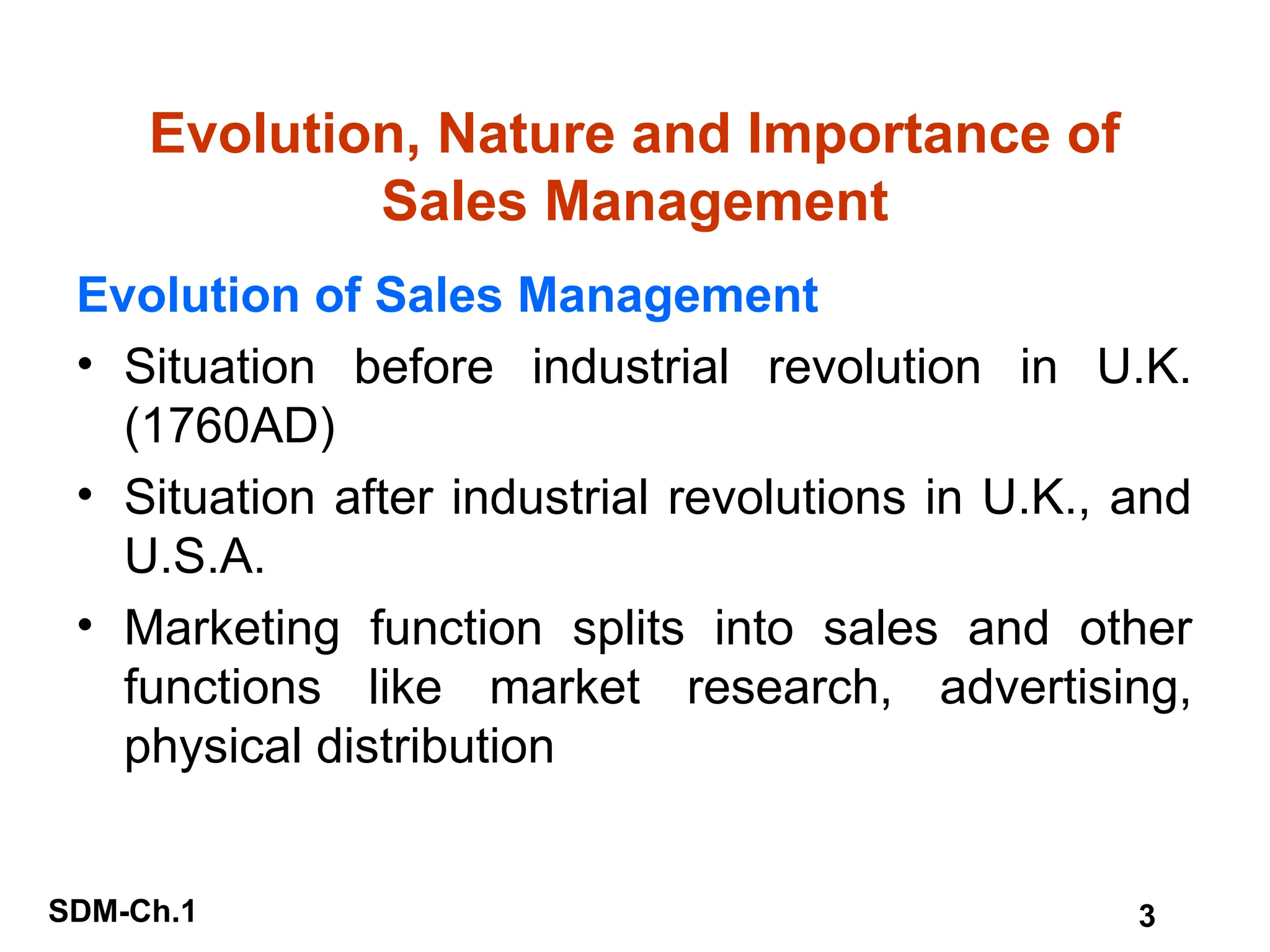
Evolution of Sales Management
• Situation before industrial revolution in U.K.
(1760AD)
• Situation after industrial revolutions in U.K., and
U.S.A.
• Marketing function splits into sales and other
functions like market research, advertising,
physical distribution
4.
SDM-Ch.1 4
What isSales
Management?
• One definition: “The management of the
personal selling part of a company’s marketing
function.”
• Another definition: “The process of planning,
directing, and controlling of personal selling,
including recruiting, selecting, equipping,
assigning, supervising, paying, and motivating
the personal sales force.
5.
SDM-Ch.1 5
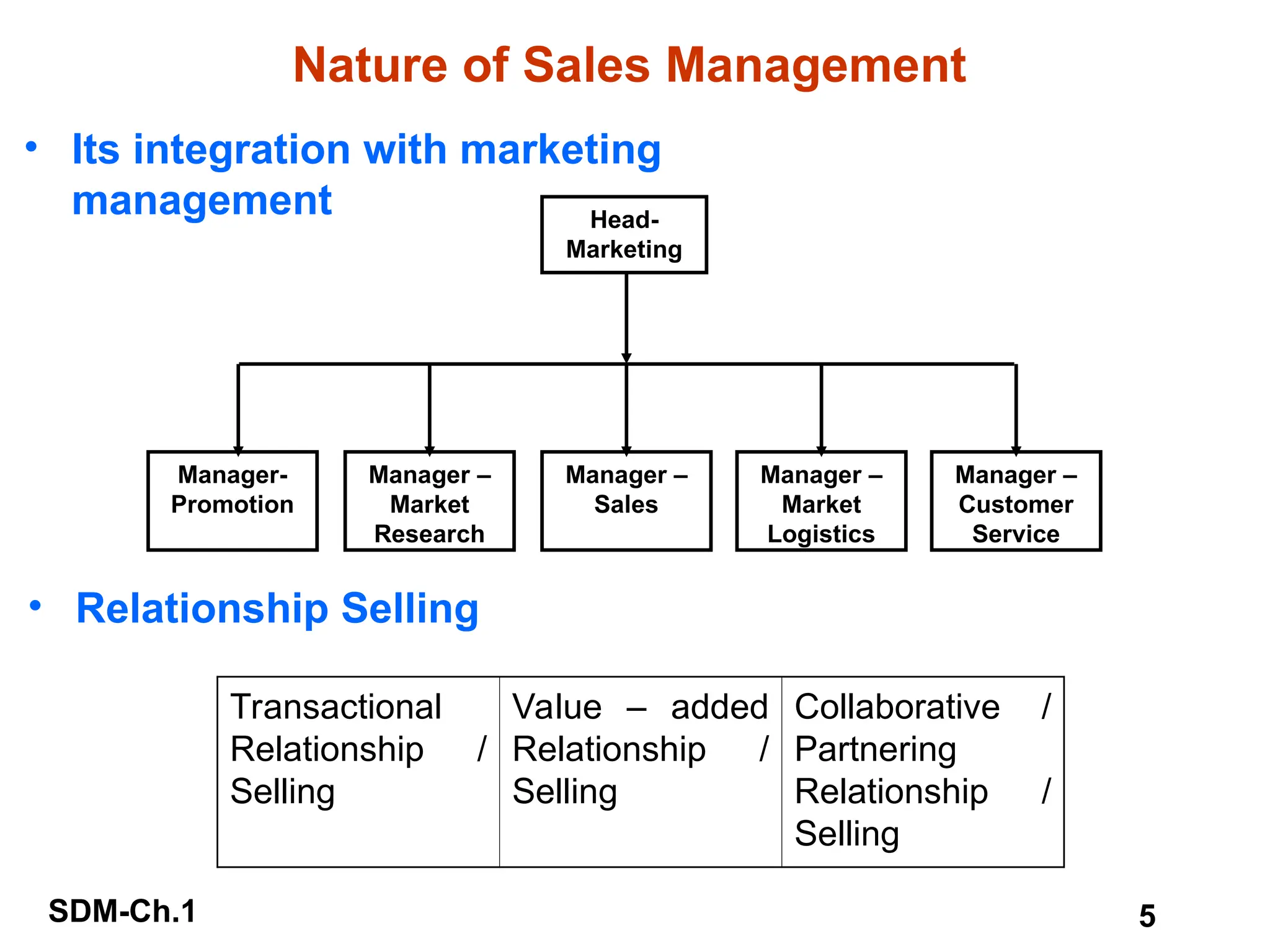
Nature ofSales Management
• Its integration with marketing
management
• Relationship Selling
Transactional
Relationship /
Selling
Value – added
Relationship /
Selling
Collaborative /
Partnering
Relationship /
Selling
Head-
Marketing
Manager –
Customer
Service
Manager –
Market
Logistics
Manager –
Sales
Manager –
Market
Research
Manager-
Promotion
6.
SDM-Ch.1 6
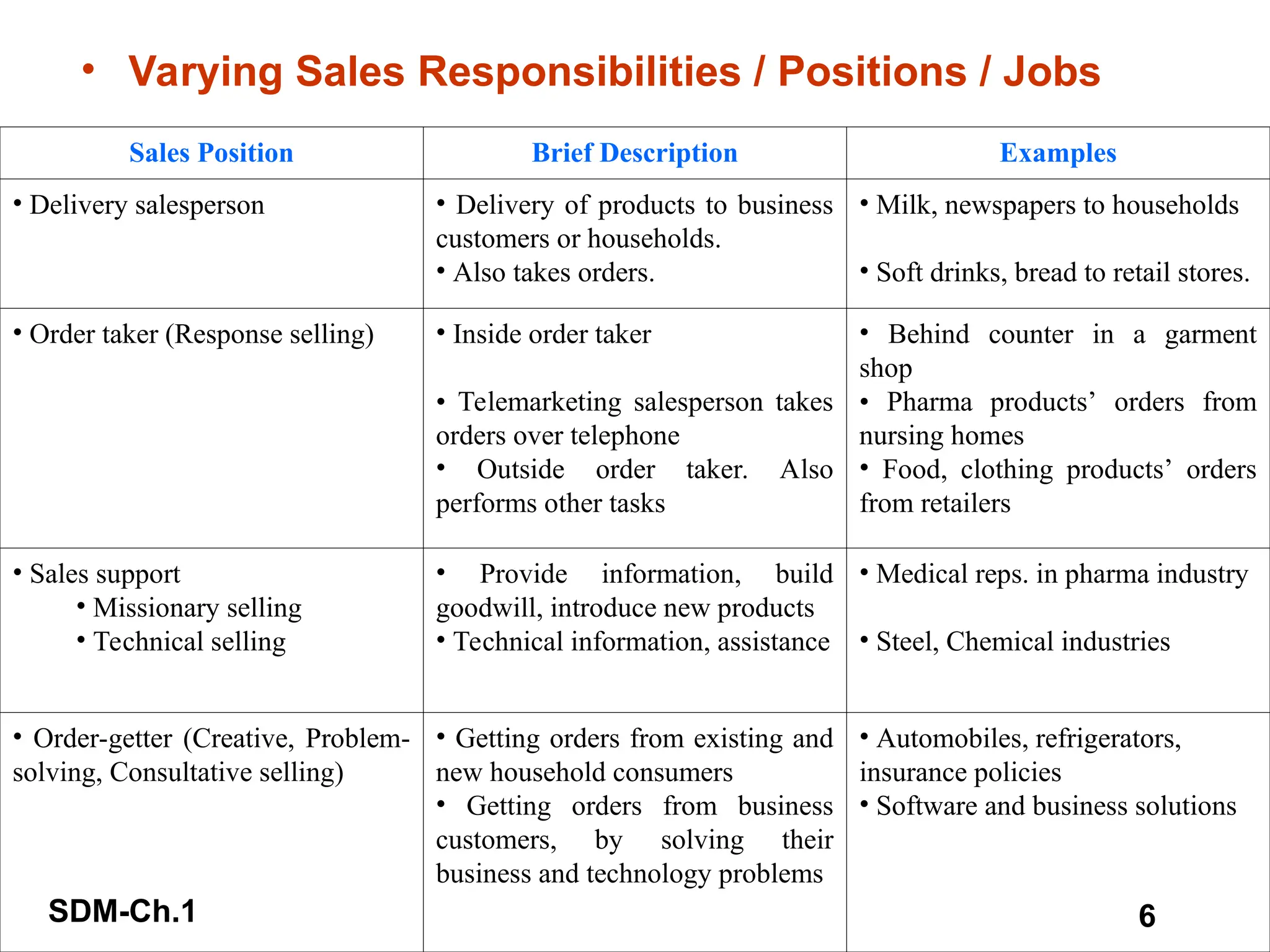
• VaryingSales Responsibilities / Positions / Jobs
Sales Position Brief Description Examples
• Delivery salesperson • Delivery of products to business
customers or households.
• Also takes orders.
• Milk, newspapers to households
• Soft drinks, bread to retail stores.
• Order taker (Response selling) • Inside order taker
• Telemarketing salesperson takes
orders over telephone
• Outside order taker. Also
performs other tasks
• Behind counter in a garment
shop
• Pharma products’ orders from
nursing homes
• Food, clothing products’ orders
from retailers
• Sales support
• Missionary selling
• Technical selling
• Provide information, build
goodwill, introduce new products
• Technical information, assistance
• Medical reps. in pharma industry
• Steel, Chemical industries
• Order-getter (Creative, Problem-
solving, Consultative selling)
• Getting orders from existing and
new household consumers
• Getting orders from business
customers, by solving their
business and technology problems
• Automobiles, refrigerators,
insurance policies
• Software and business solutions
7.
SDM-Ch.1 7
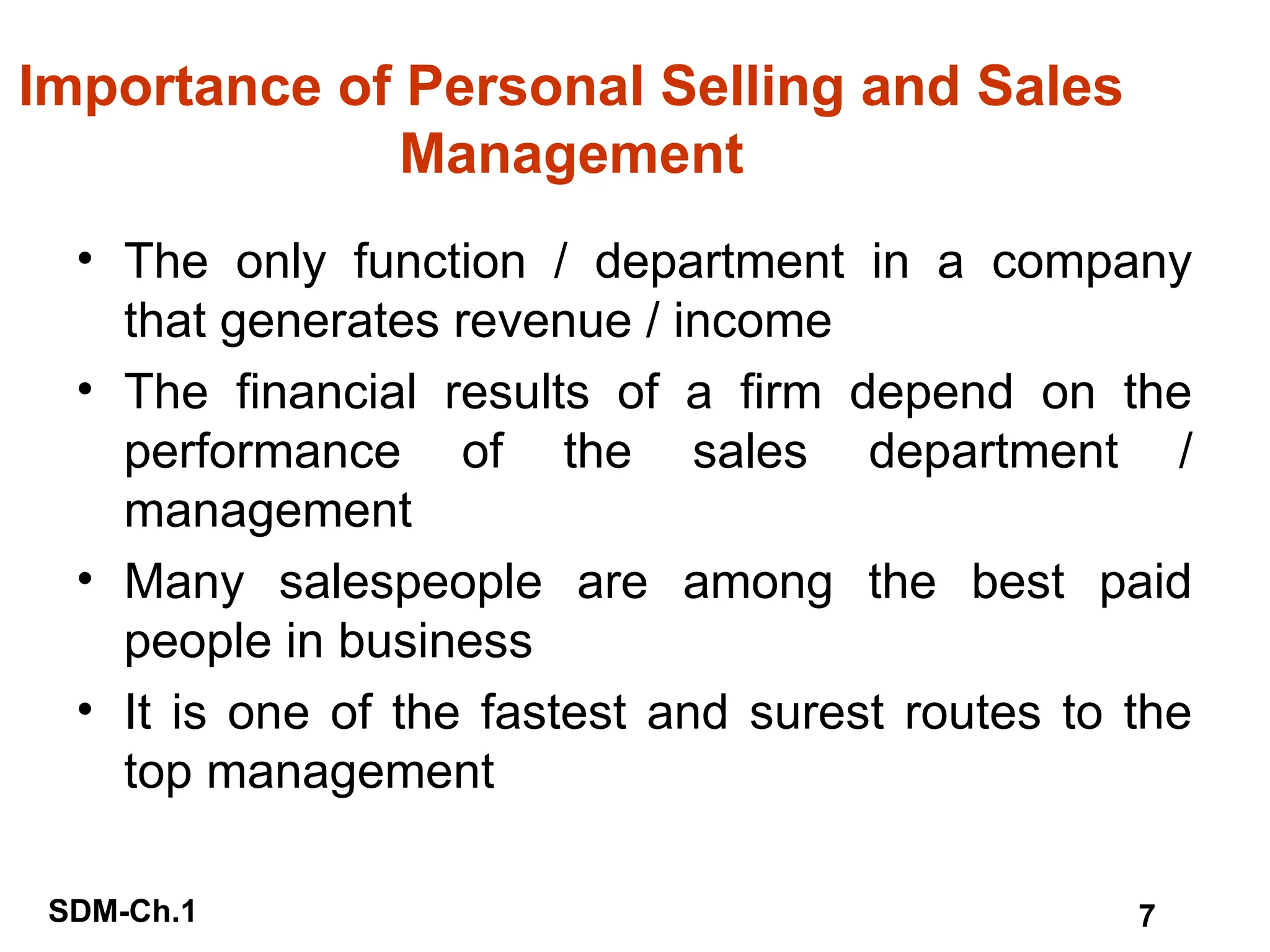
Importance ofPersonal Selling and Sales
Management
• The only function / department in a company
that generates revenue / income
• The financial results of a firm depend on the
performance of the sales department /
management
• Many salespeople are among the best paid
people in business
• It is one of the fastest and surest routes to the
top management
SDM-Ch.1 9
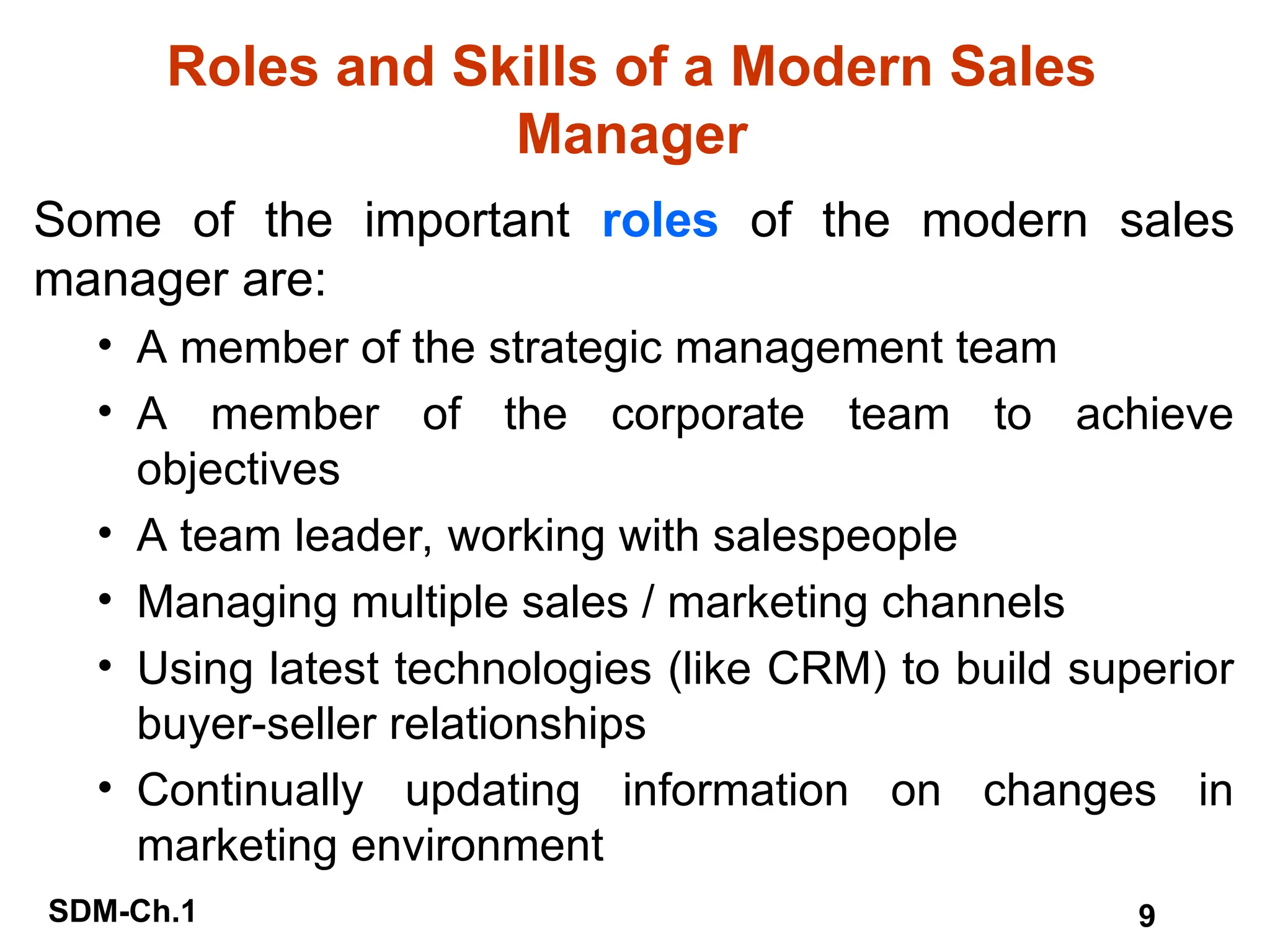
Roles andSkills of a Modern Sales
Manager
Some of the important roles of the modern sales
manager are:
• A member of the strategic management team
• A member of the corporate team to achieve
objectives
• A team leader, working with salespeople
• Managing multiple sales / marketing channels
• Using latest technologies (like CRM) to build superior
buyer-seller relationships
• Continually updating information on changes in
marketing environment
10.
SDM-Ch.1 10
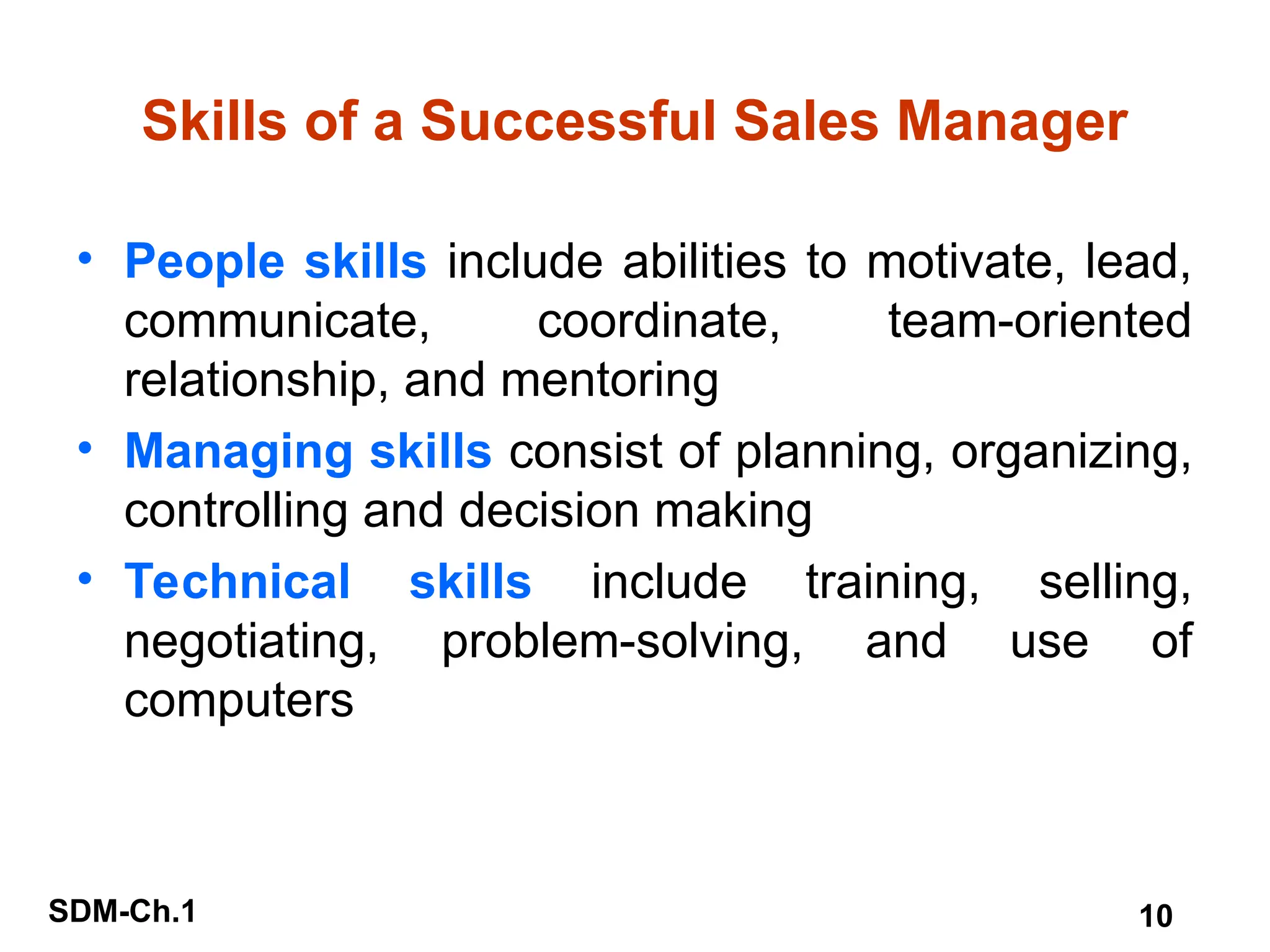
Skills ofa Successful Sales Manager
• People skills include abilities to motivate, lead,
communicate, coordinate, team-oriented
relationship, and mentoring
• Managing skills consist of planning, organizing,
controlling and decision making
• Technical skills include training, selling,
negotiating, problem-solving, and use of
computers
11.
SDM-Ch.1 11
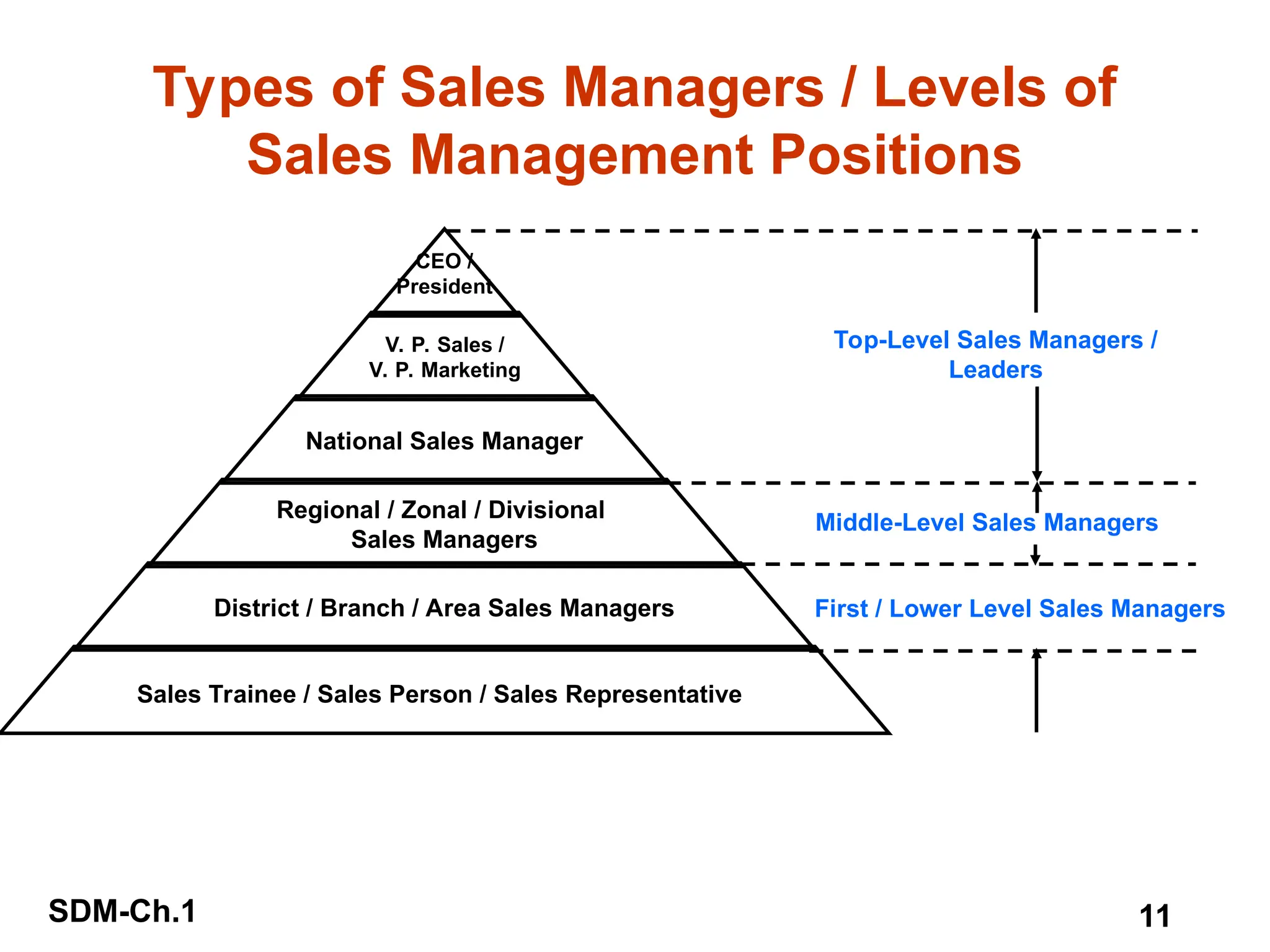
Types ofSales Managers / Levels of
Sales Management Positions
CEO /
President
V. P. Sales /
V. P. Marketing
National Sales Manager
Regional / Zonal / Divisional
Sales Managers
District / Branch / Area Sales Managers
Sales Trainee / Sales Person / Sales Representative
First / Lower Level Sales Managers
Middle-Level Sales Managers
Top-Level Sales Managers /
Leaders
12.
SDM-Ch.1 12
Sales Objectives,Strategies and
Tactics
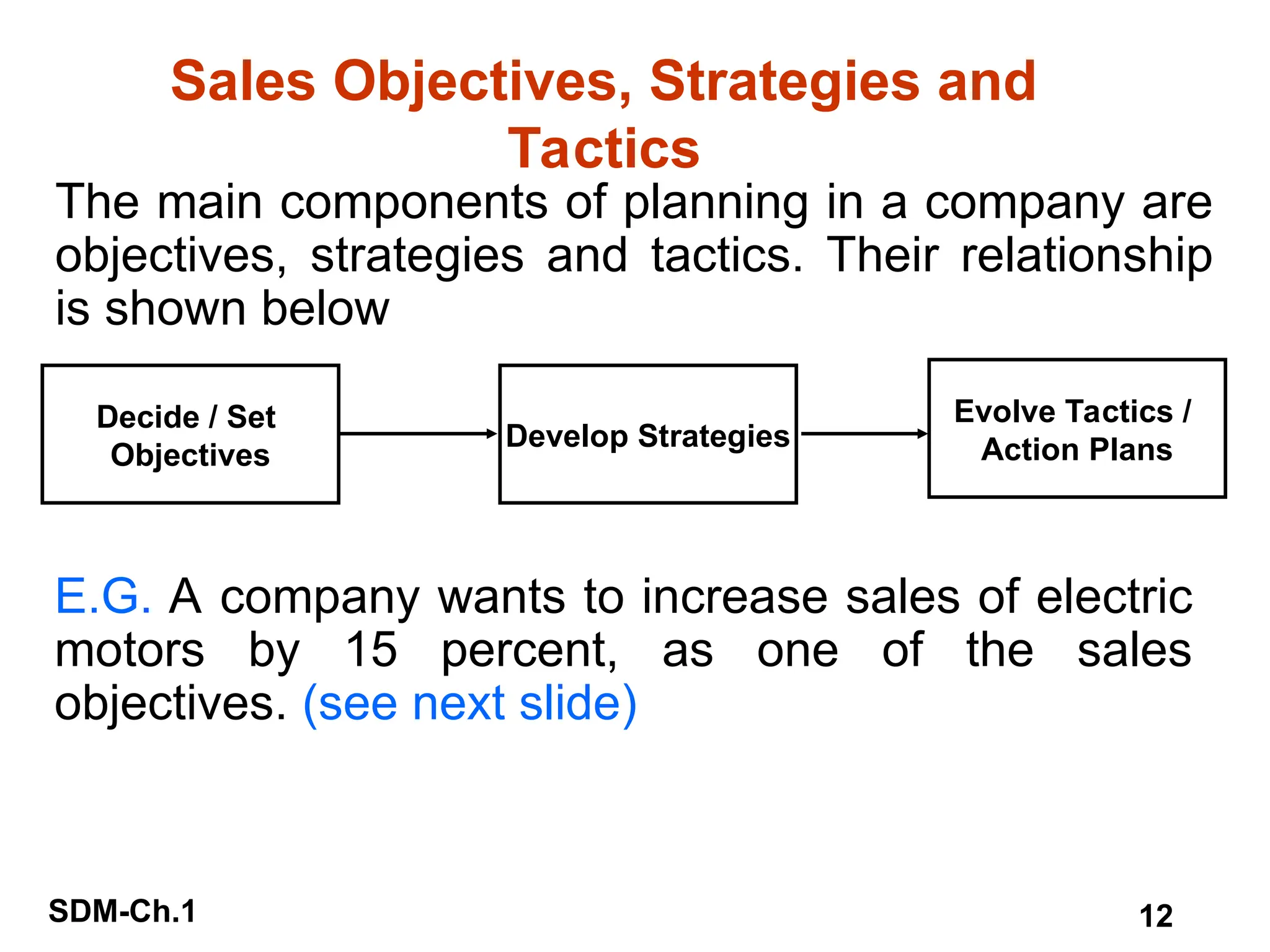
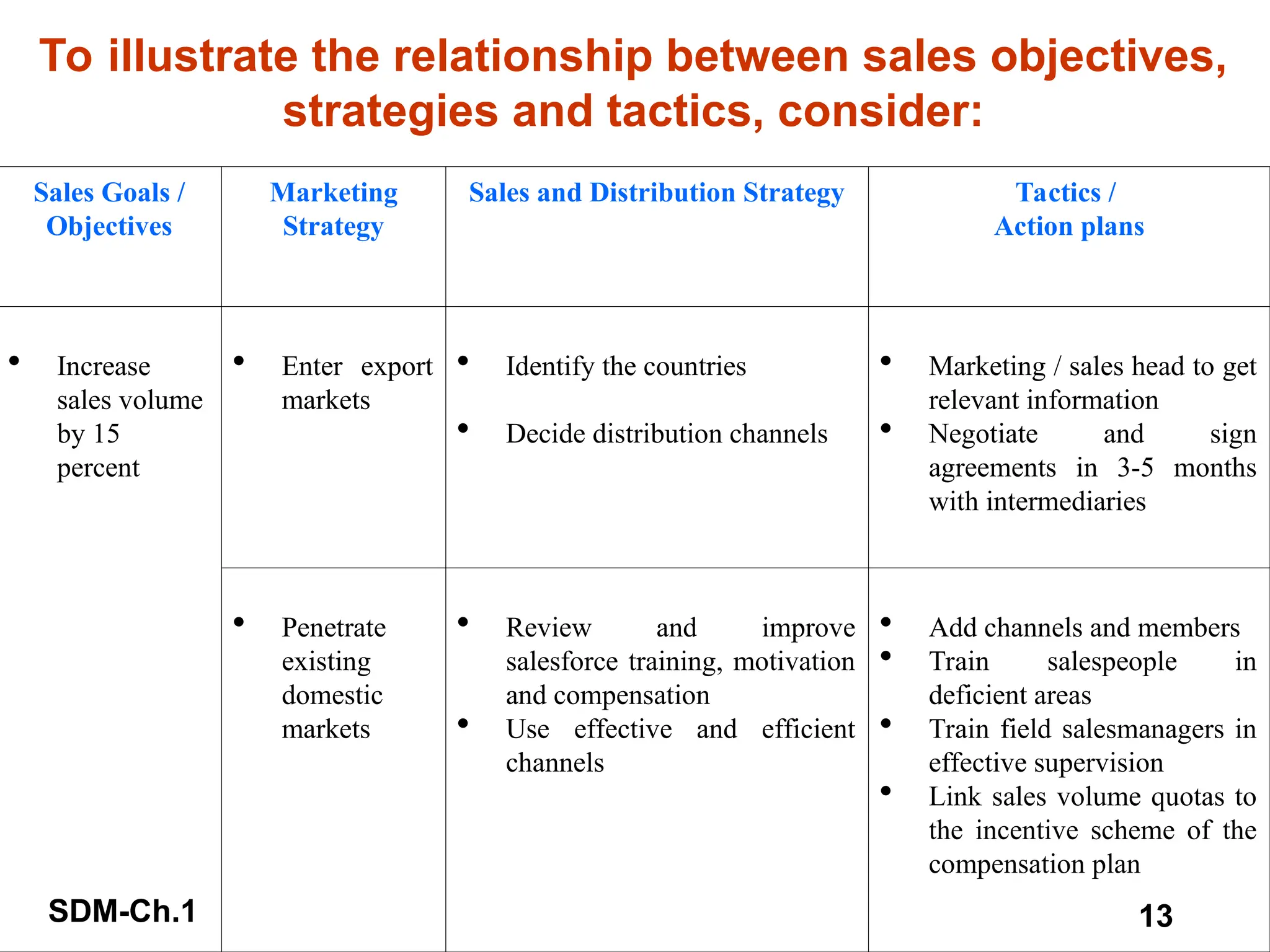
The main components of planning in a company are
objectives, strategies and tactics. Their relationship
is shown below
Decide / Set
Objectives
Develop Strategies
Evolve Tactics /
Action Plans
E.G. A company wants to increase sales of electric
motors by 15 percent, as one of the sales
objectives. (see next slide)
13.
SDM-Ch.1 13
To illustratethe relationship between sales objectives,
strategies and tactics, consider:
Sales Goals /
Objectives
Marketing
Strategy
Sales and Distribution Strategy Tactics /
Action plans
Increase
sales volume
by 15
percent
Enter export
markets
Identify the countries
Decide distribution channels
Marketing / sales head to get
relevant information
Negotiate and sign
agreements in 3-5 months
with intermediaries
Penetrate
existing
domestic
markets
Review and improve
salesforce training, motivation
and compensation
Use effective and efficient
channels
Add channels and members
Train salespeople in
deficient areas
Train field salesmanagers in
effective supervision
Link sales volume quotas to
the incentive scheme of the
compensation plan
14.
SDM-Ch.1 14
Emerging Trendsin Sales
Management
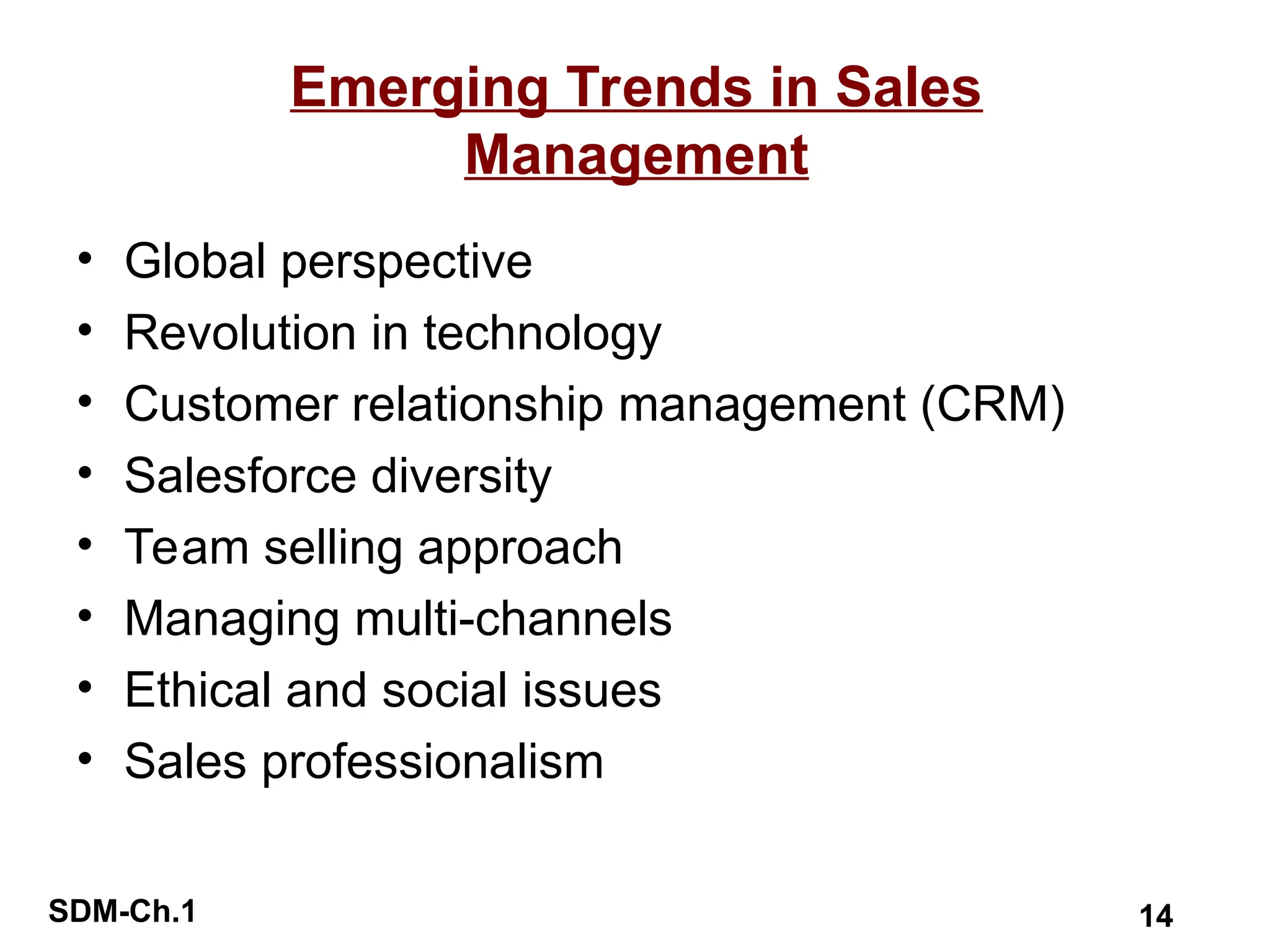
• Global perspective
• Revolution in technology
• Customer relationship management (CRM)
• Salesforce diversity
• Team selling approach
• Managing multi-channels
• Ethical and social issues
• Sales professionalism
15.
SDM-Ch.1 15
Linking Salesand Distribution
Management
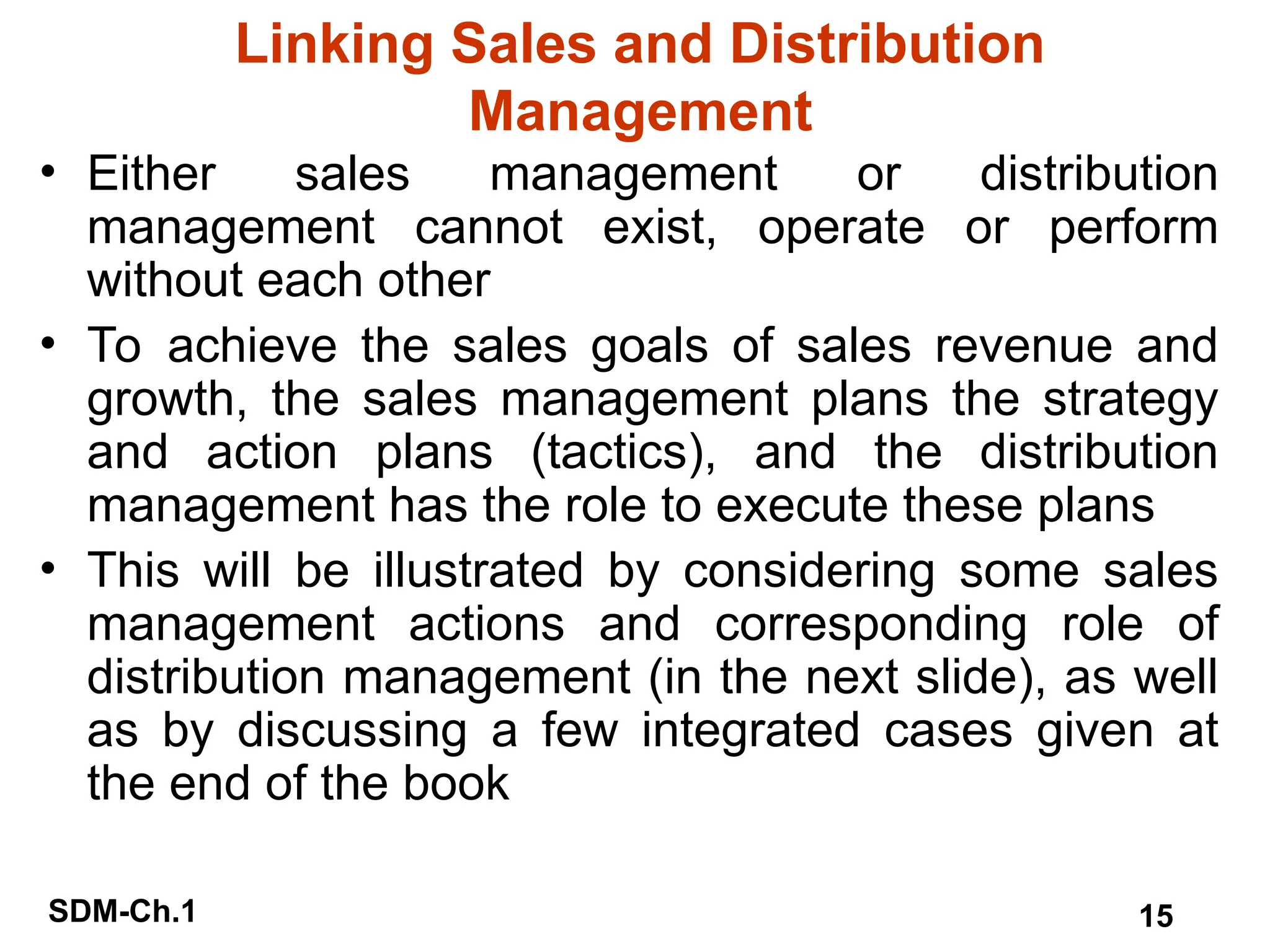
• Either sales management or distribution
management cannot exist, operate or perform
without each other
• To achieve the sales goals of sales revenue and
growth, the sales management plans the strategy
and action plans (tactics), and the distribution
management has the role to execute these plans
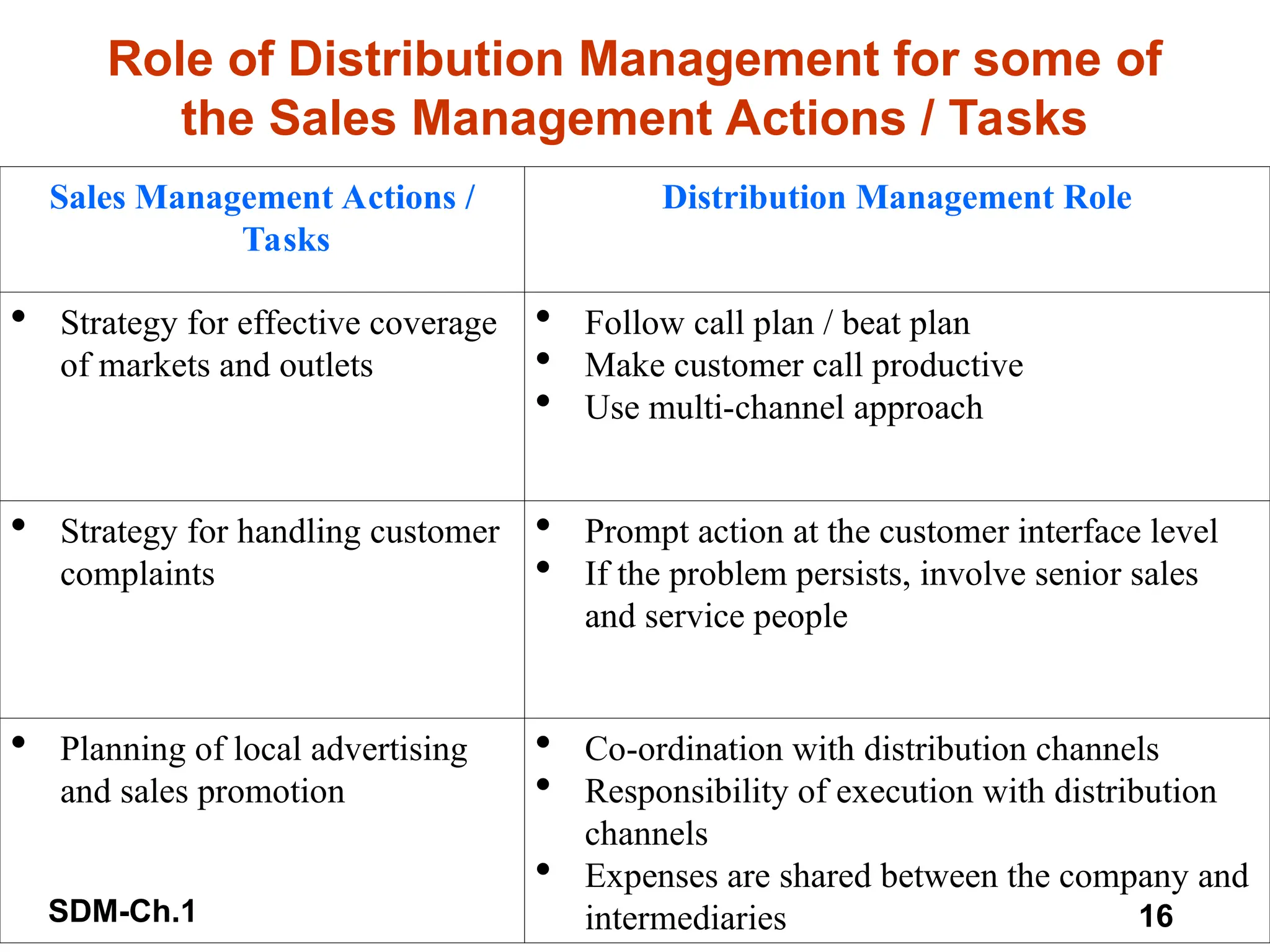
• This will be illustrated by considering some sales
management actions and corresponding role of
distribution management (in the next slide), as well
as by discussing a few integrated cases given at
the end of the book
16.
SDM-Ch.1 16
Role ofDistribution Management for some of
the Sales Management Actions / Tasks
Sales Management Actions /
Tasks
Distribution Management Role
Strategy for effective coverage
of markets and outlets
Follow call plan / beat plan
Make customer call productive
Use multi-channel approach
Strategy for handling customer
complaints
Prompt action at the customer interface level
If the problem persists, involve senior sales
and service people
Planning of local advertising
and sales promotion
Co-ordination with distribution channels
Responsibility of execution with distribution
channels
Expenses are shared between the company and
intermediaries
17.
SDM-Ch.1 17
Key Learnings
•Sales management is defined as the management of the
personal selling part of a company’s marketing function
• Selling includes varying sales jobs like delivery
salesperson, order taker, sales support person, and
order getter
• Sales is the only function or department in an
organization that generates revenue / income
• Skills of a successful sales manager include managing,
technical and people
• Main components of sales planning are objectives,
strategies, and tactics (or action plan)
• Either sales management or distribution management
can not exist, operate or perform without each other