Safe   K i ds
Injury An injury occurs when the body is exposed to energy greater than its ability to absorb it. Energy comes in many forms Mechanical/Kinetic Energy Thermal Energy Electrical Energy Chemical Energy Hazards of Energy
Children’s Greater Susceptibility to Injury Injury risk factors for  children ages 4 and under  include: · inability to understand and recognize dangers; · still-developing coordination; · tendency to imitate adult behavior; and · limited ability to react promptly and properly. Injury risk factors for  children ages 5 to 14  include: · increasing experience taking on adult tasks; · interest and intrigue with danger; · increasing interest in taking risks; · tendency to dare each other to engage in dangerous behaviors; and · more free time without adult supervision.
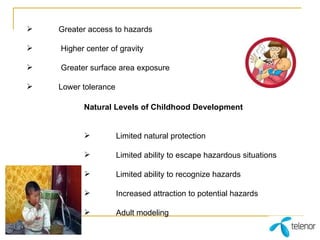
Greater access to hazards   Higher center of gravity   Greater surface area exposure Lower tolerance Natural Levels of Childhood Development Limited natural protection Limited ability to escape hazardous situations Limited ability to recognize hazards Increased attraction to potential hazards Adult modeling
Lack of Experience Smaller knowledge base   Lack of fear Behavioral Development Natural and strong desire to explore Tendency to explore by mouthing
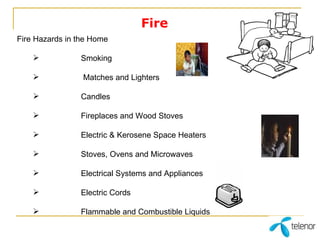
Fire Fire Hazards in the Home Smoking   Matches and Lighters Candles Fireplaces and Wood Stoves Electric & Kerosene Space Heaters Stoves, Ovens and Microwaves Electrical Systems and Appliances Electric Cords Flammable and Combustible Liquids
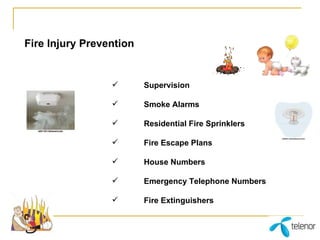
Fire Injury Prevention Supervision Smoke Alarms Residential Fire Sprinklers Fire Escape Plans House Numbers Emergency Telephone Numbers Fire Extinguishers
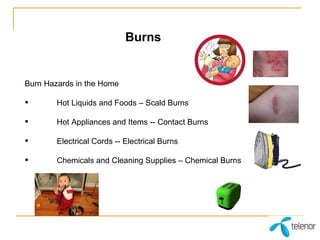
Burns Burn Hazards in the Home Hot Liquids and Foods – Scald Burns Hot Appliances and Items -- Contact Burns Electrical Cords -- Electrical Burns Chemicals and Cleaning Supplies – Chemical Burns
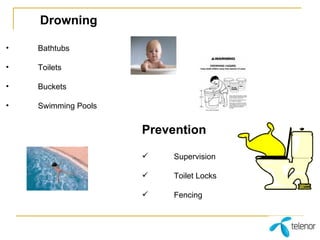
Drowning Bathtubs Toilets Buckets Swimming Pools Prevention Supervision Toilet Locks Fencing
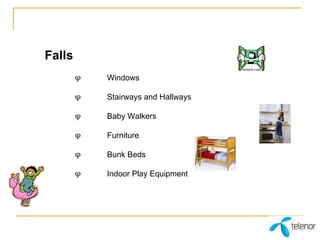
Falls Windows Stairways and Hallways Baby Walkers Furniture Bunk Beds Indoor Play Equipment
Poisoning Medications and Health Supplements Household Chemicals Household Plants Prevention Cabinet and Drawer Latches Child-Resistant Packaging
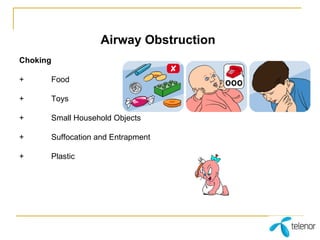
Airway Obstruction Choking +  Food +  Toys +  Small Household Objects +  Suffocation and Entrapment +  Plastic
Cutting/Piercing, Other Wounds Sharp Objects and Corners Furniture Tipovers

Safe kids

  • 1.
    Safe K i ds
  • 2.
    Injury An injuryoccurs when the body is exposed to energy greater than its ability to absorb it. Energy comes in many forms Mechanical/Kinetic Energy Thermal Energy Electrical Energy Chemical Energy Hazards of Energy
  • 3.
    Children’s Greater Susceptibilityto Injury Injury risk factors for children ages 4 and under include: · inability to understand and recognize dangers; · still-developing coordination; · tendency to imitate adult behavior; and · limited ability to react promptly and properly. Injury risk factors for children ages 5 to 14 include: · increasing experience taking on adult tasks; · interest and intrigue with danger; · increasing interest in taking risks; · tendency to dare each other to engage in dangerous behaviors; and · more free time without adult supervision.
  • 4.
    Greater access tohazards Higher center of gravity Greater surface area exposure Lower tolerance Natural Levels of Childhood Development Limited natural protection Limited ability to escape hazardous situations Limited ability to recognize hazards Increased attraction to potential hazards Adult modeling
  • 5.
    Lack of ExperienceSmaller knowledge base Lack of fear Behavioral Development Natural and strong desire to explore Tendency to explore by mouthing
  • 6.
    Fire Fire Hazardsin the Home Smoking Matches and Lighters Candles Fireplaces and Wood Stoves Electric & Kerosene Space Heaters Stoves, Ovens and Microwaves Electrical Systems and Appliances Electric Cords Flammable and Combustible Liquids
  • 7.
    Fire Injury PreventionSupervision Smoke Alarms Residential Fire Sprinklers Fire Escape Plans House Numbers Emergency Telephone Numbers Fire Extinguishers
  • 8.
    Burns Burn Hazardsin the Home Hot Liquids and Foods – Scald Burns Hot Appliances and Items -- Contact Burns Electrical Cords -- Electrical Burns Chemicals and Cleaning Supplies – Chemical Burns
  • 9.
    Drowning Bathtubs ToiletsBuckets Swimming Pools Prevention Supervision Toilet Locks Fencing
  • 10.
    Falls Windows Stairwaysand Hallways Baby Walkers Furniture Bunk Beds Indoor Play Equipment
  • 11.
    Poisoning Medications andHealth Supplements Household Chemicals Household Plants Prevention Cabinet and Drawer Latches Child-Resistant Packaging
  • 12.
    Airway Obstruction Choking+ Food + Toys + Small Household Objects + Suffocation and Entrapment + Plastic
  • 13.
    Cutting/Piercing, Other WoundsSharp Objects and Corners Furniture Tipovers