INR Bonanza Model 2016
THE SWEETER SIDE OF DEMONETIZATION
Government Facts
 Indian Currency Notes – Rupee or INR as it is referred to has various
denominations – Rs.10/-, Rs.20/-, Rs.50/-, Rs.100/-, Rs.500/- and Rs.1000/- in
common circulation in all parts of India
 Government of India by way of a notification declared all Rs.500/- and Rs.1000/-
notes as “not a legal tender” beginning the midnight of 8th and 9th November,
2016
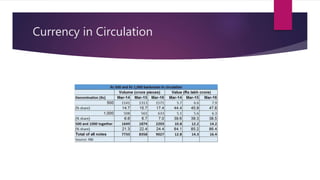
 These notes form 86% of all currency notes in circulation
 Limited use of Rs.500/-Notes permitted in stages
Declared Purpose of demonetization
 to identify and take control of “stashed cash” leading to enhancement in
available deposits with the Banking system in India
 to identify tax evaders and avoiders
 enhancing the reach of the banking system per force
 Digitizing banking spread and network
Notified Process
 New Currency Rationing
 Deposit the “demonetized” currency notes in the Bank
 Prove the source or face the Music
 “Music” primarily includes 60-200% Penalty plus Tax plus untold harassment by the
officials of the Income Tax Department
 Base assumption – any Indian citizen who has more than Rs.250,000 in Cash (USD
3650/-) and deposits it with his Bank will receive a Court and Tax Notice demanding to
prove the source of this “savings” or “income” and if it is found (subjectively)
“disproportionate” to his filed tax returns, he or she will have to face the “Music”
 Farmers (agricultural land owners) remain exempted from tax
Direct Impact of the Notified Process
 Rush at Banks to exchange / deposit old notes held in small numbers by millions of
students, smaller employees, pensioners, senior citizens and farmers
 “Stashed Cash holders” dispose of old currency in the following manner –
a) At Par
i. Depositing in the Bank – using open books of accounts
ii. Over payments to employees (including Tax liabilities)
b) At a discount
i. Buying Gold in Cash
ii. Buying Foreign Currency in the grey market
iii. Booking Forward Deliveries for New Currency
 Discounts Range from 18% to 55% depending upon Asset, Volume, Pressing Need and Availability
Indirect Impact of the Notified Process
 Continued Parallel economy (operations) in Rs.500/- Notes and High
Denomination Private IoU (I Owe You) Notes by Trusting groups of Traders,
Businessmen, Industrialists, Workers etc. Central Bank IoUs i.e., Currency Notes
have less acceptability now than private IoUs and Hundis.
 Loss of employment
 Industrial Casual Labour
 Agricultural Labour
 Blue Collared Contracted labour which was used to Cash Payments and Collections
Bonanza Options
Collection of Rupee Notes
Buying Rs.500/-Notes at a Discount and on Credit
(Going Discount – 18% to 55%)
Delivery tenor of new Notes is being promised in this Market at between 4-6 months)
Utilization
 Exchanging the Notes at Par from RBI / Banks through Agrarian / Steel economy
 Using the same notes to pay off purchase of farm produce
 Keep holding on until the signage to exchange
Assumptions
 If people have already sold in the market at a price (discount here), there are also
buyers at the given price
 Existence of a buyer means that there is existing a final “Point of Utilization” which
is more profitable to B
 Existence of a final “PoU” implies that there are ways of disposal other than at a
discount
 Which implies that there is an information mis-match between the common
masses and the buyer B
Currency in Circulation
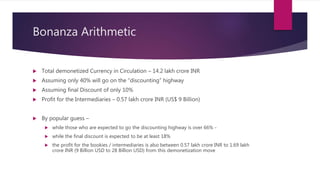
Bonanza Arithmetic
 Total demonetized Currency in Circulation – 14.2 lakh crore INR
 Assuming only 40% will go on the “discounting” highway
 Assuming final Discount of only 10%
 Profit for the Intermediaries – 0.57 lakh crore INR (US$ 9 Billion)
 By popular guess –
 while those who are expected to go the discounting highway is over 66% -
 while the final discount is expected to be at least 18%
 the profit for the bookies / intermediaries is also between 0.57 lakh crore INR to 1.69 lakh
crore INR (9 Billion USD to 28 Billion USD) from this demonetization move
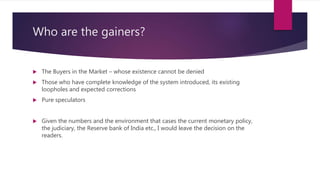
Who are the gainers?
 The Buyers in the Market – whose existence cannot be denied
 Those who have complete knowledge of the system introduced, its existing
loopholes and expected corrections
 Pure speculators
 Given the numbers and the environment that cases the current monetary policy,
the judiciary, the Reserve bank of India etc., I would leave the decision on the
readers.
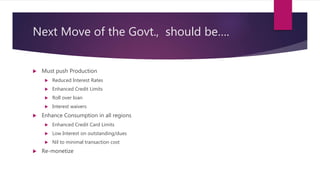
Next Move of the Govt., should be….
 Must push Production
 Reduced Interest Rates
 Enhanced Credit Limits
 Roll over loan
 Interest waivers
 Enhance Consumption in all regions
 Enhanced Credit Card Limits
 Low Interest on outstanding/dues
 Nil to minimal transaction cost
 Re-monetize

Rupee Demonetization - Profit from Irrationality

  • 1.
    INR Bonanza Model2016 THE SWEETER SIDE OF DEMONETIZATION
  • 2.
    Government Facts  IndianCurrency Notes – Rupee or INR as it is referred to has various denominations – Rs.10/-, Rs.20/-, Rs.50/-, Rs.100/-, Rs.500/- and Rs.1000/- in common circulation in all parts of India  Government of India by way of a notification declared all Rs.500/- and Rs.1000/- notes as “not a legal tender” beginning the midnight of 8th and 9th November, 2016  These notes form 86% of all currency notes in circulation  Limited use of Rs.500/-Notes permitted in stages
  • 3.
    Declared Purpose ofdemonetization  to identify and take control of “stashed cash” leading to enhancement in available deposits with the Banking system in India  to identify tax evaders and avoiders  enhancing the reach of the banking system per force  Digitizing banking spread and network
  • 4.
    Notified Process  NewCurrency Rationing  Deposit the “demonetized” currency notes in the Bank  Prove the source or face the Music  “Music” primarily includes 60-200% Penalty plus Tax plus untold harassment by the officials of the Income Tax Department  Base assumption – any Indian citizen who has more than Rs.250,000 in Cash (USD 3650/-) and deposits it with his Bank will receive a Court and Tax Notice demanding to prove the source of this “savings” or “income” and if it is found (subjectively) “disproportionate” to his filed tax returns, he or she will have to face the “Music”  Farmers (agricultural land owners) remain exempted from tax
  • 5.
    Direct Impact ofthe Notified Process  Rush at Banks to exchange / deposit old notes held in small numbers by millions of students, smaller employees, pensioners, senior citizens and farmers  “Stashed Cash holders” dispose of old currency in the following manner – a) At Par i. Depositing in the Bank – using open books of accounts ii. Over payments to employees (including Tax liabilities) b) At a discount i. Buying Gold in Cash ii. Buying Foreign Currency in the grey market iii. Booking Forward Deliveries for New Currency  Discounts Range from 18% to 55% depending upon Asset, Volume, Pressing Need and Availability
  • 6.
    Indirect Impact ofthe Notified Process  Continued Parallel economy (operations) in Rs.500/- Notes and High Denomination Private IoU (I Owe You) Notes by Trusting groups of Traders, Businessmen, Industrialists, Workers etc. Central Bank IoUs i.e., Currency Notes have less acceptability now than private IoUs and Hundis.  Loss of employment  Industrial Casual Labour  Agricultural Labour  Blue Collared Contracted labour which was used to Cash Payments and Collections
  • 7.
    Bonanza Options Collection ofRupee Notes Buying Rs.500/-Notes at a Discount and on Credit (Going Discount – 18% to 55%) Delivery tenor of new Notes is being promised in this Market at between 4-6 months) Utilization  Exchanging the Notes at Par from RBI / Banks through Agrarian / Steel economy  Using the same notes to pay off purchase of farm produce  Keep holding on until the signage to exchange
  • 8.
    Assumptions  If peoplehave already sold in the market at a price (discount here), there are also buyers at the given price  Existence of a buyer means that there is existing a final “Point of Utilization” which is more profitable to B  Existence of a final “PoU” implies that there are ways of disposal other than at a discount  Which implies that there is an information mis-match between the common masses and the buyer B
  • 9.
  • 10.
    Bonanza Arithmetic  Totaldemonetized Currency in Circulation – 14.2 lakh crore INR  Assuming only 40% will go on the “discounting” highway  Assuming final Discount of only 10%  Profit for the Intermediaries – 0.57 lakh crore INR (US$ 9 Billion)  By popular guess –  while those who are expected to go the discounting highway is over 66% -  while the final discount is expected to be at least 18%  the profit for the bookies / intermediaries is also between 0.57 lakh crore INR to 1.69 lakh crore INR (9 Billion USD to 28 Billion USD) from this demonetization move
  • 11.
    Who are thegainers?  The Buyers in the Market – whose existence cannot be denied  Those who have complete knowledge of the system introduced, its existing loopholes and expected corrections  Pure speculators  Given the numbers and the environment that cases the current monetary policy, the judiciary, the Reserve bank of India etc., I would leave the decision on the readers.
  • 12.
    Next Move ofthe Govt., should be….  Must push Production  Reduced Interest Rates  Enhanced Credit Limits  Roll over loan  Interest waivers  Enhance Consumption in all regions  Enhanced Credit Card Limits  Low Interest on outstanding/dues  Nil to minimal transaction cost  Re-monetize