Downloaded 17 times
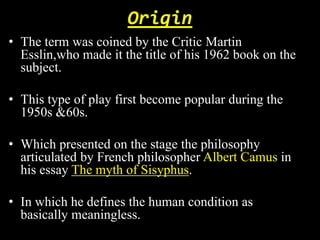
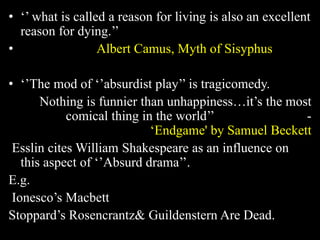
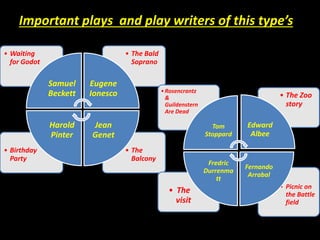
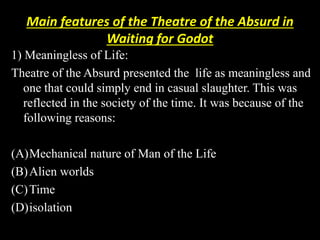
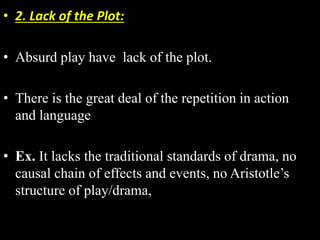
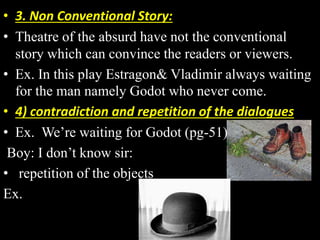
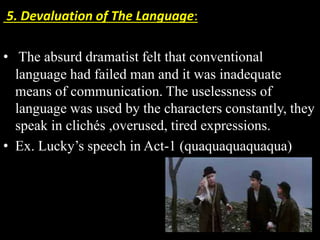
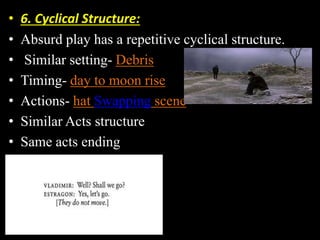
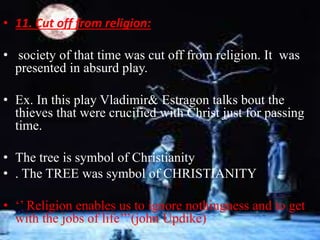
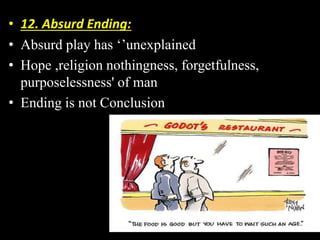



This document provides an overview of the Theatre of the Absurd genre and analyzes Samuel Beckett's play Waiting for Godot through this lens. Some key points: - The genre originated in the 1950s-60s and was coined by Martin Esslin to describe plays presenting an absurdist view of human existence as meaningless. - Absurdist plays like Waiting for Godot lack traditional plot structures and have nonsensical, repetitive dialogue and cyclical actions without resolution. They reflect the absurdity and alienation of post-WWII society. - Godot in particular examines themes of meaningless, nothingness, isolation, and the futility of human existence through Vladimir and Estragon's endless waiting for


![Share 'share 'absurdity_in_play_(waiting_for_godot).pptx'.pptx'[1]](https://cdn.slidesharecdn.com/ss_thumbnails/shareshareabsurdityinplaywaitingforgodot-181130092643-thumbnail.jpg?width=640&height=640&fit=bounds)


