“Water for Life”
Zomba District Water Points Project
Emmanuel International
Malawi, Africa
A Partnership Between:
 Rotary Club of Limbe
 Rotary Clubs of Toronto and District 7070
 Emmanuel International our Local
implementer
 Funding for the project was a combination of
Rotary Matching Grants, Funding from the
Canadian Government and Direct funding
from Emmanuel International
 Approximately 400,000 Dollars has been
spent so far.
Malawi, Africa
• Population 13 million
• Over 80% Rural
• Life expectancy – 36 years
• Ranked 164 out of 177
nations on the UN Human
Development Index (07/08)
• Zomba District Population -
747,000 (628,000 rural)
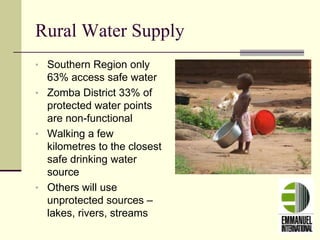
Rural Water Supply
• Southern Region only
63% access safe water
• Zomba District 33% of
protected water points
are non-functional
• Walking a few
kilometres to the closest
safe drinking water
source
• Others will use
unprotected sources –
lakes, rivers, streams
Zomba Water Points Project
Activities include:
• New boreholes & shallow
wells
• Rehabilitation of existing
non-functioning water
points
• Community Based
Management training
(CBM)
• Approx. 100,000
beneficiaries
• 150+ target villages
Boreholes
• Drilled by external
contractors
• Reach deep aquifers
(between 30m – 50m)
• Best suited for areas
that have a low water
table
• Fitted with an Afridev
pump (designed for use
in Africa)
Shallow Wells
• Hand dug wells – dug by
communities
• Normally up to 15m deep
• Best suited for areas that
have a high water table
• Cement and pump
supplied by EI; local
materials supplied by
community – encourages
community ownership
• Capped at the end of dry
season
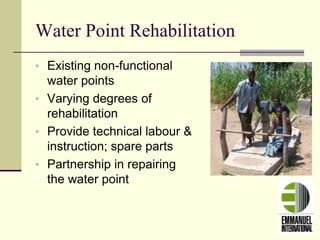
Water Point Rehabilitation
• Existing non-functional
water points
• Varying degrees of
rehabilitation
• Provide technical labour &
instruction; spare parts
• Partnership in repairing
the water point
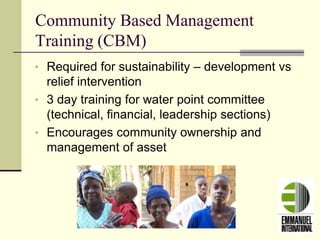
Community Based Management
Training (CBM)
• Required for sustainability – development vs
relief intervention
• 3 day training for water point committee
(technical, financial, leadership sections)
• Encourages community ownership and
management of asset
Changed Lives….
• Reduction of water
borne related illness
• Reduction in the time
and energy required
for water collection
(especially for women
and girls)
• More time to pursue
other activities –
education, income
generation, developm
ent, etc.
Improved Quality of Life…
Healthier and more productive communities.
What has been done so far
 90 Boreholes Rehabiltated
 51 New Shallow wells dug
 10 New Boreholes Drilled
 151 communities trained in Maintenance and
sanitation
 105,000 people now enjoy clean water in
their own communities
“Sweat Equity”
 In addition to funding of the project the
International Rotary Clubs have organized
two visiting teams of Rotarians who came and
participated in both the Water Project as well
as rehabilitating some class rooms at a local
primary school
 A total of 44 Sweating Rotarians on 2 teams
have participated in these projects and
donated an additional 60,000 dollars for work
on the school
The Sweat Equity Team
Thank-you!
• For partnering with us in transforming lives in
Malawi.
• Your support and interest are vital to making
a difference around the world.

Rotary presentation

  • 1.
    “Water for Life” ZombaDistrict Water Points Project Emmanuel International Malawi, Africa
  • 2.
    A Partnership Between: Rotary Club of Limbe  Rotary Clubs of Toronto and District 7070  Emmanuel International our Local implementer  Funding for the project was a combination of Rotary Matching Grants, Funding from the Canadian Government and Direct funding from Emmanuel International  Approximately 400,000 Dollars has been spent so far.
  • 3.
    Malawi, Africa • Population13 million • Over 80% Rural • Life expectancy – 36 years • Ranked 164 out of 177 nations on the UN Human Development Index (07/08) • Zomba District Population - 747,000 (628,000 rural)
  • 4.
    Rural Water Supply •Southern Region only 63% access safe water • Zomba District 33% of protected water points are non-functional • Walking a few kilometres to the closest safe drinking water source • Others will use unprotected sources – lakes, rivers, streams
  • 5.
    Zomba Water PointsProject Activities include: • New boreholes & shallow wells • Rehabilitation of existing non-functioning water points • Community Based Management training (CBM) • Approx. 100,000 beneficiaries • 150+ target villages
  • 6.
    Boreholes • Drilled byexternal contractors • Reach deep aquifers (between 30m – 50m) • Best suited for areas that have a low water table • Fitted with an Afridev pump (designed for use in Africa)
  • 7.
    Shallow Wells • Handdug wells – dug by communities • Normally up to 15m deep • Best suited for areas that have a high water table • Cement and pump supplied by EI; local materials supplied by community – encourages community ownership • Capped at the end of dry season
  • 8.
    Water Point Rehabilitation •Existing non-functional water points • Varying degrees of rehabilitation • Provide technical labour & instruction; spare parts • Partnership in repairing the water point
  • 9.
    Community Based Management Training(CBM) • Required for sustainability – development vs relief intervention • 3 day training for water point committee (technical, financial, leadership sections) • Encourages community ownership and management of asset
  • 10.
    Changed Lives…. • Reductionof water borne related illness • Reduction in the time and energy required for water collection (especially for women and girls) • More time to pursue other activities – education, income generation, developm ent, etc.
  • 11.
    Improved Quality ofLife… Healthier and more productive communities.
  • 12.
    What has beendone so far  90 Boreholes Rehabiltated  51 New Shallow wells dug  10 New Boreholes Drilled  151 communities trained in Maintenance and sanitation  105,000 people now enjoy clean water in their own communities
  • 13.
    “Sweat Equity”  Inaddition to funding of the project the International Rotary Clubs have organized two visiting teams of Rotarians who came and participated in both the Water Project as well as rehabilitating some class rooms at a local primary school  A total of 44 Sweating Rotarians on 2 teams have participated in these projects and donated an additional 60,000 dollars for work on the school
  • 14.
  • 15.
    Thank-you! • For partneringwith us in transforming lives in Malawi. • Your support and interest are vital to making a difference around the world.