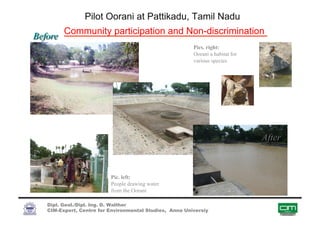
This document discusses good practices in rural drinking water programs in India that promote human rights principles of non-discrimination, community participation, accountability, and sustainability. It provides examples of initiatives that have achieved equal access to safe drinking water for all, including marginalized groups. Community-led projects in Andhra Pradesh, Karnataka, and elsewhere have improved water supply, quality, and management through people's participation in infrastructure development, operation and maintenance, and financial contributions according to ability to pay. Accountability is strengthened by complaint redressal systems and independent citizens' surveys of services.