Download free for 30 days
Sign in
Upload
Language (EN)
Support
Business
Mobile
Social Media
Marketing
Technology
Art & Photos
Career
Design
Education
Presentations & Public Speaking
Government & Nonprofit
Healthcare
Internet
Law
Leadership & Management
Automotive
Engineering
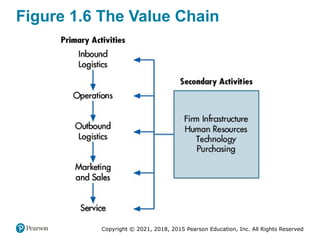
Software
Recruiting & HR
Retail
Sales
Services
Science
Small Business & Entrepreneurship
Food
Environment
Economy & Finance
Data & Analytics
Investor Relations
Sports
Spiritual
News & Politics
Travel
Self Improvement
Real Estate
Entertainment & Humor
Health & Medicine
Devices & Hardware
Lifestyle
Change Language
Language
English
Español
Português
Français
Deutsche
Cancel
Save
Submit search
EN
Uploaded by
AnangSubardjo2
PPTX, PDF
15 views
Romney Accounting Information System Ed 15
Romney Accounting Information System Ed 15
Business
◦
Read more
0
Save
Share
Embed
Embed presentation
Download
Download to read offline
1
/ 26
2
/ 26
3
/ 26
4
/ 26
5
/ 26
6
/ 26
7
/ 26
8
/ 26
9
/ 26
10
/ 26
11
/ 26
12
/ 26
13
/ 26
14
/ 26
15
/ 26
16
/ 26
17
/ 26
18
/ 26
19
/ 26
20
/ 26
21
/ 26
22
/ 26
23
/ 26
24
/ 26
25
/ 26
26
/ 26
More Related Content
PPTX
Romney accounting information system ch 01
by
YoseAtTheKahyangan
PPTX
Accounting Information System Romney_15e_accessible_fullppt_01.pptx
by
AleaHuero1
PPTX
Romney_15e_accessible_fullppt_01.pptx
by
adilkazuto
PDF
Romney_15e_accessible_fullppt_01_accessible.pdf
by
anhhoang31231025466
PPTX
romney_ais14_stppt_01.pptx_SIA week 1_upload
by
rarasavitri843
PPTX
ppt romney ais keren banget pokoknya keren deh
by
aryandanil
PPTX
LECTURE ONE(1) for accounting information
by
ShaibuAlhassan2
PPTX
Chapter 1
by
Dr. Muath Asmar
Romney accounting information system ch 01
by
YoseAtTheKahyangan
Accounting Information System Romney_15e_accessible_fullppt_01.pptx
by
AleaHuero1
Romney_15e_accessible_fullppt_01.pptx
by
adilkazuto
Romney_15e_accessible_fullppt_01_accessible.pdf
by
anhhoang31231025466
romney_ais14_stppt_01.pptx_SIA week 1_upload
by
rarasavitri843
ppt romney ais keren banget pokoknya keren deh
by
aryandanil
LECTURE ONE(1) for accounting information
by
ShaibuAlhassan2
Chapter 1
by
Dr. Muath Asmar
Similar to Romney Accounting Information System Ed 15
PDF
Accounting Information Systems 13Th Chapter 1
by
Don Dooley
PPTX
unit-1 ppt.pptx for management for MBA students for information
by
khyatishah223526
PDF
Ais section ch1
by
Zakaria Hasaneen
PPT
Accpounting for Information Systems Fraud Error
by
meize1
PPT
Ppt 01 ge
by
habtamu hailemariam
PPTX
AIS Chapter 01 Overview Accounting Information System
by
ArisSuryaPutra1
PDF
(eBook PDF) AYB221 Acc Systems and Tech CB
by
pepciujanega
PPT
CH 01 AIS-part 1.ppt
by
ssuser81be21
PDF
(eBook PDF) AYB221 Acc Systems and Tech CB
by
ojnuvtnb034
PDF
(eBook PDF) AYB221 Acc Systems and Tech CB
by
talajachot
PDF
(eBook PDF) AYB221 Acc Systems and Tech CB
by
elecromonii
PPTX
laudonmis17pptch01 Introduction to MIS.pptx
by
IgoFebrianto1
PDF
RS_AIS_ch1.pdf - Mengenal SIA - Introduction to AIS
by
spr4yit
PDF
Solution Manual for Accounting Information Systems 11th Edition by Bodnar
by
nguemrochow
PPTX
Essentials of MIS Chapter 1 Lauden and Lauden
by
AliDashti35
PPTX
Essentials of MIS Chapter 2 Lauden and Lauden
by
AliDashti35
PPT
Intro to Information Systems
by
tclanton4
PDF
AIS 15th edition Marshall B. Romney, 2022.pdf
by
ErlianaBanjarnahor1
PPTX
Introduction to Information Systems and People
by
eXtaS15
PPTX
FY bms ch1.pptx INFORMATION TECHNOLOGY IN BUSINESS MANAGEMENT
by
pushkarpssingh
Accounting Information Systems 13Th Chapter 1
by
Don Dooley
unit-1 ppt.pptx for management for MBA students for information
by
khyatishah223526
Ais section ch1
by
Zakaria Hasaneen
Accpounting for Information Systems Fraud Error
by
meize1
Ppt 01 ge
by
habtamu hailemariam
AIS Chapter 01 Overview Accounting Information System
by
ArisSuryaPutra1
(eBook PDF) AYB221 Acc Systems and Tech CB
by
pepciujanega
CH 01 AIS-part 1.ppt
by
ssuser81be21
(eBook PDF) AYB221 Acc Systems and Tech CB
by
ojnuvtnb034
(eBook PDF) AYB221 Acc Systems and Tech CB
by
talajachot
(eBook PDF) AYB221 Acc Systems and Tech CB
by
elecromonii
laudonmis17pptch01 Introduction to MIS.pptx
by
IgoFebrianto1
RS_AIS_ch1.pdf - Mengenal SIA - Introduction to AIS
by
spr4yit
Solution Manual for Accounting Information Systems 11th Edition by Bodnar
by
nguemrochow
Essentials of MIS Chapter 1 Lauden and Lauden
by
AliDashti35
Essentials of MIS Chapter 2 Lauden and Lauden
by
AliDashti35
Intro to Information Systems
by
tclanton4
AIS 15th edition Marshall B. Romney, 2022.pdf
by
ErlianaBanjarnahor1
Introduction to Information Systems and People
by
eXtaS15
FY bms ch1.pptx INFORMATION TECHNOLOGY IN BUSINESS MANAGEMENT
by
pushkarpssingh
Recently uploaded
DOCX
_18 Buying USA LinkedIn Accounts Can Boost Your Social.docx
by
timofeyzhuravlev1
DOCX
_Buy Old Gmail Accounts with Real Age and Trust with 2fa
by
pvasmmpath
PDF
Artificial Intelligence and the Great Divergence, a report by the White House
by
Chris Skinner
DOCX
Why Should I Buy Old Gmail Accounts_losangeless _______________.docx
by
joshuabellc7
DOCX
How to Buy Facebook Verified Accounts_ A Guide.docx
by
Digital Marketing in the USA
DOCX
Top 10 Sites to Buy Aged Snapchat Accounts in 2026.docx
by
BuyGmailAccounts10
PPTX
Thermal Energy International - TMG - Q2 2026 Earnings Call
by
Marketing847413
PDF
Raman Bhaumik - A Licensed Pharmacist In Multiple States
by
Raman Bhaumik
DOCX
Top 7 Site To Buy Verified OnlyFans Creator Accounts In 2026.docx
by
rcx255gljjv5jo2oh3tv
DOCX
How to Buy Apple ID Accounts in 2026.docx
by
Digital Marketing in the USA
PDF
Where to Buy Gmail Accounts Online: A 2026 Guide
by
usaseoshops
PDF
How to Buying Old Gmail Accounts That Are Aged and Low-Cost_.pdf
by
https://propvaservice.com/product/buy-old-gmail-accounts/
PDF
Dr. Michael T. Conner - Serves As CEO
by
Dr. Michael T. Conner
PPTX
Explore Hubspot’s Customer Agent for B2B
by
Boundify
DOCX
Buy Verified PayPal Accounts for Secure Online Use docx
by
mugdhobiswas17
PDF
Startup 8 - Student's Book - ENGLISH - Advanced 2
by
englishcloudresource
DOCX
Buy Old Gmail Account _A Step by Step Guide Best 5 Site Usa.docx
by
pvatopone77
PDF
Using-pension-savings-to-support-home-ownership.pdf
by
Henry Tapper
PDF
Kirill Klip GEM Royalty TNR Gold Copper Presentation
by
Kirill Klip
DOCX
Buy Verified PayPal Account Online_ A Comprehensive ....docx
by
Business
_18 Buying USA LinkedIn Accounts Can Boost Your Social.docx
by
timofeyzhuravlev1
_Buy Old Gmail Accounts with Real Age and Trust with 2fa
by
pvasmmpath
Artificial Intelligence and the Great Divergence, a report by the White House
by
Chris Skinner
Why Should I Buy Old Gmail Accounts_losangeless _______________.docx
by
joshuabellc7
How to Buy Facebook Verified Accounts_ A Guide.docx
by
Digital Marketing in the USA
Top 10 Sites to Buy Aged Snapchat Accounts in 2026.docx
by
BuyGmailAccounts10
Thermal Energy International - TMG - Q2 2026 Earnings Call
by
Marketing847413
Raman Bhaumik - A Licensed Pharmacist In Multiple States
by
Raman Bhaumik
Top 7 Site To Buy Verified OnlyFans Creator Accounts In 2026.docx
by
rcx255gljjv5jo2oh3tv
How to Buy Apple ID Accounts in 2026.docx
by
Digital Marketing in the USA
Where to Buy Gmail Accounts Online: A 2026 Guide
by
usaseoshops
How to Buying Old Gmail Accounts That Are Aged and Low-Cost_.pdf
by
https://propvaservice.com/product/buy-old-gmail-accounts/
Dr. Michael T. Conner - Serves As CEO
by
Dr. Michael T. Conner
Explore Hubspot’s Customer Agent for B2B
by
Boundify
Buy Verified PayPal Accounts for Secure Online Use docx
by
mugdhobiswas17
Startup 8 - Student's Book - ENGLISH - Advanced 2
by
englishcloudresource
Buy Old Gmail Account _A Step by Step Guide Best 5 Site Usa.docx
by
pvatopone77
Using-pension-savings-to-support-home-ownership.pdf
by
Henry Tapper
Kirill Klip GEM Royalty TNR Gold Copper Presentation
by
Kirill Klip
Buy Verified PayPal Account Online_ A Comprehensive ....docx
by
Business
Romney Accounting Information System Ed 15
1.
Accounting Information Systems Fifteenth
Edition Chapter 1 Accounting Information Systems: An Overview Copyright © 2021, 2018, 2015 Pearson Education, Inc. All Rights Reserved
2.
Copyright © 2021,
2018, 2015 Pearson Education, Inc. All Rights Reserved Learning Objectives • Distinguish between data and information: – Discuss the characteristics of useful information. – Explain how to determine the value of information. • Explain the decisions an organization makes: – The information needed to make them. – The major business processes present in most companies. • Explain how an AI S adds value to an organization: – How it affects and is affected by corporate strategy. – The role of AI S in a value chain.
3.
Copyright © 2021,
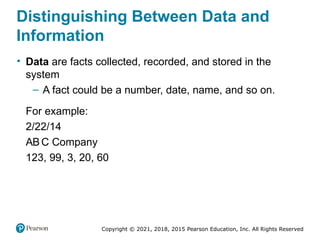
2018, 2015 Pearson Education, Inc. All Rights Reserved Distinguishing Between Data and Information • Data are facts collected, recorded, and stored in the system – A fact could be a number, date, name, and so on. For example: 2/22/14 AB C Company 123, 99, 3, 20, 60
4.
Copyright © 2021,
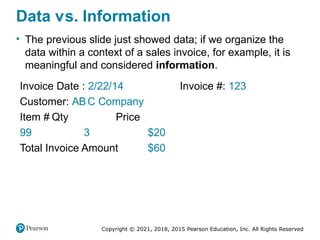
2018, 2015 Pearson Education, Inc. All Rights Reserved Data versus. Information • The previous slide just showed data; if we organize the data within a context of a sales invoice, for example, it is meaningful and considered information. Invoice Date : 2/22/14 Invoice #: 123 Customer: ABC Company Item # Qty Price 99 3 $20 Total Invoice Amount $60
5.
Copyright © 2021,
2018, 2015 Pearson Education, Inc. All Rights Reserved Decision Quality • Information helps us make better decisions. • Too much information causing information overload can reduce decision quality. • Information Technology (I T) is used to help decision makers more effectively filter and condense information.
6.
Copyright © 2021,
2018, 2015 Pearson Education, Inc. All Rights Reserved Value of Information • Information is valuable when the benefits exceed the costs of gathering, maintaining, and storing the data. Benefit (i.e., improved decision making) - Cost (i.e., time and resources used to get the information) = value of information
7.
Copyright © 2021,
2018, 2015 Pearson Education, Inc. All Rights Reserved What Makes Information Useful? (1 of 2) There are 14 general characteristics that make information useful: 1. Access restricted: limit access to authorized parties 2. Accurate: accurate, correct, and free of error 3. Available: available to users when needed 4. Reputable: perceived as true and credible 5. Complete: does not omit important aspects of events or activities 6. Concise: clear, succinct, brief, but comprehensive 7. Consistent: presented in the same format over time
8.
Copyright © 2021,
2018, 2015 Pearson Education, Inc. All Rights Reserved What Makes Information Useful? (2 of 2) 8. Current: up to the present data and time 9. Objective: unbiased, unprejudiced, and impartial 10.Relevant: reduces uncertainty and improves decision making 11.Timely: provided in time for decision maker to make decisions 12.Useable: easy to use for different task 13.Understandable: easily comprehended and interpreted 14.Verifiable: two independent people can produce the same information
9.
Copyright © 2021,
2018, 2015 Pearson Education, Inc. All Rights Reserved Machine-Readable Format • Data is most useful when it is in a machine-readable format that can be read and processed by a computer. • XBR L is an example of a machine-readable format that can improve many of the characteristics that make information useful.
10.
Copyright © 2021,
2018, 2015 Pearson Education, Inc. All Rights Reserved Information Needs and Business Processes • Business organizations use business processes to get things done. A business process is a set of related, coordinated, and structured activities and tasks performed by people, machines, or both to achieve a specific organizational goal. • Key decisions and information needed often come from these business processes.
11.
Copyright © 2021,
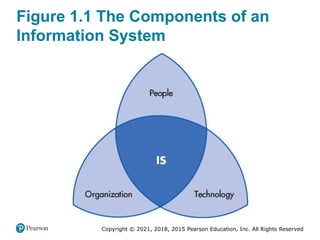
2018, 2015 Pearson Education, Inc. All Rights Reserved Figure 1.1 The Components of an Information System
12.
Copyright © 2021,
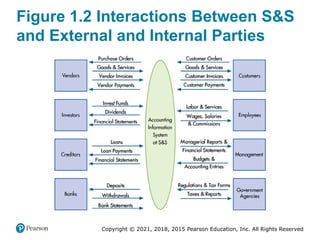
2018, 2015 Pearson Education, Inc. All Rights Reserved Transactional Information Between Internal and External Parties in an AIS • Business organizations conduct business transactions, which is an agreement between two entities to exchange goods, services, or any other event that can be measured in economic terms by an organization. • Transaction data is used to create financial statements and is called transaction processing. • The flow of information between these users for the various business activities involves a give-get exchange grouped into business processes or transaction cycles.
13.
Copyright © 2021,
2018, 2015 Pearson Education, Inc. All Rights Reserved Figure 1.2 Interactions Between S&S and External and Internal Parties
14.
Copyright © 2021,
2018, 2015 Pearson Education, Inc. All Rights Reserved Basic Business Processes • Transactions between the business organization and external parties fundamentally involve a “give–get” exchange. These basic business processes are: – Revenue cycle: give goods / give service—get cash – Expenditure cycle: get goods / get service—give cash – Production cycle: give labor and give raw materials— get finished goods – Payroll cycle: give cash—get labor – Financing cycle: give cash—get cash
15.
Copyright © 2021,
2018, 2015 Pearson Education, Inc. All Rights Reserved What Is an Accounting Information System (AI S)? • AI S is a system that collects, records, stores, and processes data to produce information for decision makers. • Consists of – People who use the system – Processes (procedures and instructions) – Technology (data, software, and information technology) – Controls to safeguard information • Thus, an AI S collects and stores data, transforms that data into information, and provides adequate controls.
16.
Copyright © 2021,
2018, 2015 Pearson Education, Inc. All Rights Reserved How Does an AI S Add Value to an Organization? • A well thought out AI S can add value by: – Improving the quality and reducing the costs of products or services – Improving efficiency – Sharing knowledge – Improving efficiency and effectiveness of its supply chain – Improving the internal control structure – Improving decision making
17.
Copyright © 2021,
2018, 2015 Pearson Education, Inc. All Rights Reserved Artificial Intelligence • Artificial intelligence (AI) is the use of computer systems to simulate human intelligence processes such as learning, reasoning, and self-improvement. • AI can be used in the following fields – Business – Education – Finance – Healthcare
18.
Copyright © 2021,
2018, 2015 Pearson Education, Inc. All Rights Reserved Data Analytics • Data analytics is the use of software and algorithms to find and solve problems and improve business performance. • Analytics can help improve decision making by – Identifying a problem/issue for management to resolve. – Collecting the data needed to solve the problem, analyze it, and make recommendations to management on how to resolve it. – Integrating actionable insights into the systems used to make decisions.
19.
Copyright © 2021,
2018, 2015 Pearson Education, Inc. All Rights Reserved Blockchain • Blockchain represents individual digital records, called blocks, linked together using cryptography in a single list, called a chain. • Blockchain has several significant advantages, including – accuracy, transparency, data consistency, trust, – no need for third parties, single set of books, reduced cost, – decentralization, efficiency, privacy, security, and provenance • There are also significant challenges to its adoption including political and regulatory issues.
20.
Copyright © 2021,
2018, 2015 Pearson Education, Inc. All Rights Reserved Cloud Computing, Virtualization, and the Internet of Things • Cloud computing is the use of a browser to remotely access software, data storage, hardware, and applications. • Virtualization is the running of multiple systems simultaneously on one physical computer. • Internet of Things (IoT) refers to the embedding of sensors in a multitude of devices (lights, heating and air conditioning, appliances, etc.) so that those devices can now connect to the Internet.
21.
Copyright © 2021,
2018, 2015 Pearson Education, Inc. All Rights Reserved AI S and Corporate Strategy • An AI S is influenced by an organization’s strategy. • A strategy is the overall goal the organization hopes to achieve (e.g., increase profitability). • Once an overall goal is determined, an organization can determine actions needed to reach their goal and identify the informational requirements (both financial and nonfinancial) necessary to measure how well they are doing in obtaining that goal.
22.
Copyright © 2021,
2018, 2015 Pearson Education, Inc. All Rights Reserved AI S in the Value Chain • The value chain links together the different activities within an organization that provide value to the customer. – Value chain activities are primary and support activities. Primary activities provide direct value to the customer. Support activities enable primary activities to be efficient and effective. • A supply chain is an extended system that includes the organization’s value chain as well as its suppliers, distributors, and customers.
23.
Copyright © 2021,
2018, 2015 Pearson Education, Inc. All Rights Reserved Figure 1.6 The Value Chain
24.
Copyright © 2021,
2018, 2015 Pearson Education, Inc. All Rights Reserved Key Terms (1 of 2) • System • Goal conflict • Goal congruence • Data • Information • Machine-readable • Information overload • Information technology (I T) • Value of information • Information system • Business process • Transaction • Transaction processing • Give-get exchange • Business processes or transaction cycles • Revenue cycle • Expenditure cycle • Production or conversion cycle • Human resource/payroll cycle • Financing cycle • General ledger and reporting system • Accounting information system (AI S) • Accounting • Artificial intelligence
25.
Copyright © 2021,
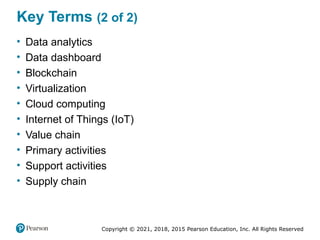
2018, 2015 Pearson Education, Inc. All Rights Reserved Key Terms (2 of 2) • Data analytics • Data dashboard • Blockchain • Virtualization • Cloud computing • Internet of Things (IoT) • Value chain • Primary activities • Support activities • Supply chain
26.
Copyright © 2021,
2018, 2015 Pearson Education, Inc. All Rights Reserved Copyright This work is protected by United States copyright laws and is provided solely for the use of instructors in teaching their courses and assessing student learning. Dissemination or sale of any part of this work (including on the World Wide Web) will destroy the integrity of the work and is not permitted. The work and materials from it should never be made available to students except by instructors using the accompanying text in their classes. All recipients of this work are expected to abide by these restrictions and to honor the intended pedagogical purposes and the needs of other instructors who rely on these materials.
Download