RE-CREATE | RE-USE | RE-ARRANGE 
U S E O F M AT E R I A L S A P P L I E D T O S E T U P A N D 
S C E N O G R A P H Y
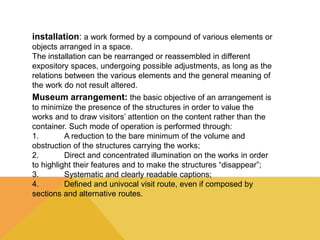
installation: a work formed by a compound of various elements or 
objects arranged in a space. 
The installation can be rearranged or reassembled in different 
expository spaces, undergoing possible adjustments, as long as the 
relations between the various elements and the general meaning of 
the work do not result altered. 
.Museum arrangement: the basic objective of an arrangement is 
to minimize the presence of the structures in order to value the 
works and to draw visitors’ attention on the content rather than the 
container. Such mode of operation is performed through: 
1. A reduction to the bare minimum of the volume and 
obstruction of the structures carrying the works; 
2. Direct and concentrated illumination on the works in order 
to highlight their features and to make the structures “disappear”; 
3. Systematic and clearly readable captions; 
4. Defined and univocal visit route, even if composed by 
sections and alternative routes.
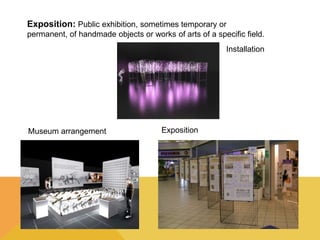
Exposition: Public exhibition, sometimes temporary or 
permanent, of handmade objects or works of arts of a specific field. 
Installation 
Museum arrangement Exposition
The experience of Ricrea Festival 
Ricrea Festival is an itinerant festival, which crossed the main provinces of 
Puglia and Lazio, proposing didactic and expositive spaces, moments of 
meeting and entertainment on the theme of reuse. In Apulia, it was held in 
the Urban Laboratories resulted from the project “Bollenti Spiriti”. The 
Festival is a project funded by the Prime Minister's Office – Dept. of Youth 
and National Civil Service, for the contest “Giovani protagonisti - Protagonisti 
per natura”. 
During the Festival : 
Exhibitions 
Meetings 
Contests 
Theatre 
performances 
Fatti d’Arte curated the selection 
of the works and the realisation of 
the museum arrangement that 
carried them
Planning 
We started considering the necessity to use recycled materials in order to 
assemble and realise the arrangement 
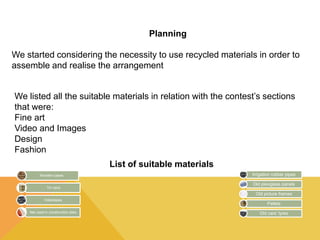
We listed all the suitable materials in relation with the contest’s sections 
that were: 
Fine art 
Video and Images 
Design 
Fashion 
List of suitable materials 
Wooden cases 
Tin cans 
Videotapes 
Net used in construction sites 
Irrigation rubber pipes 
Old plexiglass panels 
Old picture frames 
Pallets 
Old cars’ tyres
Forms to be used 
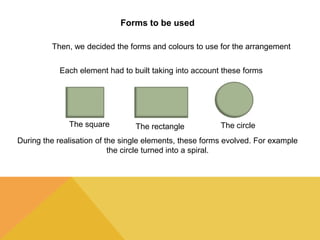
Then, we decided the forms and colours to use for the arrangement 
Each element had to built taking into account these forms 
The square The rectangle The circle 
During the realisation of the single elements, these forms evolved. For example 
the circle turned into a spiral.
The 
colour 
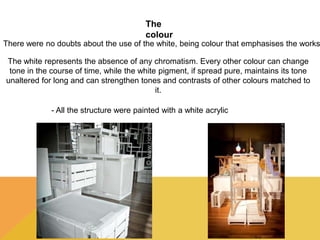
There were no doubts about the use of the white, being colour that emphasises the works 
The white represents the absence of any chromatism. Every other colour can change 
tone in the course of time, while the white pigment, if spread pure, maintains its tone 
unaltered for long and can strengthen tones and contrasts of other colours matched to 
it. 
- All the structure were painted with a white acrylic
Il layout 
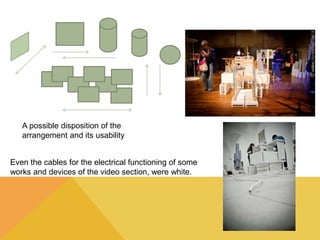
The structure disposition was planned to grant the visitors a better usability of the 
spaces and to be easy fitting to all the places where it was held. 
The arrangement did not have a precise order. The route had no start and no 
end. The purpose was to leave the choice to the visitors who, following the 
emotions suggested by each section, could decide to be guided by them for the 
whole visit. 
.
A possible disposition of the 
arrangement and its usability 
Even the cables for the electrical functioning of some 
works and devices of the video section, were white.
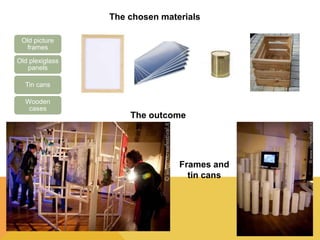
The chosen materials 
Old picture 
frames 
Old plexiglass 
panels 
Tin cans 
Wooden 
cases 
The outcome 
Frames and 
tin cans
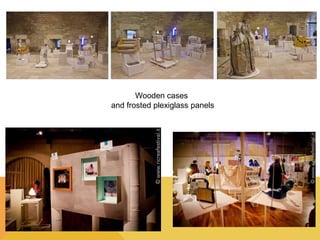
Wooden cases 
and frosted plexiglass panels
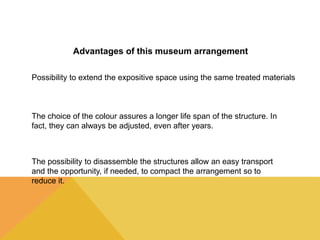
Advantages of this museum arrangement 
Possibility to extend the expositive space using the same treated materials 
The choice of the colour assures a longer life span of the structure. In 
fact, they can always be adjusted, even after years. 
The possibility to disassemble the structures allow an easy transport 
and the opportunity, if needed, to compact the arrangement so to 
reduce it.
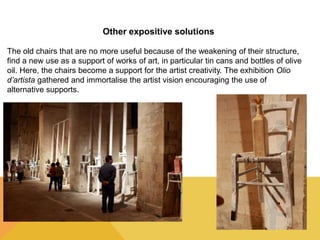
Other expositive solutions 
The old chairs that are no more useful because of the weakening of their structure, 
find a new use as a support of works of art, in particular tin cans and bottles of olive 
oil. Here, the chairs become a support for the artist creativity. The exhibition Olio 
d’artista gathered and immortalise the artist vision encouraging the use of 
alternative supports.
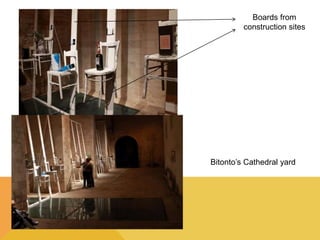
Boards from 
construction sites 
Bitonto’s Cathedral yard
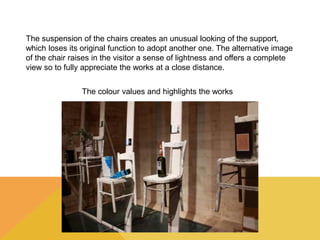
The suspension of the chairs creates an unusual looking of the support, 
which loses its original function to adopt another one. The alternative image 
of the chair raises in the visitor a sense of lightness and offers a complete 
view so to fully appreciate the works at a close distance. 
The colour values and highlights the works
Application of re-use to theatre scenography 
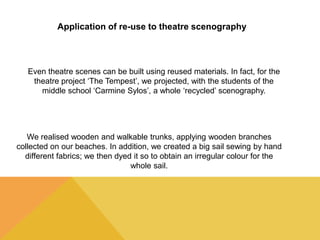
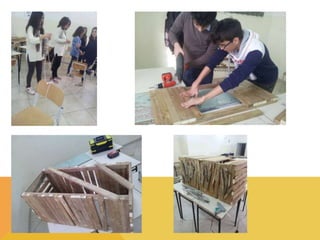
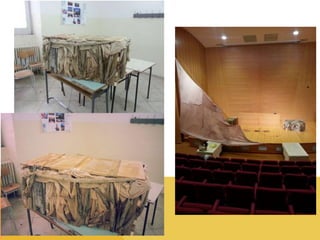
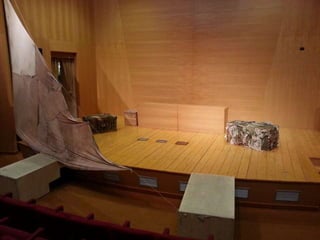
Even theatre scenes can be built using reused materials. In fact, for the 
theatre project ‘The Tempest’, we projected, with the students of the 
middle school ‘Carmine Sylos’, a whole ‘recycled’ scenography. 
We realised wooden and walkable trunks, applying wooden branches 
collected on our beaches. In addition, we created a big sail sewing by hand 
different fabrics; we then dyed it so to obtain an irregular colour for the 
whole sail.
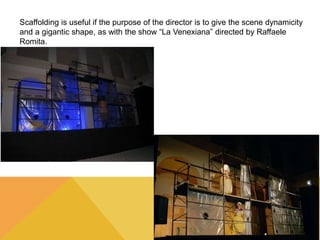
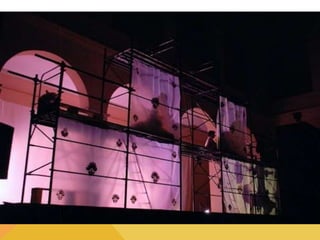
Scaffolding is useful if the purpose of the director is to give the scene dynamicity 
and a gigantic shape, as with the show “La Venexiana” directed by Raffaele 
Romita.
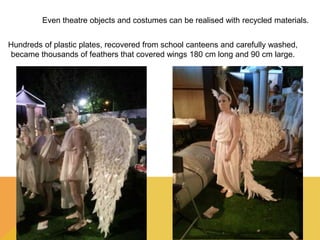
Even theatre objects and costumes can be realised with recycled materials. 
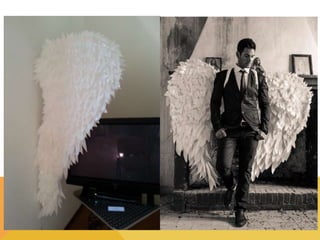
Hundreds of plastic plates, recovered from school canteens and carefully washed, 
became thousands of feathers that covered wings 180 cm long and 90 cm large.
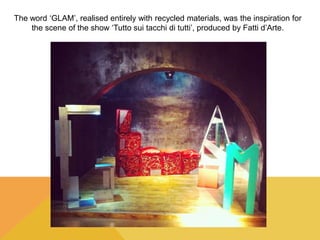
The word ‘GLAM’, realised entirely with recycled materials, was the inspiration for 
the scene of the show ‘Tutto sui tacchi di tutti’, produced by Fatti d’Arte.
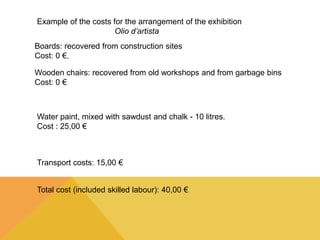
Example of the costs for the arrangement of the exhibition 
Olio d’artista 
Boards: recovered from construction sites 
Cost: 0 €. 
Wooden chairs: recovered from old workshops and from garbage bins 
Cost: 0 € 
Water paint, mixed with sawdust and chalk - 10 litres. 
Cost : 25,00 € 
Transport costs: 15,00 € 
Total cost (included skilled labour): 40,00 €
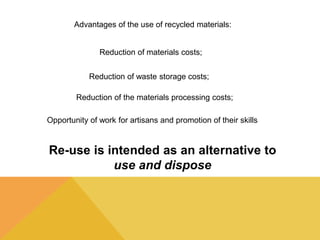
Advantages of the use of recycled materials: 
Reduction of materials costs; 
Reduction of waste storage costs; 
Reduction of the materials processing costs; 
Opportunity of work for artisans and promotion of their skills 
Re-use is intended as an alternative to 
use and dispose
Thanks for your attention

Ricreare – riusare riallestir einglese

  • 1.
    RE-CREATE | RE-USE| RE-ARRANGE U S E O F M AT E R I A L S A P P L I E D T O S E T U P A N D S C E N O G R A P H Y
  • 2.
    installation: a workformed by a compound of various elements or objects arranged in a space. The installation can be rearranged or reassembled in different expository spaces, undergoing possible adjustments, as long as the relations between the various elements and the general meaning of the work do not result altered. .Museum arrangement: the basic objective of an arrangement is to minimize the presence of the structures in order to value the works and to draw visitors’ attention on the content rather than the container. Such mode of operation is performed through: 1. A reduction to the bare minimum of the volume and obstruction of the structures carrying the works; 2. Direct and concentrated illumination on the works in order to highlight their features and to make the structures “disappear”; 3. Systematic and clearly readable captions; 4. Defined and univocal visit route, even if composed by sections and alternative routes.
  • 3.
    Exposition: Public exhibition,sometimes temporary or permanent, of handmade objects or works of arts of a specific field. Installation Museum arrangement Exposition
  • 4.
    The experience ofRicrea Festival Ricrea Festival is an itinerant festival, which crossed the main provinces of Puglia and Lazio, proposing didactic and expositive spaces, moments of meeting and entertainment on the theme of reuse. In Apulia, it was held in the Urban Laboratories resulted from the project “Bollenti Spiriti”. The Festival is a project funded by the Prime Minister's Office – Dept. of Youth and National Civil Service, for the contest “Giovani protagonisti - Protagonisti per natura”. During the Festival : Exhibitions Meetings Contests Theatre performances Fatti d’Arte curated the selection of the works and the realisation of the museum arrangement that carried them
  • 5.
    Planning We startedconsidering the necessity to use recycled materials in order to assemble and realise the arrangement We listed all the suitable materials in relation with the contest’s sections that were: Fine art Video and Images Design Fashion List of suitable materials Wooden cases Tin cans Videotapes Net used in construction sites Irrigation rubber pipes Old plexiglass panels Old picture frames Pallets Old cars’ tyres
  • 6.
    Forms to beused Then, we decided the forms and colours to use for the arrangement Each element had to built taking into account these forms The square The rectangle The circle During the realisation of the single elements, these forms evolved. For example the circle turned into a spiral.
  • 7.
    The colour Therewere no doubts about the use of the white, being colour that emphasises the works The white represents the absence of any chromatism. Every other colour can change tone in the course of time, while the white pigment, if spread pure, maintains its tone unaltered for long and can strengthen tones and contrasts of other colours matched to it. - All the structure were painted with a white acrylic
  • 8.
    Il layout Thestructure disposition was planned to grant the visitors a better usability of the spaces and to be easy fitting to all the places where it was held. The arrangement did not have a precise order. The route had no start and no end. The purpose was to leave the choice to the visitors who, following the emotions suggested by each section, could decide to be guided by them for the whole visit. .
  • 9.
    A possible dispositionof the arrangement and its usability Even the cables for the electrical functioning of some works and devices of the video section, were white.
  • 10.
    The chosen materials Old picture frames Old plexiglass panels Tin cans Wooden cases The outcome Frames and tin cans
  • 11.
    Wooden cases andfrosted plexiglass panels
  • 12.
    Advantages of thismuseum arrangement Possibility to extend the expositive space using the same treated materials The choice of the colour assures a longer life span of the structure. In fact, they can always be adjusted, even after years. The possibility to disassemble the structures allow an easy transport and the opportunity, if needed, to compact the arrangement so to reduce it.
  • 13.
    Other expositive solutions The old chairs that are no more useful because of the weakening of their structure, find a new use as a support of works of art, in particular tin cans and bottles of olive oil. Here, the chairs become a support for the artist creativity. The exhibition Olio d’artista gathered and immortalise the artist vision encouraging the use of alternative supports.
  • 14.
    Boards from constructionsites Bitonto’s Cathedral yard
  • 15.
    The suspension ofthe chairs creates an unusual looking of the support, which loses its original function to adopt another one. The alternative image of the chair raises in the visitor a sense of lightness and offers a complete view so to fully appreciate the works at a close distance. The colour values and highlights the works
  • 16.
    Application of re-useto theatre scenography Even theatre scenes can be built using reused materials. In fact, for the theatre project ‘The Tempest’, we projected, with the students of the middle school ‘Carmine Sylos’, a whole ‘recycled’ scenography. We realised wooden and walkable trunks, applying wooden branches collected on our beaches. In addition, we created a big sail sewing by hand different fabrics; we then dyed it so to obtain an irregular colour for the whole sail.
  • 20.
    Scaffolding is usefulif the purpose of the director is to give the scene dynamicity and a gigantic shape, as with the show “La Venexiana” directed by Raffaele Romita.
  • 22.
    Even theatre objectsand costumes can be realised with recycled materials. Hundreds of plastic plates, recovered from school canteens and carefully washed, became thousands of feathers that covered wings 180 cm long and 90 cm large.
  • 24.
    The word ‘GLAM’,realised entirely with recycled materials, was the inspiration for the scene of the show ‘Tutto sui tacchi di tutti’, produced by Fatti d’Arte.
  • 25.
    Example of thecosts for the arrangement of the exhibition Olio d’artista Boards: recovered from construction sites Cost: 0 €. Wooden chairs: recovered from old workshops and from garbage bins Cost: 0 € Water paint, mixed with sawdust and chalk - 10 litres. Cost : 25,00 € Transport costs: 15,00 € Total cost (included skilled labour): 40,00 €
  • 26.
    Advantages of theuse of recycled materials: Reduction of materials costs; Reduction of waste storage costs; Reduction of the materials processing costs; Opportunity of work for artisans and promotion of their skills Re-use is intended as an alternative to use and dispose
  • 27.
    Thanks for yourattention