Rhinoceros
Presentation presented by Ashutosh
Rani Lakshmi Bai Central Agriculture University Jhansi Uttar Pradesh ID No.F/135/22
Presentation submitted to Dr Swati mam and Dr Pawan Kumar sir
1
Introduction to Rhinoceros
Rhinoceros are large, herbivorous
mammals.
They are known for their distinctive horn(s)
on their nose.
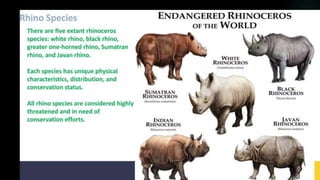
There are five species of rhinoceros: white,
black, Indian, Javan, and Sumatran.
2
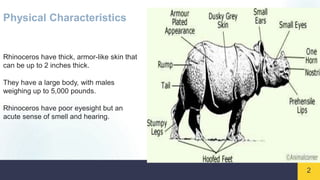
Physical Characteristics
Rhinoceros have thick, armor-like skin that
can be up to 2 inches thick.
They have a large body, with males
weighing up to 5,000 pounds.
Rhinoceros have poor eyesight but an
acute sense of smell and hearing.
3
Habitat
Rhinoceros are native to Africa and Asia.
They inhabit various habitats including
grasslands, savannas, and tropical forests.
Rhinoceros prefer areas with access to
water sources.
4
About
Rhinoceros are herbivores, mainly feeding
on grasses, leaves, and fruits.
They have a specialized lip structure that
allows them to graze efficiently.
Rhinoceros can consume up to 50
kilograms of food daily.
5
Reproduction
Female rhinoceros have a gestation period
of approximately 15-16 months.
They usually give birth to a single calf,
which they care for and protect.
Rhinoceros calves stay with their mothers
for around 2-4 years.
6
Threats to Rhinoceros
Poaching for their horns is the most
significant threat to rhinoceros.
Habitat loss due to human activities,
such as deforestation, also poses a
threat.
Climate change and natural
disasters can impact their habitats
and food sources.
7
Conservation Efforts
Conservation organizations work to protect
and conserve rhinoceros populations.
Anti-poaching patrols and enforcement of
wildlife laws help combat illegal hunting.
Community engagement and education
programs raise awareness and promote
conservation.
8
White Rhinoceros
The white rhinoceros is the largest species
of rhinoceros.
They have a square-shaped mouth for
grazing on grass.
White rhinoceros can weigh up to 6,000
pounds.
9
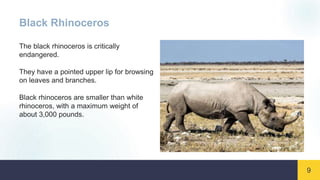
Black Rhinoceros
The black rhinoceros is critically
endangered.
They have a pointed upper lip for browsing
on leaves and branches.
Black rhinoceros are smaller than white
rhinoceros, with a maximum weight of
about 3,000 pounds.
10
Indian Rhinoceros
The Indian rhinoceros is primarily found in
northeastern India and Nepal.
They have a single horn and thick, armor-
like skin folds.
Indian rhinoceros are listed as vulnerable,
with a population of around 3,000
individuals.
11
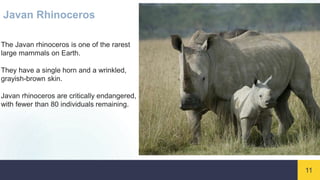
Javan Rhinoceros
The Javan rhinoceros is one of the rarest
large mammals on Earth.
They have a single horn and a wrinkled,
grayish-brown skin.
Javan rhinoceros are critically endangered,
with fewer than 80 individuals remaining.
12
Sumatran Rhinoceros
The Sumatran rhinoceros is the smallest
and most threatened rhinoceros species.
They have two horns and reddish-brown
hair covering their body.
Sumatran rhinoceros are critically
endangered, with less than 100 individuals
remaining.
13
Rhino Horn Myth
Rhino horn is falsely believed to have
medicinal properties in some cultures.
Despite no scientific evidence, it is used in
traditional medicine.
Educating people about the lack of
medicinal value is crucial in reducing
demand.
14
Role in Ecosystem
Rhinoceros play a vital role in maintaining
the balance of their ecosystems.
They help control vegetation growth
through grazing and browsing.
Their dung serves as a source of nutrients
for other organisms.
15
Unique Behaviors
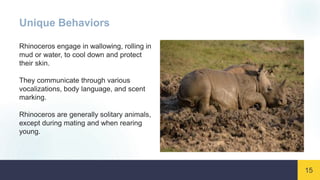
Rhinoceros engage in wallowing, rolling in
mud or water, to cool down and protect
their skin.
They communicate through various
vocalizations, body language, and scent
marking.
Rhinoceros are generally solitary animals,
except during mating and when rearing
young.
16
Conservation Success Stories
Successful conservation efforts have led to
an increase in some rhinoceros
populations.
The southern white rhinoceros has been
brought back from the brink of extinction.
Strict protection measures, captive
breeding, and habitat restoration have
contributed to these successes.
17
Ecotourism and Economic Benefits
Rhinoceros conservation can generate
revenue through ecotourism.
Visitors contribute to local economies,
creating jobs and supporting communities.
Sustainable tourism practices can help fund
conservation efforts.
18
International Collaboration
International cooperation is essential for
rhinoceros conservation.
Organizations like CITES (Convention on
International Trade in Endangered Species
of Wild Fauna and Flora) regulate trade
and protect rhinoceros.
Collaboration among governments,
conservation organizations, and local
communities is crucial for effective
conservation.
19
Future Challenges
The future of rhinoceros remains uncertain
due to ongoing threats.
Poaching networks and illegal wildlife trade
continue to pose challenges.
Climate change and habitat destruction
require ongoing adaptation and
conservation strategies.
Thank you

Rhinoceros.pptx

  • 1.
    Rhinoceros Presentation presented byAshutosh Rani Lakshmi Bai Central Agriculture University Jhansi Uttar Pradesh ID No.F/135/22 Presentation submitted to Dr Swati mam and Dr Pawan Kumar sir
  • 2.
    1 Introduction to Rhinoceros Rhinocerosare large, herbivorous mammals. They are known for their distinctive horn(s) on their nose. There are five species of rhinoceros: white, black, Indian, Javan, and Sumatran.
  • 3.
    2 Physical Characteristics Rhinoceros havethick, armor-like skin that can be up to 2 inches thick. They have a large body, with males weighing up to 5,000 pounds. Rhinoceros have poor eyesight but an acute sense of smell and hearing.
  • 4.
    3 Habitat Rhinoceros are nativeto Africa and Asia. They inhabit various habitats including grasslands, savannas, and tropical forests. Rhinoceros prefer areas with access to water sources.
  • 5.
    4 About Rhinoceros are herbivores,mainly feeding on grasses, leaves, and fruits. They have a specialized lip structure that allows them to graze efficiently. Rhinoceros can consume up to 50 kilograms of food daily.
  • 6.
    5 Reproduction Female rhinoceros havea gestation period of approximately 15-16 months. They usually give birth to a single calf, which they care for and protect. Rhinoceros calves stay with their mothers for around 2-4 years.
  • 7.
    6 Threats to Rhinoceros Poachingfor their horns is the most significant threat to rhinoceros. Habitat loss due to human activities, such as deforestation, also poses a threat. Climate change and natural disasters can impact their habitats and food sources.
  • 8.
    7 Conservation Efforts Conservation organizationswork to protect and conserve rhinoceros populations. Anti-poaching patrols and enforcement of wildlife laws help combat illegal hunting. Community engagement and education programs raise awareness and promote conservation.
  • 11.
    8 White Rhinoceros The whiterhinoceros is the largest species of rhinoceros. They have a square-shaped mouth for grazing on grass. White rhinoceros can weigh up to 6,000 pounds.
  • 12.
    9 Black Rhinoceros The blackrhinoceros is critically endangered. They have a pointed upper lip for browsing on leaves and branches. Black rhinoceros are smaller than white rhinoceros, with a maximum weight of about 3,000 pounds.
  • 13.
    10 Indian Rhinoceros The Indianrhinoceros is primarily found in northeastern India and Nepal. They have a single horn and thick, armor- like skin folds. Indian rhinoceros are listed as vulnerable, with a population of around 3,000 individuals.
  • 14.
    11 Javan Rhinoceros The Javanrhinoceros is one of the rarest large mammals on Earth. They have a single horn and a wrinkled, grayish-brown skin. Javan rhinoceros are critically endangered, with fewer than 80 individuals remaining.
  • 15.
    12 Sumatran Rhinoceros The Sumatranrhinoceros is the smallest and most threatened rhinoceros species. They have two horns and reddish-brown hair covering their body. Sumatran rhinoceros are critically endangered, with less than 100 individuals remaining.
  • 16.
    13 Rhino Horn Myth Rhinohorn is falsely believed to have medicinal properties in some cultures. Despite no scientific evidence, it is used in traditional medicine. Educating people about the lack of medicinal value is crucial in reducing demand.
  • 17.
    14 Role in Ecosystem Rhinocerosplay a vital role in maintaining the balance of their ecosystems. They help control vegetation growth through grazing and browsing. Their dung serves as a source of nutrients for other organisms.
  • 18.
    15 Unique Behaviors Rhinoceros engagein wallowing, rolling in mud or water, to cool down and protect their skin. They communicate through various vocalizations, body language, and scent marking. Rhinoceros are generally solitary animals, except during mating and when rearing young.
  • 19.
    16 Conservation Success Stories Successfulconservation efforts have led to an increase in some rhinoceros populations. The southern white rhinoceros has been brought back from the brink of extinction. Strict protection measures, captive breeding, and habitat restoration have contributed to these successes.
  • 20.
    17 Ecotourism and EconomicBenefits Rhinoceros conservation can generate revenue through ecotourism. Visitors contribute to local economies, creating jobs and supporting communities. Sustainable tourism practices can help fund conservation efforts.
  • 21.
    18 International Collaboration International cooperationis essential for rhinoceros conservation. Organizations like CITES (Convention on International Trade in Endangered Species of Wild Fauna and Flora) regulate trade and protect rhinoceros. Collaboration among governments, conservation organizations, and local communities is crucial for effective conservation.
  • 22.
    19 Future Challenges The futureof rhinoceros remains uncertain due to ongoing threats. Poaching networks and illegal wildlife trade continue to pose challenges. Climate change and habitat destruction require ongoing adaptation and conservation strategies.
  • 23.

Editor's Notes

  • #3 Image source: https://www.pinterest.com.au/pin/rhinoceroses-are-large-herbivorous-mammals-identified-by-their-characteristic-horned-snouts-the-word-rhinoceros--179088522661599982/
  • #4 Image source: https://fightforrhinos.com/the-african-rhinoceros-a-massive-mammal-with-thick-armor-like-skin/
  • #5 Image source: https://www.britannica.com/animal/black-rhinoceros
  • #6 Image source: https://animalstime.com/what-rhinos-eat/
  • #7 Image source: https://lynceans.org/all-posts/now-we-know-the-gestation-period-of-a-southern-white-rhino-is-493-days/
  • #8 Image source: https://www.myplanetblog.com/archives/1330
  • #9 Image source: https://morgantrimble.com/africa-geographic-blog-post-unite-against-poaching-1-year-of-helping-rhinos/
  • #12 Image source: https://www.shutterstock.com/image-photo/white-rhinoceros-squarelipped-largest-extant-species-1184114494
  • #13 Image source: http://endangeredwonders.org/black-rhinoceros/
  • #14 Image source: https://byjus.com/free-ias-prep/indian-rhinoceros/
  • #15 Image source: https://fightforrhinos.com/the-javan-rhinoceros-one-of-the-worlds-most-endangered-animals/
  • #16 Image source: https://www.pinterest.com/pin/476326098087657959/
  • #17 Image source: https://www.goodthingsguy.com/opinion/rhino-horn-myth-debunked-asia/
  • #18 Image source: https://journotalk.com/rhinoceros-play-an-important-role-in-their-ecosystems/
  • #19 Image source: https://www.youtube.com/watch?v=m8h8Op2n9Qo
  • #20 Image source: https://www.worldatlas.com/articles/10-biggest-conservation-success-stories-2019.html
  • #21 Image source: https://www.youtube.com/watch?v=D0l2IduJU6c
  • #22 Image source: https://www.nationalgeographic.org/newsroom/five-international-conservation-organizations-team-up-to-save-the-sumatran-rhino/
  • #23 Image source: https://earth-chronicles.com/science/the-remains-of-a-giant-rhinoceros-ancestor-found-in-china.html