Arranging Numbers
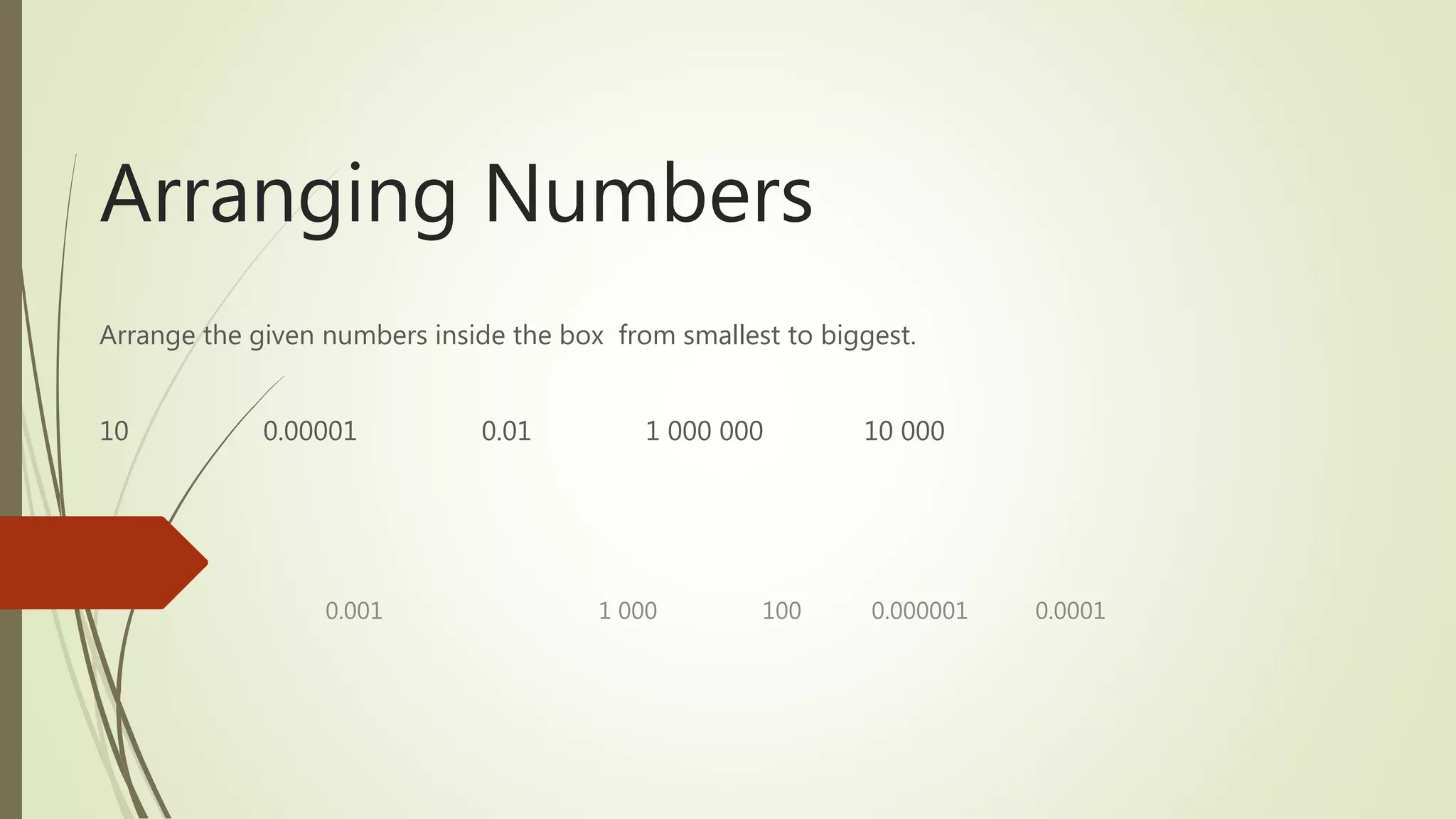
Arrange the given numbers inside the box from smallest to biggest.
10 0.00001 0.01 1 000 000 10 000
0.001 1 000 100 0.000001 0.0001
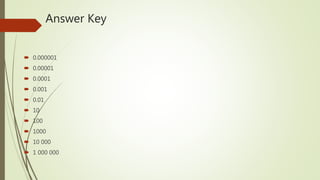
Answer Key
 0.000001
 0.00001
 0.0001
 0.001
 0.01
 10
 100
 1000
 10 000
 1 000 000
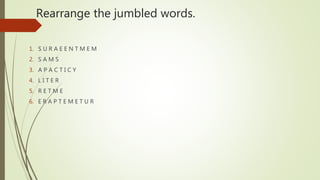
Rearrange the jumbled words.
1. S U R A E E N T M E M
2. S A M S
3. A P A C T I C Y
4. L I T E R
5. R E T M E
6. E R A P T E M E T U R
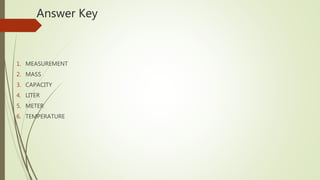
Answer Key
1. MEASUREMENT
2. MASS
3. CAPACITY
4. LITER
5. METER
6. TEMPERATURE
MEASUREMENT
Objectives
At the end of the lesson, the learners will be able to:
a. Describe Measurements;
b. Explain the different between English system and Metric system; and
c. Enumerate the basic types of measurement and its units.
• One of the earliest tools that human beings
invented was the unit of Measurement.
Measurement is a process of making an
inference out something putting a possible end
to its feature like length, weight or even
volume.
 Measurement is very important in our daily lives. We need to answer questions that begin
with how long, how far, how much and so on.
 All these questions require some kind of measurement before they can be answered.
 The unit of measures use depends on the quantity or item to be answered.
 Just like when you buy gasoline by liter, mangoes by kilograms and ice cream by gallon.
You get the distance between two buildings in meters and that between two cities or towns
in kilometers.
Measurements are classified into two;
1.Nonstandard
 Units of measurement like digit, hand, handsan, foot, cubit and pace were some body parts
used as tools by the ancient Greek and Roman civilization in masuring objects.
2. Standard
 These units are classified into two types;
 English system like inch, foot and yard.
 Metric system like meter, centimeter and kilometer.
 The metric system is the most common system of measurement used in the world today
because the computations are easier in this system. It is a system of weights and measures,
based on the meter for length and the kilograms for mass that was adopted in France in
1975.
and now used officially in almost all countries.
While English system are the units of measurement in England up to 1826, which evolved as a
combination of the Anglo-saxon and Roman system of units.
There are many basic types of measurements
namely;
 Length
 Weight/Mass
 Volume/Capacity
 Temperature
Length
 Meter is the basic unit of length
 The common metric unit for length are the following:
 kilometer (km)
 hm
 dam
 dm
 Centimeter (cm)
 Millimeter (mm)
Mass/Weight
 Mass refers to the amount of matter in an object without considering location,
whereas weight refers to the mass subjected to gravitational attraction.
 Gram (g) is the basic unit of weight.
 In our daily lives, it is weight that we measure.
 In the olden times, people use “salop” in buying rice.
 Nowadays, it is bought by “kilo” the popular name for kilogram (kg.)
 The weighing scale and the beam balance are some of the instruments used in
measuring weights.
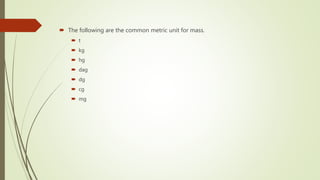
 The following are the common metric unit for mass.
 t
 kg
 hg
 dag
 dg
 cg
 mg
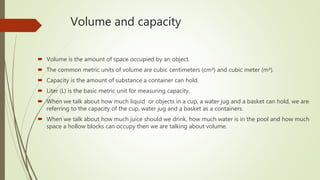
Volume and capacity
 Volume is the amount of space occupied by an object.
 The common metric units of volume are cubic centimeters (cm³) and cubic meter (m³).
 Capacity is the amount of substance a container can hold.
 Liter (L) is the basic metric unit for measuring capacity.
 When we talk about how much liquid or objects in a cup, a water jug and a basket can hold, we are
referring to the capacity of the cup, water jug and a basket as a containers.
 When we talk about how much juice should we drink, how much water is in the pool and how much
space a hollow blocks can occupy then we are talking about volume.
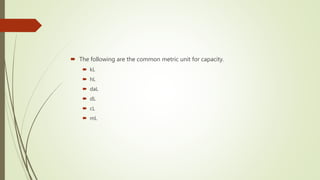
 The following are the common metric unit for capacity.
 kL
 hL
 daL
 dL
 cL
 mL
Temperature
 refers to the degree of hotness or coldness that can be measured using a
thermometer.
 the units used in measuring temperature are degree Celsius (°C), degree Fahrenheit
(°F) and Kelvin (K).
 the metric system uses °C and K.
 °F used in English system.
 Temperature measures in Kelvin are usually seen in scientific work, while degree
Celsius is used in our everyday activities.
Activity
 Each of you has cardboard and chalk.
 Questions to be seen at projector.
 Choose the letter of the correct answer.
 After the allotted time, each of you must raise your cardboard with correct answer.
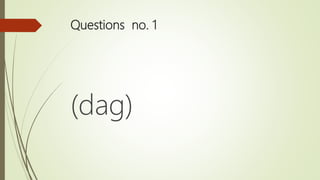
Questions no. 1
(dag)
Questions no. 1
(dag)
Questions no. 1
(dag)
Questions no. 1
(dag)
Questions no. 1
(dag)
Questions no. 1
(dag)
Questions no. 1
(dag)
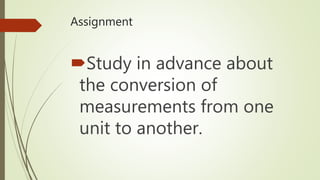
Assignment
Study in advance about
the conversion of
measurements from one
unit to another.

Revised COT1.pptx

  • 1.
    Arranging Numbers Arrange thegiven numbers inside the box from smallest to biggest. 10 0.00001 0.01 1 000 000 10 000 0.001 1 000 100 0.000001 0.0001
  • 2.
    Answer Key  0.000001 0.00001  0.0001  0.001  0.01  10  100  1000  10 000  1 000 000
  • 3.
    Rearrange the jumbledwords. 1. S U R A E E N T M E M 2. S A M S 3. A P A C T I C Y 4. L I T E R 5. R E T M E 6. E R A P T E M E T U R
  • 4.
    Answer Key 1. MEASUREMENT 2.MASS 3. CAPACITY 4. LITER 5. METER 6. TEMPERATURE
  • 5.
  • 6.
    Objectives At the endof the lesson, the learners will be able to: a. Describe Measurements; b. Explain the different between English system and Metric system; and c. Enumerate the basic types of measurement and its units.
  • 7.
    • One ofthe earliest tools that human beings invented was the unit of Measurement. Measurement is a process of making an inference out something putting a possible end to its feature like length, weight or even volume.
  • 8.
     Measurement isvery important in our daily lives. We need to answer questions that begin with how long, how far, how much and so on.  All these questions require some kind of measurement before they can be answered.  The unit of measures use depends on the quantity or item to be answered.  Just like when you buy gasoline by liter, mangoes by kilograms and ice cream by gallon. You get the distance between two buildings in meters and that between two cities or towns in kilometers. Measurements are classified into two; 1.Nonstandard  Units of measurement like digit, hand, handsan, foot, cubit and pace were some body parts used as tools by the ancient Greek and Roman civilization in masuring objects. 2. Standard  These units are classified into two types;  English system like inch, foot and yard.  Metric system like meter, centimeter and kilometer.
  • 9.
     The metricsystem is the most common system of measurement used in the world today because the computations are easier in this system. It is a system of weights and measures, based on the meter for length and the kilograms for mass that was adopted in France in 1975. and now used officially in almost all countries. While English system are the units of measurement in England up to 1826, which evolved as a combination of the Anglo-saxon and Roman system of units.
  • 10.
    There are manybasic types of measurements namely;  Length  Weight/Mass  Volume/Capacity  Temperature
  • 11.
    Length  Meter isthe basic unit of length  The common metric unit for length are the following:  kilometer (km)  hm  dam  dm  Centimeter (cm)  Millimeter (mm)
  • 12.
    Mass/Weight  Mass refersto the amount of matter in an object without considering location, whereas weight refers to the mass subjected to gravitational attraction.  Gram (g) is the basic unit of weight.  In our daily lives, it is weight that we measure.  In the olden times, people use “salop” in buying rice.  Nowadays, it is bought by “kilo” the popular name for kilogram (kg.)  The weighing scale and the beam balance are some of the instruments used in measuring weights.
  • 13.
     The followingare the common metric unit for mass.  t  kg  hg  dag  dg  cg  mg
  • 14.
    Volume and capacity Volume is the amount of space occupied by an object.  The common metric units of volume are cubic centimeters (cm³) and cubic meter (m³).  Capacity is the amount of substance a container can hold.  Liter (L) is the basic metric unit for measuring capacity.  When we talk about how much liquid or objects in a cup, a water jug and a basket can hold, we are referring to the capacity of the cup, water jug and a basket as a containers.  When we talk about how much juice should we drink, how much water is in the pool and how much space a hollow blocks can occupy then we are talking about volume.
  • 15.
     The followingare the common metric unit for capacity.  kL  hL  daL  dL  cL  mL
  • 16.
    Temperature  refers tothe degree of hotness or coldness that can be measured using a thermometer.  the units used in measuring temperature are degree Celsius (°C), degree Fahrenheit (°F) and Kelvin (K).  the metric system uses °C and K.  °F used in English system.  Temperature measures in Kelvin are usually seen in scientific work, while degree Celsius is used in our everyday activities.
  • 17.
    Activity  Each ofyou has cardboard and chalk.  Questions to be seen at projector.  Choose the letter of the correct answer.  After the allotted time, each of you must raise your cardboard with correct answer.
  • 18.
  • 19.
  • 20.
  • 21.
  • 22.
  • 23.
  • 24.
  • 25.
    Assignment Study in advanceabout the conversion of measurements from one unit to another.