Campus Public Safety Online
Reunification Planning:
The Next Step
• Assumptions
• Activation
• Three prong approach
2
Disclaimer/ Credit
3
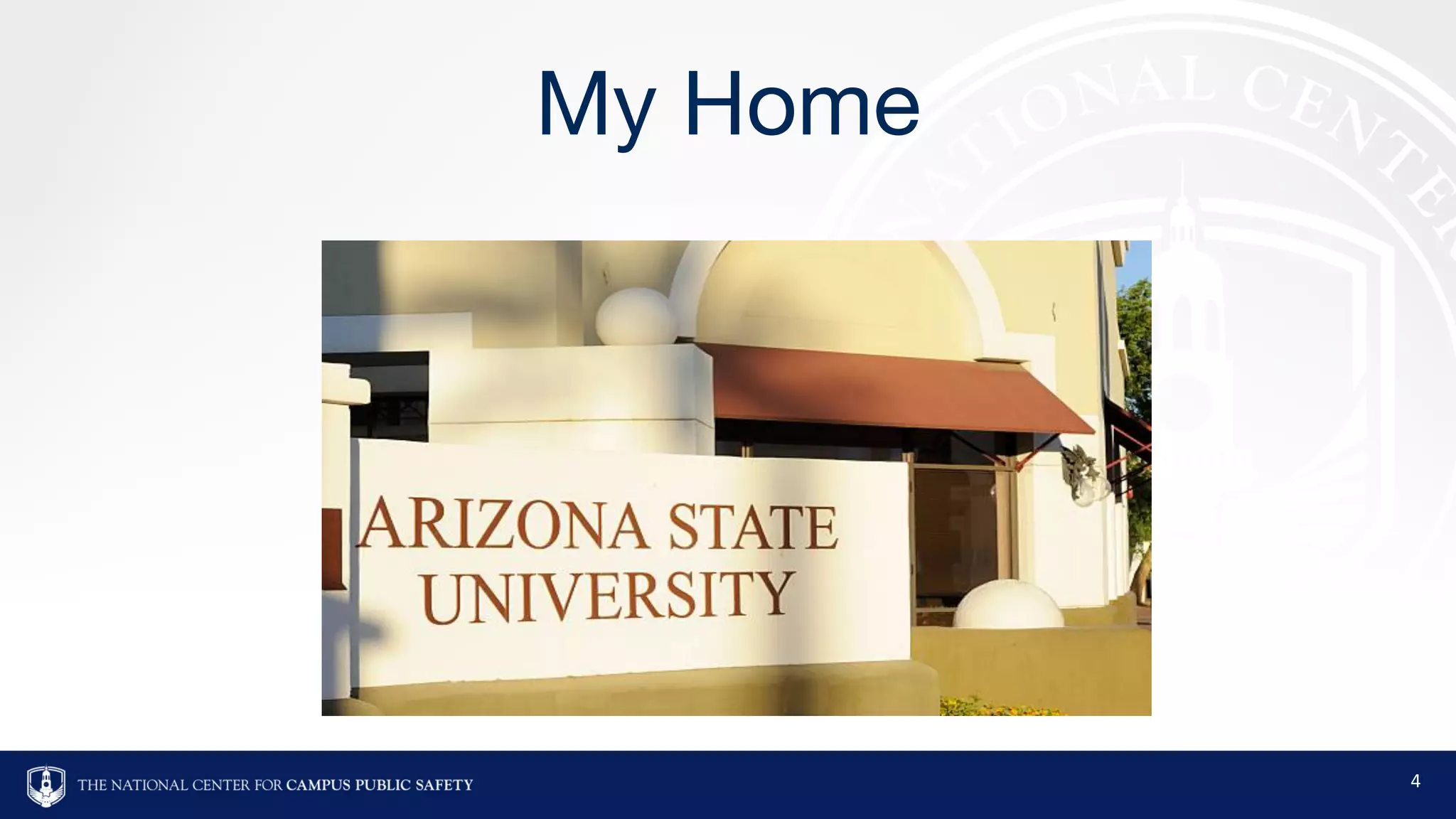
My Home
4
Assumptions
• Families will show up!
• Information gathering may collapse our infrastructure;
• Anticipate minimum of 8-10 per patient (hospital);
• They will be stressed, perhaps aggressive;
• Families will have high expectations;
• Your process may not be able to meet all of their needs;
• Ethnic & cultural traditions will be important in processing
information and grieving.
5
Assumptions Continued
• Victim identification may take days, weeks or months;
• Unsolicited volunteers show up during disasters;
• Pedophiles position themselves to have easy access to
vulnerable children;
• Responding to mass casualty or mass fatality
incidents can be overwhelming and traumatic
for staff;
• Rest, Nutrition, and support will be necessary;
• Staff Support falls under the Logistics sector (medical unit).
6
Activation, Purpose
• Accurate and timely information sharing with loved ones;
• A way to identify loved ones;
• Provide emotional support for families
and victims;
• Protect families from media and curiosity seekers;
• Provide a child care safe zone for unaccompanied minors;
• Provide opportunity for post-mortem investigation/ services.
7
Activation, Purpose continued
• Directs families to other hospitals when
appropriate, or once established,
to a family reunification centers.
• Addresses psycho/ social, spiritual, medical
and logistical needs to the best of the
hospitals ability.
8
Activation Trigger
• Will be different:
– Overwhelmed services;
– Political considerations.
• Other requirements:
– Declarations;
– Others…
9
Three Prong Approach
10
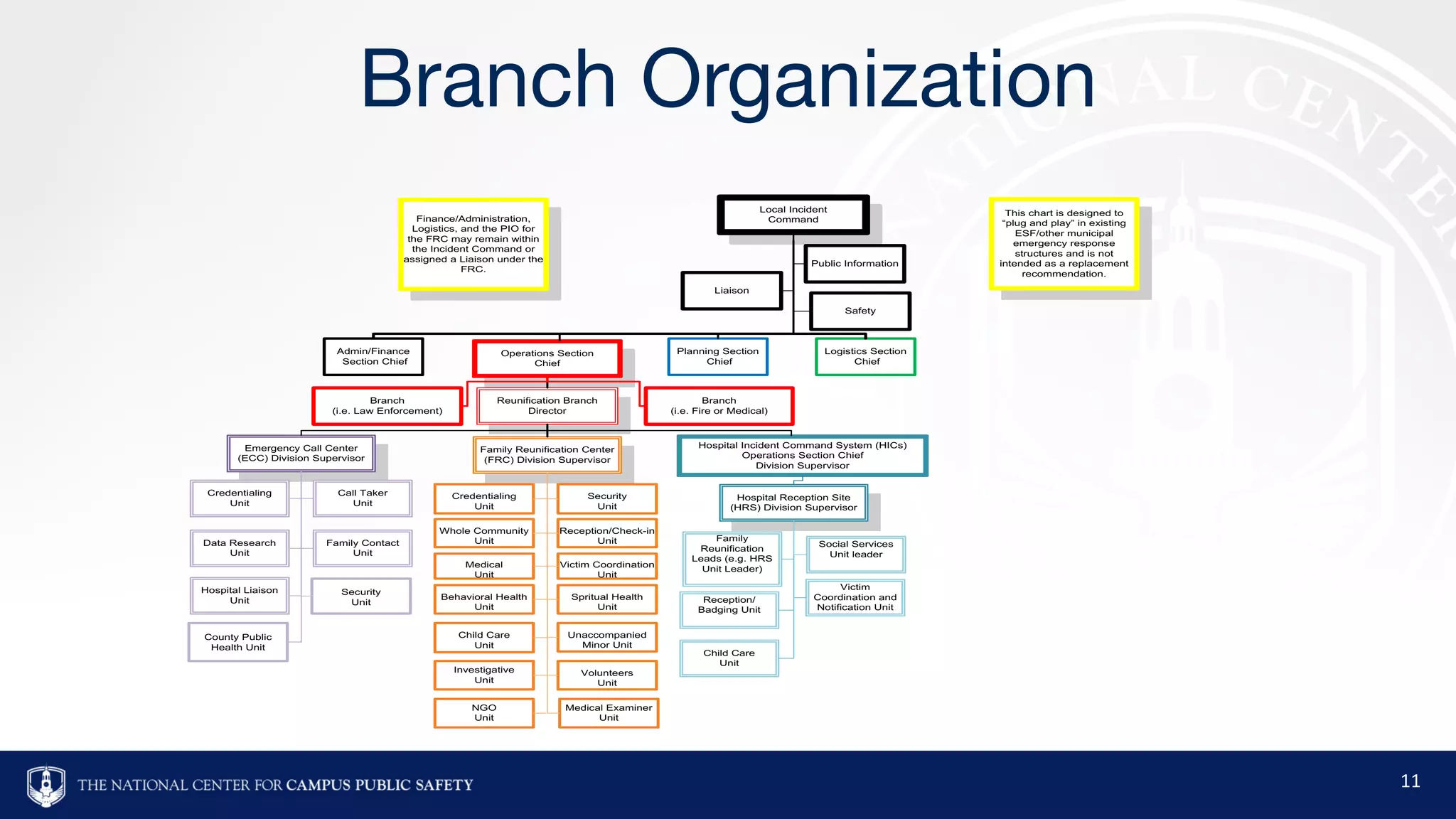
Branch Organization
11
Local Incident
Command
Operations Section
Chief
Reunification Branch
Director
Family Reunification Center
(FRC) Division Supervisor
Hospital Reception Site
(HRS) Division Supervisor
Emergency Call Center
(ECC) Division Supervisor
Family Contact
Unit
Data Research
Unit
Credentialing
Unit
Hospital Liaison
Unit
Family
Reunification
Leads (e.g. HRS
Unit Leader)
Social Services
Unit leader
Child Care
Unit
Reception/
Badging Unit
Victim
Coordination and
Notification Unit
Call Taker
Unit
Finance/Administration,
Logistics, and the PIO for
the FRC may remain within
the Incident Command or
assigned a Liaison under the
FRC.
This chart is designed to
“plug and play” in existing
ESF/other municipal
emergency response
structures and is not
intended as a replacement
recommendation.
Public Information
Liaison
Safety
Logistics Section
Chief
Planning Section
Chief
Admin/Finance
Section Chief
Branch
(i.e. Fire or Medical)
Branch
(i.e. Law Enforcement)
Hospital Incident Command System (HICs)
Operations Section Chief
Division Supervisor
Security
Unit
Credentialing
Unit
Reception/Check-in
Unit
Whole Community
Unit
Victim Coordination
Unit
Medical
Unit
Spritual Health
Unit
Behavioral Health
Unit
Unaccompanied
Minor Unit
Child Care
Unit
Volunteers
Unit
Investigative
Unit
Medical Examiner
Unit
Security
Unit
County Public
Health Unit
NGO
Unit
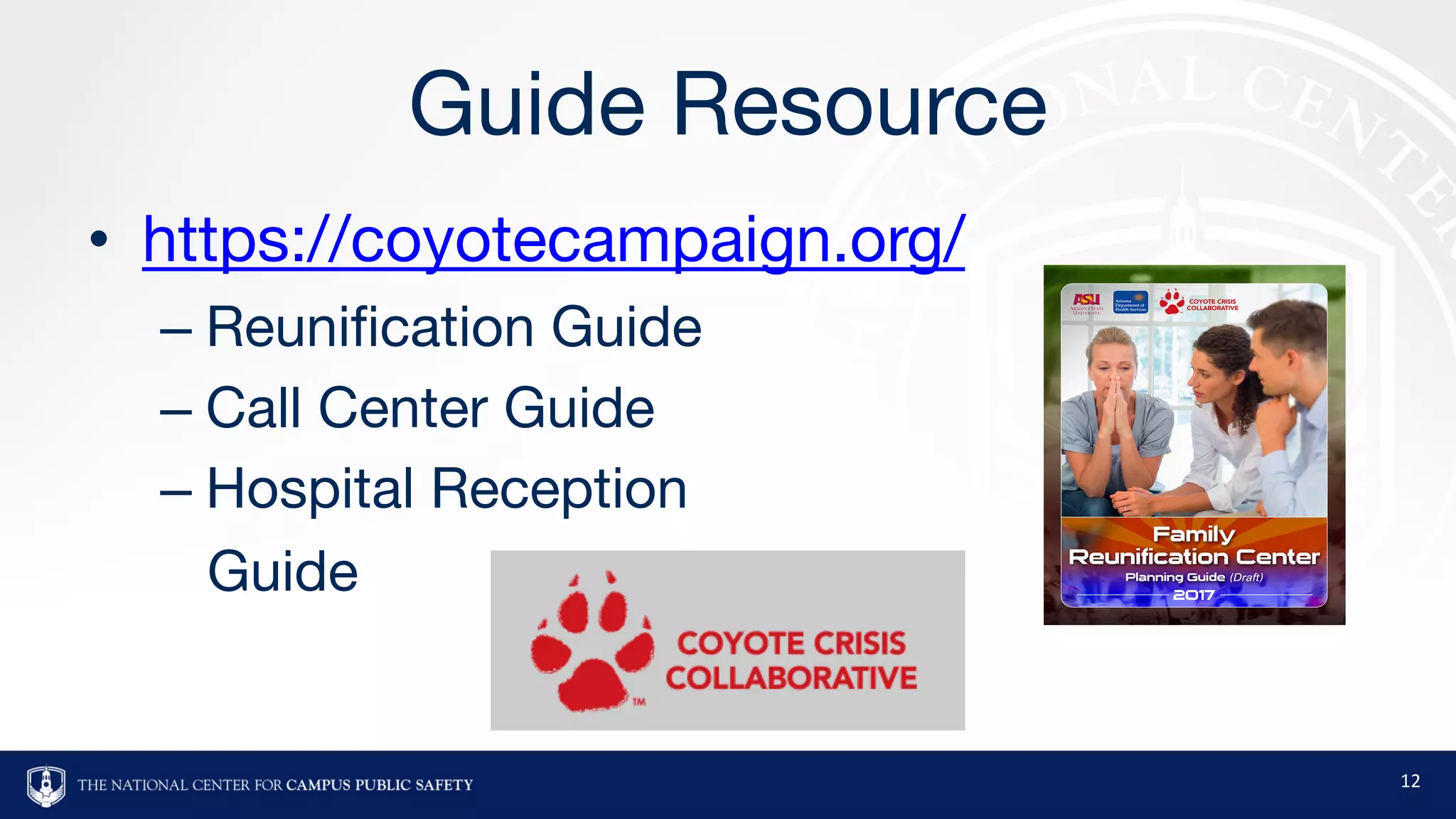
Guide Resource
• https://coyotecampaign.org/
– Reunification Guide
– Call Center Guide
– Hospital Reception
Guide
12
13
Questions
Allen Clark
Executive Director, ASU Preparedness and Security Initiatives
aclark@asu.edu
14
www.bja.gov www.margolishealy.com
www.nccpsafety.org
info@nccpsafety.org
1.866.817.5817

Reunification Planning: The Next Step

  • 1.
  • 2.
    Reunification Planning: The NextStep • Assumptions • Activation • Three prong approach 2
  • 3.
  • 4.
  • 5.
    Assumptions • Families willshow up! • Information gathering may collapse our infrastructure; • Anticipate minimum of 8-10 per patient (hospital); • They will be stressed, perhaps aggressive; • Families will have high expectations; • Your process may not be able to meet all of their needs; • Ethnic & cultural traditions will be important in processing information and grieving. 5
  • 6.
    Assumptions Continued • Victimidentification may take days, weeks or months; • Unsolicited volunteers show up during disasters; • Pedophiles position themselves to have easy access to vulnerable children; • Responding to mass casualty or mass fatality incidents can be overwhelming and traumatic for staff; • Rest, Nutrition, and support will be necessary; • Staff Support falls under the Logistics sector (medical unit). 6
  • 7.
    Activation, Purpose • Accurateand timely information sharing with loved ones; • A way to identify loved ones; • Provide emotional support for families and victims; • Protect families from media and curiosity seekers; • Provide a child care safe zone for unaccompanied minors; • Provide opportunity for post-mortem investigation/ services. 7
  • 8.
    Activation, Purpose continued •Directs families to other hospitals when appropriate, or once established, to a family reunification centers. • Addresses psycho/ social, spiritual, medical and logistical needs to the best of the hospitals ability. 8
  • 9.
    Activation Trigger • Willbe different: – Overwhelmed services; – Political considerations. • Other requirements: – Declarations; – Others… 9
  • 10.
  • 11.
    Branch Organization 11 Local Incident Command OperationsSection Chief Reunification Branch Director Family Reunification Center (FRC) Division Supervisor Hospital Reception Site (HRS) Division Supervisor Emergency Call Center (ECC) Division Supervisor Family Contact Unit Data Research Unit Credentialing Unit Hospital Liaison Unit Family Reunification Leads (e.g. HRS Unit Leader) Social Services Unit leader Child Care Unit Reception/ Badging Unit Victim Coordination and Notification Unit Call Taker Unit Finance/Administration, Logistics, and the PIO for the FRC may remain within the Incident Command or assigned a Liaison under the FRC. This chart is designed to “plug and play” in existing ESF/other municipal emergency response structures and is not intended as a replacement recommendation. Public Information Liaison Safety Logistics Section Chief Planning Section Chief Admin/Finance Section Chief Branch (i.e. Fire or Medical) Branch (i.e. Law Enforcement) Hospital Incident Command System (HICs) Operations Section Chief Division Supervisor Security Unit Credentialing Unit Reception/Check-in Unit Whole Community Unit Victim Coordination Unit Medical Unit Spritual Health Unit Behavioral Health Unit Unaccompanied Minor Unit Child Care Unit Volunteers Unit Investigative Unit Medical Examiner Unit Security Unit County Public Health Unit NGO Unit
  • 12.
    Guide Resource • https://coyotecampaign.org/ –Reunification Guide – Call Center Guide – Hospital Reception Guide 12
  • 13.
  • 14.
    Questions Allen Clark Executive Director,ASU Preparedness and Security Initiatives aclark@asu.edu 14
  • 15.