Pricing Options forRetailers
• Discount orientation : Low price and low cost
• At-the-market orientation: Average price,
Middle class average to above average products
• Upscale orientation: prestigious image store
Consumer: Price Elasticityof
Demand
• The sensitivity of customers to price
changes in terms of the quantities they will
buy:
• Elastic – small percentage changes in
price lead to substantial percentage
changes in the number of units bought
• Inelastic – large percentage changes in
price lead to small percentage changes in
the number of units bought
6.
Market Segments byPrice Sensitivity
• Economic consumers: Looking for lowest price all stores same
• Status-oriented consumers: Different looking for prestige brands
• Assortment-oriented consumers: looking for a strong selections and fair
price
• Personalizing consumers: the buy where they feel a bond with employees
• Convenience-oriented consumers: nearby store
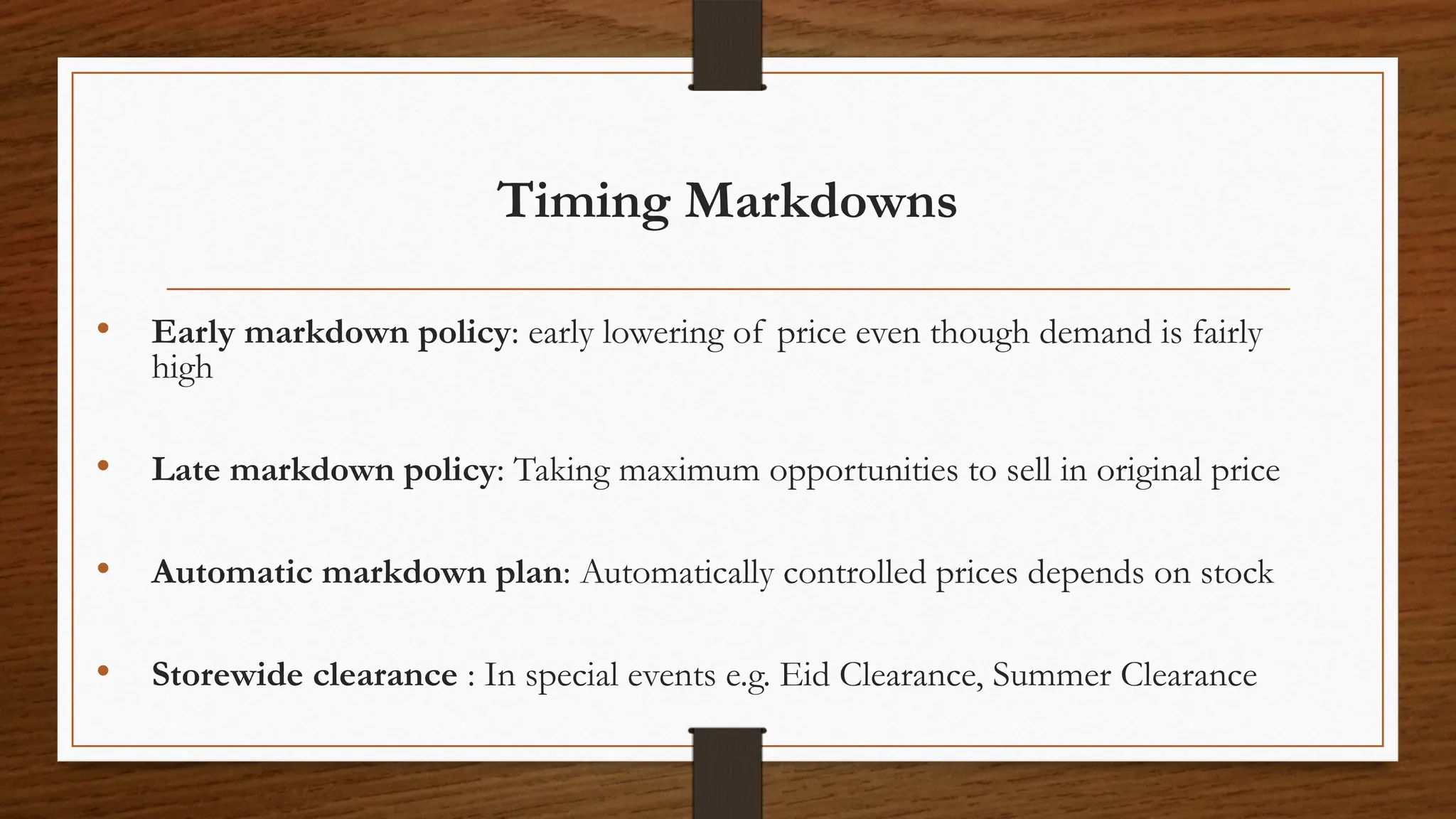
Timing Markdowns
• Earlymarkdown policy: early lowering of price even though demand is fairly
high
• Late markdown policy: Taking maximum opportunities to sell in original price
• Automatic markdown plan: Automatically controlled prices depends on stock
• Storewide clearance : In special events e.g. Eid Clearance, Summer Clearance
Advertising Objectives forRetailers
• Lifting short-term sales
• Increasing customer traffic
• Developing and/or reinforcing a retail
image
• Informing customers about goods and
services and/or company attributes
• Easing the job for sales personnel
• Developing demand for private brands
15.
Public Relations Objectivesfor
Retailers
• Increase awareness of the retailer and its
strategy mix
• Maintain or improve the company image
• Show the retailer as a contributor to the
public’s quality of life
• Demonstrate innovativeness
• Present a favorable message in a highly
believable manner
• Minimize total promotion costs
16.
Personal Selling Objectivesfor Retailers
• Persuade customers to buy
• Stimulate sales of impulse items or products related
to customers’ basic purchases
• Complete customer transactions
• Feed back information to company decision makers
• Provide proper levels of customer service
• Improve and maintain customer satisfaction
• Create awareness of items also marketed through
the Web, mail, and telemarketing