RETAIL MARKETING
MANAGEMENT-19GCM42B
A.Albert Ravi
Retail
• Retail is the sale of goods to end
users, not for resale, but for use
and consumption by the purchaser.
• Retail is to sell in small quantities
directly to the ultimate consumer
RETAILER
• A retailer is last middlemen in the chain of
distribution of goods to consumers. He is a link
between the wholesalers and the consumer.
• A retailer, or merchant, is an entity
that sells goods such as clothing, groceries, or
cars directly to consumers through various
distribution channels with the goal of earning a
profit. This merchant can be a physical building
or online.
RETAILING
• The American Marketing Association defines
retailing as “the activities involved in selling
directly to the ultimate consumer for personal
and non-business use. It embraces direct-to-
customer sales activities of the producer,
whether through his own stores or by house-to-
house canvassing or by mail-order business.
Characteristics of Retailers:
• (i) A retailer is the link between a wholesaler and the
ultimate consumer and he is the last intermediary in
distribution.
• (ii) A retailer buys goods from wholesaler in bulk
and resells them to consumers in small quantities.
• (iii) A retailer maintains a personal contact with his
customers.
• (iv) A retailer makes sufficient shop display of his
wares to attract consumers.
Characteristics……
• (v) Retailers perform all the marketing functions which a
wholesaler performs and in addition emphasises on
advertisement.
• (vi) Retailers deal in a variety of merchandise and are
often known as general merchants.
• (vii) Usually retailers are classified into two major
groups, viz., small scale retailers and large scale retailers.
• (vii) Retailers aim at providing maximum satisfaction to
their customers in limited area.
Functions of a Retailer
• The primary function of a retailer is selling the
products to the customers
• The retailers perform the functions of warehousing
and storing.
• The retailer sells goods in small quantities according
to the demand and choice of consumers.
• The retailer grades the goods which are not graded
by manufacturers and wholesalers. He packs goods
in small lots for the convenience of consumers.
• A retailer always keeps stock of goods in anticipation of
demand. He bears the risk of loss due to fire, theft, spoilage,
price fluctuations, etc.
• Some retailers grant credit to customers and provide the
facility of return or exchange of goods.
• He persuades consumers to buy goods through personal
selling.
• Retailers provide knowledge to consumers about new
products and uses of old products.
• Retailers often carry goods from wholesalers and
manufacturers to their shops.
Functions of a Retailer……….
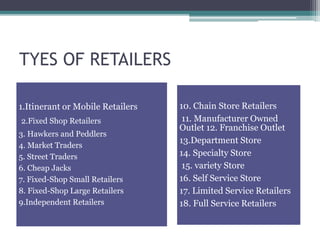
TYES OF RETAILERS
1.Itinerant or Mobile Retailers
2.Fixed Shop Retailers
3. Hawkers and Peddlers
4. Market Traders
5. Street Traders
6. Cheap Jacks
7. Fixed-Shop Small Retailers
8. Fixed-Shop Large Retailers
9.Independent Retailers
10. Chain Store Retailers
11. Manufacturer Owned
Outlet 12. Franchise Outlet
13.Department Store
14. Specialty Store
15. variety Store
16. Self Service Store
17. Limited Service Retailers
18. Full Service Retailers
Thank you…
• Continues………………in part-II

Retail Marketing Management- INTRODUCTION

  • 1.
  • 2.
    Retail • Retail isthe sale of goods to end users, not for resale, but for use and consumption by the purchaser. • Retail is to sell in small quantities directly to the ultimate consumer
  • 3.
    RETAILER • A retaileris last middlemen in the chain of distribution of goods to consumers. He is a link between the wholesalers and the consumer. • A retailer, or merchant, is an entity that sells goods such as clothing, groceries, or cars directly to consumers through various distribution channels with the goal of earning a profit. This merchant can be a physical building or online.
  • 4.
    RETAILING • The AmericanMarketing Association defines retailing as “the activities involved in selling directly to the ultimate consumer for personal and non-business use. It embraces direct-to- customer sales activities of the producer, whether through his own stores or by house-to- house canvassing or by mail-order business.
  • 5.
    Characteristics of Retailers: •(i) A retailer is the link between a wholesaler and the ultimate consumer and he is the last intermediary in distribution. • (ii) A retailer buys goods from wholesaler in bulk and resells them to consumers in small quantities. • (iii) A retailer maintains a personal contact with his customers. • (iv) A retailer makes sufficient shop display of his wares to attract consumers.
  • 6.
    Characteristics…… • (v) Retailersperform all the marketing functions which a wholesaler performs and in addition emphasises on advertisement. • (vi) Retailers deal in a variety of merchandise and are often known as general merchants. • (vii) Usually retailers are classified into two major groups, viz., small scale retailers and large scale retailers. • (vii) Retailers aim at providing maximum satisfaction to their customers in limited area.
  • 7.
    Functions of aRetailer • The primary function of a retailer is selling the products to the customers • The retailers perform the functions of warehousing and storing. • The retailer sells goods in small quantities according to the demand and choice of consumers. • The retailer grades the goods which are not graded by manufacturers and wholesalers. He packs goods in small lots for the convenience of consumers.
  • 8.
    • A retaileralways keeps stock of goods in anticipation of demand. He bears the risk of loss due to fire, theft, spoilage, price fluctuations, etc. • Some retailers grant credit to customers and provide the facility of return or exchange of goods. • He persuades consumers to buy goods through personal selling. • Retailers provide knowledge to consumers about new products and uses of old products. • Retailers often carry goods from wholesalers and manufacturers to their shops. Functions of a Retailer……….
  • 9.
    TYES OF RETAILERS 1.Itinerantor Mobile Retailers 2.Fixed Shop Retailers 3. Hawkers and Peddlers 4. Market Traders 5. Street Traders 6. Cheap Jacks 7. Fixed-Shop Small Retailers 8. Fixed-Shop Large Retailers 9.Independent Retailers 10. Chain Store Retailers 11. Manufacturer Owned Outlet 12. Franchise Outlet 13.Department Store 14. Specialty Store 15. variety Store 16. Self Service Store 17. Limited Service Retailers 18. Full Service Retailers
  • 10.