The Relationship
between Transiency and
Student Performance
Emily M. Spira
Piedmont College
Why student transiency?
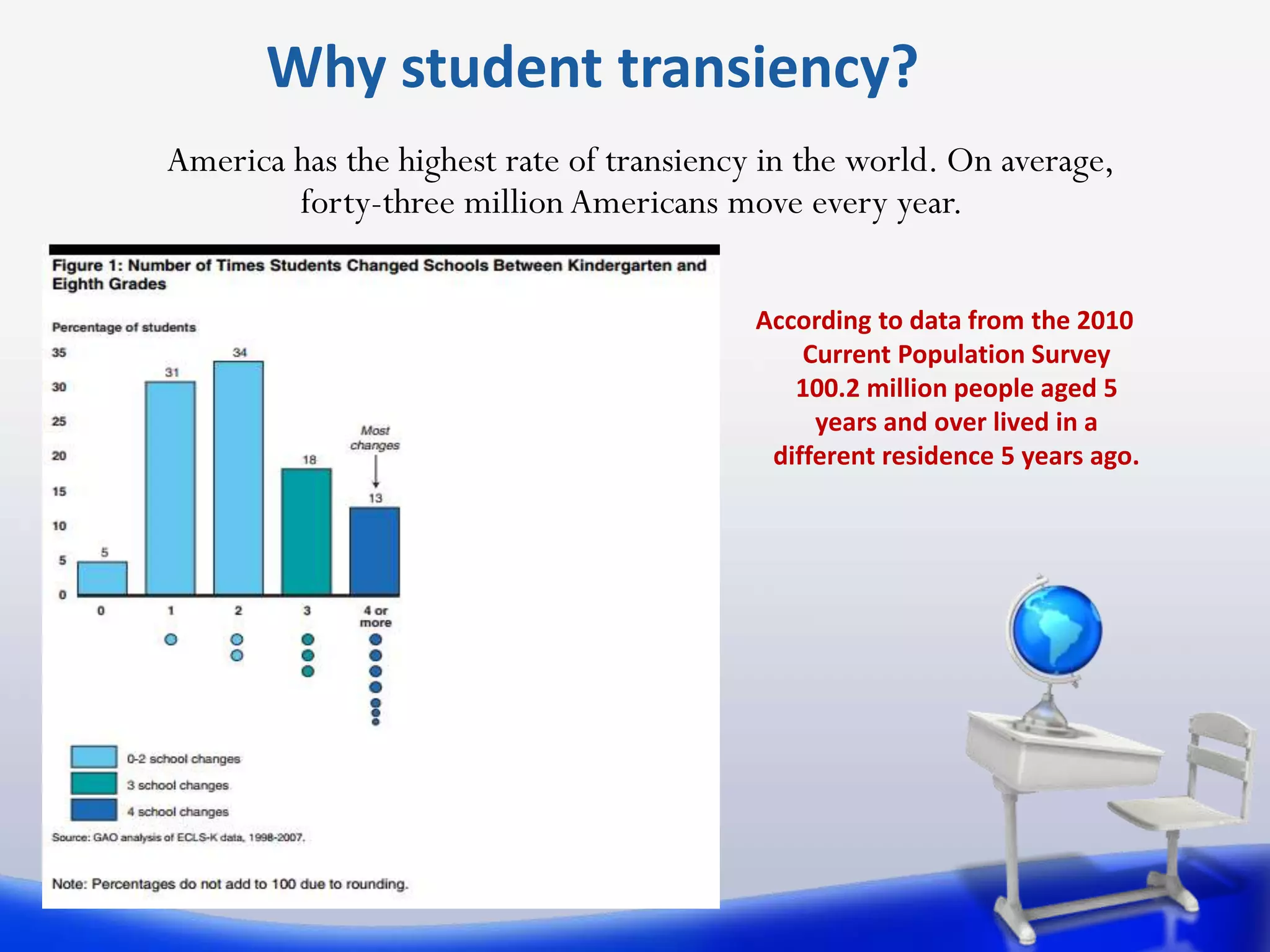
America has the highest rate of transiency in the world. On average,
forty-three million Americans move every year.
According to data from the 2010
Current Population Survey
100.2 million people aged 5
years and over lived in a
different residence 5 years ago.
Why student transiency?
Problem Statement
•

The goal of this study is to determine whether transiency affects
student performance.
•

Transiency is a growing problem at the elementary school level

•

Challenges exist for teachers and students

•

Students can have gaps in their learning
•
•

•

Curriculum differences
Calendar differences

Student mobility also affects a students’ social and emotional well-being
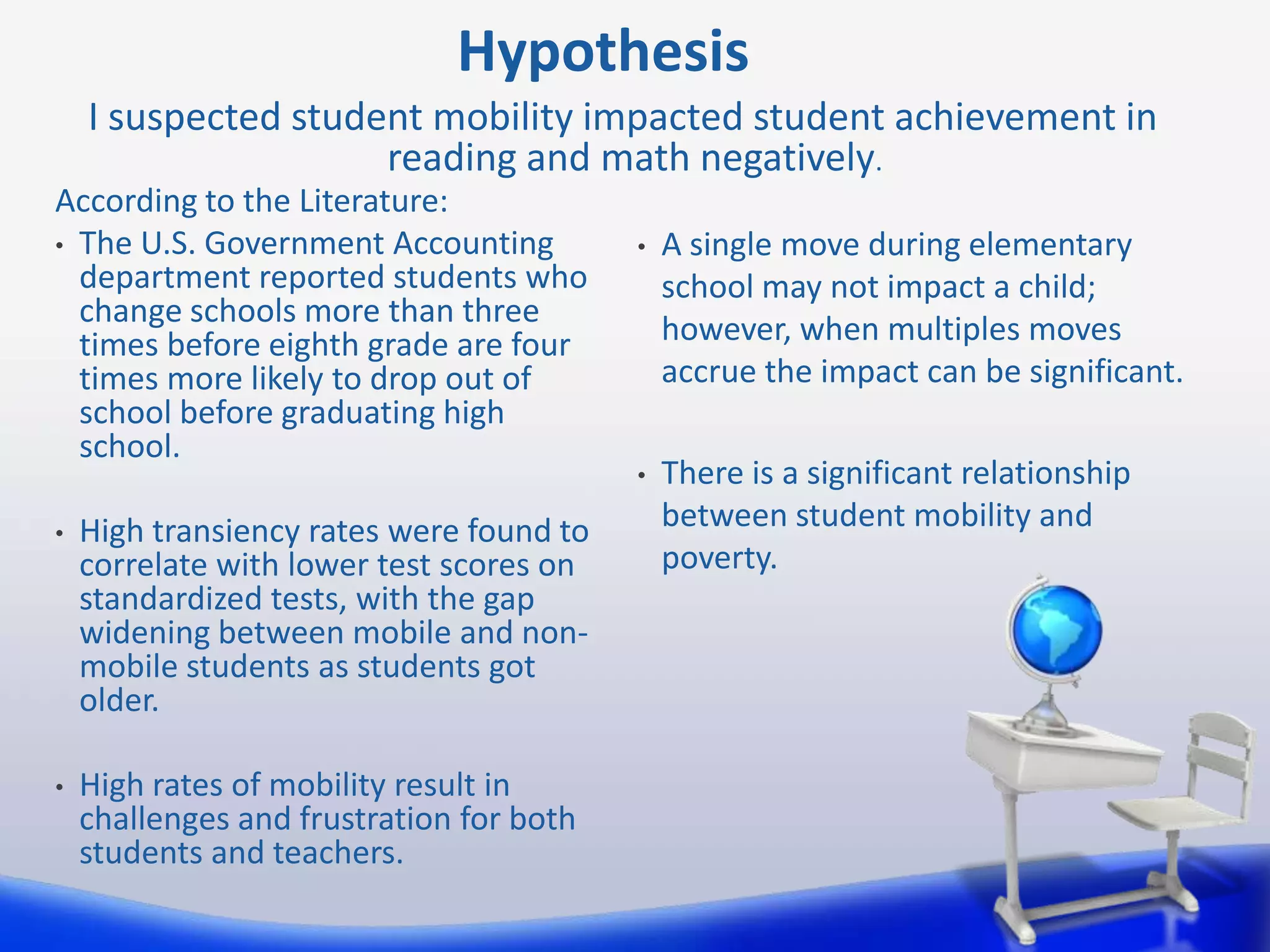
Hypothesis
I suspected student mobility impacted student achievement in
reading and math negatively.
According to the Literature:
• The U.S. Government Accounting
department reported students who
change schools more than three
times before eighth grade are four
times more likely to drop out of
school before graduating high
school.
•

High transiency rates were found to
correlate with lower test scores on
standardized tests, with the gap
widening between mobile and nonmobile students as students got
older.

•

High rates of mobility result in
challenges and frustration for both
students and teachers.

•

A single move during elementary
school may not impact a child;
however, when multiples moves
accrue the impact can be significant.

•

There is a significant relationship
between student mobility and
poverty.
Research Question

What impact does transiency have on
student achievement in reading and
math?
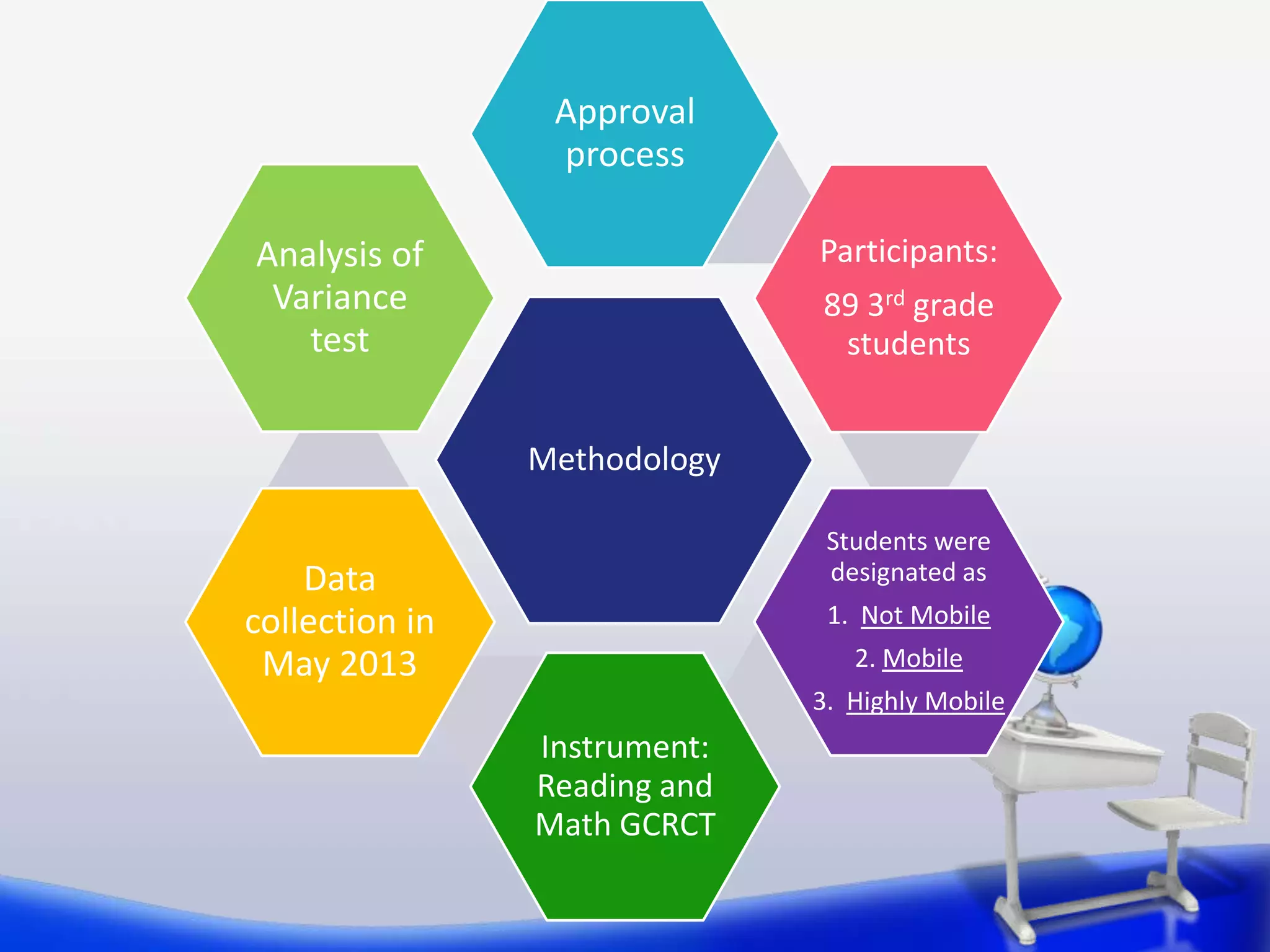
Approval
process
Participants:

Analysis of
Variance
test

89 3rd grade
students
Methodology
Students were
designated as

Data
collection in
May 2013

1. Not Mobile

2. Mobile
3. Highly Mobile

Instrument:
Reading and
Math GCRCT
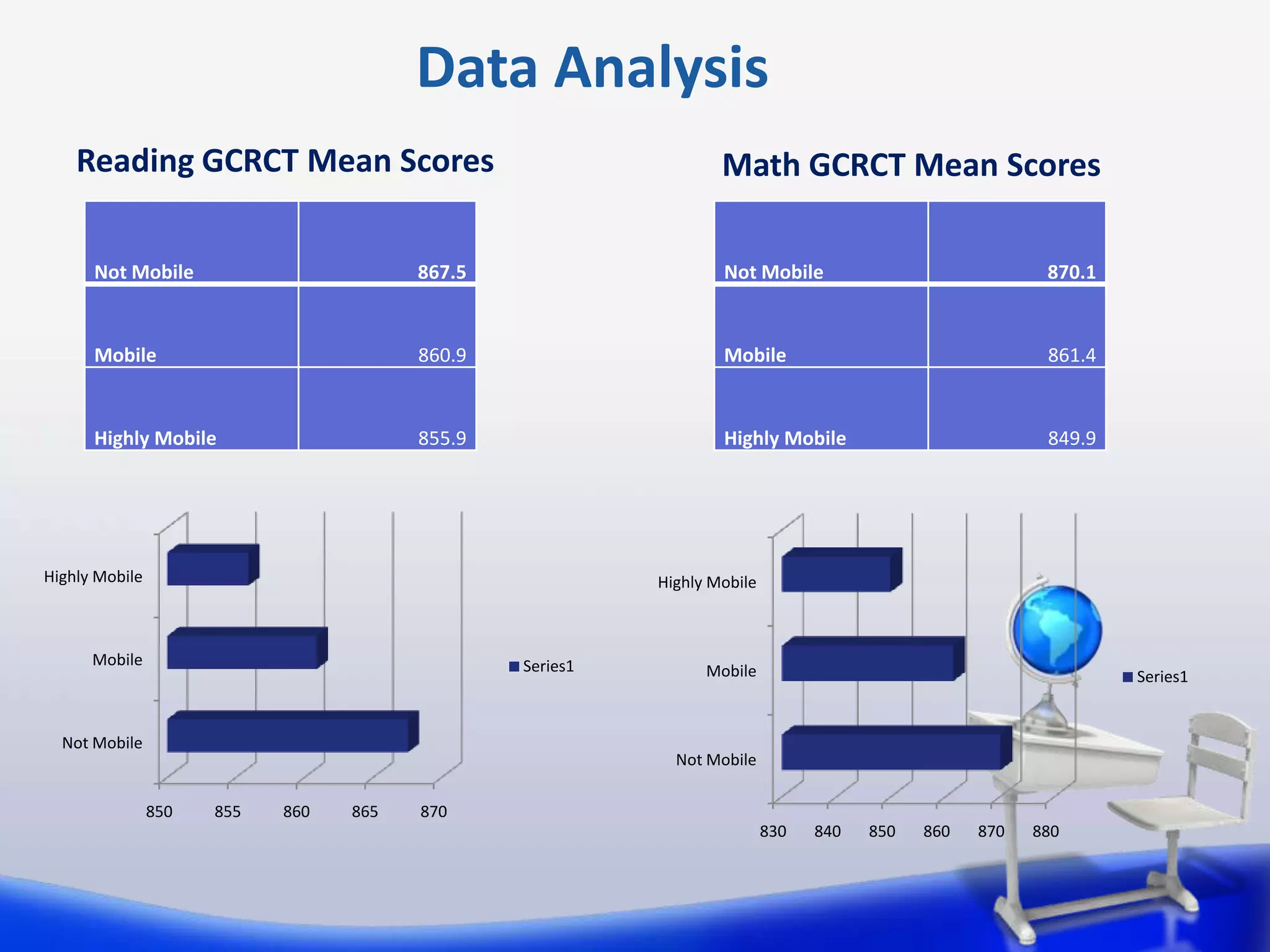
Data Analysis
Reading GCRCT Mean Scores

Math GCRCT Mean Scores

Not Mobile

867.5

Not Mobile

870.1

Mobile

860.9

Mobile

861.4

Highly Mobile

855.9

Highly Mobile

849.9

Highly Mobile

Highly Mobile

Mobile

Series1

Not Mobile

Mobile

Series1

Not Mobile
850

855

860

865

870
830

840

850

860

870

880
Conclusion
•

•

There is not a significant difference between any of the
groups on the reading or math GCRCT (p>.05).

The findings indicate transiency does not impact third grade
student achievement in reading and math as measured by
GCRCT.
Thank you for coming!
Questions?

Research presentation spira final

  • 1.
    The Relationship between Transiencyand Student Performance Emily M. Spira Piedmont College
  • 2.
    Why student transiency? Americahas the highest rate of transiency in the world. On average, forty-three million Americans move every year. According to data from the 2010 Current Population Survey 100.2 million people aged 5 years and over lived in a different residence 5 years ago.
  • 3.
  • 4.
    Problem Statement • The goalof this study is to determine whether transiency affects student performance. • Transiency is a growing problem at the elementary school level • Challenges exist for teachers and students • Students can have gaps in their learning • • • Curriculum differences Calendar differences Student mobility also affects a students’ social and emotional well-being
  • 5.
    Hypothesis I suspected studentmobility impacted student achievement in reading and math negatively. According to the Literature: • The U.S. Government Accounting department reported students who change schools more than three times before eighth grade are four times more likely to drop out of school before graduating high school. • High transiency rates were found to correlate with lower test scores on standardized tests, with the gap widening between mobile and nonmobile students as students got older. • High rates of mobility result in challenges and frustration for both students and teachers. • A single move during elementary school may not impact a child; however, when multiples moves accrue the impact can be significant. • There is a significant relationship between student mobility and poverty.
  • 6.
    Research Question What impactdoes transiency have on student achievement in reading and math?
  • 7.
    Approval process Participants: Analysis of Variance test 89 3rdgrade students Methodology Students were designated as Data collection in May 2013 1. Not Mobile 2. Mobile 3. Highly Mobile Instrument: Reading and Math GCRCT
  • 8.
    Data Analysis Reading GCRCTMean Scores Math GCRCT Mean Scores Not Mobile 867.5 Not Mobile 870.1 Mobile 860.9 Mobile 861.4 Highly Mobile 855.9 Highly Mobile 849.9 Highly Mobile Highly Mobile Mobile Series1 Not Mobile Mobile Series1 Not Mobile 850 855 860 865 870 830 840 850 860 870 880
  • 9.
    Conclusion • • There is nota significant difference between any of the groups on the reading or math GCRCT (p>.05). The findings indicate transiency does not impact third grade student achievement in reading and math as measured by GCRCT.
  • 10.
    Thank you forcoming! Questions?