Psychological Horror
How does the audience know it is a 
psychological horror? 
• A major clue that a film is a psychological 
horror is often that the setting would be 
normal and a familiar everyday event where 
tragedy will occur.
Characters 
• It is important to establish a character, but in a 
psychological horror film it is important to establish 
their traits and features slow by not revealing their face 
or their opinions and beliefs at the start. 
• Characters can also be figments of the imagination or 
things which do not exist in real life, for example ghosts 
or hallucinations. 
• The main hero or character is usually a women. This 
emphasises the stereotypical view that women are 
more fearful than men and are more likely to react 
more to small events such as footsteps, things moving 
and therefore they are more vulnerable.
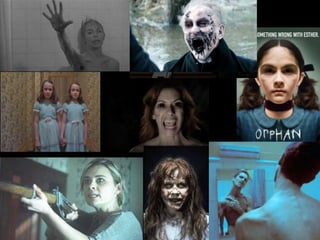
Normal characters within a 
psychological horror are. 
• Young adults or a child. 
• Mentally unstable. 
• Emotionally unstable. 
• Dark, gothic. 
• A detective or other authority figure. 
• An unsuspecting partner or friend.
Music and sound 
• Music can often enhance a psychological horror. It can 
create moments of suspense through high pitched noises 
or the sound of footsteps approaching the victim. It can 
also be used in contrast to what is going on. 
• Instrumental music is often used which adds to the tension 
created by the storyline, violins and other classical 
instruments. The music usually builds up to a climax to help 
entice the audience on intense part of the films. 
• Psychological horrors also use the sound of people in pain 
to create atmosphere. Sounds of people screaming, 
struggling and suffering, gun shot wounds are typically 
used.
Plots 
• It is conventional for psychological horror to 
be well paced also for the plot to take its time. 
This will keep the audience engaged on the 
film.
Lighting 
• Low key lighting is used to create fear and 
tension, a lot of obscurity. It is used to create 
enigma and mystery, it also helps to create 
and unsetting atmosphere that builds tension. 
• Because of this moments of bright light or 
colour often are the climax.
Editing 
• Fast pace editing is often used to emphasise 
drama and heighten tension. 
• Slow paced editing is also used in particularly 
emotional parts. This allows more 
concentration on the character and their 
suffering and pain. 
• Hand held camera shots make the diegetic 
sounds like footsteps and echoes lets the 
audience fell apart of the action.
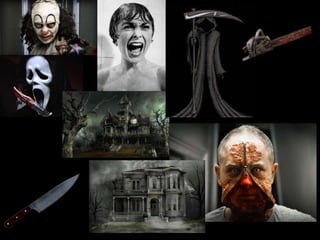
Iconography of a psychological horror 
• The haunted house (forbidden chamber) 
• Symbols of death 
• The disfigured face or mask 
• The screaming victim (in modern horror the 
‘final girl’) 
• The phallic murder weapon: knife, stake, 
chainsaw.
Research into horror genre

Research into horror genre

  • 1.
  • 2.
    How does theaudience know it is a psychological horror? • A major clue that a film is a psychological horror is often that the setting would be normal and a familiar everyday event where tragedy will occur.
  • 3.
    Characters • Itis important to establish a character, but in a psychological horror film it is important to establish their traits and features slow by not revealing their face or their opinions and beliefs at the start. • Characters can also be figments of the imagination or things which do not exist in real life, for example ghosts or hallucinations. • The main hero or character is usually a women. This emphasises the stereotypical view that women are more fearful than men and are more likely to react more to small events such as footsteps, things moving and therefore they are more vulnerable.
  • 4.
    Normal characters withina psychological horror are. • Young adults or a child. • Mentally unstable. • Emotionally unstable. • Dark, gothic. • A detective or other authority figure. • An unsuspecting partner or friend.
  • 6.
    Music and sound • Music can often enhance a psychological horror. It can create moments of suspense through high pitched noises or the sound of footsteps approaching the victim. It can also be used in contrast to what is going on. • Instrumental music is often used which adds to the tension created by the storyline, violins and other classical instruments. The music usually builds up to a climax to help entice the audience on intense part of the films. • Psychological horrors also use the sound of people in pain to create atmosphere. Sounds of people screaming, struggling and suffering, gun shot wounds are typically used.
  • 7.
    Plots • Itis conventional for psychological horror to be well paced also for the plot to take its time. This will keep the audience engaged on the film.
  • 8.
    Lighting • Lowkey lighting is used to create fear and tension, a lot of obscurity. It is used to create enigma and mystery, it also helps to create and unsetting atmosphere that builds tension. • Because of this moments of bright light or colour often are the climax.
  • 9.
    Editing • Fastpace editing is often used to emphasise drama and heighten tension. • Slow paced editing is also used in particularly emotional parts. This allows more concentration on the character and their suffering and pain. • Hand held camera shots make the diegetic sounds like footsteps and echoes lets the audience fell apart of the action.
  • 10.
    Iconography of apsychological horror • The haunted house (forbidden chamber) • Symbols of death • The disfigured face or mask • The screaming victim (in modern horror the ‘final girl’) • The phallic murder weapon: knife, stake, chainsaw.