A Webinar Presentation on December 8th, 2016 2PM PST
Robert A. Kloner MD, PhD
Director of the Cardiovascular Research
Institute of HMRI
VP of Translation, HMRI
Professor of Clinical Medicine, Division of
Cardiovascular Medicine, Dept. of
Medicine,
Keck School of Medicine at University of
Southern California
Disclosure: Dr. Kloner is a consultant to IC Therapeutics and Endothelin, Inc.
Myocardial Infarction (Heart Attack)
 In the US there are close to 1 million myocardial infarctions (MI)
annually.
 Despite improved survival rates with early reperfusion therapy
(thrombolytics, angioplasty, stenting), there is still a 1 month mortality
rate of ~10% and a one year mortality rate of ~13%.
 Congestive heart failure remains a significant morbidity (~25% in 1yr
post-MI).
 A recent study in the NEJM showed that although
the time from ambulance arrival to reopening the
occluded artery in a catheterization laboratory has
shortened in the US (~90 min), further shortening of
time has not improved mortality (1).
 Better interventions are needed.
 Heart attack size correlates with mortality and heart
failure. Even a 5% reduction in size improves clinical
outcome (2,3).
1. Menees DS et al. NEJM 2013;369:901-909.
2. Boden H et al. Am J Cardiol 2013;111:1387-93.
3. Turer AT et al. Curr Control Trials Cardiovasc Med.
2005 Aug 23;6:12.
Clinical Trials of MI Reduction
Many pharmacologic agents that were cardioprotective in animal models
failed in clinical trials.
PZ Gerczuk and RA Kloner JACC 2012;59:969-78.
The Preconditioning
Phenomenon
The heart’s own self-preserving mechanism
Brief periods of ischemia (2-5 minutes) prior to a
longer duration of ischemia:
 Reduce infarct size in most models
 Reduce ventricular arrhythmias
If we can learn the mechanism of preconditioning, it
may lead to potentially important therapies.
40 min occlusion plus 4 hours reperfusion in anesthetized
rabbit;
Left = control;
Right = preconditioned with two 5 min occlusions plus 5 min
reperfusion before the long occlusion.
Hale SL, Kloner RA Coronary Artery Disease 1992;3:133-140
Effects of preconditioning
on myocardial infarct size
in dogs
Murry CE, Jennings RB, Reimer KA. Preconditioning with ischemia: a delay of
lethal cell injury in ischemic myocardium. Circulation. 1986 Nov;74(5):1124-36
Murry CE, Jennings RB, Reimer KA. Preconditioning with ischemia: a delay of
lethal cell injury in ischemic myocardium. Circulation. 1986 Nov;74(5):1124-36
Clinical Evidence For
Preconditioning
 Less chest pain, ST-segment elevation, lactate
production with subsequent compared to first angioplasty
balloon inflation
 Reduction in infarct size, mortality and CHF in patients
with history of angina before acute MI
 Acute tolerance to angina (warm up phenomenon)
 Studies performed on human cardiac tissue:
 ATP levels during CABG
 In vitro studies on isolated human muscle
 In vitro studies on human myocytes
History of Any Angina - TIMI 4
No Angina Angina
TotalCKunits
0
100
120
140
160
Kloner, et al.
154
119
Kloner RA, Shook T, Przyklenk K, Davis VG, Junio L, Matthews RV, Burstein S,
Gibson M, Poole WK, Cannon CP, McCabe C, Braunwald E, for the TIMI 4 Investigators. Previous angina alters in-hospital
outcome in TIMI 4. A clinical correlate to preconditioning? Circulation 1995; 91:37-45.
History of Any Angina - TIMI 4
(%)
0
2
4
6
8
10
12
14
No Angina
Angina
8%
3%
7%
1%
12%
4%p = 0.03
p = 0.006
p = 0.004
In-Hospital
Death
Severe CHF/
Shock
Death
Severe CHF
Shock
Kloner RA, Shook T, Przyklenk K, Davis VG, Junio L, Matthews RV, Burstein S,
Gibson M, Poole WK, Cannon CP, McCabe C, Braunwald E, for the TIMI 4 Investigators. Previous angina alters in-hospital
outcome in TIMI 4. A clinical correlate to preconditioning? Circulation 1995; 91:37-45.
Remote Ischemic Preconditioning or
Ischemic Conditioning at a Distance
Ischemic conditioning of one vascular bed may protect
a remote vascular bed. This could occur within the
same organ or between different organs.
Regional ischemic preconditioning protects
remote virgin myocardium from subsequent
sustained coronary occlusion
In this study, preconditioning the circumflex coronary artery
bed reduced infarct size when the left anterior
descending artery was occluded for 60 min followed by
reperfusion.
Showed that “Brief episodes of ischemia in one vascular
bed protect remote, virgin myocardium from subsequent
sustained coronary artery occlusion in canine model.”
Przyklenk K, Bauer B, Ovize M, Kloner RA, Whittaker P. Regional ischemic
'preconditioning' protects remote virgin myocardium from subsequent sustained
coronary occlusion. Circulation. 1993 Mar;87(3):893-9
Regional ischemic preconditioning protects remote virgin myocardium
Przyklenk K. et al. Circulation 1993;87:893
Ischemic preconditioning at a distance. Reduction
of myocardial infarct size by partial reduction of
blood supply combined with rapid stimulation of the
gastrocnemius muscle in rabbit.
 Birnbaum Y, Hale SL, Kloner RA. Ischemic preconditioning at a distance: reduction of
myocardial infarct size by partial reduction of blood supply combined with rapid
stimulation of the gastrocnemius muscle in the rabbit. Circulation. 1997 Sep
2;96(5):1641-6.
Showed that remote ischemia of a skeletal muscle could
precondition the myocardium.
Mechanisms
Stimulus Effector Cell-
signaling
Protection
4 cycles of
5 min. I
5 min. R
Ischemic
tissue
releases
“drug
cocktail”
Remote ischaemic conditioning before hospital admission, as a complement
to angioplasty, and effect on myocardial salvage in patients with acute
myocardial infarction: a randomised trial
 333 patients with first AMI randomized to primary PCI with or without remote
conditioning (4 cycles of 5-minute brachial artery cuff inflation & 5 minutes
deflation)
 Median salvage index by myocardial perfusion imaging 0.75 in remote
conditioning group versus 0.55 in control group, p = 0.03
 Conclusion: Remote ischemic conditioning before hospital admission
increases myocardial salvage and is safe.
Bøtker HE, et al. Remote ischaemic conditioning before hospital admission, as a complement to
angioplasty, and effect on myocardial salvage in patients with acute myocardial infarction: a
randomised trial. Lancet. 2010 375:727.
Bøtker HE, et al. Remote ischaemic conditioning before hospital admission, as a complement to
angioplasty, and effect on myocardial salvage in patients with acute myocardial infarction: a
randomised trial. Lancet. 2010 375:727.
Improved long-term clinical outcomes in patients with ST-elevation myocardial infarction
undergoing remote ischaemic conditioning as an adjunct to primary percutaneous coronary
intervention (The CONDI Study)
 333 pts with a first acute ST-elevation myocardial infarction were randomized to
primary percutaneous coronary intervention with (n = 166) or without (n = 167)
remote ischemic conditioning (intermittent arm ischemia through four cycles of
5-min inflation followed by 5-min deflation of a blood-pressure cuff
 The primary endpoint was major adverse cardiac and cerebrovascular events
(MACCE)—a composite of all-cause mortality, myocardial infarction,
readmission for heart failure, and ischemic stroke/transient ischemic attack.
Hazard ratio for the primary
composite endpoint and for the
secondary endpoints in the follow-
up period (median follow-up 3.8
yrs).
Sloth AD, et al, European Heart Journal (2014) 35, 168–175
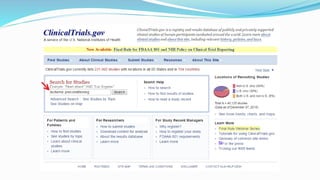
227 RIPC studies listed at ClinicalTrials.gov
– accessed on 12/08/2016
 These studies are aimed at investigating the use of
RIPC for various conditions in addition to myocardial
infarction, such as kidney transplantation,
angiopathy in diabetes and intracranial
atherosclerosis.
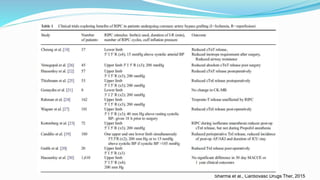
Sharma et al., Cardiovasc Drugs Ther, 2015
Remote Ischemic Conditioning in Acute Myocardial Infarction
CABG
Sharma et al., Cardiovasc Drugs Ther, 2015
Meta-analysis of RIPC Cardioprotection Enzymes
Le Page et al., Basic Res Cardiol, 2015
Ischemic Conditioning-Potential
Applications
 Reducing myocardial infarct size
 Reducing cardiac damage during percutaneous
coronary intervention
 Protecting the myocardium during coronary artery
bypass grafting and other procedures requiring
cardiopulmonary bypass
 Protecting the vasculature during vascular surgery
procedures
 Unstable angina
 Before activities that reproducibly cause angina in
patients with stable angina
 Protecting donor hearts before excision and transport
 Protecting other organs (brain, kidney) during
episodes of ischemia
Neurogenic pathway mediated remote preconditioning protects the brain from
transient focal ischemic injury. Malhotra S, et al. Brain Res. 2011;1386:184-90.
 Adult Wistar male rats underwent remote preconditioning
(RIPC) or sham surgery
 Then 2 hours middle cerebral artery occlusion (MCO)
 Those having MCO 24 hours after RIPC had significantly
smaller cerebral infarct volumes (150 mm3) versus controls
(250 mm3; p<0.05) and better neurological scores
 Ganglion blocker (hexamethonium) blocked the benefit
Upper limb ischemic preconditioning prevents recurrent stroke in intracranial
arterial stenosis. Meng R, et al. Neurology. 2012;79(18):1853-61.
 68 cases symptomatic atherosclerotic arterial stenosis (diagnosed by
imaging)
 Bilateral arm ischemic preconditioning (BAIPC, n=38) underwent
 5 brief bilateral upper limb ischemia followed by reperfusion
 Twice a day over 300 days
 Incidence of recurrent stroke at 90 and 300 days were 23% and 26%
respectively in untreated control group versus 5% and 7.9% respectively in
preconditioning group (p < 0.01)
 SPECT measure of cerebral flow improved in preconditioning group
Ischemic Conditioning Is Safe and Effective for Octo- and
Nonagenarians in Stroke Prevention and Treatment. Meng R, et al.
Neurotherapeutics. 2015;12(3):667-77.
 Effectiveness of bilateral arm ischemic preconditioning (BAIPC) in
reducing stroke recurrence in in octo- and nonagenarians patients
 58 patients with symptomatic intracranial arterial stenosis
randomized to BAIPC (5 cycles twice daily) versus sham for 180
days
 BAIPC reduced hsCRP, IL-6, IL-1 and leukocyte count
 At 180 days 2 infarctions and 7 TIAs in BAIPC group versus 8
infarctions and 11 TIAs in sham group (p < 0.05)
Remote ischemic perconditioning as an adjunct therapy to
thrombolysis in patients with acute ischemic stroke: a
randomized trial. Hougaard KD, et al. Stroke. 2014;45(1):159-67.
 443 patients suspected acute stroke
 Alteplase
 MRI 24 hours, 1 months
 Primary end point: penumbral salvage, volume of the perfusion-
diffusion mismatch not progressing to infarction after 1 month
 After adjustment for baseline perfusion and diffusion lesion severity,
voxelwise analysis showed that remote conditioning reduced tissue
risk of infarction (P=0.0003)
Remote ischemic postconditioning: Harnessing endogenous
protection in a murine model of vascular cognitive impairment. Khan
MB, Hoda MN, Vaibhav K, et al. Transl Stroke Res 2015; 6: 69-77
 This group previously reported that remote ischemic
conditioning during acute stroke confers neuroprotection
(Hess DC et al. Stroke, 2013; 44: 1191-7) and increased
cerebral blood flow (CBF).
 They tested whether remote conditioning could augment
CBF and prevent cognitive impairment in the BCAS
(bilateral common carotid artery stenosis) mouse model.
 BCAS was induced with customized micro coils in male
mice to establish chronic cerebral hypoperfusion, which
creates a model of vascular cognitive impairment.
 One week after BCAS surgery mice treated with remote
ischemic postconditioning once daily for 2 weeks.
 Cognitive testing performed at 4 weeks.
 RESULTS: Remote ischemic postconditioning improved
cognitive function, inhibited inflammatory responses and
prevented cell death, decreased accumulation of amyloid beta
protein and protected white matter integrity.
Khan MB, Hoda MN, Vaibhav K, et al. Transl Stroke Res 2015; 6: 69-77
Remote Ischemic Conditioning - Dr. Robert Kloner

Remote Ischemic Conditioning - Dr. Robert Kloner

  • 1.
    A Webinar Presentationon December 8th, 2016 2PM PST
  • 2.
    Robert A. KlonerMD, PhD Director of the Cardiovascular Research Institute of HMRI VP of Translation, HMRI Professor of Clinical Medicine, Division of Cardiovascular Medicine, Dept. of Medicine, Keck School of Medicine at University of Southern California Disclosure: Dr. Kloner is a consultant to IC Therapeutics and Endothelin, Inc.
  • 4.
    Myocardial Infarction (HeartAttack)  In the US there are close to 1 million myocardial infarctions (MI) annually.  Despite improved survival rates with early reperfusion therapy (thrombolytics, angioplasty, stenting), there is still a 1 month mortality rate of ~10% and a one year mortality rate of ~13%.  Congestive heart failure remains a significant morbidity (~25% in 1yr post-MI).
  • 5.
     A recentstudy in the NEJM showed that although the time from ambulance arrival to reopening the occluded artery in a catheterization laboratory has shortened in the US (~90 min), further shortening of time has not improved mortality (1).  Better interventions are needed.  Heart attack size correlates with mortality and heart failure. Even a 5% reduction in size improves clinical outcome (2,3). 1. Menees DS et al. NEJM 2013;369:901-909. 2. Boden H et al. Am J Cardiol 2013;111:1387-93. 3. Turer AT et al. Curr Control Trials Cardiovasc Med. 2005 Aug 23;6:12.
  • 6.
    Clinical Trials ofMI Reduction Many pharmacologic agents that were cardioprotective in animal models failed in clinical trials.
  • 7.
    PZ Gerczuk andRA Kloner JACC 2012;59:969-78.
  • 8.
    The Preconditioning Phenomenon The heart’sown self-preserving mechanism Brief periods of ischemia (2-5 minutes) prior to a longer duration of ischemia:  Reduce infarct size in most models  Reduce ventricular arrhythmias If we can learn the mechanism of preconditioning, it may lead to potentially important therapies.
  • 9.
    40 min occlusionplus 4 hours reperfusion in anesthetized rabbit; Left = control; Right = preconditioned with two 5 min occlusions plus 5 min reperfusion before the long occlusion. Hale SL, Kloner RA Coronary Artery Disease 1992;3:133-140
  • 10.
    Effects of preconditioning onmyocardial infarct size in dogs Murry CE, Jennings RB, Reimer KA. Preconditioning with ischemia: a delay of lethal cell injury in ischemic myocardium. Circulation. 1986 Nov;74(5):1124-36
  • 11.
    Murry CE, JenningsRB, Reimer KA. Preconditioning with ischemia: a delay of lethal cell injury in ischemic myocardium. Circulation. 1986 Nov;74(5):1124-36
  • 12.
    Clinical Evidence For Preconditioning Less chest pain, ST-segment elevation, lactate production with subsequent compared to first angioplasty balloon inflation  Reduction in infarct size, mortality and CHF in patients with history of angina before acute MI  Acute tolerance to angina (warm up phenomenon)  Studies performed on human cardiac tissue:  ATP levels during CABG  In vitro studies on isolated human muscle  In vitro studies on human myocytes
  • 13.
    History of AnyAngina - TIMI 4 No Angina Angina TotalCKunits 0 100 120 140 160 Kloner, et al. 154 119 Kloner RA, Shook T, Przyklenk K, Davis VG, Junio L, Matthews RV, Burstein S, Gibson M, Poole WK, Cannon CP, McCabe C, Braunwald E, for the TIMI 4 Investigators. Previous angina alters in-hospital outcome in TIMI 4. A clinical correlate to preconditioning? Circulation 1995; 91:37-45.
  • 14.
    History of AnyAngina - TIMI 4 (%) 0 2 4 6 8 10 12 14 No Angina Angina 8% 3% 7% 1% 12% 4%p = 0.03 p = 0.006 p = 0.004 In-Hospital Death Severe CHF/ Shock Death Severe CHF Shock Kloner RA, Shook T, Przyklenk K, Davis VG, Junio L, Matthews RV, Burstein S, Gibson M, Poole WK, Cannon CP, McCabe C, Braunwald E, for the TIMI 4 Investigators. Previous angina alters in-hospital outcome in TIMI 4. A clinical correlate to preconditioning? Circulation 1995; 91:37-45.
  • 15.
    Remote Ischemic Preconditioningor Ischemic Conditioning at a Distance Ischemic conditioning of one vascular bed may protect a remote vascular bed. This could occur within the same organ or between different organs.
  • 16.
    Regional ischemic preconditioningprotects remote virgin myocardium from subsequent sustained coronary occlusion In this study, preconditioning the circumflex coronary artery bed reduced infarct size when the left anterior descending artery was occluded for 60 min followed by reperfusion. Showed that “Brief episodes of ischemia in one vascular bed protect remote, virgin myocardium from subsequent sustained coronary artery occlusion in canine model.” Przyklenk K, Bauer B, Ovize M, Kloner RA, Whittaker P. Regional ischemic 'preconditioning' protects remote virgin myocardium from subsequent sustained coronary occlusion. Circulation. 1993 Mar;87(3):893-9
  • 17.
    Regional ischemic preconditioningprotects remote virgin myocardium Przyklenk K. et al. Circulation 1993;87:893
  • 18.
    Ischemic preconditioning ata distance. Reduction of myocardial infarct size by partial reduction of blood supply combined with rapid stimulation of the gastrocnemius muscle in rabbit.  Birnbaum Y, Hale SL, Kloner RA. Ischemic preconditioning at a distance: reduction of myocardial infarct size by partial reduction of blood supply combined with rapid stimulation of the gastrocnemius muscle in the rabbit. Circulation. 1997 Sep 2;96(5):1641-6. Showed that remote ischemia of a skeletal muscle could precondition the myocardium.
  • 19.
    Mechanisms Stimulus Effector Cell- signaling Protection 4cycles of 5 min. I 5 min. R Ischemic tissue releases “drug cocktail”
  • 20.
    Remote ischaemic conditioningbefore hospital admission, as a complement to angioplasty, and effect on myocardial salvage in patients with acute myocardial infarction: a randomised trial  333 patients with first AMI randomized to primary PCI with or without remote conditioning (4 cycles of 5-minute brachial artery cuff inflation & 5 minutes deflation)  Median salvage index by myocardial perfusion imaging 0.75 in remote conditioning group versus 0.55 in control group, p = 0.03  Conclusion: Remote ischemic conditioning before hospital admission increases myocardial salvage and is safe. Bøtker HE, et al. Remote ischaemic conditioning before hospital admission, as a complement to angioplasty, and effect on myocardial salvage in patients with acute myocardial infarction: a randomised trial. Lancet. 2010 375:727.
  • 21.
    Bøtker HE, etal. Remote ischaemic conditioning before hospital admission, as a complement to angioplasty, and effect on myocardial salvage in patients with acute myocardial infarction: a randomised trial. Lancet. 2010 375:727.
  • 22.
    Improved long-term clinicaloutcomes in patients with ST-elevation myocardial infarction undergoing remote ischaemic conditioning as an adjunct to primary percutaneous coronary intervention (The CONDI Study)  333 pts with a first acute ST-elevation myocardial infarction were randomized to primary percutaneous coronary intervention with (n = 166) or without (n = 167) remote ischemic conditioning (intermittent arm ischemia through four cycles of 5-min inflation followed by 5-min deflation of a blood-pressure cuff  The primary endpoint was major adverse cardiac and cerebrovascular events (MACCE)—a composite of all-cause mortality, myocardial infarction, readmission for heart failure, and ischemic stroke/transient ischemic attack. Hazard ratio for the primary composite endpoint and for the secondary endpoints in the follow- up period (median follow-up 3.8 yrs). Sloth AD, et al, European Heart Journal (2014) 35, 168–175
  • 26.
    227 RIPC studieslisted at ClinicalTrials.gov – accessed on 12/08/2016  These studies are aimed at investigating the use of RIPC for various conditions in addition to myocardial infarction, such as kidney transplantation, angiopathy in diabetes and intracranial atherosclerosis.
  • 27.
    Sharma et al.,Cardiovasc Drugs Ther, 2015 Remote Ischemic Conditioning in Acute Myocardial Infarction
  • 28.
    CABG Sharma et al.,Cardiovasc Drugs Ther, 2015
  • 29.
    Meta-analysis of RIPCCardioprotection Enzymes Le Page et al., Basic Res Cardiol, 2015
  • 30.
    Ischemic Conditioning-Potential Applications  Reducingmyocardial infarct size  Reducing cardiac damage during percutaneous coronary intervention  Protecting the myocardium during coronary artery bypass grafting and other procedures requiring cardiopulmonary bypass  Protecting the vasculature during vascular surgery procedures  Unstable angina  Before activities that reproducibly cause angina in patients with stable angina  Protecting donor hearts before excision and transport  Protecting other organs (brain, kidney) during episodes of ischemia
  • 31.
    Neurogenic pathway mediatedremote preconditioning protects the brain from transient focal ischemic injury. Malhotra S, et al. Brain Res. 2011;1386:184-90.  Adult Wistar male rats underwent remote preconditioning (RIPC) or sham surgery  Then 2 hours middle cerebral artery occlusion (MCO)  Those having MCO 24 hours after RIPC had significantly smaller cerebral infarct volumes (150 mm3) versus controls (250 mm3; p<0.05) and better neurological scores  Ganglion blocker (hexamethonium) blocked the benefit
  • 32.
    Upper limb ischemicpreconditioning prevents recurrent stroke in intracranial arterial stenosis. Meng R, et al. Neurology. 2012;79(18):1853-61.  68 cases symptomatic atherosclerotic arterial stenosis (diagnosed by imaging)  Bilateral arm ischemic preconditioning (BAIPC, n=38) underwent  5 brief bilateral upper limb ischemia followed by reperfusion  Twice a day over 300 days  Incidence of recurrent stroke at 90 and 300 days were 23% and 26% respectively in untreated control group versus 5% and 7.9% respectively in preconditioning group (p < 0.01)  SPECT measure of cerebral flow improved in preconditioning group
  • 33.
    Ischemic Conditioning IsSafe and Effective for Octo- and Nonagenarians in Stroke Prevention and Treatment. Meng R, et al. Neurotherapeutics. 2015;12(3):667-77.  Effectiveness of bilateral arm ischemic preconditioning (BAIPC) in reducing stroke recurrence in in octo- and nonagenarians patients  58 patients with symptomatic intracranial arterial stenosis randomized to BAIPC (5 cycles twice daily) versus sham for 180 days  BAIPC reduced hsCRP, IL-6, IL-1 and leukocyte count  At 180 days 2 infarctions and 7 TIAs in BAIPC group versus 8 infarctions and 11 TIAs in sham group (p < 0.05)
  • 34.
    Remote ischemic perconditioningas an adjunct therapy to thrombolysis in patients with acute ischemic stroke: a randomized trial. Hougaard KD, et al. Stroke. 2014;45(1):159-67.  443 patients suspected acute stroke  Alteplase  MRI 24 hours, 1 months  Primary end point: penumbral salvage, volume of the perfusion- diffusion mismatch not progressing to infarction after 1 month  After adjustment for baseline perfusion and diffusion lesion severity, voxelwise analysis showed that remote conditioning reduced tissue risk of infarction (P=0.0003)
  • 35.
    Remote ischemic postconditioning:Harnessing endogenous protection in a murine model of vascular cognitive impairment. Khan MB, Hoda MN, Vaibhav K, et al. Transl Stroke Res 2015; 6: 69-77  This group previously reported that remote ischemic conditioning during acute stroke confers neuroprotection (Hess DC et al. Stroke, 2013; 44: 1191-7) and increased cerebral blood flow (CBF).  They tested whether remote conditioning could augment CBF and prevent cognitive impairment in the BCAS (bilateral common carotid artery stenosis) mouse model.  BCAS was induced with customized micro coils in male mice to establish chronic cerebral hypoperfusion, which creates a model of vascular cognitive impairment.
  • 36.
     One weekafter BCAS surgery mice treated with remote ischemic postconditioning once daily for 2 weeks.  Cognitive testing performed at 4 weeks.  RESULTS: Remote ischemic postconditioning improved cognitive function, inhibited inflammatory responses and prevented cell death, decreased accumulation of amyloid beta protein and protected white matter integrity.
  • 37.
    Khan MB, HodaMN, Vaibhav K, et al. Transl Stroke Res 2015; 6: 69-77
  • 38.
    Khan MB, HodaMN, Vaibhav K, et al. Transl Stroke Res 2015; 6: 69-77