Religious Experiences 
Philosophy
What is a religious experience 
• A religious experience can be described as a 
mental event which a person undergoes either 
spontaneously or through intensive training and 
self-discipline. This experience can make a person 
feel like they have a closer and deeper 
understanding of God. A religious experience can 
sometimes encourage someone to live a better 
life. There are many different types of religious 
experience, for example visions, numinosity, 
conversion and a mystical experience.
Visions 
• Visons occur when an individual believes that they have seen or 
heard something supernatural or a supernatural being. There are 
three ways in which an individual may experience a vision. 
• An intellectual vision brings knowledge and understanding such as a 
revelation from God 
• An imaginary vision where something that strengthens the faith is 
seen with the mind’s eye 
• A corporeal vision is where the figure is externally present such as 
St. Bernadette’s visions of the virgin Mary 
• Sometimes dreams are considered to be visions. For example 
joseph’s dream in Matthews gospel where joseph is warned in a 
dream to take Mary and Jesus to Egypt to protect them from Herod.
Numinosity 
• Numinosity refers to the sense of being in the 
presence of a great power but also feeling 
separate from it. A numinous feeling doesn’t 
have to be considered a religious experience 
but is often called that as people have no 
other explanation for this feeling.
Numinosity continued 
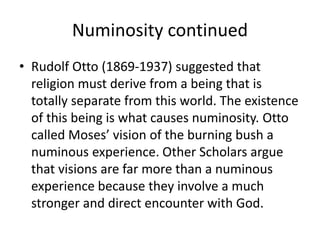
• Rudolf Otto (1869-1937) suggested that 
religion must derive from a being that is 
totally separate from this world. The existence 
of this being is what causes numinosity. Otto 
called Moses’ vision of the burning bush a 
numinous experience. Other Scholars argue 
that visions are far more than a numinous 
experience because they involve a much 
stronger and direct encounter with God.
Conversion
Mystical Experince 
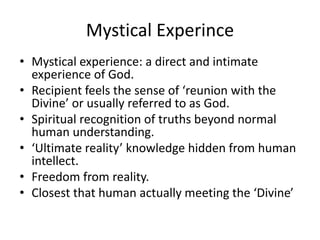
• Mystical experience: a direct and intimate 
experience of God. 
• Recipient feels the sense of ‘reunion with the 
Divine’ or usually referred to as God. 
• Spiritual recognition of truths beyond normal 
human understanding. 
• ‘Ultimate reality’ knowledge hidden from human 
intellect. 
• Freedom from reality. 
• Closest that human actually meeting the ‘Divine’
Mystical Experience continued 
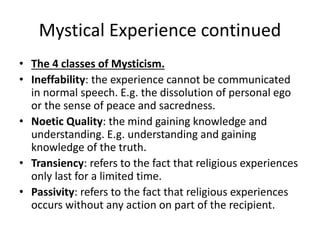
• The 4 classes of Mysticism. 
• Ineffability: the experience cannot be communicated 
in normal speech. E.g. the dissolution of personal ego 
or the sense of peace and sacredness. 
• Noetic Quality: the mind gaining knowledge and 
understanding. E.g. understanding and gaining 
knowledge of the truth. 
• Transiency: refers to the fact that religious experiences 
only last for a limited time. 
• Passivity: refers to the fact that religious experiences 
occurs without any action on part of the recipient.
Mystical Experience continued 
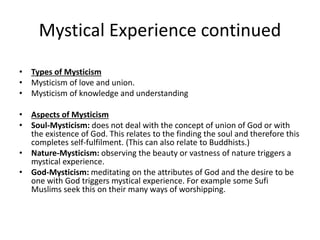
• Types of Mysticism 
• Mysticism of love and union. 
• Mysticism of knowledge and understanding 
• Aspects of Mysticism 
• Soul-Mysticism: does not deal with the concept of union of God or with 
the existence of God. This relates to the finding the soul and therefore this 
completes self-fulfilment. (This can also relate to Buddhists.) 
• Nature-Mysticism: observing the beauty or vastness of nature triggers a 
mystical experience. 
• God-Mysticism: meditating on the attributes of God and the desire to be 
one with God triggers mystical experience. For example some Sufi 
Muslims seek this on their many ways of worshipping.

Religious experiences philosophy

  • 1.
  • 2.
    What is areligious experience • A religious experience can be described as a mental event which a person undergoes either spontaneously or through intensive training and self-discipline. This experience can make a person feel like they have a closer and deeper understanding of God. A religious experience can sometimes encourage someone to live a better life. There are many different types of religious experience, for example visions, numinosity, conversion and a mystical experience.
  • 3.
    Visions • Visonsoccur when an individual believes that they have seen or heard something supernatural or a supernatural being. There are three ways in which an individual may experience a vision. • An intellectual vision brings knowledge and understanding such as a revelation from God • An imaginary vision where something that strengthens the faith is seen with the mind’s eye • A corporeal vision is where the figure is externally present such as St. Bernadette’s visions of the virgin Mary • Sometimes dreams are considered to be visions. For example joseph’s dream in Matthews gospel where joseph is warned in a dream to take Mary and Jesus to Egypt to protect them from Herod.
  • 4.
    Numinosity • Numinosityrefers to the sense of being in the presence of a great power but also feeling separate from it. A numinous feeling doesn’t have to be considered a religious experience but is often called that as people have no other explanation for this feeling.
  • 5.
    Numinosity continued •Rudolf Otto (1869-1937) suggested that religion must derive from a being that is totally separate from this world. The existence of this being is what causes numinosity. Otto called Moses’ vision of the burning bush a numinous experience. Other Scholars argue that visions are far more than a numinous experience because they involve a much stronger and direct encounter with God.
  • 6.
  • 7.
    Mystical Experince •Mystical experience: a direct and intimate experience of God. • Recipient feels the sense of ‘reunion with the Divine’ or usually referred to as God. • Spiritual recognition of truths beyond normal human understanding. • ‘Ultimate reality’ knowledge hidden from human intellect. • Freedom from reality. • Closest that human actually meeting the ‘Divine’
  • 8.
    Mystical Experience continued • The 4 classes of Mysticism. • Ineffability: the experience cannot be communicated in normal speech. E.g. the dissolution of personal ego or the sense of peace and sacredness. • Noetic Quality: the mind gaining knowledge and understanding. E.g. understanding and gaining knowledge of the truth. • Transiency: refers to the fact that religious experiences only last for a limited time. • Passivity: refers to the fact that religious experiences occurs without any action on part of the recipient.
  • 9.
    Mystical Experience continued • Types of Mysticism • Mysticism of love and union. • Mysticism of knowledge and understanding • Aspects of Mysticism • Soul-Mysticism: does not deal with the concept of union of God or with the existence of God. This relates to the finding the soul and therefore this completes self-fulfilment. (This can also relate to Buddhists.) • Nature-Mysticism: observing the beauty or vastness of nature triggers a mystical experience. • God-Mysticism: meditating on the attributes of God and the desire to be one with God triggers mystical experience. For example some Sufi Muslims seek this on their many ways of worshipping.