Religious Experiences
and Spiritual Practices
MODULE 4
Personal Religious
Experiences and Mysticism
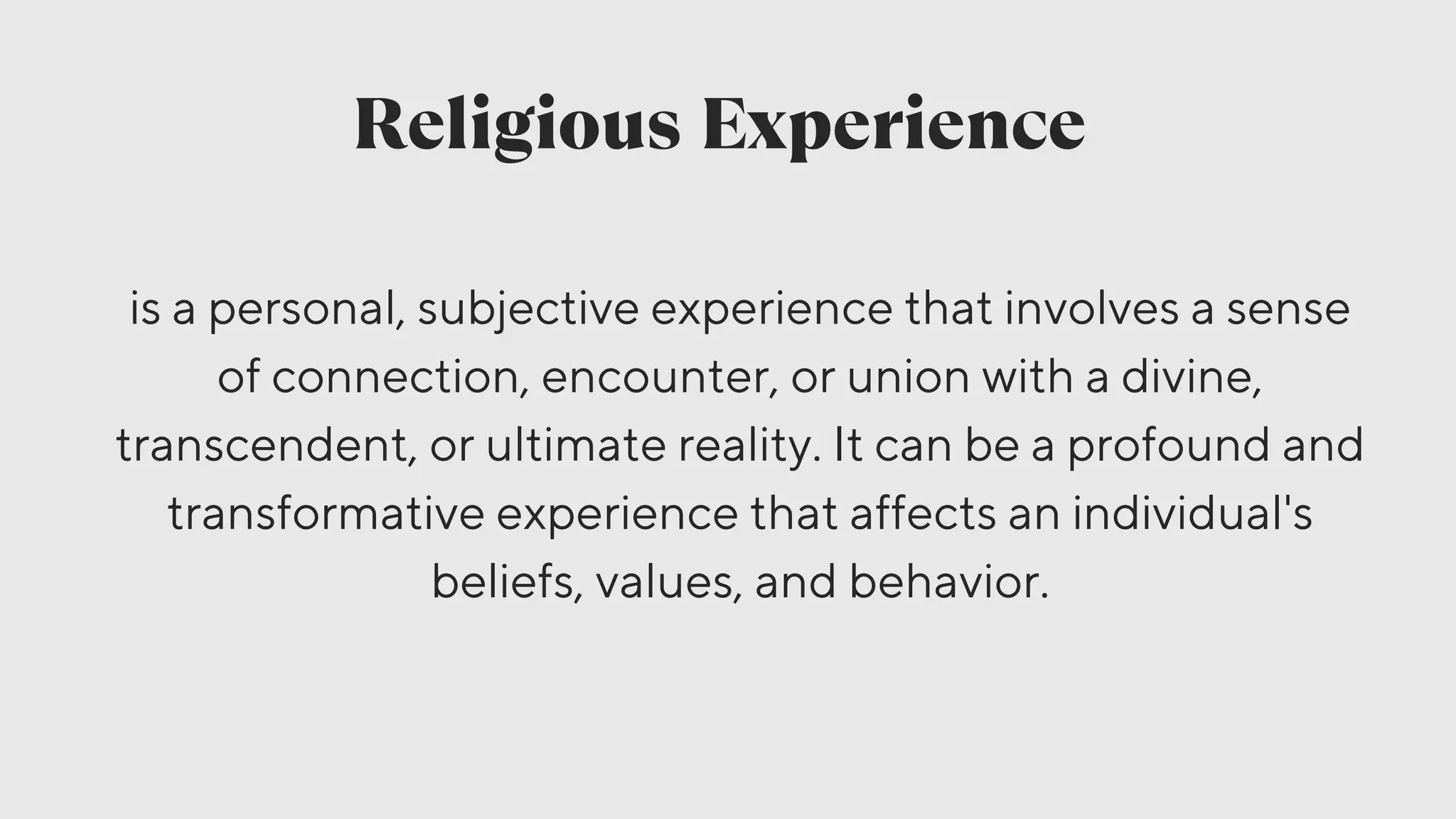
Religious Experience
is a personal, subjective experience that involves a sense
of connection, encounter, or union with a divine,
transcendent, or ultimate reality. It can be a profound and
transformative experience that affects an individual's
beliefs, values, and behavior.
Mysticism
Mysticism refers to the pursuit of a direct, personal
experience of the divine or ultimate reality..
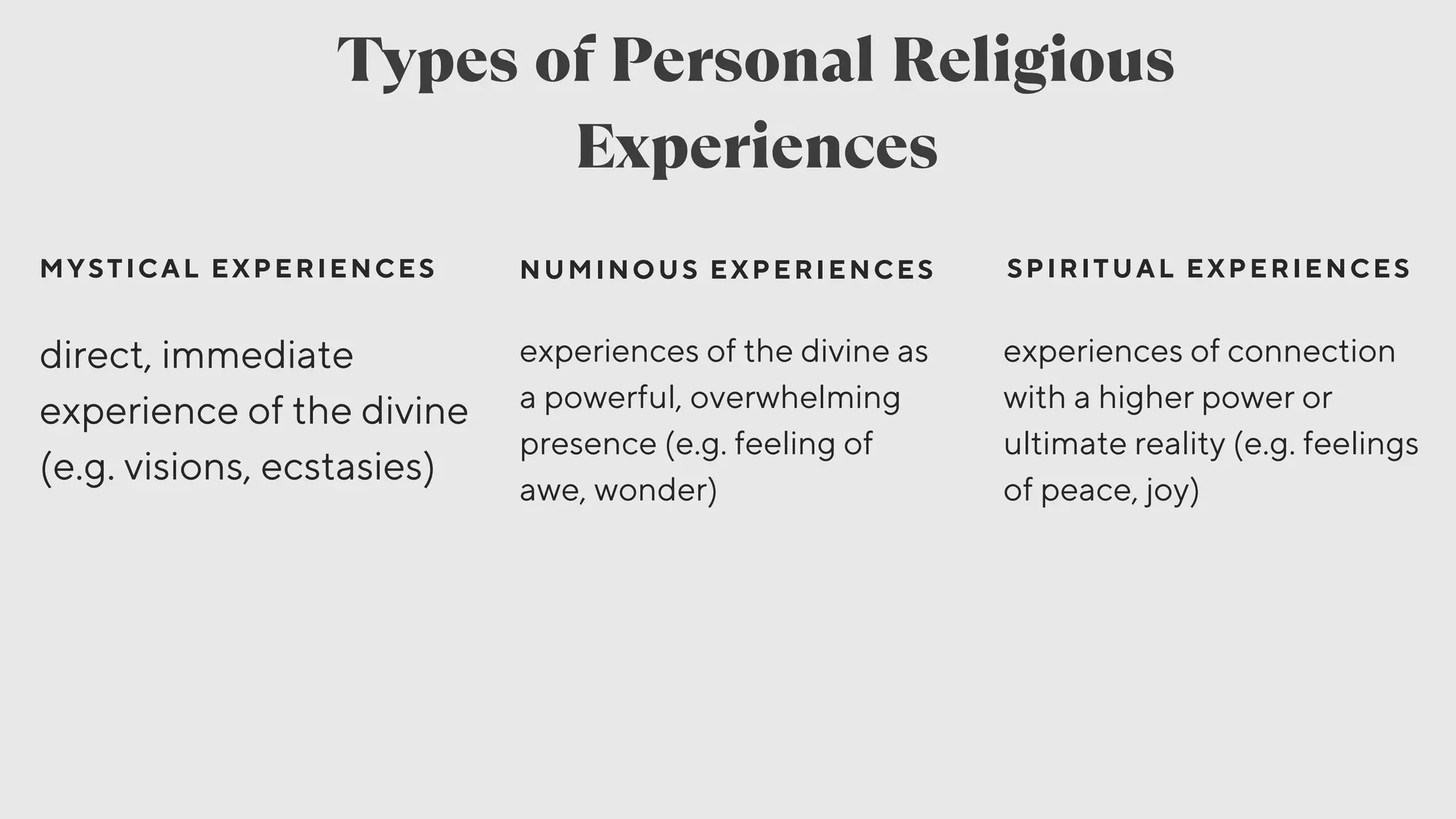
MYSTICAL EXPERIENCES NUMINOUS EXPERIENCES SPIRITUAL EXPERIENCES
direct, immediate
experience of the divine
(e.g. visions, ecstasies)
experiences of the divine as
a powerful, overwhelming
presence (e.g. feeling of
awe, wonder)
experiences of connection
with a higher power or
ultimate reality (e.g. feelings
of peace, joy)
Types of Personal Religious
Experiences
INEFFABILTY NEOTIC QUALITY TRANSCIENCE
· difficult to put into words provides insight or
understanding
Temporary and fleeting
PASSIVITY
individual feels receptive
and open to the experience
Characteristics of Mystical
Experiences
• Provides a direct, personal experience of the divine
• Can deepen and enrich one's faith
• Can provide a sense of connection and unity with
others
Role of Mysticism in
Religion
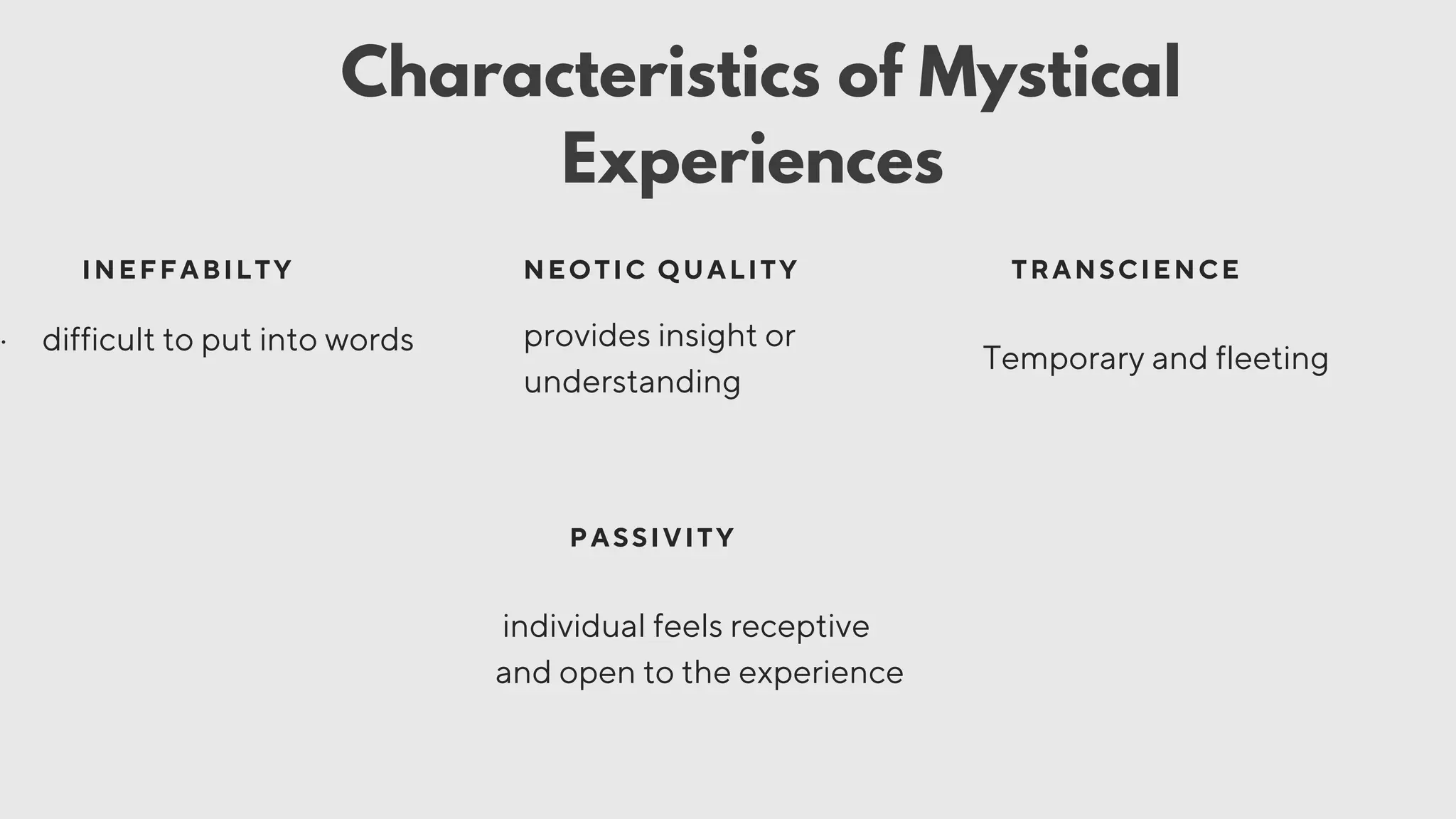
·• Difficulty in communicating
the experience to others
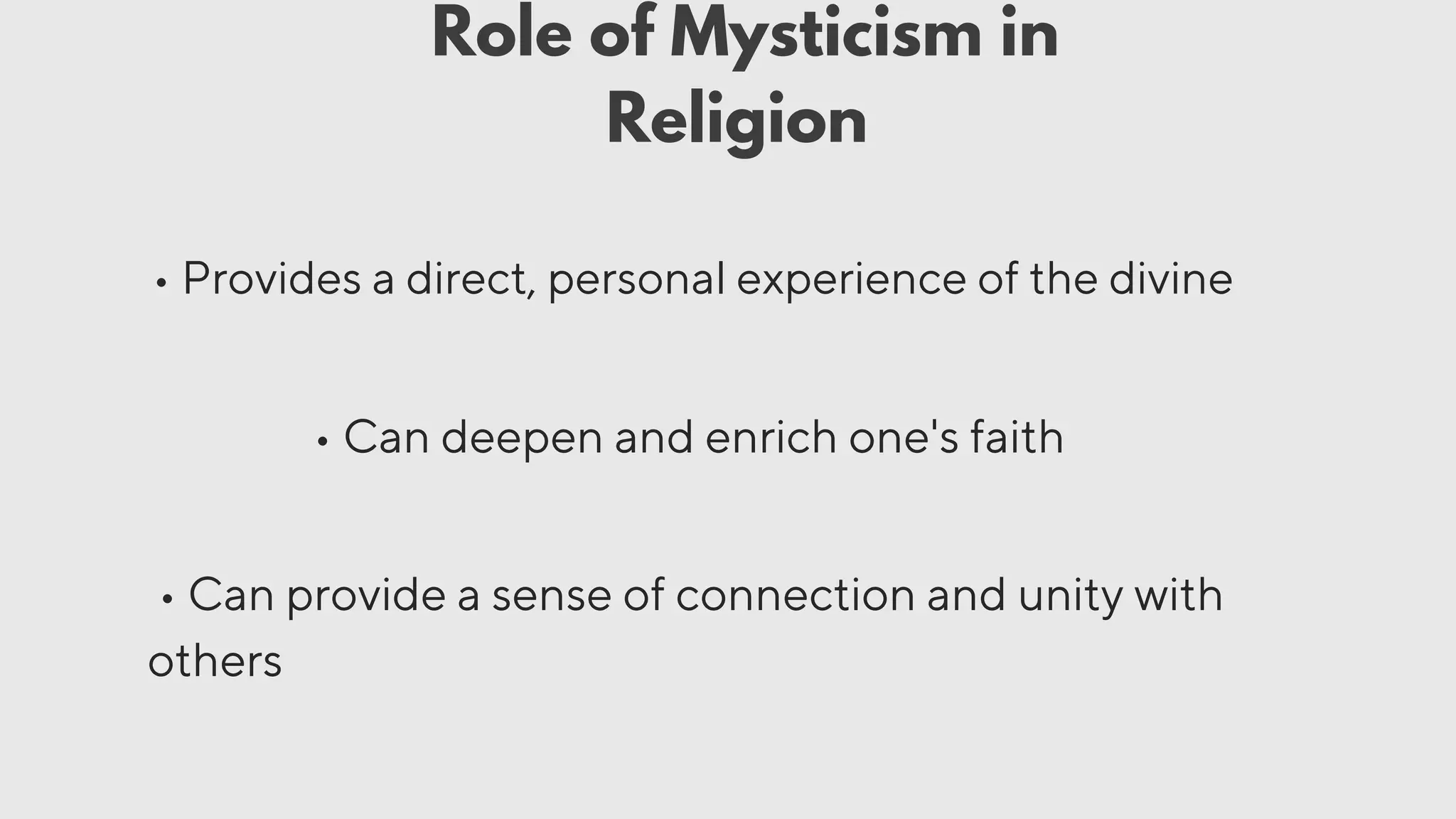
• Risk of misinterpretation or
misunderstanding
Challenges and Criticisms of
Mysticism
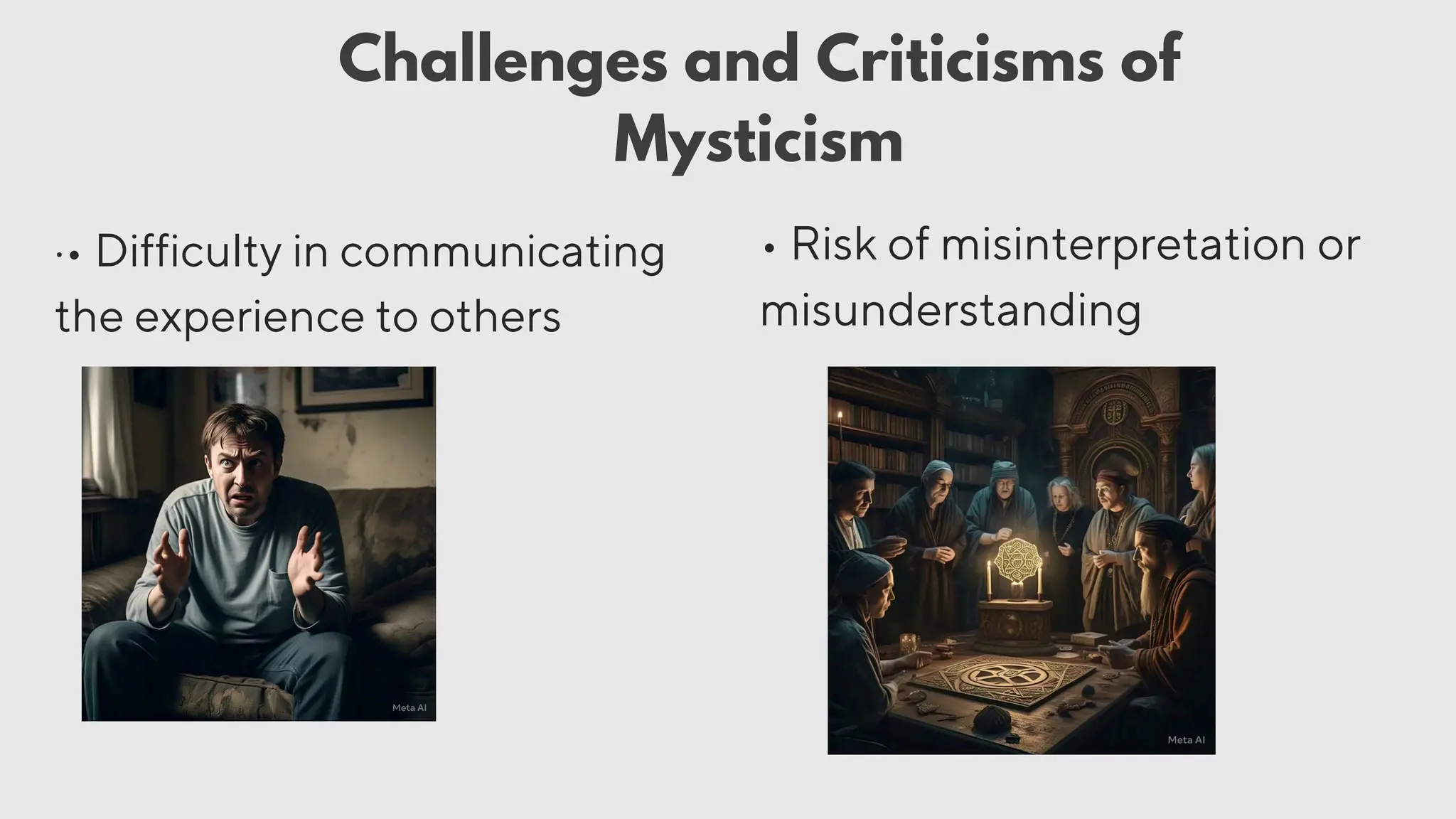
• Potential for ego-inflation or self-delusion
WHAT IS THE IMPORTANCE OF PERSONAL
RELIGIOUS EXPERIENCE AND MYSTICISM?
Personal religious experiences and mysticism play a significant
role in shaping our spiritual lives and understanding of the
divine.
Thank you

Module 4 Religious Experiences and Spiritual Practices.pdf

  • 1.
  • 3.
  • 4.
    Religious Experience is apersonal, subjective experience that involves a sense of connection, encounter, or union with a divine, transcendent, or ultimate reality. It can be a profound and transformative experience that affects an individual's beliefs, values, and behavior.
  • 5.
    Mysticism Mysticism refers tothe pursuit of a direct, personal experience of the divine or ultimate reality..
  • 6.
    MYSTICAL EXPERIENCES NUMINOUSEXPERIENCES SPIRITUAL EXPERIENCES direct, immediate experience of the divine (e.g. visions, ecstasies) experiences of the divine as a powerful, overwhelming presence (e.g. feeling of awe, wonder) experiences of connection with a higher power or ultimate reality (e.g. feelings of peace, joy) Types of Personal Religious Experiences
  • 7.
    INEFFABILTY NEOTIC QUALITYTRANSCIENCE · difficult to put into words provides insight or understanding Temporary and fleeting PASSIVITY individual feels receptive and open to the experience Characteristics of Mystical Experiences
  • 8.
    • Provides adirect, personal experience of the divine • Can deepen and enrich one's faith • Can provide a sense of connection and unity with others Role of Mysticism in Religion
  • 9.
    ·• Difficulty incommunicating the experience to others • Risk of misinterpretation or misunderstanding Challenges and Criticisms of Mysticism
  • 10.
    • Potential forego-inflation or self-delusion
  • 11.
    WHAT IS THEIMPORTANCE OF PERSONAL RELIGIOUS EXPERIENCE AND MYSTICISM? Personal religious experiences and mysticism play a significant role in shaping our spiritual lives and understanding of the divine.

  • 12.