
RELIGION IN INDIA
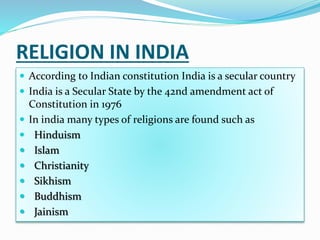
 According to Indian constitution India is a secular country
 India is a Secular State by the 42nd amendment act of
Constitution in 1976
 In india many types of religions are found such as
 Hinduism
 Islam
 Christianity
 Sikhism
 Buddhism
 Jainism
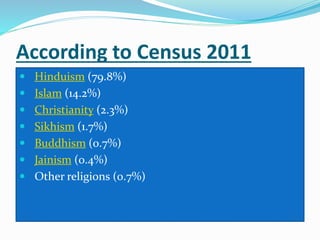
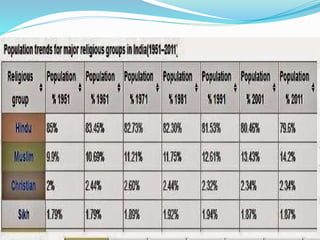
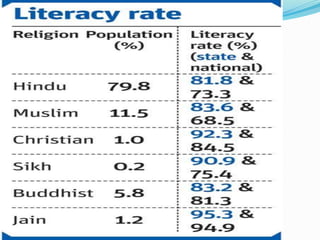
According to Census 2011
 Hinduism (79.8%)
 Islam (14.2%)
 Christianity (2.3%)
 Sikhism (1.7%)
 Buddhism (0.7%)
 Jainism (0.4%)
 Other religions (0.7%)
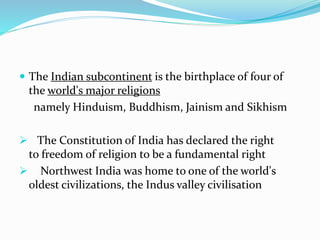
 The Indian subcontinent is the birthplace of four of
the world's major religions
namely Hinduism, Buddhism, Jainism and Sikhism
 The Constitution of India has declared the right
to freedom of religion to be a fundamental right
 Northwest India was home to one of the world's
oldest civilizations, the Indus valley civilisation
HINDU
 India is home to around 90% of the global population
of Hindus
 Most Hindu shrines and temples are located in India,
as are the birthplaces of most Hindu saints.
 Allahabad hosts the world's largest religious
pilgrimage, Kumbha Mela, where Hindus from across
the world come together to bathe in the confluence of
three sacred rivers of India: the Ganga, the Yamuna,
and the Saraswati.
 Hinduism is often regarded as the oldest religion in
the world
 Hindus worship a single god with different forms
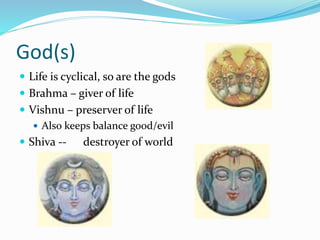
God(s)
 Life is cyclical, so are the gods
 Brahma – giver of life
 Vishnu – preserver of life
 Also keeps balance good/evil
 Shiva -- destroyer of world
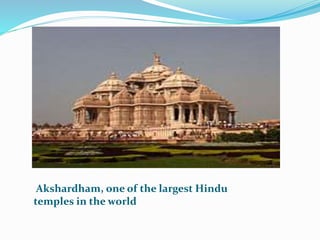
Akshardham, one of the largest Hindu
temples in the world
ISLAM
 Muslims compose 14.23% of the Indian
 It is a second highest religion in india
 Muslims offer five daily prayers at specific times of the
day, indicated by adhan (call to prayer) from the local
mosques
 3–4% of Muslim children study in madrasas (Islamic
schools
 According to the 2011 census, India is home to 172
million Muslims,
 the world's third-largest Muslim population after
those in Indonesia (210 million) and Pakistan (195
million).
 Muslims are a majority in states Jammu and
Kashmir and Lakshadweep, and live in high
concentrations in Uttar Pradesh, Bihar, West
Bengal, Assam, and Kerala
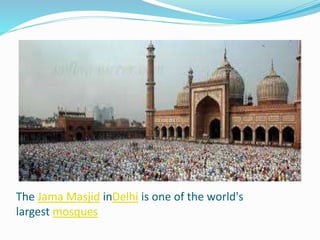
The Jama Masjid inDelhi is one of the world's
largest mosques
Christianity
 Christianity compose (2.3%) of the India
 . St. Thomas is credited with introduction of
Christianity in India
 Christians comprise a majority in Nagaland, Mizoram,
andMeghalaya and have significant populations
in Kerala and Goa
Sikhism
 Sikhism compose (1.7%) of the India
 Guru Nanak Dev Ji (1469–1539) was the founder
of Sikhism.
 Sikhism recognises all humans as equal
before Waheguru
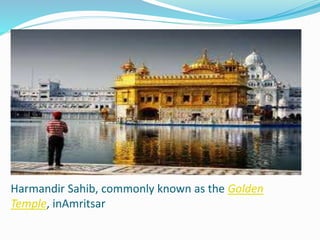
Harmandir Sahib, commonly known as the Golden
Temple, inAmritsar
Buddhism
 Buddhism compose (0.7%) of the India
 Around 8.5 million Buddhists live in India
 They believe in no God
 Founder: Siddhartha Gautama
 in equality (no caste system)
Jainism
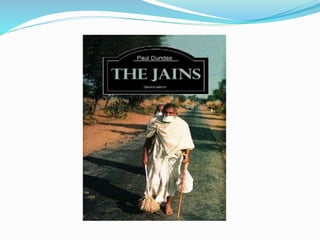
 Jainism compose (0.4%) of the India
 Jainism has two major ancient sub-
traditions, Digambaras and Svetambaras
Religion in india
Religion in india
Religion in india
Religion in india

Religion in india

  • 2.
    RELIGION IN INDIA According to Indian constitution India is a secular country  India is a Secular State by the 42nd amendment act of Constitution in 1976  In india many types of religions are found such as  Hinduism  Islam  Christianity  Sikhism  Buddhism  Jainism
  • 3.
    According to Census2011  Hinduism (79.8%)  Islam (14.2%)  Christianity (2.3%)  Sikhism (1.7%)  Buddhism (0.7%)  Jainism (0.4%)  Other religions (0.7%)
  • 4.
     The Indiansubcontinent is the birthplace of four of the world's major religions namely Hinduism, Buddhism, Jainism and Sikhism  The Constitution of India has declared the right to freedom of religion to be a fundamental right  Northwest India was home to one of the world's oldest civilizations, the Indus valley civilisation
  • 5.
    HINDU  India ishome to around 90% of the global population of Hindus  Most Hindu shrines and temples are located in India, as are the birthplaces of most Hindu saints.  Allahabad hosts the world's largest religious pilgrimage, Kumbha Mela, where Hindus from across the world come together to bathe in the confluence of three sacred rivers of India: the Ganga, the Yamuna, and the Saraswati.
  • 6.
     Hinduism isoften regarded as the oldest religion in the world  Hindus worship a single god with different forms
  • 7.
    God(s)  Life iscyclical, so are the gods  Brahma – giver of life  Vishnu – preserver of life  Also keeps balance good/evil  Shiva -- destroyer of world
  • 8.
    Akshardham, one ofthe largest Hindu temples in the world
  • 9.
    ISLAM  Muslims compose14.23% of the Indian  It is a second highest religion in india  Muslims offer five daily prayers at specific times of the day, indicated by adhan (call to prayer) from the local mosques  3–4% of Muslim children study in madrasas (Islamic schools
  • 10.
     According tothe 2011 census, India is home to 172 million Muslims,  the world's third-largest Muslim population after those in Indonesia (210 million) and Pakistan (195 million).  Muslims are a majority in states Jammu and Kashmir and Lakshadweep, and live in high concentrations in Uttar Pradesh, Bihar, West Bengal, Assam, and Kerala
  • 11.
    The Jama MasjidinDelhi is one of the world's largest mosques
  • 12.
    Christianity  Christianity compose(2.3%) of the India  . St. Thomas is credited with introduction of Christianity in India  Christians comprise a majority in Nagaland, Mizoram, andMeghalaya and have significant populations in Kerala and Goa
  • 13.
    Sikhism  Sikhism compose(1.7%) of the India  Guru Nanak Dev Ji (1469–1539) was the founder of Sikhism.  Sikhism recognises all humans as equal before Waheguru
  • 14.
    Harmandir Sahib, commonlyknown as the Golden Temple, inAmritsar
  • 15.
    Buddhism  Buddhism compose(0.7%) of the India  Around 8.5 million Buddhists live in India  They believe in no God  Founder: Siddhartha Gautama  in equality (no caste system)
  • 16.
    Jainism  Jainism compose(0.4%) of the India  Jainism has two major ancient sub- traditions, Digambaras and Svetambaras