Presented by-
Kruti Kamdar (A032)
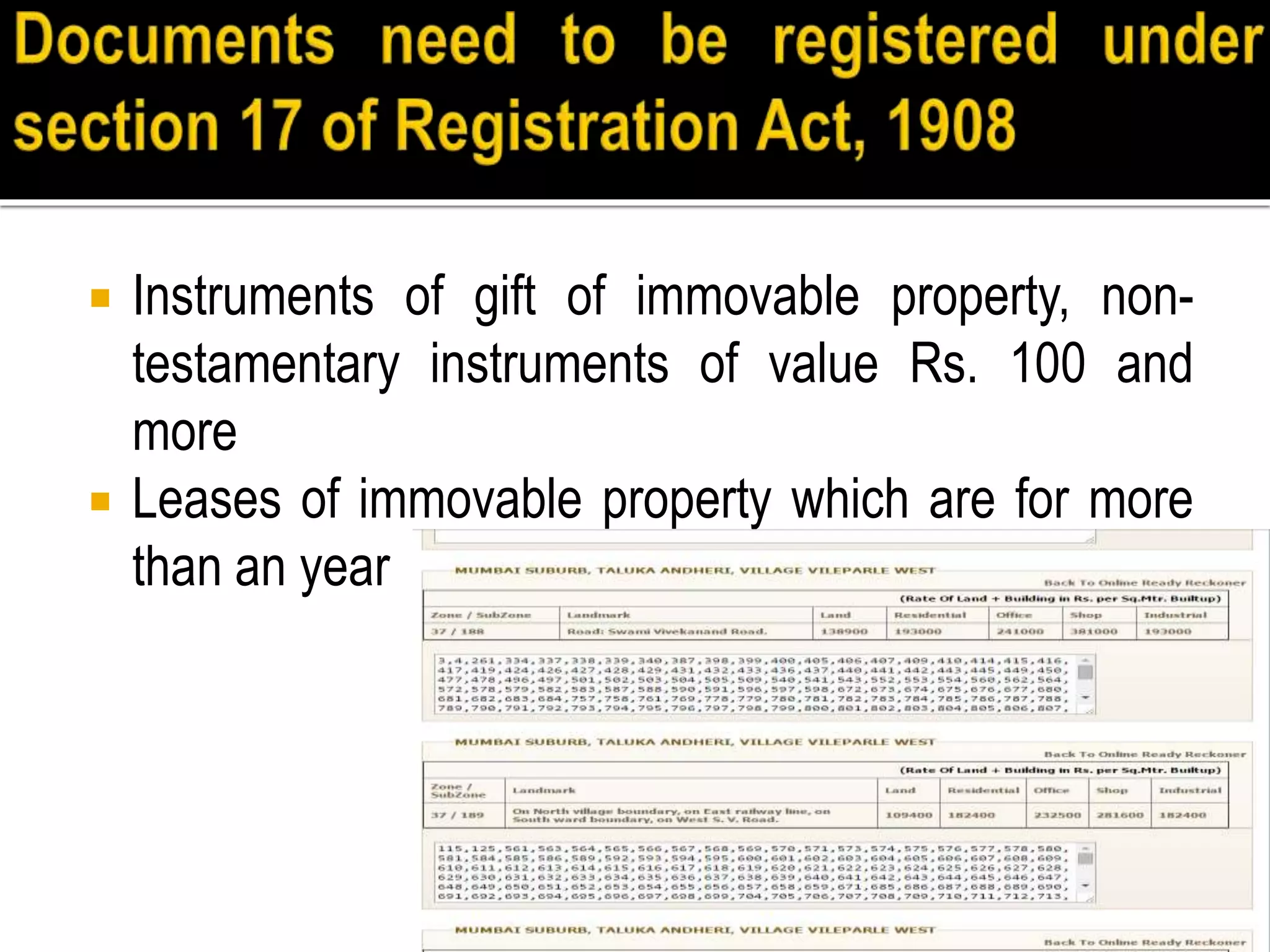
 Instruments of gift of immovable property, non-
testamentary instruments of value Rs. 100 and
more
 Leases of immovable property which are for more
than an year
 A transfer of a decree or order of a court or of any
award when such decree or order or award
operates to create, declare, etc. any interest of the
value of Rs. 100 and upwards in immovable
property, requires registration. Non-testamentary
documents generally require registration.
 A document other than a will must be presented
within four months of its execution. (registration of
will is optional)
 Within four months after its arrival in India, registrar
may accept such document for registration on
payment of proper registration fee. A document
executed outside India is not valid unless it is
registered in India (Nainsukhdas v.
Gowardhandas, AIR 1948 Nag. 110).
 Section 28 provides that documents affecting
immovable property mentioned in Sections 17(1)
and (2) and Sections 17(1)(a)(b)(c)(d) and (e),
Section 17(2), etc. shall be presented for
registration in the office of a Sub-Registrar within
whose sub-district the whole or some portion of the
relevant property is situated.
 At the place where the decree is made. If the
decree or order does not affect immovable
property, it may be presented for registration in the
office of any other Sub-Registrar under the State
Government at whose office all persons claiming
under the decree or order desire it to be registered.
 A person executing or claiming under the same, or
in the case of a copy of a decree or order, claiming
under the decree or order, or the representative or
assign of such person, or the agent of such person,
representative or assign, duly authorised by power-
of-attorney executed and authenticated in the
proper manner
 Yes. For registering a document the persons
executing such document or their representatives,
assigns or authorised agents must appear before
the registering officer within the time allowed for
presentation. (Section 34)
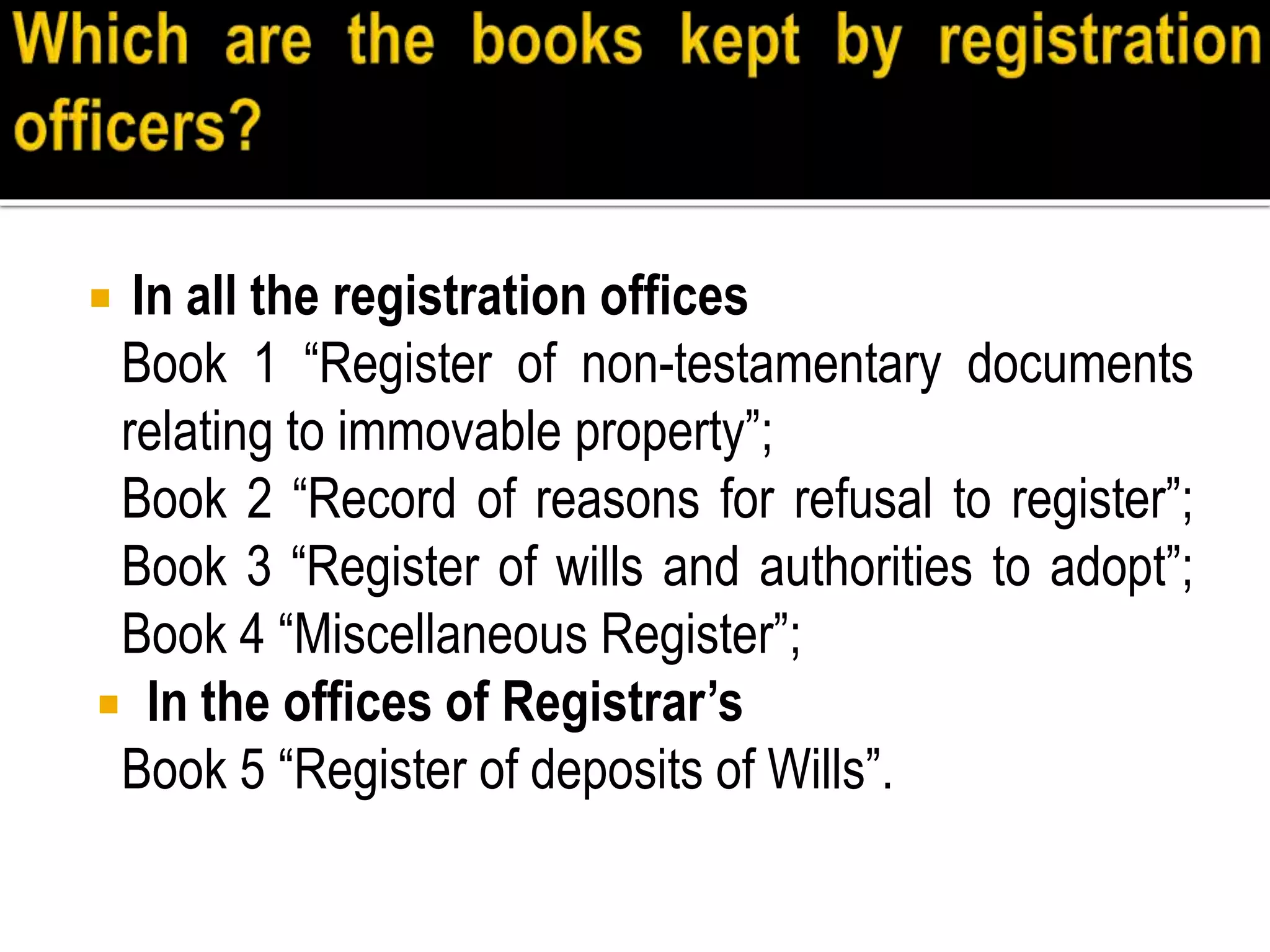
 In all the registration offices
Book 1 “Register of non-testamentary documents
relating to immovable property”;
Book 2 “Record of reasons for refusal to register”;
Book 3 “Register of wills and authorities to adopt”;
Book 4 “Miscellaneous Register”;
 In the offices of Registrar’s
Book 5 “Register of deposits of Wills”.
 Who can present a will for registration?
The testator, or after his death, any person claiming as executor or
otherwise under a will, may present it to any Registrar or Sub-
Registrar for registration.
 What is the procedure for registration of a will ?
Any testator may, either personally or by duly authorised agent,
deposit with any Registrar his will in a sealed cover superscribed with
the name of the testator and that of his agent, if any, and with a
statement of the nature of the document. On receiving such
documents, the Registrar on being satisfied shall transcribe in his
Registrar Book No. 5, the superscription and shall note the date, time,
month, etc. of such receipt and shall then place and retain the sealed
cover in his fire-proof box.
Will
 As between two registered documents, the date of
execution determines the priority. Of the two
registered documents, executed by same persons
in respect of the same property to two different
persons at two different times, the one which is
executed first gets priority over the other, even if
the former deed is registered subsequently to the
later one
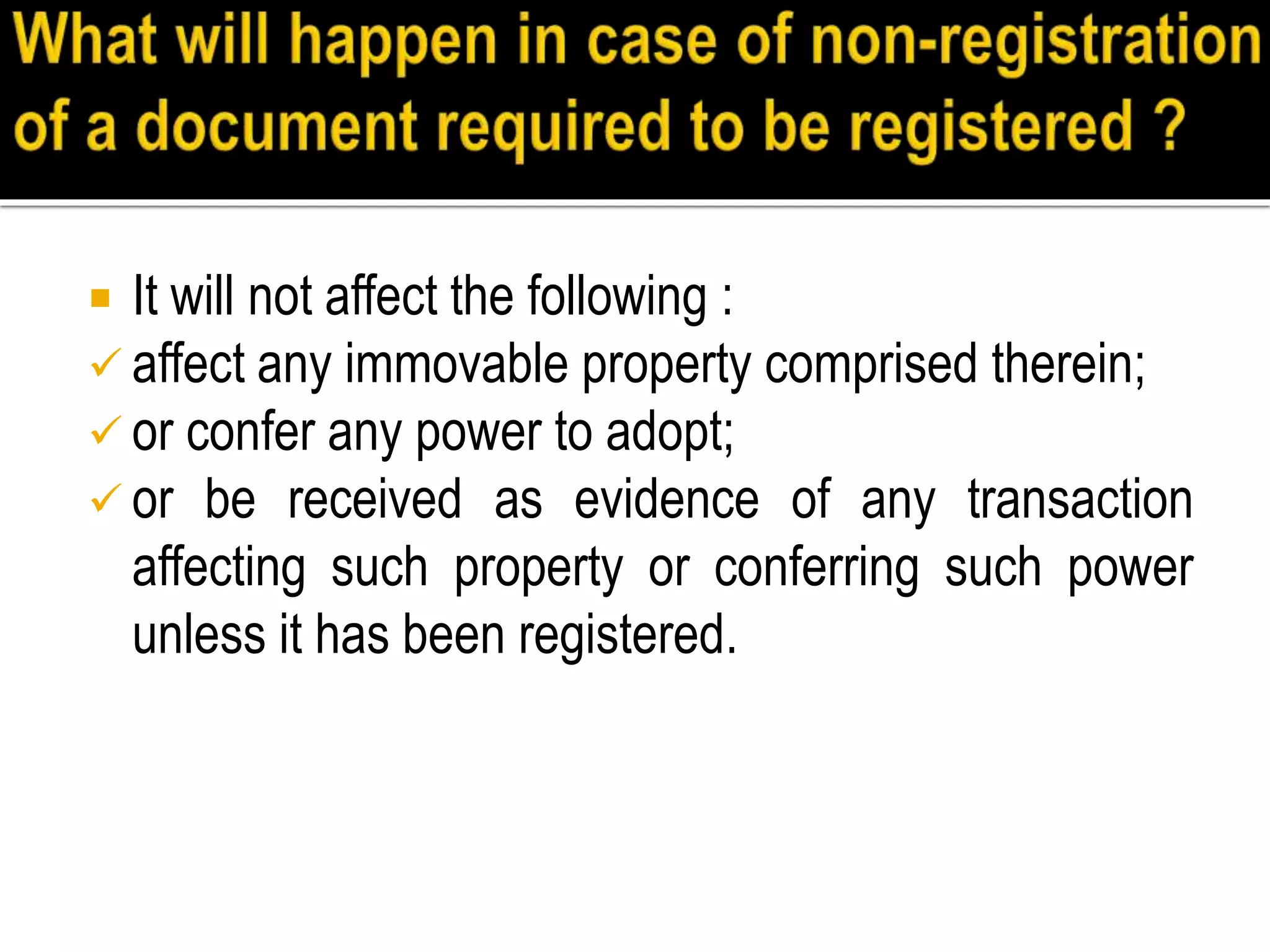
 It will not affect the following :
 affect any immovable property comprised therein;
 or confer any power to adopt;
 or be received as evidence of any transaction
affecting such property or conferring such power
unless it has been registered.
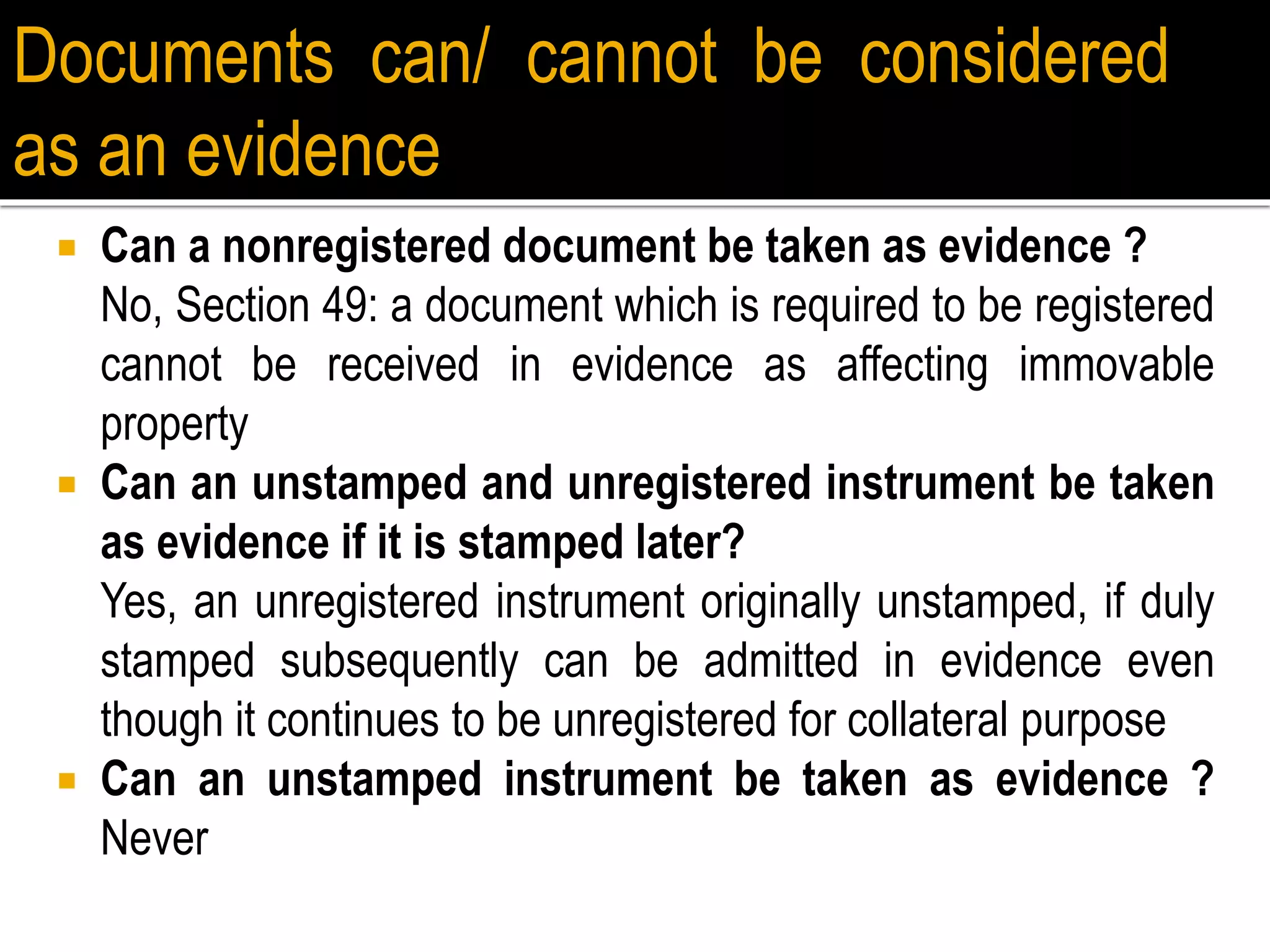
 Can a nonregistered document be taken as evidence ?
No, Section 49: a document which is required to be registered
cannot be received in evidence as affecting immovable
property
 Can an unstamped and unregistered instrument be taken
as evidence if it is stamped later?
Yes, an unregistered instrument originally unstamped, if duly
stamped subsequently can be admitted in evidence even
though it continues to be unregistered for collateral purpose
 Can an unstamped instrument be taken as evidence ?
Never
Documents can/ cannot be considered
as an evidence
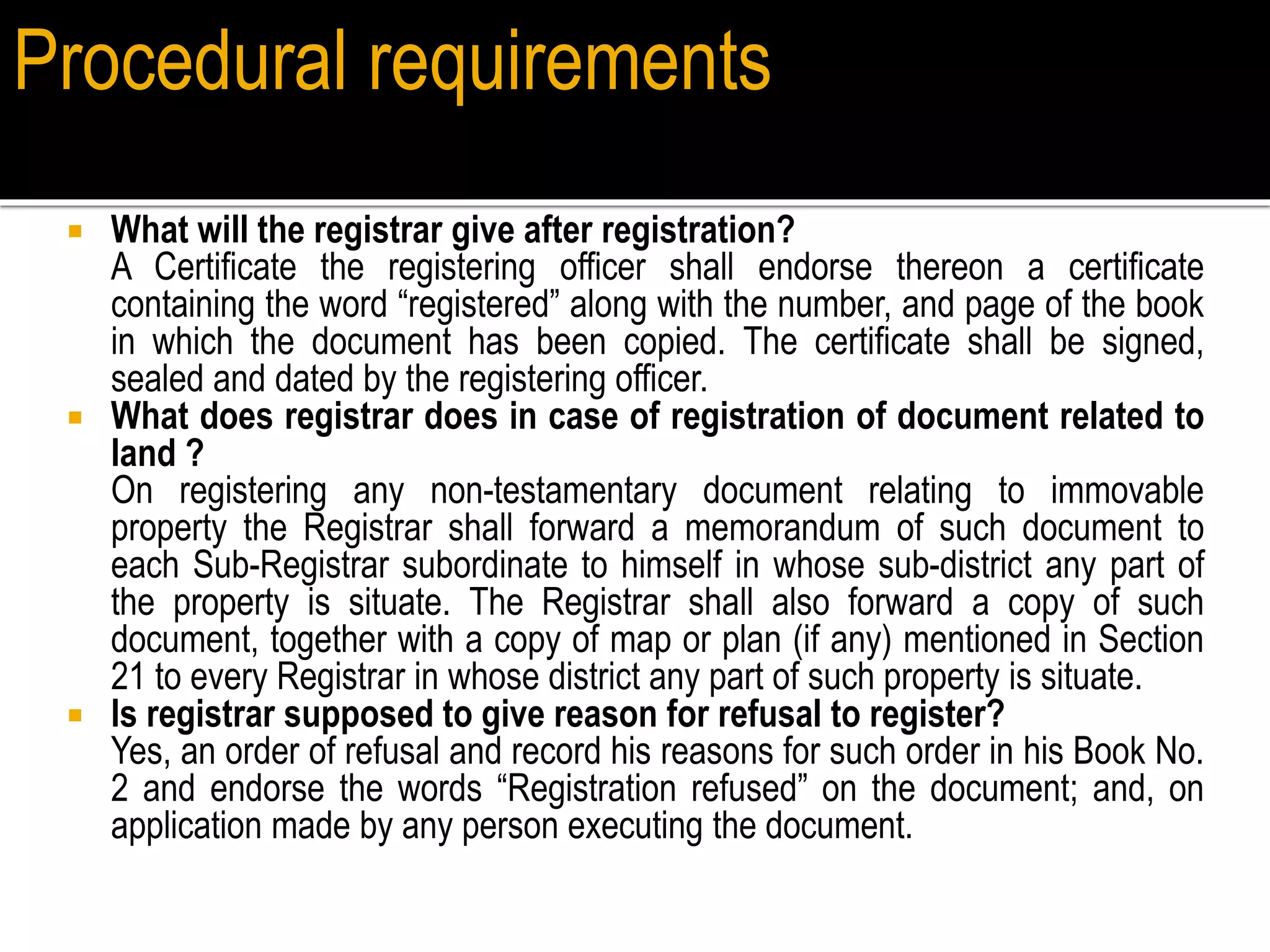
 What will the registrar give after registration?
A Certificate the registering officer shall endorse thereon a certificate
containing the word “registered” along with the number, and page of the book
in which the document has been copied. The certificate shall be signed,
sealed and dated by the registering officer.
 What does registrar does in case of registration of document related to
land ?
On registering any non-testamentary document relating to immovable
property the Registrar shall forward a memorandum of such document to
each Sub-Registrar subordinate to himself in whose sub-district any part of
the property is situate. The Registrar shall also forward a copy of such
document, together with a copy of map or plan (if any) mentioned in Section
21 to every Registrar in whose district any part of such property is situate.
 Is registrar supposed to give reason for refusal to register?
Yes, an order of refusal and record his reasons for such order in his Book No.
2 and endorse the words “Registration refused” on the document; and, on
application made by any person executing the document.
Procedural requirements
 Will need not be registered.
 Gift deeds, mortgage deeds, Agreement to
lease for more that one year and other
documents whose value is above Rs. 100 are
required to be registered.

Registration of Document in India

  • 1.
  • 2.
     Instruments ofgift of immovable property, non- testamentary instruments of value Rs. 100 and more  Leases of immovable property which are for more than an year
  • 3.
     A transferof a decree or order of a court or of any award when such decree or order or award operates to create, declare, etc. any interest of the value of Rs. 100 and upwards in immovable property, requires registration. Non-testamentary documents generally require registration.
  • 4.
     A documentother than a will must be presented within four months of its execution. (registration of will is optional)
  • 5.
     Within fourmonths after its arrival in India, registrar may accept such document for registration on payment of proper registration fee. A document executed outside India is not valid unless it is registered in India (Nainsukhdas v. Gowardhandas, AIR 1948 Nag. 110).
  • 6.
     Section 28provides that documents affecting immovable property mentioned in Sections 17(1) and (2) and Sections 17(1)(a)(b)(c)(d) and (e), Section 17(2), etc. shall be presented for registration in the office of a Sub-Registrar within whose sub-district the whole or some portion of the relevant property is situated.
  • 7.
     At theplace where the decree is made. If the decree or order does not affect immovable property, it may be presented for registration in the office of any other Sub-Registrar under the State Government at whose office all persons claiming under the decree or order desire it to be registered.
  • 8.
     A personexecuting or claiming under the same, or in the case of a copy of a decree or order, claiming under the decree or order, or the representative or assign of such person, or the agent of such person, representative or assign, duly authorised by power- of-attorney executed and authenticated in the proper manner
  • 9.
     Yes. Forregistering a document the persons executing such document or their representatives, assigns or authorised agents must appear before the registering officer within the time allowed for presentation. (Section 34)
  • 10.
     In allthe registration offices Book 1 “Register of non-testamentary documents relating to immovable property”; Book 2 “Record of reasons for refusal to register”; Book 3 “Register of wills and authorities to adopt”; Book 4 “Miscellaneous Register”;  In the offices of Registrar’s Book 5 “Register of deposits of Wills”.
  • 11.
     Who canpresent a will for registration? The testator, or after his death, any person claiming as executor or otherwise under a will, may present it to any Registrar or Sub- Registrar for registration.  What is the procedure for registration of a will ? Any testator may, either personally or by duly authorised agent, deposit with any Registrar his will in a sealed cover superscribed with the name of the testator and that of his agent, if any, and with a statement of the nature of the document. On receiving such documents, the Registrar on being satisfied shall transcribe in his Registrar Book No. 5, the superscription and shall note the date, time, month, etc. of such receipt and shall then place and retain the sealed cover in his fire-proof box. Will
  • 12.
     As betweentwo registered documents, the date of execution determines the priority. Of the two registered documents, executed by same persons in respect of the same property to two different persons at two different times, the one which is executed first gets priority over the other, even if the former deed is registered subsequently to the later one
  • 13.
     It willnot affect the following :  affect any immovable property comprised therein;  or confer any power to adopt;  or be received as evidence of any transaction affecting such property or conferring such power unless it has been registered.
  • 14.
     Can anonregistered document be taken as evidence ? No, Section 49: a document which is required to be registered cannot be received in evidence as affecting immovable property  Can an unstamped and unregistered instrument be taken as evidence if it is stamped later? Yes, an unregistered instrument originally unstamped, if duly stamped subsequently can be admitted in evidence even though it continues to be unregistered for collateral purpose  Can an unstamped instrument be taken as evidence ? Never Documents can/ cannot be considered as an evidence
  • 15.
     What willthe registrar give after registration? A Certificate the registering officer shall endorse thereon a certificate containing the word “registered” along with the number, and page of the book in which the document has been copied. The certificate shall be signed, sealed and dated by the registering officer.  What does registrar does in case of registration of document related to land ? On registering any non-testamentary document relating to immovable property the Registrar shall forward a memorandum of such document to each Sub-Registrar subordinate to himself in whose sub-district any part of the property is situate. The Registrar shall also forward a copy of such document, together with a copy of map or plan (if any) mentioned in Section 21 to every Registrar in whose district any part of such property is situate.  Is registrar supposed to give reason for refusal to register? Yes, an order of refusal and record his reasons for such order in his Book No. 2 and endorse the words “Registration refused” on the document; and, on application made by any person executing the document. Procedural requirements
  • 16.
     Will neednot be registered.  Gift deeds, mortgage deeds, Agreement to lease for more that one year and other documents whose value is above Rs. 100 are required to be registered.