Julie Mensen
Laura Braconnier
 Gloesener Anne
    Nora Heirens
 Definition « regional »
 Definition « seasonal »
 In what context are they related to sustainable
  developpement?
 What can we do?
 Related to a large geographic region
  Example: Luxembourg  Europe
           Argentina  south America
           China  Asia
      Example against: Luxembourg ≠ China
 Something that is
  near to our
  home/country.


     Luxembourg
     Germany
 Relatedto a season : Products are growing in
 a certain season of the year.

Example: * strawberrys in summer
         * apples in autumn
         * etc
 Buying products even if it’s not the season
 doping: products are produced with chemical
  substances, or under wrong/unnaturally conditions
  (ex: strawberry’s aren’t raised in the right sunlight)

 Buying products from places far away
 transport: a lot of Kerosene, decomposition of
              ozone layer
 doping: companys use damaged stoffeling
                that their products come over during
                  the transport
                against moths
               …
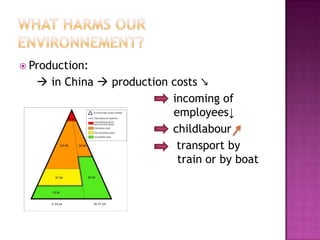
 Production:
    in China  production costs ↘
                           incoming of
                           employees↓
                           childlabour
                            transport by
                            train or by boat
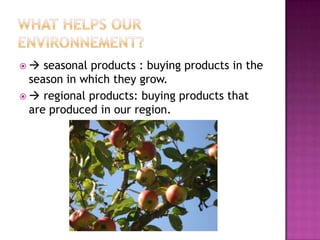
   seasonal products : buying products in the
  season in which they grow.
  regional products: buying products that
  are produced in our region.
Green electrictiy
« green » cars
No petrol/ Kerosene
No chemical products
Not over-fishing
No plastic
More recycling
By Julie Mensen, Laura
Braconnier, Gloesener Anne, Heirens
                               Nora
 Definition
           « ecofriendly tourisme »
 How should be ecofriendly tourisme?
 How shouldn’t be ecofriendly tourisme?
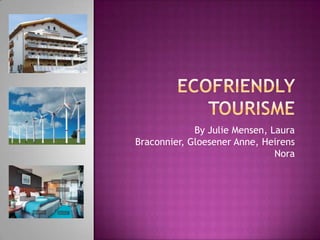
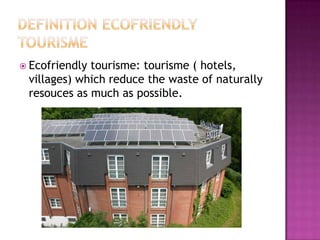
 Ecofriendlytourisme: tourisme ( hotels,
 villages) which reduce the waste of naturally
 resouces as much as possible.
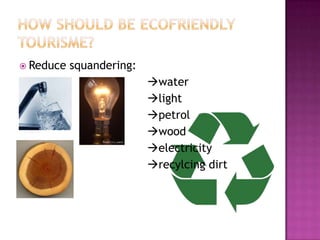
 Reduce   squandering:
                          water
                          light
                          petrol
                          wood
                          electricity
                          recylcing dirt
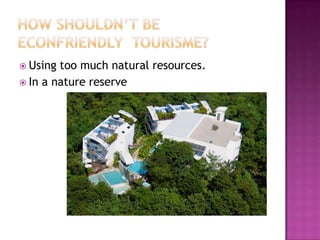
 Using too much natural resources.
 In a nature reserve
Regional products

Regional products

  • 1.
    Julie Mensen Laura Braconnier Gloesener Anne Nora Heirens
  • 2.
     Definition «regional »  Definition « seasonal »  In what context are they related to sustainable developpement?  What can we do?
  • 3.
     Related toa large geographic region   Example: Luxembourg  Europe Argentina  south America China  Asia Example against: Luxembourg ≠ China  Something that is near to our home/country. Luxembourg Germany
  • 4.
     Relatedto aseason : Products are growing in a certain season of the year. Example: * strawberrys in summer * apples in autumn * etc
  • 5.
     Buying productseven if it’s not the season  doping: products are produced with chemical substances, or under wrong/unnaturally conditions (ex: strawberry’s aren’t raised in the right sunlight)  Buying products from places far away  transport: a lot of Kerosene, decomposition of ozone layer  doping: companys use damaged stoffeling  that their products come over during the transport  against moths …
  • 6.
     Production:  in China  production costs ↘ incoming of employees↓ childlabour transport by train or by boat
  • 7.
     seasonal products : buying products in the season in which they grow.   regional products: buying products that are produced in our region.
  • 8.
    Green electrictiy « green» cars No petrol/ Kerosene No chemical products Not over-fishing No plastic More recycling
  • 9.
    By Julie Mensen,Laura Braconnier, Gloesener Anne, Heirens Nora
  • 10.
     Definition « ecofriendly tourisme »  How should be ecofriendly tourisme?  How shouldn’t be ecofriendly tourisme?
  • 11.
     Ecofriendlytourisme: tourisme( hotels, villages) which reduce the waste of naturally resouces as much as possible.
  • 12.
     Reduce squandering: water light petrol wood electricity recylcing dirt
  • 13.
     Using toomuch natural resources.  In a nature reserve