What is
REFUGEES?
The UnitedNations High Commissioner for
Refugees (UNHCR) defines refugee as “someone
who forced to flee their country due to
persecution, war, or violence, with a well-founded
fear of persecution based on race, religion,
nationality, political opinion, or social group”.
3.
What is Internally
DisplacedPersons (IDPs)?
Unlike refugees, IDPs flee their homes but do not cross
international boarders.
They are not protected by international law and rely on
their own governments for aid.
4.
STATISTICS (UN DATA)
Thereare 21. 3 million refugees and 51% are below
18 years of age.
The highest record so far since WWII.
The refugees and the IDC have something in
common :
They are not in their homes.
They are not secure.
5.
Challenges Faced:
Separation fromfamily, friend, and communities.
Limited access to education, healthcare, and basic
needs.
Poor living conditions in camps with inadequate
resources.
Psychological distress due to uncertainty about their
future.
6.
Educational Barriers
Hostcountries struggle to provide proper education due to
weak systems.
Long stays in refugee camps lead to shifts in education that
burden teachers and shorten learning time.
Language barriers and lack of learning materials.
Exposure to war and violence leads to psycho-social issues.
7.
• Quote byEglantyne Jebb: “All wars, whether just or
unjust, disastrous or victorious , are waged against the
child”.
• Manuel Fontaine (UNICEF, 2018): Children in conflict
zones suffer extreme violence, including use as human
shields, killing, maiming, and forced recruitment.
Children in Conflict Zones
8.
Human Rights Violations:
Rape,forced marriage, and abduction are
common tactics in conflicts from Syria,
Yemen, Myanmar, South Sudan, and more.
Children’s rights are disregarded by
unresponsive governments and perpetrators
of violence.
9.
Call to Action
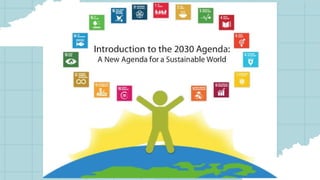
The 2030 UN Sustainable Development Goals (SDGs)
emphasize inclusive and equitable education for all,
particularly vulnerable children.
Governments and organizations must prioritize:
Protection of displaced children
Providing quality education and psychological
support.
Ensuring international cooperation to prevent and
address child rights violations
11.
QUESTIONS:
1. If yourcommunity suddenly had to host
displaced children from a conflict zone, how
would you respond, and what support systems
would you prioritize?
12.
QUESTIONS:
2. Do youbelieve wealthy countries have moral
obligation to accept more refugees, especially
children? Why or why not?
3. Imagine being forced to flee your home as a child
– what would be your greatest concern, and how
should governments address it?



![CHILDREN IN DIFFICULT CIRCUMSTANCES [Autosaved].pptx](https://cdn.slidesharecdn.com/ss_thumbnails/childrenindifficultcircumstancesautosaved-250227160710-6a8e1486-thumbnail.jpg?width=640&height=640&fit=bounds)


