Reduce your Angular state
options with NGXS
Yohan Lasorsa
 github.com/sinedied
 @sinedied
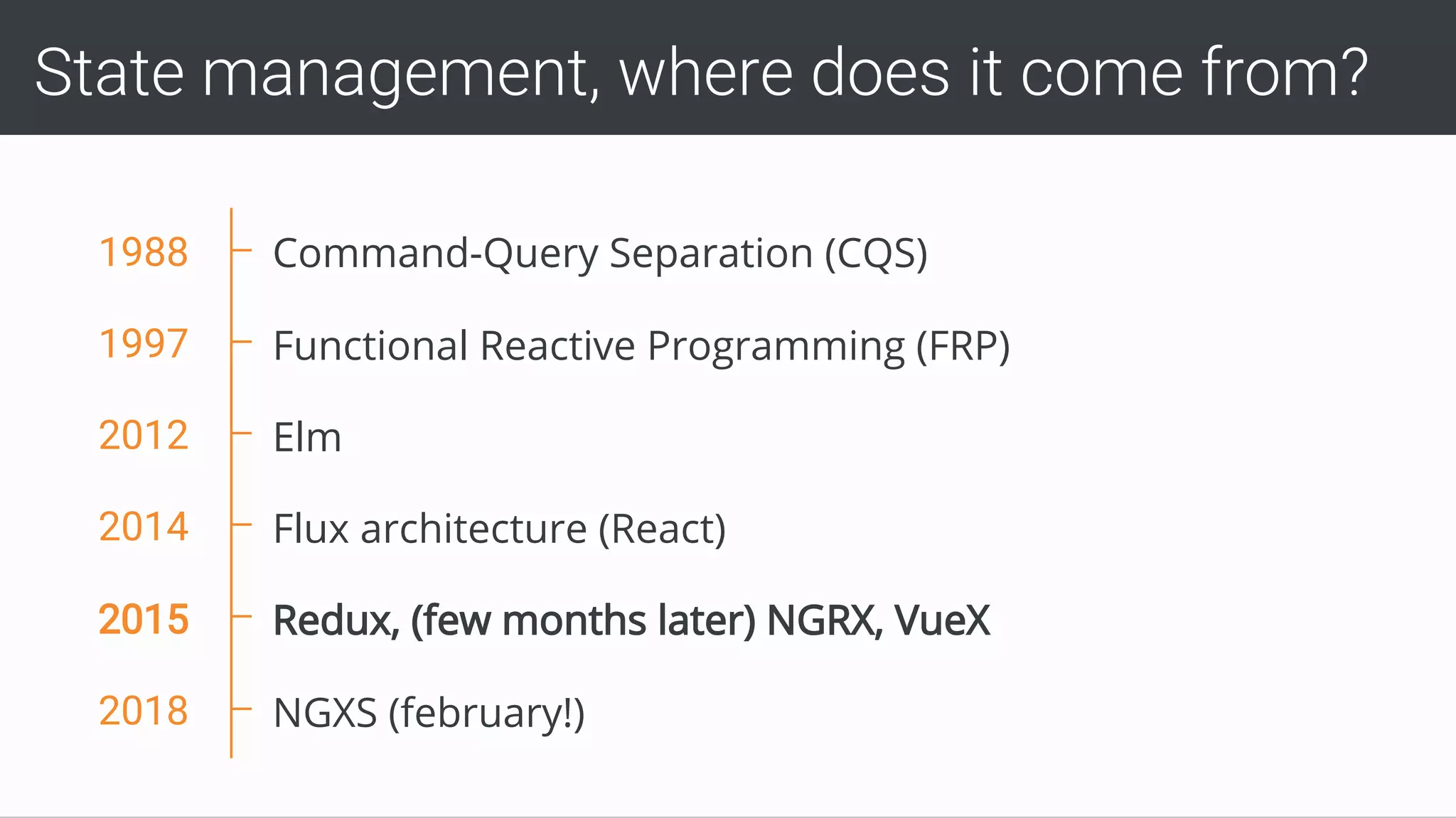
1988
1997
2012
2014
2015
2018
Command-Query Separation (CQS)
Functional Reactive Programming (FRP)
Elm
Flux architecture (React)
Redux, (few months later) NGRX, VueX
NGXS (february!)
State management, where does it come from?
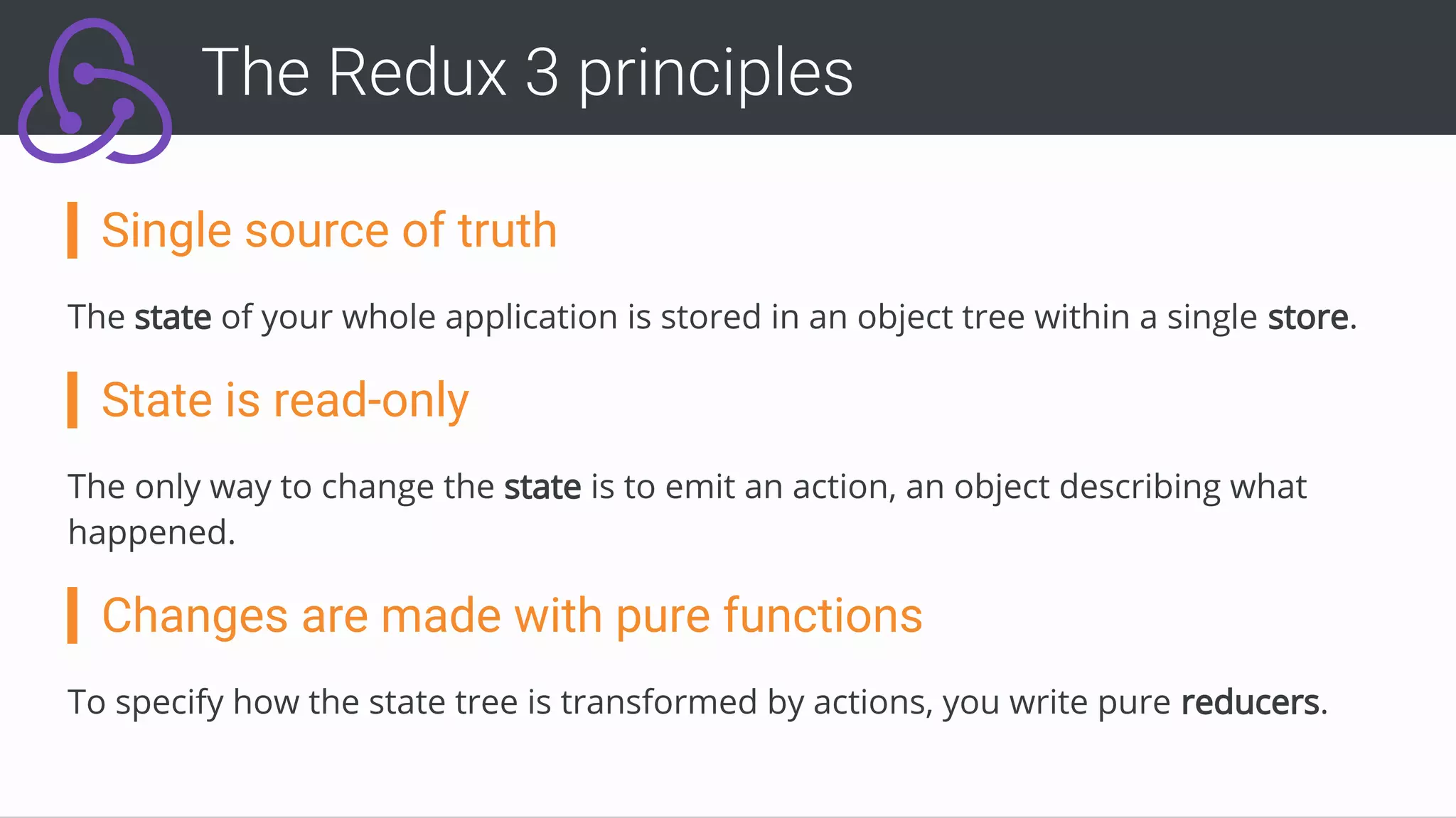
Single source of truth
The state of your whole application is stored in an object tree within a single store.
State is read-only
The only way to change the state is to emit an action, an object describing what
happened.
Changes are made with pure functions
To specify how the state tree is transformed by actions, you write pure reducers.
The Redux 3 principles
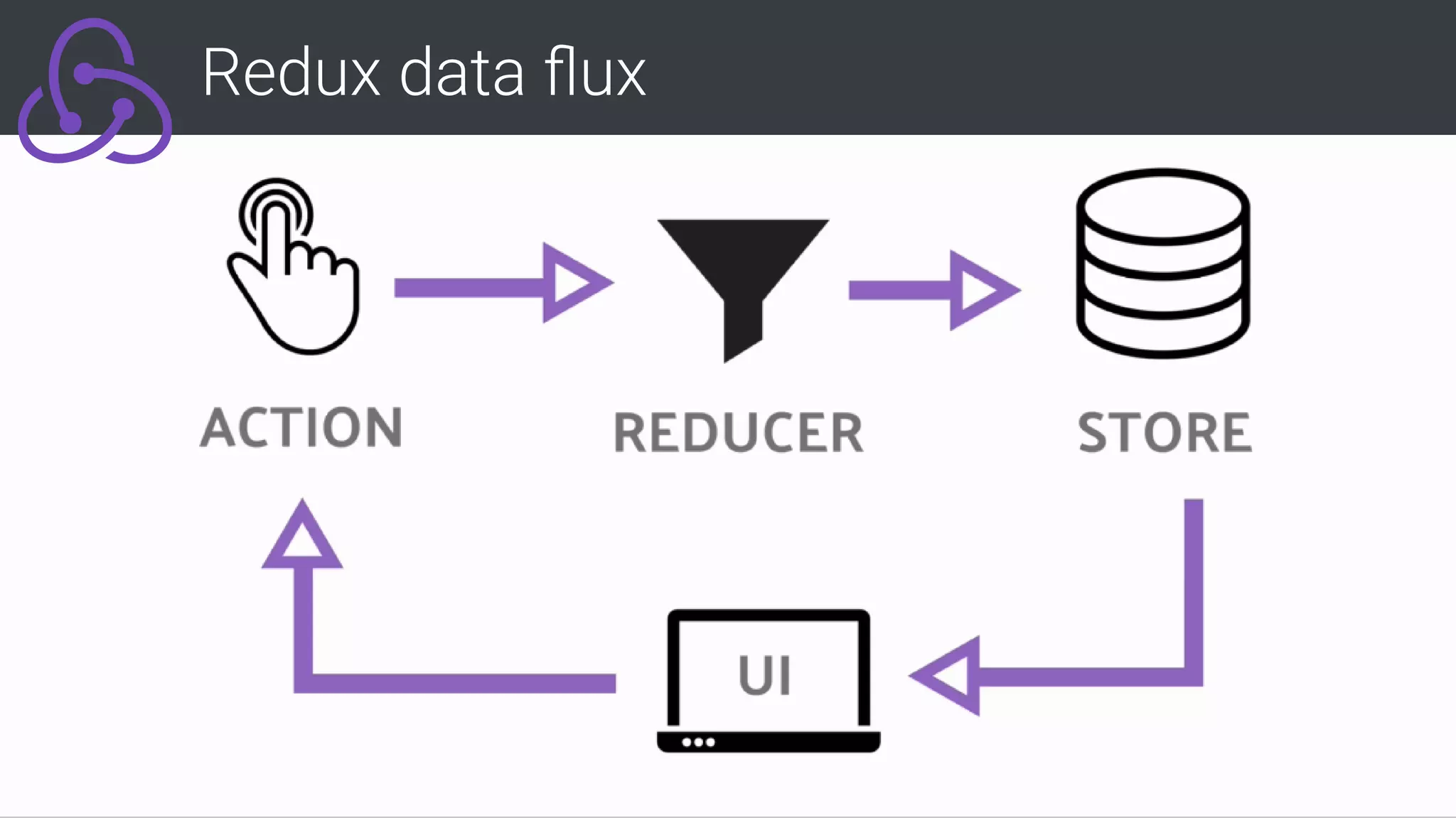
Redux data flux
Use Redux directly
(You really don't want to...)
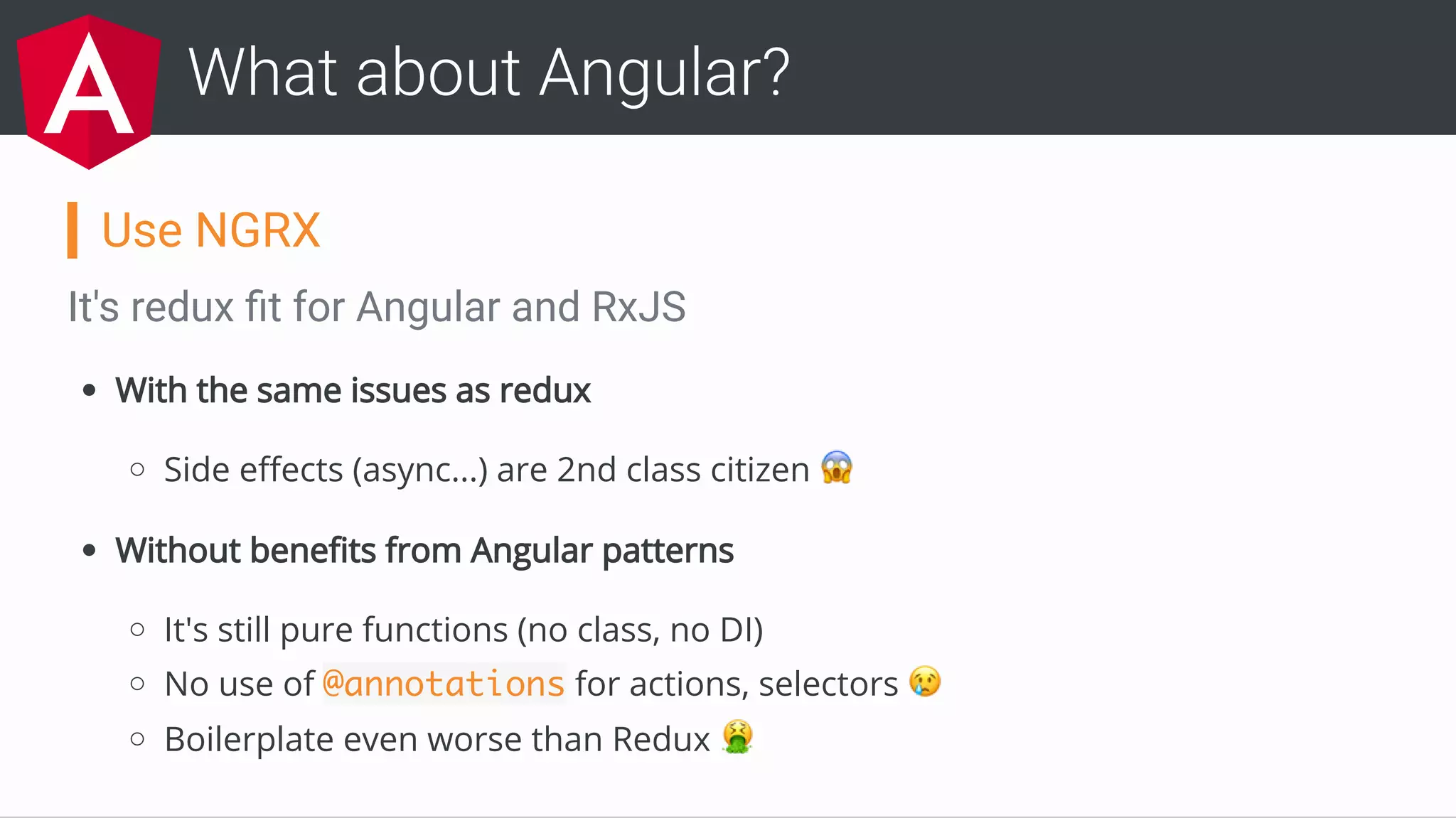
What about Angular?
Use NGRX
It's redux fit for Angular and RxJS
With the same issues as redux
Side effects (async...) are 2nd class citizen
Without benefits from Angular patterns
It's still pure functions (no class, no DI)
No use of @annotations for actions, selectors
Boilerplate even worse than Redux
What about Angular?
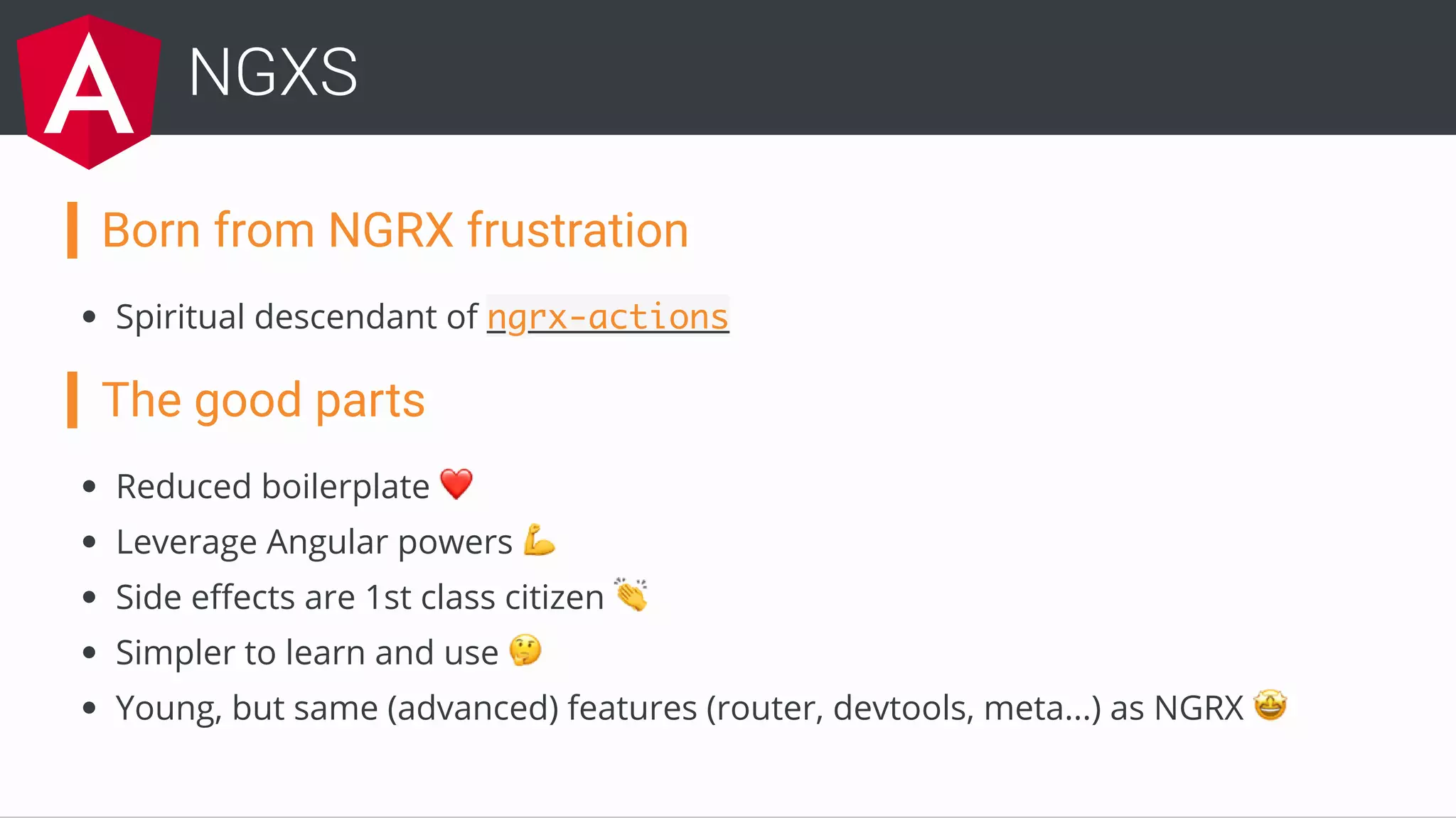
There comes
   
Born from NGRX frustration
Spiritual descendant of ngrx-actions
The good parts
Reduced boilerplate ❤
Leverage Angular powers
Side effects are 1st class citizen
Simpler to learn and use
Young, but same (advanced) features (router, devtools, meta...) as NGRX
NGXS
4 concepts
Store Global state container, action dispatcher and selector
Action Class describing the action to take and its associated metadata
State Class definition of the state
Select State slice selectors
NGXS basics
NGXS website
Why another state management framework for Angular?
Redux website
NGRX libs
Comprehensive Introduction to @ngrx/store
Markdown Editor variants:
Angular without state management
Angular with NGRX
Angular with NGXS
React with Rexux
Vue with VueX
Links

Reduce your Angular state options with NGXS

  • 1.
    Reduce your Angularstate options with NGXS Yohan Lasorsa  github.com/sinedied  @sinedied
  • 2.
    1988 1997 2012 2014 2015 2018 Command-Query Separation (CQS) FunctionalReactive Programming (FRP) Elm Flux architecture (React) Redux, (few months later) NGRX, VueX NGXS (february!) State management, where does it come from?
  • 4.
    Single source oftruth The state of your whole application is stored in an object tree within a single store. State is read-only The only way to change the state is to emit an action, an object describing what happened. Changes are made with pure functions To specify how the state tree is transformed by actions, you write pure reducers. The Redux 3 principles
  • 5.
  • 6.
    Use Redux directly (Youreally don't want to...) What about Angular?
  • 7.
    Use NGRX It's reduxfit for Angular and RxJS With the same issues as redux Side effects (async...) are 2nd class citizen Without benefits from Angular patterns It's still pure functions (no class, no DI) No use of @annotations for actions, selectors Boilerplate even worse than Redux What about Angular?
  • 8.
  • 9.
    Born from NGRXfrustration Spiritual descendant of ngrx-actions The good parts Reduced boilerplate ❤ Leverage Angular powers Side effects are 1st class citizen Simpler to learn and use Young, but same (advanced) features (router, devtools, meta...) as NGRX NGXS
  • 10.
    4 concepts Store Globalstate container, action dispatcher and selector Action Class describing the action to take and its associated metadata State Class definition of the state Select State slice selectors NGXS basics
  • 11.
    NGXS website Why anotherstate management framework for Angular? Redux website NGRX libs Comprehensive Introduction to @ngrx/store Markdown Editor variants: Angular without state management Angular with NGRX Angular with NGXS React with Rexux Vue with VueX Links